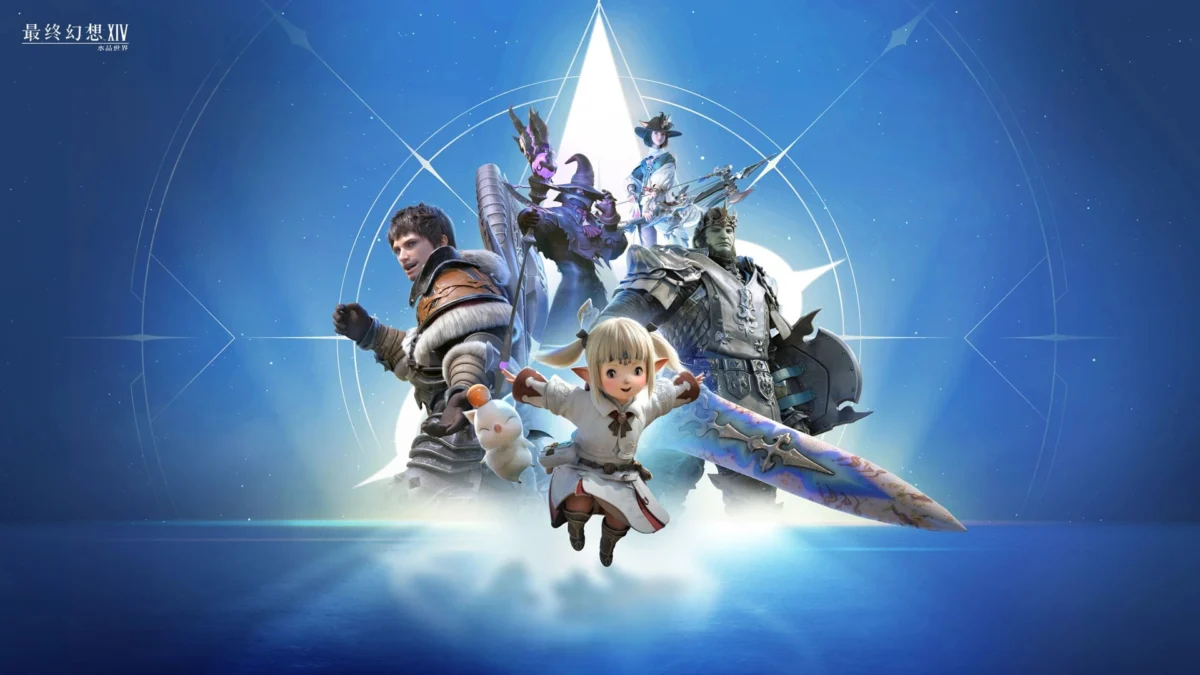
Shanghai, China – July 17, 2026 – In a development that has sent ripples of disappointment through its nascent player base and the broader global gaming community, Final Fantasy XIV Mobile (Chinese Edition) is set to cease all operations on September 30, 2026. The announcement, delivered by LightSpeed Studios, a prominent subsidiary of Tencent Games, marks a swift and decisive end to the mobile MMORPG’s ambitious journey in the Chinese market, barely a year after its highly anticipated launch. Furthermore, the accompanying revelation that the previously planned global version will no longer proceed extinguishes hopes for a worldwide mobile adaptation of Square Enix’s critically acclaimed online universe.
The termination of service comes as a stark reminder of the volatile and intensely competitive landscape of the mobile gaming industry, particularly within China. While LightSpeed Studios cited "adjustments in business operations and changes in the market environment" as the primary drivers behind this decision, the rapid closure of a title backed by such colossal industry players and a beloved IP raises significant questions about its performance, strategic viability, and the inherent challenges of translating complex MMORPG experiences to mobile platforms.
Main Facts: A Dream Cut Short
The core of today’s news is the definitive closure of Final Fantasy XIV Mobile (Chinese Edition) and the complete cessation of development for its global counterpart. LightSpeed Studios, acting on behalf of Tencent and Square Enix, delivered the somber news, setting September 30, 2026, as the final day of service. This date is less than fifteen months after the game’s official launch in China on June 19, 2025, painting a picture of a remarkably brief operational lifespan for a title carrying such significant brand weight and developmental investment.
The announcement specified that the decision was reached through "amicable negotiation" between Tencent and Square Enix, indicating a mutual agreement to terminate their licensing arrangement. This joint decision underscores that the challenges faced were likely substantial enough to convince both parties that continued investment was no longer strategically sound. For players in mainland China, this means the deletion of all account data, character information, and related game data after the servers go offline, in accordance with the Personal Information Protection Law.
Crucially, the statement extended apologies not only to the Chinese players who had embarked on the mobile Eorzean adventure but also to "everyone who has been looking forward to the global version," confirming that those aspirations will now remain unfulfilled. This unilateral cancellation of the global release points to a broader reassessment of the project’s feasibility beyond just the Chinese market, suggesting systemic issues or a fundamental shift in strategy from the developers and publishers involved.
The news comes as a significant blow to the mobile MMORPG genre, which has seen varying degrees of success in adapting established PC and console franchises. Final Fantasy XIV Mobile had aimed to carve out a niche by offering a portable rendition of one of the most successful subscription-based MMORPGs in history, a task that now appears to have been insurmountable.
Chronology: The Rise and Fall of Mobile Eorzea
The journey of Final Fantasy XIV Mobile was, in retrospect, a fleeting one, characterized by initial promise, a high-profile launch, and a swift, unceremonious conclusion.
The Genesis of a Mobile Dream
While specific pre-announcement details for Final Fantasy XIV Mobile are not extensively publicized in the provided text, the very concept of a mobile adaptation of Final Fantasy XIV likely emerged from a confluence of factors. The phenomenal success of the PC and console version of Final Fantasy XIV: A Realm Reborn and its subsequent expansions had cemented its status as a genre titan, boasting millions of active subscribers worldwide. This success naturally led to discussions about expanding its reach, particularly into the burgeoning mobile gaming market, where the potential for new player acquisition and revenue streams was immense. Developers often look to successful IPs as fertile ground for mobile spin-offs or adaptations, aiming to capitalize on existing brand loyalty. The decision to partner with Tencent’s LightSpeed Studios, known for its expertise in mobile game development and its deep understanding of the Chinese market, signaled a serious intent to make FFXIV Mobile a significant contender. Early development likely involved complex discussions about how to distill the vast, intricate world and gameplay mechanics of FFXIV into a mobile-friendly format without compromising its core identity or alienating its dedicated fanbase. The expectation was that a mobile version could serve as an entry point for new players, or a convenient companion for existing Warriors of Light on the go.
Launch and Initial Reception (June 19, 2025)
Final Fantasy XIV Mobile officially launched in mainland China on June 19, 2025. The launch was undoubtedly met with considerable fanfare, backed by the immense marketing power of Tencent and the revered Final Fantasy brand. The launch day message, "Resonate with the Light, and blaze as one," captured the aspirational tone, promising adventurers that "the adventure had just begun." Initial player feedback, as acknowledged in the termination announcement, pointed to a vibrant, if nascent, community. Players shared "suggestions on gameplay, experiences, and features," indicating active engagement and a desire to shape "Mobile Eorzea." The presence of "Seasoned Warriors of Light" stepping up as mentors to guide newcomers speaks to the initial efforts at community building, mirroring the strong social fabric of the main FFXIV game. The vision was clear: to foster a "vast, warm community" on mobile, bringing the beloved world of Eorzea to a new platform and audience. This period would have been crucial for gathering data on player behavior, monetization effectiveness, and technical performance, all of which would ultimately inform the long-term viability of the project.
A Short-Lived Journey
Between its launch in June 2025 and the termination announcement in July 2026, Final Fantasy XIV Mobile (Chinese Edition) existed for just over a year. While the specifics of this period are not detailed in the provided text, it’s reasonable to infer a period of live service operations, likely involving regular content updates, seasonal events, and ongoing community management. Developers would have been actively monitoring player retention rates, daily active users (DAU), monthly active users (MAU), and, critically, revenue generation through in-app purchases and subscriptions. This short lifespan suggests that either the initial performance metrics fell significantly short of expectations, or the operational costs associated with maintaining a complex MMORPG on mobile proved unsustainable. The promise of a global release would have hung over this period, with international fans eagerly watching the Chinese version for clues about its quality and future. Any major technical hurdles, balance issues, or difficulties in monetizing the game effectively would have become increasingly apparent during these months, culminating in the difficult decision to pull the plug.
The Termination Announcement (July 17, 2026)
The definitive end was announced on July 17, 2026, with the game’s operations team delivering the news. The statement was imbued with regret and gratitude, directly addressing the "Dear Adventurers" who had supported the game. The core reason provided – "adjustments in business operations and changes in the market environment" – is a broad but common explanation for such closures, often masking underlying issues related to financial performance, player engagement, or strategic realignment. The explicit mention of Tencent and Square Enix’s "amicable negotiation" to terminate the licensing agreement highlights the corporate nature of the decision, emphasizing that this was a mutual, calculated move rather than a unilateral declaration. The apology to both current Chinese players and prospective global players was a key element, acknowledging the dashed hopes and investments made. A detailed "Service Termination Schedule" would have followed, outlining the cessation of new registrations, in-game purchases, and finally, server shutdown. The 76-day countdown from the announcement to the final shutdown date of September 30, 2026, provided a short window for players to say their goodbyes, with the operations team promising to "do our best" to accompany them through this final journey.
The Final Chapter (September 30, 2026)
The ultimate conclusion will arrive on September 30, 2026, when Final Fantasy XIV Mobile (Chinese Edition) officially ceases all operations. On this date, the servers will go offline, rendering the game unplayable. Following this, player account data, character information, and other related data for players in mainland China will be deleted in compliance with the Personal Information Protection Law. This final act marks the complete erasure of Final Fantasy XIV Mobile from the digital landscape, leaving behind only memories for those who played and an unfulfilled promise for those who waited.
Supporting Data: Navigating a Treacherous Landscape
The abrupt termination of Final Fantasy XIV Mobile can be better understood by examining the broader context of the mobile gaming industry, the strategies of the involved companies, and the inherent difficulties of the project itself.
The Mobile MMORPG Landscape
The mobile MMORPG market, particularly in China, is a behemoth characterized by intense competition, high player expectations, and often, brutal economics. While the success of titles like Genshin Impact (though an open-world action RPG rather than a traditional MMORPG, it sets an incredibly high bar for mobile production values and monetization) demonstrates the immense potential of the platform, traditional MMORPGs face unique challenges. Games like Lineage M, Black Desert Mobile, and various Chinese-developed titles have found success, but they often do so by streamlining complex mechanics, emphasizing auto-play features, and focusing on aggressive monetization models.
The difficulties include:
- Technical Demands: Porting a sprawling world like Eorzea, with its intricate combat systems, large-scale raids, and vibrant graphics, to mobile devices without significant compromises is a monumental task. Mobile hardware limitations, network latency, and battery drain are constant concerns.
- Player Expectations: PC/console FFXIV players expect a deep, engaging experience. Mobile players, however, often seek convenience, quick play sessions, and intuitive touch controls. Bridging this gap effectively is incredibly difficult.
- Monetization: Finding a monetization strategy that respects the Final Fantasy brand, satisfies Square Enix, and generates sufficient revenue for Tencent, all while being palatable to Chinese players, is a delicate balance. Free-to-play gacha models are prevalent, but FFXIV‘s core identity is built around a subscription and premium expansions, which might not translate seamlessly.
- Retention: In a market saturated with new releases, retaining players is paramount. If FFXIV Mobile failed to offer a compelling, unique, and consistently updated experience, players would quickly migrate to other options.
Tencent’s Mobile Gaming Dominance and Strategy
Tencent is undeniably a global titan in the gaming industry, particularly in mobile. Its portfolio includes ownership stakes in Epic Games, Riot Games, Supercell, and countless other developers. Its strategy often involves:
- Licensing and Localization: Bringing popular Western IPs to the Chinese market, leveraging its distribution channels (WeChat, QQ) and operational expertise.
- Massive Scale: Launching games to enormous audiences and iterating rapidly based on player data.
- Aggressive Monetization: Employing sophisticated free-to-play models with a strong emphasis on in-app purchases.
The shutdown of FFXIV Mobile represents a rare misstep for Tencent in its home market, especially with such a high-profile IP. It suggests that even Tencent’s formidable resources and market understanding could not overcome the inherent challenges or that the game’s financial performance simply didn’t justify continued investment compared to other ventures. This decision might lead Tencent to re-evaluate its approach to adapting highly complex, existing PC/console MMORPGs for mobile, perhaps favoring more bespoke mobile-first titles or those with simpler core mechanics.
Square Enix’s Mobile Ventures and IP Management
Square Enix has a long and often checkered history with mobile gaming. While titles like Final Fantasy Brave Exvius and Dissidia Final Fantasy Opera Omnia have enjoyed considerable success and longevity, many other Final Fantasy mobile spin-offs or ports have been short-lived or met with lukewarm reception. The company has a delicate balance to strike: leveraging its immensely valuable Final Fantasy IP for new revenue streams without diluting its brand prestige or cannibalizing its core console/PC offerings.
The primary Final Fantasy XIV game, developed by Creative Business Unit III under Naoki Yoshida, is a jewel in Square Enix’s crown. Its success is built on a deep narrative, engaging gameplay, and a strong sense of community. The decision to allow a mobile adaptation, particularly one developed by an external partner, would have been made with careful consideration. The cancellation of FFXIV Mobile suggests that Square Enix, through its "amicable negotiation" with Tencent, concluded that the mobile version either failed to meet quality standards, financial targets, or posed a risk to the overarching FFXIV brand identity. This could lead Square Enix to be even more cautious with future mobile adaptations of its flagship MMORPGs, possibly favoring cloud streaming solutions for the full experience rather than dedicated mobile ports.
Financial and Operational Considerations
The generic explanation of "adjustments in business operations and changes in the market environment" almost invariably points to underlying financial and operational realities. Potential factors include:
- Underperformance: Lower-than-expected player acquisition, retention, and crucially, revenue generation. The cost of running a live service MMORPG – server maintenance, ongoing development, customer support, marketing – is immense. If the game wasn’t generating sufficient income, it would quickly become a financial drain.
- Development Challenges: Translating FFXIV‘s complex systems, UI, and graphics to mobile would have been a continuous challenge, potentially leading to ballooning development costs or a product that felt compromised compared to the original.
- Market Saturation/Competition: The Chinese mobile market is incredibly competitive. Even with the FFXIV IP, the game might have struggled to stand out against established local giants or other new releases that offered a more tailored mobile experience.
- Regulatory Environment: China’s gaming regulations are dynamic and strict, particularly concerning content and monetization. While less likely a direct cause for an "amicable negotiation" termination, it could contribute to an unfavorable "market environment."
Ultimately, the decision to terminate service after such a short run indicates that the project was not meeting its strategic or financial objectives, leading both Tencent and Square Enix to cut their losses rather than continue investing in a venture with diminishing returns.
Official Responses: A Unified Message of Regret
The official termination of service announcement from LightSpeed Studios serves as the primary and, so far, sole public statement regarding the game’s closure. Its language is carefully crafted to convey regret, gratitude, and a sense of shared understanding.
LightSpeed Studios’ Statement
The announcement begins with an address to "Dear Adventurers," immediately establishing a personal tone. It recalls the launch day promise of an ongoing adventure and acknowledges the players’ role in bringing "Mobile Eorzea" to life. Phrases like "Every suggestion you shared on gameplay, experiences, and features guided us to build the game world" and "countless mornings and nights spent fighting side by side came together to form the vast, warm community we once envisioned together" highlight the developer’s appreciation for the community’s engagement and efforts. This emphasis on the players’ contributions aims to soften the blow of the closure, validating their investment of time and passion.
The pivotal section states: "Today, however, we must regretfully share an important announcement. Due to adjustments in business operations and changes in the market environment, Tencent and Square Enix have, through amicable negotiation, decided to terminate the licensing agreement for Final Fantasy XIV Mobile (Chinese Edition)." The use of "regretfully" and the acknowledgement of "amicable negotiation" are key. They frame the decision as a difficult but mutually agreed-upon business necessity rather than a failure of one party or another.
The statement offers sincere apologies to both the Chinese player base and those awaiting the global version, expressing regret for "being unable to fully live up to your expectations" and "being unable to meet your expectations." This dual apology is crucial, as it addresses both current stakeholders and the broader international audience who had invested hope in the project. The expression of "heartfelt gratitude" further reinforces the desire to end on a respectful note, acknowledging the emotional connection players form with online games.
The 76-day notice period and the promise of the team doing their best to "accompany everyone through this final journey" are standard in such announcements, aiming to provide a dignified exit for the game and its players. The mention of data deletion according to the Personal Information Protection Law is a necessary legal disclosure.
Tencent and Square Enix’s Stance
While the announcement is issued by LightSpeed Studios, it explicitly names Tencent and Square Enix as the parties involved in the "amicable negotiation" to terminate the licensing agreement. This indicates that the decision was not made unilaterally by LightSpeed but was a collaborative conclusion reached by the IP owner (Square Enix) and the licensee/publisher (Tencent).
The absence of separate, more detailed statements from Tencent or Square Enix themselves is common in such situations. It suggests a coordinated public relations strategy to present a unified front and minimize further discussion or speculation. By having LightSpeed Studios, the direct operator, deliver the news, the message is centralized, and the core reasons are kept concise. Both companies likely wish to move on from the project quietly, focusing their public messaging on their successful ventures. Their "amicable negotiation" implies a shared understanding of the project’s performance and future prospects, leading to a mutual agreement that cessation was the best path forward for both their business interests and the long-term health of the Final Fantasy XIV brand.
Implications: Echoes and Lessons Learned
The cessation of Final Fantasy XIV Mobile carries significant implications for its immediate community, the involved companies, and the wider gaming industry.
Impact on the Player Base
For the Chinese players who dedicated their time, effort, and potentially money to Final Fantasy XIV Mobile, the impact is one of profound disappointment and frustration. Live service games often foster strong communities and emotional investments. The abrupt termination, especially after only a little over a year, means the loss of a virtual home, the severance of in-game friendships, and the nullification of any progress or achievements made. The deletion of account data, while legally mandated, further underscores the finality of the loss, leaving no digital trace of their adventures. For global fans, the news is a crushing blow to long-held aspirations. Many had hoped FFXIV Mobile would offer a convenient way to engage with their beloved Eorzea on the go, or serve as an accessible entry point for newcomers. These hopes are now definitively dashed, leaving a sense of unfulfilled promise and possibly a degree of skepticism towards future mobile adaptations of complex IPs.
Future of Final Fantasy on Mobile
This failure will undoubtedly prompt Square Enix to reassess its strategy for bringing the Final Fantasy franchise, particularly its MMORPG components, to mobile. It could lead to:
- Increased Caution: A more conservative approach to licensing out core IPs for mobile development, especially for complex genres like MMORPGs.
- Focus on Cloud Gaming: Square Enix might lean more heavily into cloud streaming solutions (like GeForce NOW or Xbox Cloud Gaming) to deliver the full, uncompromised PC/console FFXIV experience to mobile devices, rather than developing a separate, potentially inferior, mobile-native version.
- Standalone Titles: A continued focus on mobile-first, standalone Final Fantasy titles that are designed from the ground up for mobile constraints and monetization models, rather than direct adaptations of existing PC/console games.
- Internal Development: If a future FFXIV mobile endeavor were ever considered, Square Enix might opt for internal development or a much tighter collaborative process to maintain strict quality control and ensure brand consistency.
Lessons for the Industry
The rapid closure of Final Fantasy XIV Mobile offers several critical lessons for the broader gaming industry:
- IP Strength Isn’t Everything: Even with an immensely popular and beloved IP like Final Fantasy XIV, success in the mobile MMORPG market is not guaranteed. Execution, adaptation, and monetization strategies are equally, if not more, important.
- The Cost of Complexity: Replicating the depth and complexity of a PC/console MMORPG on mobile is incredibly challenging and expensive. Streamlining can alienate core fans, while maintaining fidelity can lead to performance issues and high development costs.
- Market Volatility: The mobile gaming market, particularly in regions like China, is hyper-competitive and subject to rapid shifts in player preferences, technological advancements, and regulatory environments. Even giants like Tencent can experience setbacks.
- Player Expectations vs. Mobile Realities: There’s a persistent tension between what players expect from a flagship IP (a full, uncompromised experience) and what mobile platforms can realistically deliver (convenience, shorter play sessions, touch controls). Developers must manage these expectations carefully.
- Sustainability of Live Services: The viability of live service games hinges on sustained player engagement and revenue. If these metrics fall short, even well-funded projects can be swiftly terminated, highlighting the brutal economics of the genre.
Broader Trends in Gaming
This event also contributes to ongoing discussions about the broader trends in gaming:
- Mobile vs. Traditional Gaming: The debate continues about whether mobile gaming can truly replicate the depth of traditional PC/console experiences, especially for genres like MMORPGs.
- Live Service Scrutiny: The increasing number of live service game shutdowns prompts greater scrutiny from players and investors about the long-term viability and player protection policies of such titles.
- The Value of Digital Ownership: With games increasingly becoming services rather than products, players face the risk of their digital investments disappearing overnight, reigniting conversations about digital ownership and consumer rights.
The end of Final Fantasy XIV Mobile is a somber chapter in the ongoing saga of mobile gaming. It underscores the immense challenges involved in adapting beloved franchises to new platforms and serves as a poignant reminder that even the most powerful partnerships and popular IPs are not immune to the harsh realities of a relentlessly competitive market. For the Warriors of Light who ventured into Mobile Eorzea, their journey has concluded far too soon, leaving behind a silence where once the echoes of adventure resonated.