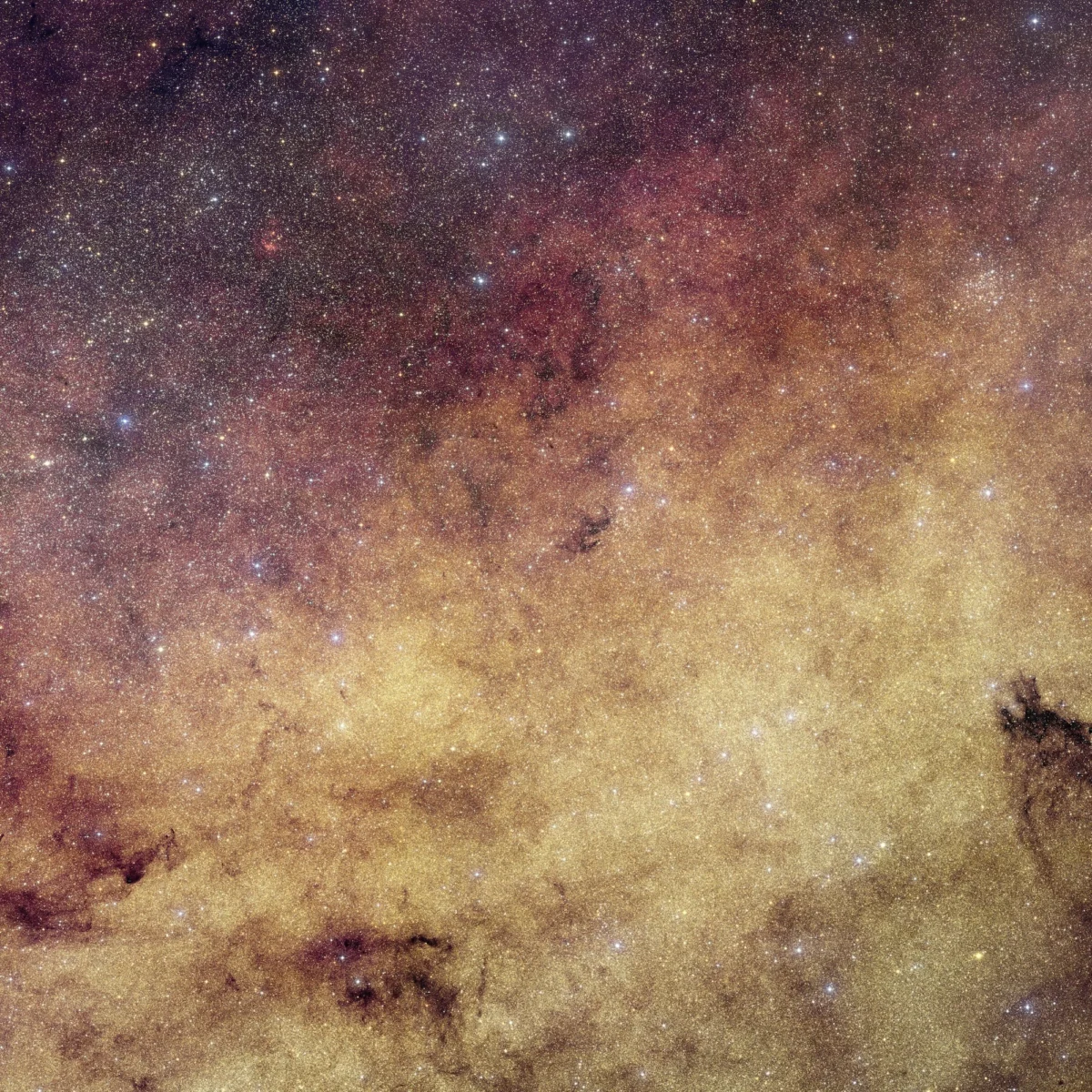
In a landmark achievement for space exploration, the European Space Agency’s (ESA) Euclid mission has unveiled the highest-resolution imagery ever captured of the Milky Way’s dense, luminous core. Released in March 2025, this sprawling mosaic offers an unprecedented view of the "galactic bulge," a region teeming with billions of stars, complex molecular clouds, and the elusive signatures of planetary systems orbiting distant suns. This mission marks a turning point in our ability to map the architecture of our home galaxy, providing a canvas for astronomers to study the distribution of mass and the evolution of stellar populations with unprecedented clarity.
The Galactic Bulge: A Cosmic Crossroads
The center of our galaxy, known as the galactic bulge, is a region of immense complexity. It is a tightly packed, three-dimensional structure where the density of stars is significantly higher than in the spiral arms we inhabit. According to the ESA, this region is dominated by older, cooler stars, which imbue the core with a distinctive, warm yellow hue.
However, the beauty of the image is secondary to its scientific utility. By utilizing Euclid’s advanced visible-light sensors, researchers are performing "galactic archaeology," parsing through the 60 million individual stars captured in the frame to understand how the galaxy was formed and how it continues to change. The presence of dark, amorphous splotches—molecular clouds and nebulae—serves as a stark reminder of the chaotic, dust-filled environment that defines the heart of the Milky Way, blocking our view of the more distant stars while simultaneously providing the raw material for new solar systems to be born.
Chronology: A Mission of Precision
The path to this breakthrough began years prior to the March 2025 data release, rooted in the foundational objectives of the Euclid mission.

- July 2023: Euclid launches from Cape Canaveral, Florida, atop a SpaceX Falcon 9 rocket, destined for the second Lagrange point (L2), a stable gravitational point in space.
- Late 2023 – Early 2024: The telescope undergoes rigorous calibration of its Visible Instrument (VIS) and Near-Infrared Spectrometer and Photometer (NISP). Scientists ensure that the thermal stability of the instrument is sufficient for long-exposure, high-resolution imaging.
- Mid-2024: Euclid begins its primary survey of the cosmos, focusing on the dark energy and dark matter distribution, but also dedicating significant time to the galactic plane.
- March 2025: The ESA officially releases the Galactic Bulge Survey imagery. The data is processed and integrated into the ESASky interface, allowing both professional astronomers and the public to interact with the high-definition mosaic.
Supporting Data: Why Euclid Changes the Game
To understand the significance of Euclid, one must look at the technical specifications that separate it from its predecessors. While the Hubble Space Telescope has long been the gold standard for high-resolution imaging, Euclid introduces a unique combination of sharpness and wide-field coverage that is unprecedented in astronomical history.
The Power of Field-of-View
The ESA notes that Euclid’s sensitivity in visible light is comparable to the Hubble Space Telescope’s Wide Field Camera. However, the true advantage lies in the scale. A single pointing by Euclid covers an area roughly 270 times larger than that of Hubble. To put this into perspective, if the Keck Observatory—a world-class ground-based facility—were tasked with capturing the same mosaic, it would require approximately 2,000 hours of continuous observation. Euclid accomplishes this in mere hours, effectively turning "surveying the sky" from a multi-year project into a task that can be completed in a fraction of the time.
The Science of Microlensing
The image is not just a photograph; it is a tool for discovery. Astronomers are currently using this data to identify exoplanets via a phenomenon known as gravitational microlensing. When a star with a planet passes directly in front of a more distant star, the gravity of the foreground star (and its planet) acts as a magnifying lens, causing a temporary spike in the light observed from the background star. By monitoring these subtle fluctuations in light, scientists can infer the mass, distance, and orbital characteristics of planets that are otherwise impossible to see directly.
Official Responses and Expert Insights
The scientific community has responded to the release with considerable enthusiasm. Dr. René Laureijs, ESA’s Euclid Project Scientist, remarked during the release that "the ability to see both the broad structure of the galaxy and the fine detail of individual stars is the holy grail of observational astronomy."

The mission team has emphasized that the "dark splotches" visible in the image—which appear as voids—are actually the most active sites of star formation. "These molecular clouds are the nurseries of the galaxy," explains one researcher involved in the data processing. "They are opaque to our eyes, but in the context of this image, they act as the perfect backdrop to showcase the depth of the galactic bulge. They provide the contrast necessary to perceive the sheer scale of the stellar population behind them."
Implications for the Future of Astronomy
The data provided by Euclid is expected to fuel research for at least the next decade. There are several key areas where this image will have a lasting impact:
Mapping the "Dark" Galaxy
While the image shows 60 million visible stars, it is also being used to map the invisible. By measuring the motion and distribution of stars, scientists can better understand the gravitational influence of dark matter, which is thought to be the scaffolding that holds the spiral galaxy together.
Expanding the Exoplanet Census
Prior to Euclid, much of our exoplanet data came from missions like Kepler or TESS, which focused on different regions of the sky. By targeting the dense, crowded regions of the galactic bulge, Euclid is opening a new frontier in planet hunting. Understanding how planets form in high-density environments—where stellar encounters are more frequent—could reveal whether the conditions for life are universal or unique to the quieter regions of the galaxy.

Advancing Computational Astronomy
The sheer volume of data returned by Euclid represents a challenge in big data analytics. The image processing pipelines required to stitch together these millions of stars into a seamless, high-resolution mosaic serve as a blueprint for future missions, such as the Nancy Grace Roman Space Telescope.
Conclusion: A Window into Our Origins
The Euclid image of the Milky Way’s heart is more than a technological marvel; it is a historical record. Every star captured in this frame represents a solar system, a potential host for planetary bodies, and a chapter in the long, complex history of our galaxy. As the ESA continues to process the full breadth of Euclid’s data, we are moving closer to answering fundamental questions about the nature of the cosmos.
For those interested in exploring these cosmic depths, the ESA has made the full mosaic available through the ESASky portal. As we zoom into the glowing, golden center of our galaxy, we are not just looking at a collection of light; we are looking at our own cosmic origin story, brought into focus with a clarity that was, until recently, beyond the reach of human engineering. The mission is far from over, but with the galactic bulge now in its sights, Euclid has already secured its place as one of the most important instruments in the history of astronomy.