
 Ammar Sabilarrohman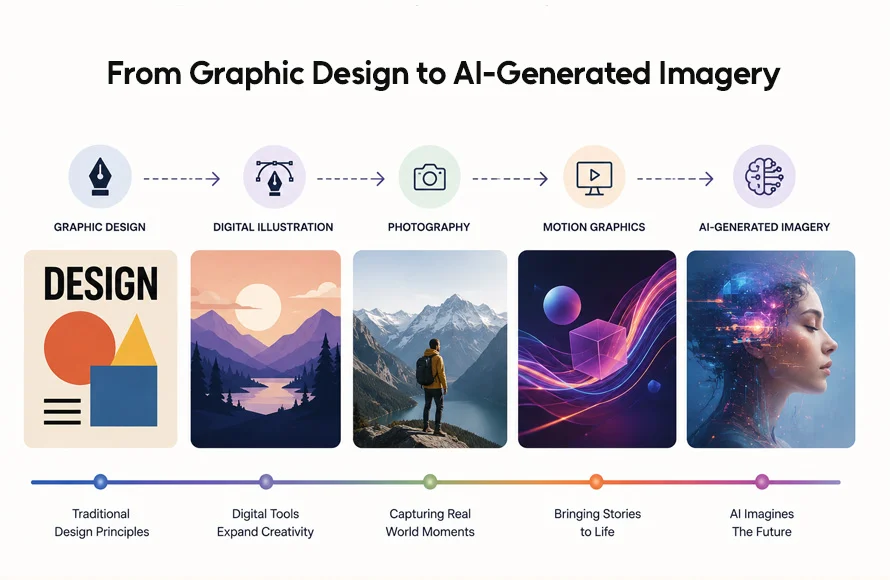
Every day, a silent, relentless deluge of imagery flows across the screens of billions. From the flicker of a short-form video to the carefully curated infographic in a corporate slide deck, visual communication has evolved from a supplementary design element into the primary language of the modern era. It is a universal medium that transcends linguistic barriers, compresses profound societal shifts into a single glance, and triggers visceral emotional responses with a speed that text simply cannot match.
In an age defined by hyper-connectivity, our collective memory is no longer written solely in ink; it is encoded in pixels, icons, and aesthetic trends. This article examines the mechanics of visual influence, the neurological foundations of our response to imagery, and the strategic imperatives for organizations navigating a world where "seeing is believing" has become a complex, often volatile, reality.
The Chronology of Visual Dominance: From Symbols to Algorithms
For centuries, visual symbols served as the bedrock of identity. Religious iconography, heraldic flags, and intricate textile patterns provided a silent lexicon of belonging. However, the digital revolution has fundamentally altered the tempo and reach of these symbols.

Historically, cultural transmission was a slow, deliberate process of migration and trade. Today, the cycle of cultural diffusion has been compressed into hours. A protest graphic conceived in a design studio in one hemisphere can be translated, repurposed, and displayed on placards across three continents before the sun sets.
The digital shift has been marked by three distinct phases:
- The Static Era: Where branding and cultural symbols were fixed, local, and slow to evolve.
- The Global Connectivity Era: The advent of the internet allowed for the mass export of aesthetics, leading to the "homogenization" of global design trends.
- The Algorithmic Era: We now live in an era where platforms like TikTok, Instagram, and Pinterest function as cultural amplifiers. Algorithms dictate the visibility of imagery, rewarding specific visual styles with massive reach, effectively turning niche subcultural aesthetics into mainstream global norms.
The Neuroscience of Sight: Why Images Rule the Brain
The preference for visual information is not a modern trend—it is a biological imperative. Neuroscience dictates that the human brain processes visual imagery approximately 60,000 times faster than text. This is a survival mechanism honed over millennia, allowing humans to assess threats or opportunities in a fraction of a second.

When an organization employs a high-impact photograph or a striking data visualization, it effectively bypasses the slower, analytical pathways of the prefrontal cortex, engaging the limbic system—the brain’s emotional center—directly. This "emotional anchoring" is why a single image of a humanitarian crisis often generates more immediate empathy and tangible support than a ten-page policy white paper.
The Power of Cognitive Load Reduction
In a digital economy defined by the "attention recession," clarity is the ultimate currency. Well-executed infographics do not just "look good"—they reduce cognitive load. Research indicates that when information is paired with relevant visuals, retention rates jump from 10% to 65% after three days. For organizations, this means that visual communication is not a creative "add-on" but a strategic necessity for effective knowledge transfer.
Supporting Data: The Impact of Visual Strategy
| Metric | Impact of Visuals |
|---|---|
| Processing Speed | 60,000x faster than text |
| Retention (3 days) | 65% with images vs. 10% text-only |
| Engagement | Posts with images receive 94% more views |
| Trust Building | 70% of consumers cite visual consistency as a key factor in brand loyalty |
Data derived from industry studies on perceptual psychology and digital engagement.

The New Frontier: AI, Ethics, and Authenticity
The democratization of creative tools—powered by generative AI—has created a paradigm shift. We have moved from an era of "content creation" to one of "creative orchestration." AI models can now generate photorealistic imagery, bespoke marketing assets, and complex concept art in minutes.
While this allows for unprecedented scale, it introduces a profound crisis of authenticity. When synthetic content becomes indistinguishable from reality, the foundational trust between the audience and the message is threatened. Organizations must now grapple with the legal and ethical implications of using AI, ensuring that their visual output does not cross the line into deception.
For technical teams, the challenge is infrastructure. Running high-fidelity AI models at scale requires robust, managed cloud solutions. As noted by industry experts, organizations that utilize scalable platforms like IONOS for AI model hosting are better positioned to manage these workloads without the latency issues that can derail real-time visual engagement strategies.

Implications for Organizations and Brand Identity
For brands and institutions, the implications of this visual-first landscape are significant. A visual strategy can no longer be delegated to a junior designer; it must be a boardroom-level priority.
1. The Death of the "One-Size-Fits-All" Campaign
Cultural associations with color, typography, and iconography are not universal. A color that denotes purity in one region may symbolize mourning in another. A "thumbs up" gesture, while innocuous in the West, can carry offensive connotations elsewhere. Failure to conduct cross-cultural research into visual semiotics is not just a branding error; it is a significant reputational risk.
2. The Mandate for Accessibility
Visual communication is a tool for inclusion, but only if it is accessible. The failure to include alt-text, maintain sufficient color contrast, or provide captions for video content excludes millions of users. True visual communication strategy treats accessibility as a core design principle, not an afterthought.

3. The "Living" Style Guide
Consistency breeds trust. Organizations must maintain a "living" style guide that encompasses not just logos and fonts, but photographic tone, motion graphics, and even the "personality" of AI-generated assets. This consistency acts as a mental shorthand, allowing the audience to recognize and trust the brand in an increasingly cluttered digital space.
Official Perspectives: The Role of Ethical Oversight
Industry leaders, including ethics boards in journalism and advertising, have begun calling for a "Truth in Imagery" framework. The primary consensus is that while the medium may be changing, the responsibility remains the same.
"The ability to manipulate reality through AI does not absolve the creator of the duty to truth," says a spokesperson for the Global Design Ethics Council. "When we use visual storytelling to drive impact, we are entering into a social contract with the viewer. If that contract is broken by deceptive synthetic media, the organization loses more than just a campaign—it loses its legitimacy."

Conclusion: Designing the Future
Visual communication is the architecture of modern thought. As we look toward the future, the organizations that thrive will be those that balance technological innovation with human-centric design. By prioritizing ethical oversight, investing in cross-cultural research, and leveraging high-performance cloud infrastructure, brands can move beyond mere "content production."
Instead, they will engage in a higher form of storytelling—one that resonates with the human brain’s deepest instincts, fosters genuine trust across borders, and shapes the cultural narratives of tomorrow. The visual landscape is vast and, at times, overwhelming; yet, for those who master its language, it offers an unparalleled opportunity to connect, influence, and lead in a rapidly shifting world.


 Dwi Wanna
 Lina Irawan




