

In the ever-evolving landscape of modern comics, the sheer volume of high-quality releases often outpaces the capacity for long-form critical analysis. This week at Graphic Policy, we shift our focus to our "Mini Reviews and Recommendations"—a curated deep dive into the latest offerings from the industry’s heavy hitters. From the gritty, socially conscious re-imaginings of the DC Absolute line to the psychedelic horror experiments emerging from Image Comics, this week’s batch highlights a medium currently obsessed with deconstructing the very archetypes it helped create.
The State of the Industry: A Mid-Year Pulse Check
The current comic book market is defined by a dichotomy: legacy publishers are leaning into "Absolute" or "Ultimate" reboots to strip characters down to their rawest potential, while indie imprints are pushing the boundaries of genre hybridity. As we navigate mid-2026, the trend suggests that readers are no longer content with status-quo superhero storytelling. They are looking for narratives that mirror the anxieties of the real world—economic disparity, the rise of radicalization, and the erosion of institutional trust.
1. Absolute Green Arrow #1 (DC Comics)
Verdict: Must Buy (Score: 10/10)
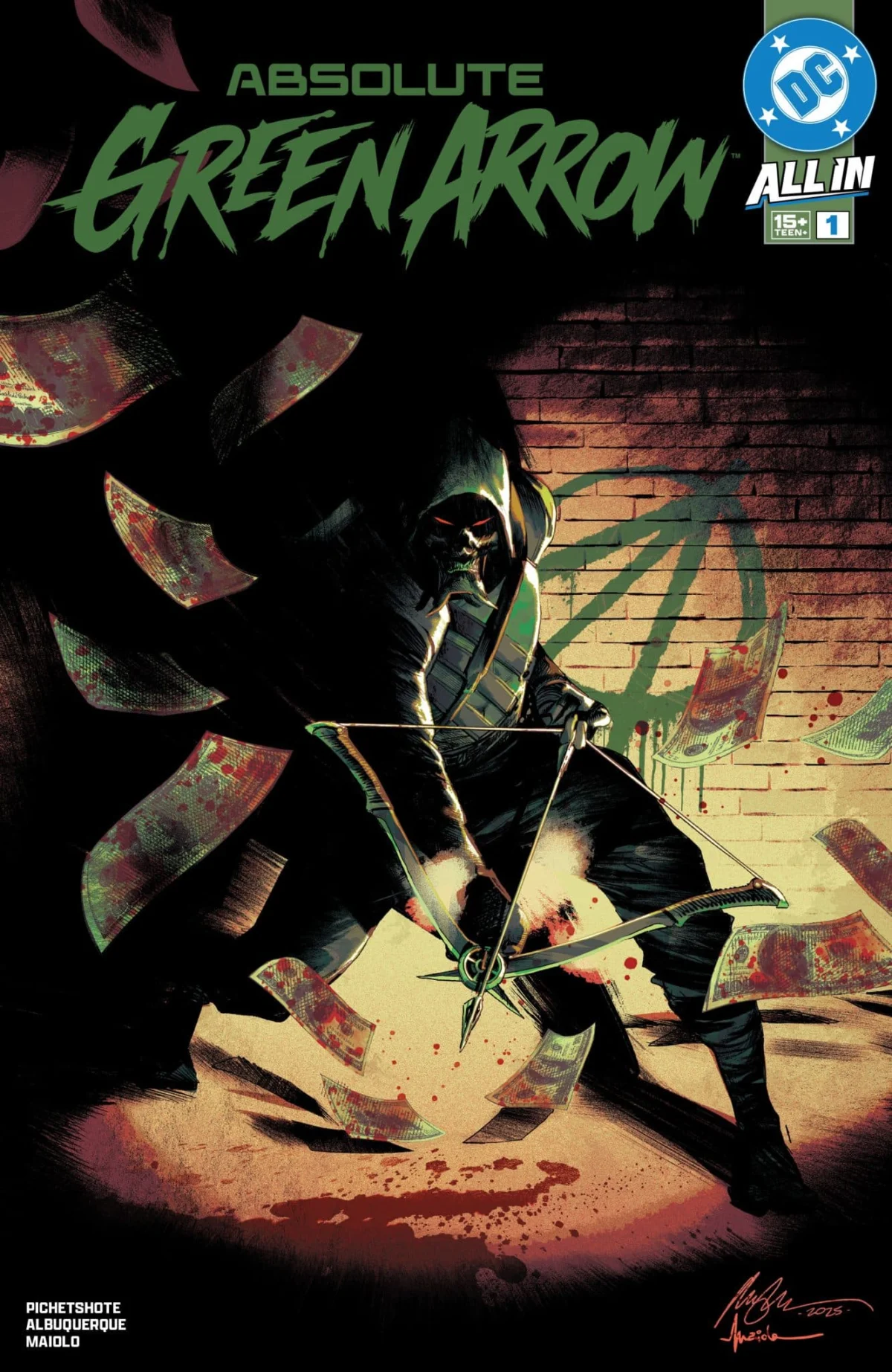
Pornsak Pichetshote, Rafael Albuquerque, and Marcelo Maiolo have delivered what is arguably the strongest launch of the year with Absolute Green Arrow #1. Set in the aftermath of the Absolute Evil event, the narrative introduces a world where the lines between hero and vigilante have been irreparably blurred.
The story follows Dinah Lance, an investigator working in a world where former business moguls—and polarizing figures like Oliver Queen and the monstrous Jubal Slade—are being targeted for assassination. Pichetshote’s writing shines by centering Dinah, a character driven by a desperate need to support her father’s healthcare costs, forcing her to work for the very elite she loathes. The narrative is sharp, timely, and unflinchingly grim. Visually, Albuquerque and Maiolo provide a kinetic, gritty aesthetic that feels like a noir thriller filtered through the lens of modern urban decay. It is a masterclass in establishing a new, darker status quo.
2. Sirens: Love Hurts #4 (DC/Black Label)
Verdict: Must Buy (Score: 9.8/10)
Tini Howard’s Sirens: Love Hurts has concluded its run, cementing itself as a high-water mark for character-driven DC Black Label stories. By focusing on the shifting dynamics between Poison Ivy, Harley Quinn, Black Canary, and Catwoman, Howard avoids the trap of generic team-up books.
The finale delivers a cathartic showdown with the antagonist "Horoscope," but the true strength lies in the quiet, character-focused moments—specifically the dialogue between Batman and Catwoman. Babs Tarr’s character work, coupled with Miquel Muerto’s immaculate color palette, turns every page into a visual feast. It is a rare series that manages to balance high-stakes action with deep, resonant emotional intelligence.
3. Odin #1 (Image Comics)
Verdict: Must Buy (Score: 8.1/10)
Marguerite Bennett and James Tynion IV tackle the chilling reality of modern extremist radicalization in Odin #1. Following undercover journalist Adela as she infiltrates a Gen Z Odinist group, the comic quickly spirals from an investigative thriller into something far more hallucinatory and disturbing.
Letizia Cadonici’s art, paired with Jordie Bellaire’s colors, uses the barren, desolate landscape of the camp to emphasize the isolation of the characters. When the narrative turns, the switch to jarring, visceral reds and a looser, more frantic art style effectively conveys the loss of control. It is a difficult, uncomfortable read that hits close to home, but it is an essential piece of contemporary horror.
4. Of the Earth #1 (Image Comics)
Verdict: Must Buy (Score: 8.0/10)
Chris Condon and Andrew Ehrich, with legendary artist Charlie Adlard and Pip Martin, have crafted a masterpiece of atmospheric noir. Set in the desolate landscape of Solitude, Texas, Of the Earth uses an ingenious blend of in-universe ephemera—oil company memos and fictionalized documents—to ground its horror in a tangible, decaying reality.
The story follows Tabby, a protagonist whose inherent empathy makes her an outsider in a town defined by cruelty. The pacing is deliberate, building tension through small, horrific vignettes, such as an encounter with a Duel-inspired truck. It is a unique genre-bender that explores the intersection of environmental exploitation and cosmic dread.
5. The Umbrella Academy: Plan B #4 (Dark Horse)
Verdict: Read (Score: 7.5/10)
After a period of dormancy, the Umbrella Academy is finding its footing again. Gerard Way and Gabriel Bá continue to excel when focusing on the dysfunctional family dynamics that made the series a cultural phenomenon. While the plot involving parallel timelines can occasionally feel redundant—borrowing heavily from the tropes established in earlier volumes—the character work remains stellar.
Allison’s internal monologue regarding her time in the Hotel Oblivion prison is a standout moment of writing. Bá and Dave Stewart continue to provide visuals that are, quite simply, unparalleled in their "gorgeously bonkers" execution.
6. Reborn: Ultimate Impact #1 (Marvel)
Verdict: Pass (Score: 6.1/10)
In the crowded landscape of the new Ultimate Universe, Reborn: Ultimate Impact #1 struggles to find its own identity. While Chris Condon and Stefano Caselli provide some visually engaging panels, the book suffers from an overstuffed plot that attempts to juggle too many disparate elements—from Earth-6160 death cults to the inclusion of Miles Morales and a host of generic new heroes.
The title itself feels like a corporate "cash-in," lacking the cohesive, high-concept vision seen in Deniz Camp’s Ultimates. While the introduction of a new "Wonder Man" shows potential, the lack of a clear throughline makes this a difficult recommendation for anyone not already deeply invested in the wider Ultimate U ecosystem.
Chronology of Trends: Why Now?
The industry’s current fixation on "Absolute" and "Ultimate" universes represents a strategic shift in the comic book market. By 2026, the exhaustion regarding decades-long continuity has reached a tipping point. Publishers are finding that modern readers respond to "start-from-scratch" narratives that maintain the spirit of legacy characters while removing the baggage of 60 years of confusing lore.
Key Factors Driving the Current Market:
- Narrative Decompression: Writers are prioritizing slow-burn, atmosphere-heavy storytelling, as seen in Of the Earth.
- Genre Blending: Superheroes are being increasingly utilized as a framework for other genres, such as horror, noir, and political satire (Odin and Absolute Green Arrow).
- Visual Evolution: The role of the colorist has become more prominent, with artists like Jordie Bellaire and Marcelo Maiolo defining the emotional tone of the book as much as the line art itself.
Implications for the Future of Sequential Art
The success of Absolute Green Arrow and Sirens: Love Hurts indicates that readers are demanding a higher level of social awareness in their comics. The industry is moving away from the "hero as an untouchable icon" and toward "hero as an agent of chaotic, often tragic change."
As we look toward the remainder of 2026, the publishers that will thrive are those that continue to empower creator-led projects that challenge, rather than comfort, the audience. The "Absolute" line, in particular, is proving that a reimagining of established IP is not just a marketing gimmick, but a creative necessity to keep these characters relevant to a generation that views the world through a lens of systemic critique.
Final Recommendations
If you are looking to invest in one new series, Absolute Green Arrow is the clear standout, offering a synthesis of sharp writing and breathtaking art that feels perfectly calibrated for the current zeitgeist. For those seeking a darker, more experimental experience, Odin remains a haunting, must-read exploration of the shadows within our society. As always, the comics medium continues to act as a mirror to our own reality—sometimes, that reflection is beautiful; other times, as these books show us, it is terrifyingly clear.









No comments yet. Be the first to join the conversation!