

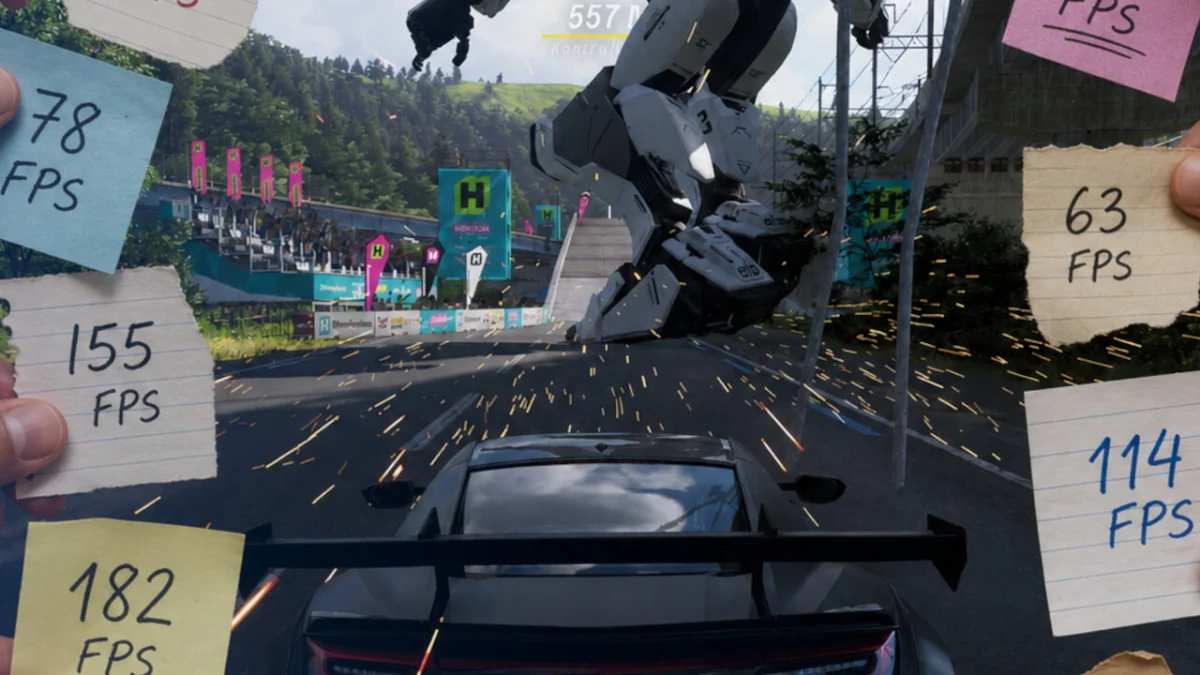
As we conclude the 20th week of 2026, the technology landscape continues to shift at a breakneck pace. This past week saw a flurry of activity at ComputerBase, with 85 news reports and two comprehensive hardware reviews published. From the high-octane virtual racetracks of Forza Horizon 6 to the transformative integration of generative AI into home assistants and the rapid expansion of residential renewable energy storage, the week has been a microcosm of current tech trends.
This summary serves as your guide to the most impactful developments of the week, offering deep dives into the performance metrics of the latest AAA titles, the maturation of AI-driven voice assistants, and the hardware that promises to power our homes more efficiently.
The Main Facts: A Week of High-Performance Computing and AI
The headlines this week were dominated by the intersection of high-fidelity gaming and intelligent automation. The release of Forza Horizon 6 has provided a new stress test for current-generation graphics cards, while Amazon’s "Alexa+" early access program offers a glimpse into the future of conversational AI. Simultaneously, the energy sector is seeing significant hardware leaps, with Anker Solix pushing the boundaries of what home balcony solar setups can achieve.
Chronology of Key Events
- Monday: Launch of the Forza Horizon 6 technical analysis, focusing on graphical fidelity and scaling.
- Tuesday: Early access impressions of Alexa+, marking a shift from scripted commands to context-aware intelligence.
- Wednesday: Analysis of the Anker Solix Solarbank 4 Pro, highlighting a massive jump in battery capacity.
- Thursday: In-depth discussion on the podcast regarding the future of community-driven hardware benchmarks.
- Friday/Saturday: Finalization of upcoming reviews for mechanical keyboards and budget-friendly graphics solutions.
Gaming Performance: The Forza Horizon 6 Technical Benchmark
Forza Horizon 6 is more than just a racing game; it is a showcase of modern rendering technology. Our recent performance review, which included extensive testing on Nvidia GeForce, AMD Radeon, and Intel Arc architectures, underscores the sheer demand for raw graphical power in 2026.
The Technical Landscape
The game’s engine is a testament to the progress in raytracing and AI-driven upscaling. Our testing focused on two primary pillars: DLSS 4 and FSR 4.1. The implementation of these technologies is critical for users aiming for high frame rates at 4K resolution. While the game is optimized to handle a wide range of hardware, the "Ultra" preset remains a formidable gatekeeper.
- Nvidia Performance: The latest RTX 50-series cards continue to dominate when raytracing is engaged, with DLSS 4 providing a significant overhead advantage.
- AMD & Intel: The Radeon RX 8000-series and Intel’s latest Arc offerings show impressive raw rasterization, though FSR 4.1 remains essential for maintaining fluid gameplay at higher fidelity settings.
- Raytracing Impact: Forza Horizon 6 utilizes raytraced reflections and global illumination, which, while visually stunning, demand significant VRAM and compute resources.
For gamers, the takeaway is clear: while entry-level cards can play the game, the full visual experience—complete with high-fidelity raytracing and sharp upscaling—requires a top-tier GPU investment.
The AI Revolution: Alexa+ Enters the Fray
Perhaps the most significant non-gaming story of the week is the rollout of "Alexa+," Amazon’s attempt to revitalize its voice assistant through advanced generative AI.
From "Dumb Assistant" to Intelligent Agent
For years, voice assistants were limited to a static library of pre-programmed commands. Alexa+ breaks this paradigm. During our early access testing, the difference was palpable. Unlike the traditional Alexa, which often struggled with complex requests or conversational context, Alexa+ demonstrates a sophisticated understanding of intent.
Early Impressions:
- Contextual Awareness: The assistant can now link multiple requests. You can ask for a travel itinerary and follow up with a question about weather or transport without repeating the subject.
- Latency Challenges: One notable drawback remains speed. The processing required for generative AI is heavier than simple command-and-control logic, leading to slightly longer response times than users have been accustomed to.
- Reliability: It is not perfect yet. We encountered instances where the model misinterpreted complex queries, but the overall trajectory suggests that the "dumb" era of virtual assistants is drawing to a close.
Sustainable Tech: Scaling Up Solar Storage
With the summer months approaching, energy independence has become a focal point for many consumers. The introduction of the Anker Solix Solarbank 4 Pro represents a significant leap in the balcony power plant category.
Technical Specifications and Implications
The Solarbank 4 Pro is not just an incremental update; it is a major power upgrade.
- Capacity: The system now offers 5 kWh of storage, nearly doubling the 2.7 kWh capacity of the Solarbank 3 Pro.
- MPPT Efficiency: With four Maximum Power Point Trackers (MPPT), the system can capture up to 5,000 watts of solar input, making it highly versatile for varied lighting conditions throughout the day.
- Off-Grid Utility: A major inclusion is the 2,500-watt AC output, which allows the system to act as an emergency power supply, enabling users to run appliances even during grid failures.
This advancement signifies a broader trend: consumer-grade renewable energy systems are becoming sophisticated enough to provide meaningful load-shifting, reducing reliance on the grid during peak hours.
The Podcast: Shaping the Future of Benchmarks
In this week’s installment of the ComputerBase podcast, Jan and Fabian dove deep into the nuances of Forza Horizon 6. However, the most interesting segment involved the future of community benchmarks.
The editorial team is preparing to elevate community-sourced data to a professional standard. Starting next week, the site will begin a new initiative to integrate reader-submitted benchmark data for Forza Horizon 6. This collaborative approach aims to capture a broader range of hardware configurations than any single lab could test, providing a more representative picture of how games perform in the "real world" of diverse PC builds.
Looking Ahead: The Pipeline
As we move into the next week, the editorial schedule is packed with hardware that caters to different segments of the market:
- Mechanical Keyboards: We will be reviewing two new keyboards that take vastly different approaches to form factor and switch feel—one focused on enthusiast customization and the other on industrial efficiency.
- Budget Graphics: Recognizing the need for accessible gaming, we are testing a series of graphics cards priced under 300 Euros. These cards are the lifeblood of the mid-range market, and our tests will focus on price-to-performance ratios in modern titles.
- Cooling and Storage: We have a new CPU cooler on the bench designed for high-TDP processors, as well as a high-speed USB 4.0 enclosure that promises to redefine external drive performance.
Final Thoughts
The 20th week of 2026 has been a testament to the rapid maturation of home-based technology. Whether it is the AI integration transforming our voice assistants, the computational power being squeezed out of modern gaming engines, or the increasing capacity of our home energy solutions, we are witnessing a period of profound growth.
We hope this digest provides the necessary context for your weekend reading. As always, the editorial team remains committed to providing the most rigorous and transparent testing in the industry. We look forward to your feedback on the new community-driven benchmark initiatives and wish you a restful and productive Sunday.
For those interested in the full technical breakdowns of the aforementioned hardware and software, please refer to the detailed reports published throughout the week on the ComputerBase main page.












No comments yet. Be the first to join the conversation!