

The Triumphant Outsider: A New Era for Bulgarian Pop
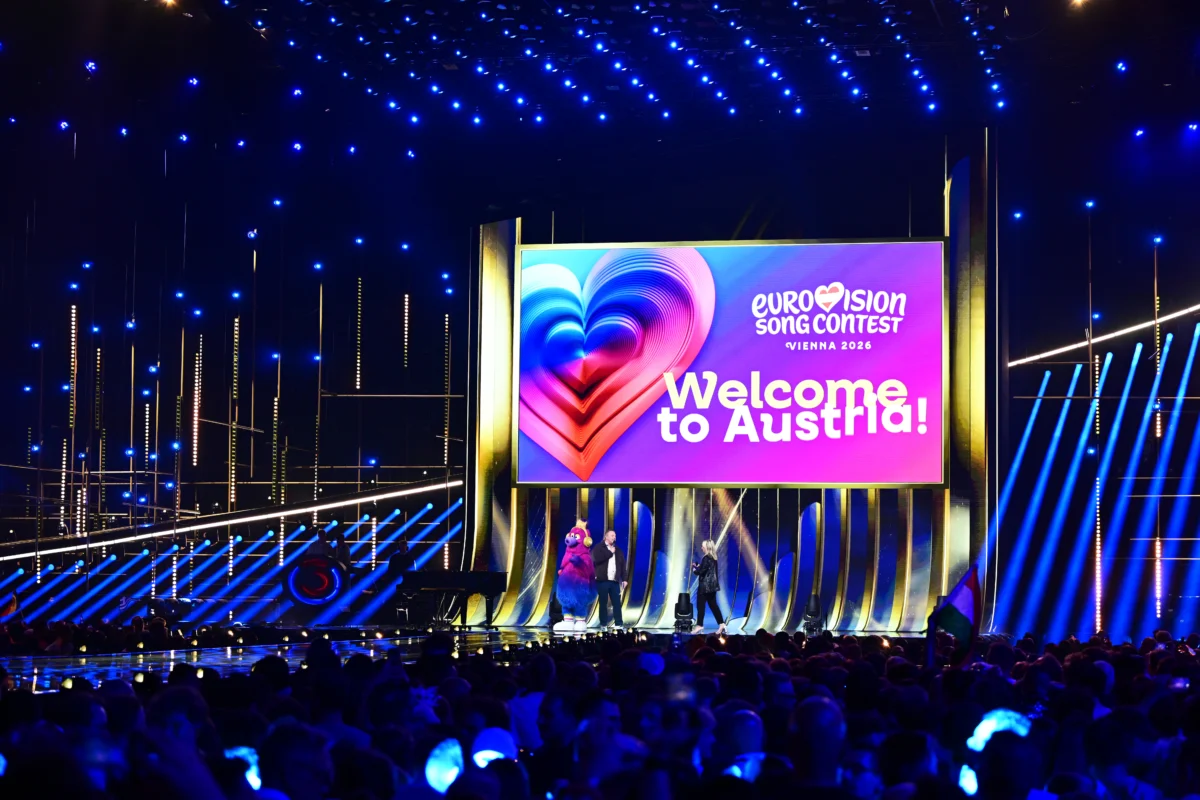
In a night defined by high-stakes tension and a global audience of 160 million, Bulgaria defied the oddsmakers to secure its first-ever Eurovision Song Contest title. Entering the final at Vienna’s Wiener Stadthalle as a long-shot contender—sitting well outside the top five in pre-show betting markets—Bulgaria’s entry, pop sensation Dara, delivered a masterclass in stage presence. Her infectious dance-hall anthem, "Bangaranga," captivated both the international jury panels and the public vote, catapulting the nation to the top of the leaderboard.
For a country that only joined the Eurovision family in 2005 and has reached the final stage only five times in its history, the victory marks a watershed moment. As the final points were tallied, it became clear that "Bangaranga" had resonated with a broad, cross-cultural demographic. While the term itself remains linguistically elusive, Dara offered a poignant interpretation during a post-show press conference: "It is the feeling that everybody gets in themselves the moment you choose to lead through love and not fear." This message of resilience and optimism proved to be the winning formula in an otherwise polarized arena.
A Geopolitical Nailbiter: The Clash of Narratives
While the musical performance was stellar, the evening was inextricably linked to the geopolitical realities of the Middle East. The competition, which has long prided itself on being a non-political event, found itself at the epicenter of international controversy due to the participation of Israel.
The contest became a psychological duel between the eventual winners and the Israeli entry, performed by Noam Bettan. Bettan, a child of French immigrants to Israel, drew widespread attention for "Michelle," a soaring power ballad that many analysts interpreted as a metaphor for the fraught, complex relationship between the Jewish people and the European continent.
Midway through the popular vote, Israel surged into a commanding lead, having climbed from an eighth-place finish in the jury rankings. For several agonizing minutes, it appeared as though Israel might secure its fifth Eurovision title. The atmosphere inside the Wiener Stadthalle reached a fever pitch during the final moments of the broadcast, as the cameras cut to a split-screen featuring both Dara and Bettan. The visual juxtaposition triggered a visceral response from the crowd; the air was thick with a cacophony of booing, which was immediately countered by supporters shouting "Am Yisrael Chai" (The People of Israel Live).
The uncertainty kept the world in suspense until the final envelope was opened, confirming that Bulgaria had narrowly edged out the Israeli entry.
Chronology of a Contentious Night
The Saturday final was the culmination of a week-long series of events that tested the logistical and diplomatic capabilities of the host city, Vienna.
- Pre-Show Preparations: With five nations opting to boycott the event in protest of Israel’s inclusion, the security landscape was unprecedented. Vienna authorities deployed 500 private security personnel, installed 180 high-definition surveillance cameras, and utilized counter-drone technology and specialized sniffer dogs to secure the perimeter.
- The Jury Vote: The evening began with a strong performance by the technical juries, where Bulgaria established an early lead. Romania’s representative, Alexandra Căpitănescu, a physics graduate student, surprised observers with a third-place finish for her track "Choke Me," an intense, gothic-inspired composition that subverted the traditional tropes of pop music.
- The Popular Vote: As the tele-voting results began to roll in, the dynamics shifted. Israel’s dramatic climb caused a massive surge in engagement across social media platforms, with the hashtag #Eurovision trending globally.
- The Climax: The final tallying of the popular vote narrowed the gap between the top two, culminating in the announcement that secured Bulgaria’s victory.
- The Aftermath: The event concluded with the official announcement that Sofia, the capital of Bulgaria, will host the 2025 Eurovision Song Contest, setting the stage for a new chapter in the nation’s cultural diplomacy.
Supporting Data and Performance Analysis
The statistical breakdown of this year’s contest reveals a widening gap between traditional musical favorites and the voters’ preferences. Pre-final betting favorites—including Australia, Finland, and Greece—failed to crack the top three, indicating a shift in audience appetite toward high-energy, narrative-driven performances.
| Country | Artist | Song | Final Standing |
|---|---|---|---|
| Bulgaria | Dara | "Bangaranga" | 1st |
| Israel | Noam Bettan | "Michelle" | 2nd |
| Romania | Alexandra Căpitănescu | "Choke Me" | 3rd |
Israel’s performance is particularly notable in the context of its recent history in the competition. The nation previously finished as the runner-up last year with a song involving Yuval Raphael, a survivor of the Nova Massacre. The continued success of Israeli artists, despite the intense external pressure, highlights the strength of their songwriting and the support of a global fan base that transcends political borders.
Official Responses and Security Implications
The security measures taken by Vienna were not merely local; they were part of an international effort. Recognizing the potential for digital interference, the City of Vienna collaborated with an FBI task force based in New York to monitor and mitigate cyber threats against the Eurovision broadcasting infrastructure. This unprecedented level of cooperation underscores the extent to which the contest has become a critical target for information warfare and cyber-espionage.
European Broadcasting Union (EBU) officials have remained tight-lipped regarding the protests, officially maintaining the stance that Eurovision is a "non-political music event." However, behind the scenes, there is growing concern that the increasing politicization of the show could jeopardize its future viability. "We are here to celebrate music," said one event organizer on condition of anonymity, "but when the world’s most pressing conflicts find a stage in the arena, the goal of unity becomes increasingly difficult to protect."
The Geopolitical Implications of the 2025 Host
Bulgaria’s victory is not merely a triumph of pop music; it is a significant boost to the nation’s international profile. Hosting an event of this magnitude requires a massive investment in infrastructure, tourism, and security. By bringing the contest to Sofia, Bulgaria will effectively transition from a participant to a central player in the European cultural narrative.
The implications for Israel are equally significant. Despite the protests and the calls for boycotts, the country demonstrated a remarkable ability to remain a central, albeit polarizing, fixture in global entertainment. The "Michelle" phenomenon, regarded by critics as a poignant reflection of the Jewish experience in Europe, has solidified the country’s reputation for producing emotionally resonant and culturally significant entries.
As the dust settles in Vienna and the focus shifts toward Bulgaria, the 2024 Eurovision Song Contest will be remembered as the year that the "banger" met the "barrier." While the music of Dara and the artistry of Noam Bettan provided the soundtrack, it was the underlying currents of global politics that dictated the pulse of the evening. Whether the contest can return to its roots as a purely musical celebration, or whether it will continue to be a mirror for the world’s deepest divisions, remains to be seen in the lead-up to the 2025 competition.











No comments yet. Be the first to join the conversation!