

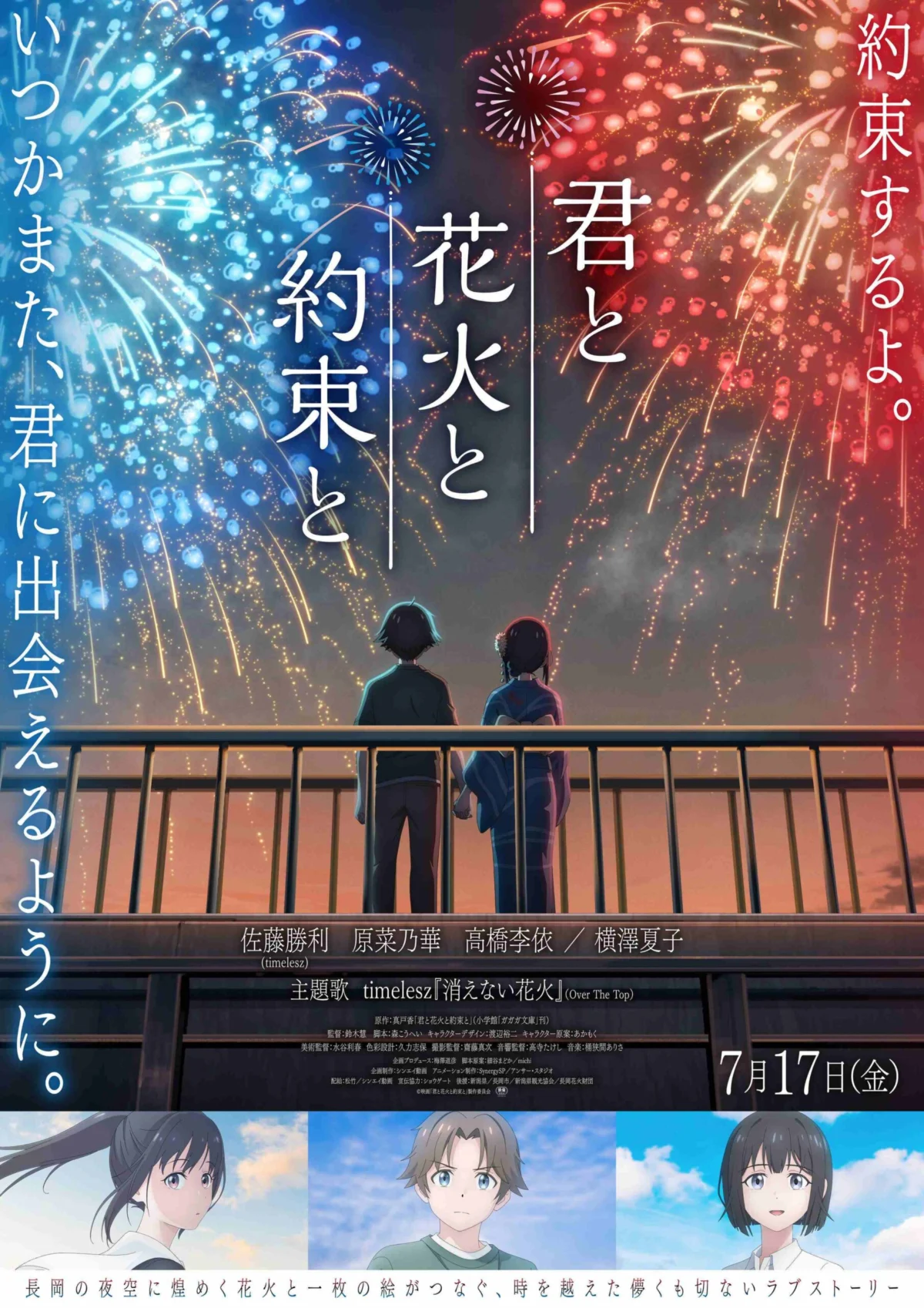
The highly anticipated anime film adaptation of Kaori Mado and Akamoku’s beloved light novel, Kimi to Hanabi to Yakusoku to (translated as You, Fireworks, and Our Promise), is officially gearing up for its Japanese theatrical premiere on July 17th. The official website has recently unveiled a wealth of new information, including the addition of prominent voice actresses to its cast, a talented team of animation professionals, the evocative theme song, a captivating key visual, and the release of its first full trailer, sending ripples of excitement through the anime community.
Unveiling the Stellar Cast and Dedicated Creative Team
Adding significant star power to the project, veteran voice actresses Rie Takahashi and Natsuko Yokosawa have been confirmed to lend their voices to pivotal characters. Rie Takahashi, renowned for her roles in popular series such as Kanojo, Okarishimasu (Rent-a-Girlfriend) and Komi Can’t Communicate, will portray the character of Haru. She will be joined by Natsuko Yokosawa, known for her work in Bokura no Yoake (Drifting Home) and Shaman King Flowers, who is set to voice Yukari Natsume. Their involvement promises to bring depth and emotional resonance to the film’s narrative.
Behind the scenes, a formidable lineup of animation talent has been assembled to bring Mado’s heartfelt story to life. The artistic vision for the film will be guided by Toshiharu Mizutani, whose impressive portfolio includes art direction for the acclaimed Banana Fish. Complementing this visual expertise, Shiho Kuriki, who previously contributed to the visual aesthetics of Anne Shirley (Anne of Green Gables), will oversee the color design. The intricate cinematography will be handled by Shinji Saitou, a key figure in the visual execution of City Hunter Movie: Tenshi no Namida. Ensuring the auditory experience is equally immersive, Takeshi Takadera, a veteran sound director with credits including the critically lauded [Oshi no Ko], will lead the sound department. The musical landscape of the film will be composed by Alisa Okehazama, whose previous works, such as the score for Kusuriya no Hitorigoto (The Apothecary Diaries), have garnered significant praise for their emotional depth and thematic relevance.
A Glimpse into the Narrative: Theme Song and First Trailer
Adding a melodic layer to the film’s emotional tapestry is the theme song, titled "Kienai Hanabi" (Unfading Fireworks). This poignant track will be performed by the popular J-group timelesz, who previously delivered the opening theme for Hananoi-kun to Koi no Yamai (A Condition Called Love). The theme song is prominently featured in the film’s newly released first trailer, offering viewers a tantalizing auditory and visual preview of the story’s atmosphere and emotional core.
The trailer itself, released alongside the other announcements, provides an early glimpse into the film’s visual style and narrative tone. It showcases the stunning animation quality, hinting at the poignant story of connection, memory, and the fleeting beauty of summer. The visual elements, combined with the evocative theme song, create a powerful sense of anticipation for the full cinematic experience.
The Creative Engine: Direction, Script, and Character Design
The directorial reins of Kimi to Hanabi to Yakusoku to have been entrusted to Akira Suzuki, whose prior work on Kami no Tou: Ouji no Kikan (Tower of God: The Great Journey) demonstrates a keen eye for compelling storytelling. He will be spearheading the production at the esteemed studios SynergySP and The Answer Studio, known for their contributions to a wide range of successful anime projects.
Crafting the screenplay for this cinematic adaptation is Kouhei Mori, who will be tasked with translating the nuances of Mado’s light novel into a visually engaging narrative. Further enhancing the film’s aesthetic appeal, Yuuji Watanabe, celebrated for his work as the animation director on Fairy Tail Movie 2: Dragon Cry, will be responsible for the character designs. His expertise is expected to imbue the characters with a distinct visual identity that resonates with both long-time fans of the source material and new audiences alike.
The Genesis of the Story: From Light Novel to Manga
The cinematic journey of Kimi to Hanabi to Yakusoku to is rooted in the success of Kaori Mado’s original light novel, published under Shogakukan’s Gagaga bunko imprint in December 2025. The novel, brought to life with the charming illustrations of Akamoku, captivated readers with its heartfelt narrative.
Further expanding its reach, a manga adaptation of the light novel began serialization on Shogakukan’s Sunday Webry web service on March 26th. This manga is being drawn by the talented Yomiya Ririura, allowing a broader audience to engage with the story in a different format and building further momentum leading up to the film’s release.
A Deep Dive into the Production: Key Staff and Their Contributions
The intricate details of the animation process are a testament to the dedication of the creative team. The Art Director, Toshiharu Mizutani, plays a crucial role in establishing the visual world of the film. His experience with Banana Fish, a series lauded for its distinctive art style and atmospheric setting, suggests that Kimi to Hanabi to Yakusoku to will possess a visually rich and immersive environment. Mizutani’s work will likely contribute significantly to the film’s overall mood and emotional impact, translating the ephemeral beauty of summer and the complexities of human connection into tangible visual landscapes.
Color Design by Shiho Kuriki is another element that promises to elevate the film’s aesthetic. Kuriki’s previous work on Anne Shirley showcased a nuanced understanding of how color can evoke emotion and convey character. For a story that likely revolves around themes of nostalgia, youthful exuberance, and potentially poignant moments, Kuriki’s color palette will be instrumental in shaping the audience’s perception and emotional response. The choice of colors can transform a seemingly simple scene into a powerful emotional experience, and Kuriki’s expertise is a valuable asset in this regard.
The Director of Photography, Shinji Saitou, is responsible for the visual storytelling through camera angles, lighting, and composition. His work on City Hunter Movie: Tenshi no Namida indicates a proficiency in capturing dynamic action sequences and creating visually striking imagery. For Kimi to Hanabi to Yakusoku to, Saitou’s contributions will likely focus on capturing the intimacy of character interactions, the grandeur of summer landscapes, and the symbolic resonance of fireworks, a recurring motif in the title. The way light falls, shadows play, and scenes are framed will all contribute to the film’s narrative flow and emotional impact.
In the realm of sound, Sound Director Takeshi Takadera is a name synonymous with high-quality audio experiences in anime. His extensive work, including the critically acclaimed [Oshi no Ko], demonstrates a mastery of creating immersive soundscapes that enhance both the emotional and narrative elements of a production. Takadera’s role will involve ensuring that every whisper, every sigh, and every burst of fireworks is meticulously crafted to resonate with the audience, amplifying the film’s emotional weight and creating a truly captivating auditory journey.
The Music Composer, Alisa Okehazama, is poised to deliver a score that will linger in the minds of viewers long after the credits roll. Her previous work on Kusuriya no Hitorigoto, a series praised for its elegant and evocative soundtrack, suggests that Okehazama possesses a remarkable ability to weave music into the fabric of a narrative, enhancing its emotional resonance. For Kimi to Hanabi to Yakusoku to, her compositions will likely capture the spectrum of emotions inherent in the story, from the joy of youthful discovery to the bittersweet pangs of memory and longing.
A Chronological Look at the Project’s Development
The journey of Kimi to Hanabi to Yakusoku to from a serialized novel to a feature film has been a gradual yet exciting progression.
- December 2025: The foundational piece, Kaori Mado’s light novel Kimi to Hanabi to Yakusoku to, is published under Shogakukan’s Gagaga bunko imprint, complete with Akamoku’s illustrations. This marks the initial introduction of the story and its characters to the public.
- March 26th (Current Year): The manga adaptation, illustrated by Yomiya Ririura, commences its serialization on Shogakukan’s Sunday Webry web service. This initiative broadens the story’s reach and generates initial buzz for the upcoming film.
- Recent (Implied by the news release): The official website for the anime movie adaptation becomes the central hub for information, unveiling key details about the production.
- Tuesday (Date of the news release): A significant wave of new information is released:
- Additional cast members are announced, including Rie Takahashi and Natsuko Yokosawa.
- Key production staff members are revealed, including the Art Director, Color Designer, Director of Photography, Sound Director, and Music Composer.
- The theme song, "Kienai Hanabi" by timelesz, is announced and previewed.
- A captivating key visual is unveiled, offering a glimpse into the film’s aesthetic.
- The first full trailer is released, providing a dynamic preview of the film’s narrative and animation.
- July 17th (Upcoming): The anime movie Kimi to Hanabi to Yakusoku to is scheduled to premiere in Japanese theaters, marking the culmination of the project’s development.
Supporting Data and Contextual Information
The success of the light novel and the growing popularity of its manga adaptation provide strong supporting data for the anticipation surrounding the anime film. The light novel market in Japan continues to be a significant source of inspiration for anime productions, with many successful adaptations originating from this medium. The involvement of established and respected studios like SynergySP and The Answer Studio further lends credibility to the project’s potential quality.
The choice of a July release date is also noteworthy. Summer releases in Japan often coincide with school holidays, making them prime viewing periods for younger audiences and families. This strategic timing suggests that the film aims to capture a broad demographic.
The inclusion of specific staff members with impressive track records in previous successful anime productions serves as crucial supporting data for discerning fans. For instance, the involvement of Takeshi Takadera as Sound Director immediately signals a high standard of audio production, given his work on highly acclaimed titles. Similarly, Alisa Okehazama’s musical contributions to Kusuriya no Hitorigoto have established her as a composer capable of crafting emotionally resonant scores that perfectly complement narrative themes.
Official Statements and Community Reception
While no direct official statements from the production team beyond the information released on the website have been provided in the original content, the nature of the announcements themselves serves as an official communication strategy. The release of the key visual, trailer, and detailed cast and staff lists is a deliberate effort to engage with the fanbase and build anticipation.
The anime community’s reaction to these announcements, as indicated by the excitement surrounding the release, can be inferred as largely positive. The inclusion of popular voice actors like Rie Takahashi and Natsuko Yokosawa, coupled with the strong pedigree of the animation staff, has undoubtedly generated significant buzz. The trailer’s preview of the theme song has also likely contributed to positive sentiment, with fans eager to hear the full track. Online forums and social media platforms are expected to be abuzz with discussions and analyses of the newly released materials.
Implications and Future Outlook
The unveiling of these comprehensive details signals a significant push towards the film’s release. The strategic release of the trailer and key visual serves as a powerful marketing tool, designed to capture the attention of both existing fans of the light novel and manga, as well as newcomers to the story.
The film’s success could have several implications. Firstly, it could further solidify the appeal of light novel adaptations in the anime industry, encouraging more studios to invest in similar projects. Secondly, the strong creative team assembled suggests a commitment to quality, which, if realized, could lead to critical acclaim and commercial success for the film. This, in turn, could boost the profiles of the involved studios and individuals, potentially leading to future collaborations.
Furthermore, the global appeal of anime means that a successful Japanese theatrical release could pave the way for international distribution, introducing Kimi to Hanabi to Yakusoku to to a wider audience worldwide. The themes of connection, memory, and the fleeting nature of time, often explored in coming-of-age stories featuring summer and fireworks, tend to resonate universally, suggesting strong potential for international appeal. The success of this film could also lead to further adaptations of Mado’s works or similar stories from the Gagaga bunko imprint.
In conclusion, the recent revelations regarding the Kimi to Hanabi to Yakusoku to anime movie have significantly amplified anticipation for its July 17th premiere. With a compelling cast, a highly skilled creative team, and a tantalizing preview of its narrative and aesthetic, the film is poised to be a significant cinematic event, promising to deliver an emotionally resonant and visually stunning experience for anime enthusiasts.










No comments yet. Be the first to join the conversation!