Evan Lee Salim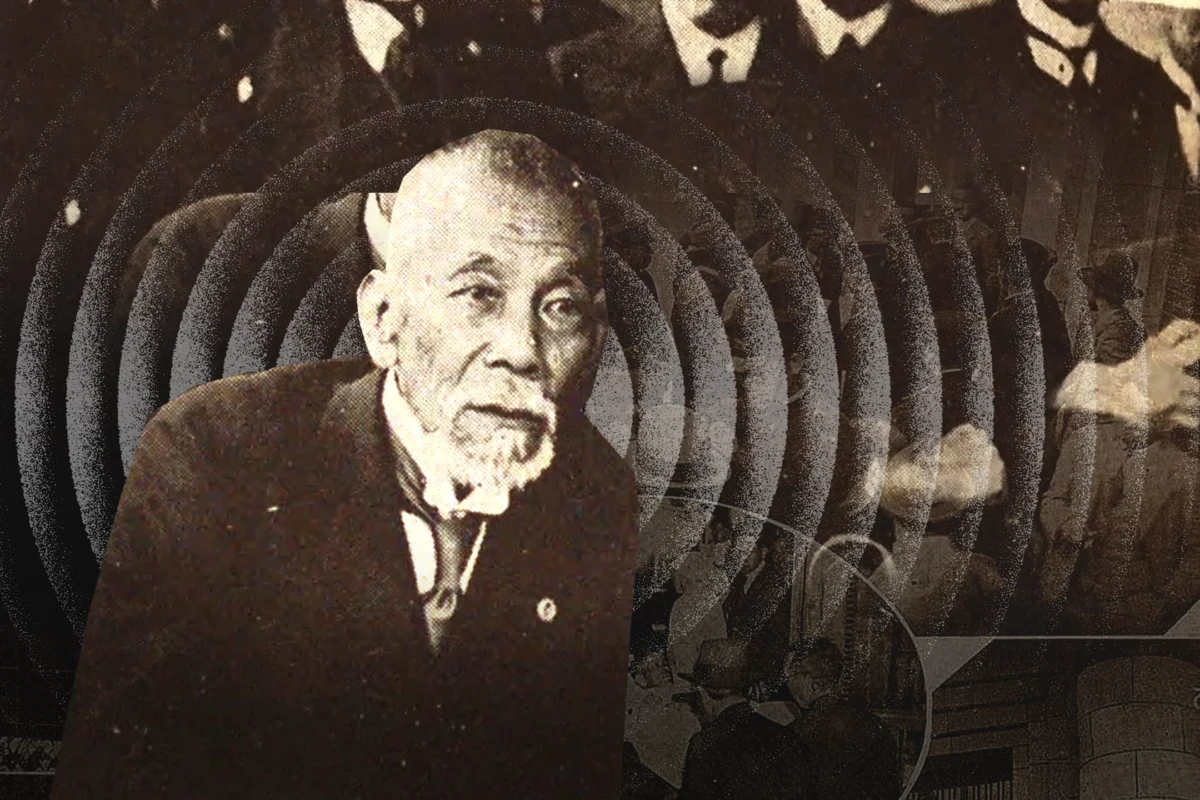
On May 15, 1932, the fragile architecture of Japan’s Taisho-era parliamentary democracy suffered a blow from which it would never fully recover. As dusk fell over Tokyo, 11 naval officers and army cadets stormed the official residence of Prime Minister Tsuyoshi Inukai. In a chilling confrontation that would echo through the coming decade of conflict, the Prime Minister attempted to reason with the insurgents, famously declaring, "Hanaseba wakaru" ("If I could speak, you would understand"). His assassins offered no such grace, retorting, "Mondo muyo, ute" ("Discussion is useless, shoot").
The death of Inukai was not merely a political assassination; it was a violent punctuation mark in a narrative of economic despair, ultranationalist fervor, and the steady erosion of civilian rule. The May 15 Incident stands today as the moment the Japanese military successfully transitioned from a state institution into a political force capable of determining the nation’s destiny through the barrel of a gun.
The Roots of Instability: A Nation in Crisis
To understand the tragedy of May 15, one must examine the "Dark Valley"—the period of economic and social volatility that gripped Japan following the Great Kanto Earthquake of 1923. The catastrophe strained the national budget, but it was the 1927 Showa Financial Crisis that shattered public confidence. As the banking system crumbled, the zaibatsu—Japan’s massive industrial conglomerates—seized greater control, leading to a perception that the government was merely a puppet for corporate interests.
This bitterness was compounded by the Wall Street Crash of 1929. As global trade collapsed, the price of raw silk plummeted, devastating rural Japan. Farmers, once the backbone of the empire, found themselves in cycles of crushing debt, forced to sell their daughters into prostitution or labor to survive. To these rural citizens, the urbane, Western-leaning politicians in Tokyo seemed not only corrupt but actively indifferent to their plight.

The London Naval Treaty and the Crack in Authority
In 1930, Prime Minister Osachi Hamaguchi signed the London Naval Treaty, which imposed limitations on Japan’s naval armaments. While viewed internationally as a step toward peace, the Imperial Japanese Navy viewed it as an affront to the Emperor’s supreme command authority. When a member of the ultranationalist Aikokusha shot Hamaguchi at Tokyo Station later that year, it signaled that "political violence" had become a viable, even celebrated, path for those who felt the state had betrayed the national interest.
Chronology of a Collapsing Democracy
The slide toward the May 15 Incident was not a sudden lurch but a systematic dismantling of institutional norms.
- September 1931: The Kwantung Army orchestrates the Mukden Incident in Manchuria. By detonating a bomb on a railway line and blaming Chinese dissidents, the military creates a pretext for invasion without the consent of the civilian government in Tokyo.
- February 1932: The "League of Blood" Incident occurs. Masterminded by the Buddhist extremist Nissho Inoue, the Ketsumeidan (Blood Brotherhood) seeks to kill 20 prominent elites to "purify" the nation. While they only succeed in murdering two—former Finance Minister Junnosuke Inoue and Mitsui executive Takuma Dan—the public reaction is one of eerie sympathy rather than horror.
- May 14, 1932: Charlie Chaplin arrives in Japan for a tour. Unbeknownst to him, he is a primary target in a twisted plot by naval officer Kiyoshi Koga. The conspirators believe that assassinating the world-famous actor would provoke a war with the United States, thereby forcing the government’s hand.
- May 15, 1932: The coordinated assault begins. While Inukai is assassinated, simultaneous attacks target the Rikken Seiyukai party headquarters, Mitsubishi Bank, and critical power infrastructure.
- May 16, 1932: Chaplin, having escaped the plot by choosing to attend a sumo match instead of the planned reception, survives. The uprising, however, fails to gain the momentum the military desired, leading to a period of uneasy political maneuvering.
The Target: Charlie Chaplin and the Logic of Chaos
The inclusion of Charlie Chaplin in the list of targets reveals the irrational, fanatical mindset of the young officers. Kiyoshi Koga and his cohorts were not merely aiming for a regime change; they were attempting to ignite a global conflagration. They reasoned that the death of a Western icon like Chaplin during his state-sanctioned visit would create such international outrage—or be framed as a result of Western meddling—that the Japanese government would be forced into an aggressive stance against the U.S. and Britain.
The fact that Chaplin’s life was spared by a simple change of plans—deciding to watch sumo wrestling with the Prime Minister’s son—serves as a historical "what if" that haunts the imagination. Had the plot succeeded, the diplomatic fallout might have accelerated the Pacific War by a decade.

Official Responses and the Failure of Justice
The aftermath of the May 15 Incident revealed how deeply the rot of radicalism had penetrated the Japanese judicial and social systems. When the conspirators were brought to trial, they did not hide their actions; they used the courtroom as a stage for propaganda.
The tribunal was inundated with over 110,000 petitions, many signed in blood, demanding leniency for the "patriot" assassins. Faced with an public that largely viewed the murderers as heroes, the judiciary folded. The sentences were remarkably light, ranging from one to 15 years in prison. This leniency served as a green light for future extremists. It sent a clear message: in the new Japan, the murder of a high-ranking official was a minor transgression if the perpetrator claimed to be acting for the Emperor.
Implications: The Road to the February 26 Incident
The May 15 Incident fundamentally altered the power structure of the Japanese state. The era of "party government," where leaders were chosen based on parliamentary majorities, effectively ended. It was replaced by a "national unity" cabinet under Admiral Makoto Saito, which was essentially a front for military interests.
The consequences were far-reaching:

- Isolationism: The new government moved quickly to recognize the puppet state of Manchukuo, leading to Japan’s eventual withdrawal from the League of Nations.
- The Normalization of Sedition: By refusing to punish the conspirators of 1932, the state lost its moral authority. The military began to operate as a state-within-a-state, answerable only to the Throne, while ignoring the Cabinet.
- The February 26 Incident: The seeds sown in 1932 bore bitter fruit in 1936, when 1,400 troops attempted a full-scale coup. While that too failed, the atmosphere of fear and the recurring nature of these uprisings ensured that the civilian government remained a subservient entity until the end of World War II.
Conclusion: A Lesson in Fragile Institutions
The May 15 Incident is a stark reminder of how quickly the foundations of democracy can crumble when the public loses faith in its institutions and when political violence is tolerated, or worse, romanticized. The assassins of 1932 believed they were saving Japan from Westernization and corruption. Instead, they destroyed the very systems that allowed for public discourse and institutional checks and balances.
As we look back from the vantage point of 2026, the tragedy of Tsuyoshi Inukai serves as a historical warning. The collapse of the Taisho democracy was not inevitable; it was the result of a series of compromises, failures of nerve by the judiciary, and a public that allowed itself to be seduced by the siren song of radicalism. The "Dark Valley" of Japan’s history remains a testament to the fact that when a nation stops talking and starts shooting, the cost is measured not just in lives, but in the total loss of the future.


 Neng Nana
 Asro
Asro