Suro Senen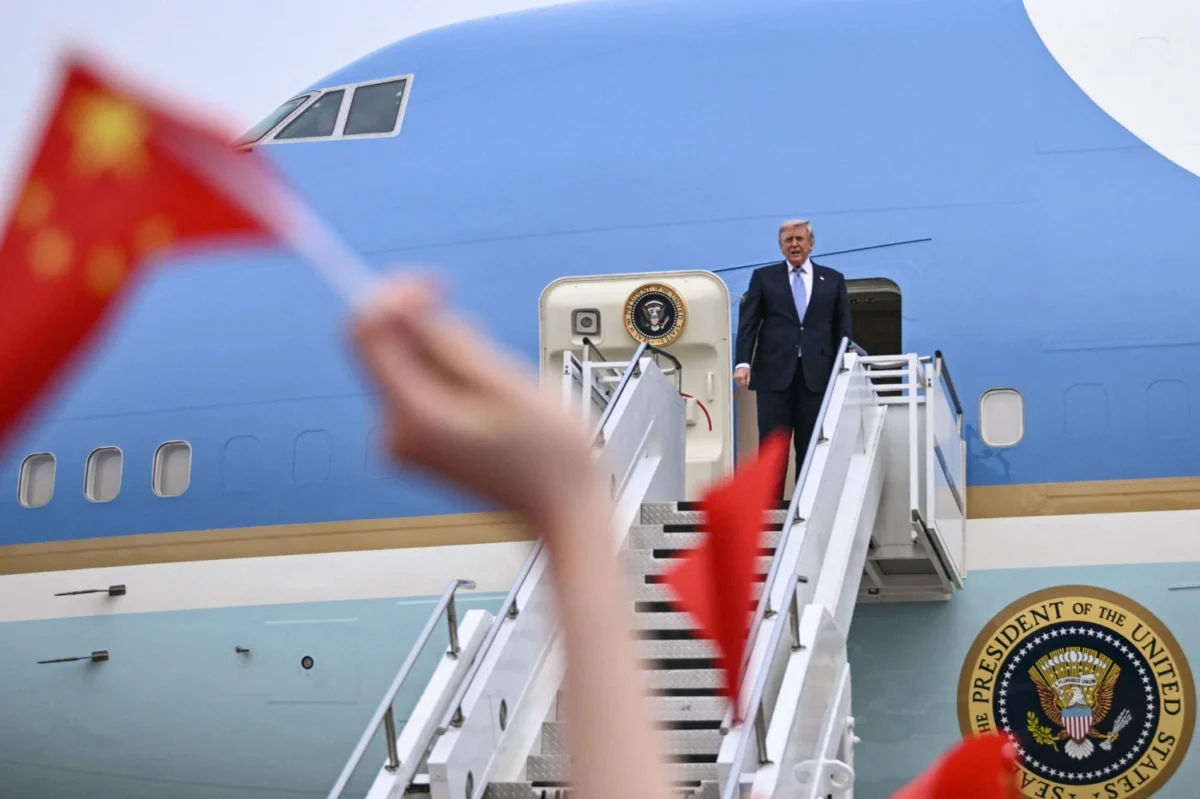
BEIJING — U.S. President Donald Trump departed Beijing Capital Airport on Friday, concluding a high-stakes summit with Chinese President Xi Jinping that sought to reconcile profound economic ambitions with the volatile realities of global security. As the presidential motorcade made its way to the tarmac, the two leaders left behind a whirlwind of high-level negotiations, marked by celebratory rhetoric regarding trade alongside the sobering, underlying friction regarding the sovereignty of Taiwan and the escalating crisis in the Middle East.
Main Facts: The Core of the Beijing Summit
The summit, held at the historic and highly secure Zhongnanhai compound, was designed to serve as a reset for the world’s two most powerful economies. President Trump, eager to showcase a narrative of "America First" prosperity, touted a series of agreements spanning aviation, agriculture, and the burgeoning artificial intelligence sector.
"We’ve made some fantastic trade deals, great for both countries," Trump remarked during a working lunch, seated alongside Xi. While the White House has yet to release the granular details of these accords, the President’s optimistic framing suggested a significant breakthrough in reducing the bilateral trade deficit—a cornerstone of his economic platform.
However, the celebratory tone of the trade announcements was starkly contrasted by the gravity of the geopolitical agenda. The summit was undeniably overshadowed by a direct and pointed warning from President Xi regarding the Taiwan Strait. Chinese officials have increasingly signaled that the status quo in the region is unsustainable, putting the United States in a position of navigating a potential flashpoint that could derail the global economy.
Chronology of the Beijing Visit
The visit, which spanned 48 hours, was characterized by a meticulous, if tense, schedule of negotiations:
- Thursday Morning: President Trump arrived in Beijing amidst tight security. His arrival was immediately followed by a bilateral briefing focusing on the mounting pressure in the Taiwan Strait, with reports indicating that Xi Jinping used the opening session to set a firm tone regarding China’s "red lines."
- Thursday Afternoon: The focus shifted toward economic technicalities. Delegations from the U.S. Department of Commerce and their Chinese counterparts held marathon sessions aimed at finalizing agreements on agricultural imports and semiconductor cooperation—a move intended to address AI development concerns.
- Friday Morning: The "Zhongnanhai Talks." The two leaders met in a private, extended session over tea and lunch. This session was reportedly the most difficult, with Trump pushing for Chinese diplomatic intervention in the Middle East, specifically requesting that Beijing leverage its influence to urge Iran toward a resolution in the ongoing regional conflict.
- Friday Afternoon: Final press briefings and the formal departure. President Trump boarded Air Force One, signaling an end to the summit before the official readout from either capital was finalized.
Supporting Data: The Economic and Strategic Landscape
The urgency behind this summit is backed by shifting global data. Trade between the U.S. and China has remained a volatile metric; while agricultural exports from the American Midwest remain vital to the Chinese market, the tech sector has become a battlefield of sanctions and export controls.
According to preliminary briefings, the agreements reached in the aviation sector are expected to bolster U.S. manufacturing orders, potentially supporting thousands of jobs in the aerospace supply chain. Simultaneously, the focus on AI—a sector currently dominated by a race between Silicon Valley and Beijing—aims to establish "guardrails" for safety and ethical deployment, though skeptics argue that the strategic competition between the two nations renders such agreements largely symbolic.
Regarding the Middle East, the U.S. strategy involves utilizing China’s role as a primary consumer of Iranian oil to force a diplomatic shift. However, data from regional energy markets suggests that Beijing has been hesitant to compromise its own energy security for the sake of U.S. geopolitical objectives, making Trump’s request a significant hurdle for the success of the talks.
The Taiwan Question: A Geopolitical Flashpoint
Perhaps the most critical aspect of the visit was the discourse surrounding Taiwan. President Xi’s explicit warning regarding the "possibility of conflict" represents a departure from the more ambiguous language used in previous years.

For the United States, the challenge is twofold: maintaining the "One China" policy while ensuring that Taiwan remains a democratic, self-governing entity that acts as a vital node in the global semiconductor supply chain. Experts suggest that Xi’s rhetoric is a response to perceived shifts in U.S. defense posturing in the Indo-Pacific. The inclusion of this topic in the Beijing summit underscores that trade cannot be decoupled from security; the two are now inextricably linked in the modern U.S.-China relationship.
Official Responses and Diplomatic Nuance
The official response from the Chinese Ministry of Foreign Affairs remained characteristically measured, emphasizing "mutual respect" and "sovereignty." State media outlets, including Xinhua, highlighted the trade agreements as a win for global stability, largely downplaying the more contentious segments of the talks regarding Iran and Taiwan.
Conversely, the White House press corps has been tasked with framing the trip as a success of personal diplomacy. Administration officials argue that by engaging directly with Xi, President Trump has prevented a further deterioration of relations. "The President is opening doors that have been closed for years," one senior aide noted, though they declined to provide a timeline for when the promised trade benefits would manifest in the U.S. economy.
Implications for Global Stability
The implications of this summit extend far beyond the borders of Washington and Beijing. For the global markets, the outcome is a "mixed bag." While the promise of trade stability offers a reprieve from fears of total economic decoupling, the continued friction over Taiwan suggests that geopolitical volatility is likely to remain the baseline for the foreseeable future.
Furthermore, the U.S. push for China to act as a mediator in the Middle East highlights a fundamental shift in the global order. Washington is increasingly acknowledging that it cannot manage the world’s most dangerous crises without at least the tacit cooperation of Beijing. If the summit results in even a minor de-escalation in the Middle East, it would be a major victory for the current administration. If it fails, the U.S. may be forced to reassess its strategy of "engagement" in favor of a more aggressive containment policy.
As Air Force One touched down in the United States, the consensus among foreign policy analysts is that the Beijing summit was a tactical pause rather than a strategic resolution. Both leaders have signaled a desire to avoid an immediate catastrophe, but the fundamental differences in their visions for the 21st-century global order remain as profound as ever.
Moving forward, the success of these agreements will be measured not by the rhetoric delivered in the halls of Zhongnanhai, but by the tangible actions taken by both governments in the coming months. As the world watches, the delicate dance between these two superpowers continues—one step toward economic cooperation, two steps toward strategic rivalry.
Quality journalism is more essential than ever in navigating these complex shifts. By subscribing to our service, you ensure that you receive deep, accurate, and independent reporting on the stories that define our global future.


 Neng Nana
 Asro
Asro