


In an era where consumer attention is a fragmented commodity, Garnier—a subsidiary of the global beauty giant L’Oréal—has opted for a strategy rooted in absurdity, linguistic confusion, and the star power of reality television. By launching a campaign that centers on a deliberate misinterpretation of the word "mousse," the brand is attempting to bridge the gap between traditional product marketing and the rapid-fire, irony-poisoned humor of the Gen Z social media landscape.
The campaign, which officially kicked off in mid-May 2026, features Love Island personality TJ Palma. Through a series of skits, guerilla marketing, and influencer partnerships, Garnier is looking to breathe new life into its core hair care offerings, specifically targeting the younger demographic that prizes authenticity and entertainment over standard "hard sell" advertising.
The Core Concept: A Play on Words
At the heart of the campaign is a mock-documentary style short film—reminiscent of the cult-favorite sitcom The Office—which depicts TJ Palma in his new role as a Garnier social media marketing consultant. Tasked with developing a creative strategy to promote the brand’s newly repackaged mousse, Palma suffers a humorous lapse in judgment, confusing the hair styling product with a literal moose.
What follows is a chaotic, multi-day marketing endeavor where Palma commits entirely to a "moose" theme. The absurdity of the situation serves a dual purpose: it generates immediate, viral-ready clips for social platforms like TikTok and Instagram, while simultaneously keeping the actual product—the Garnier Fructis Curl Construct Creation Mousse—top-of-mind. The narrative arc concludes with Palma’s "redemption," where he produces a genuine, high-quality "Get Ready With Me" (GRWM) video demonstrating how to properly use the product for his signature curls.
A Chronology of the "Moose" Takeover
Garnier’s approach was not a single-day drop, but a carefully choreographed sequence of events designed to build anticipation and foster organic speculation.
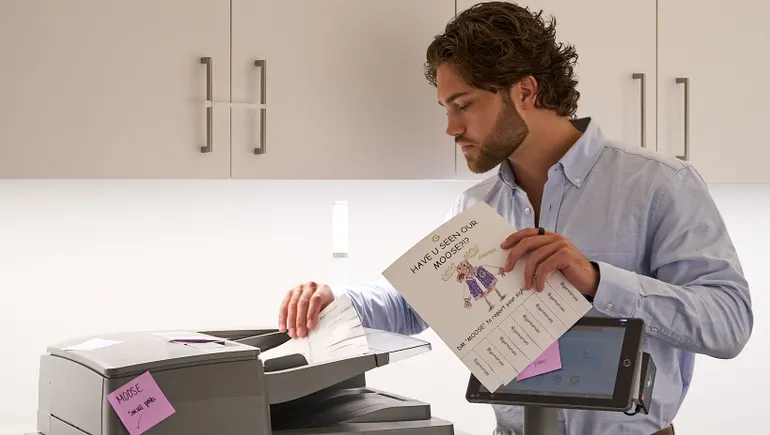
- Early May 2026 (The Tease): The campaign began with a cryptic Instagram post featuring a photograph of a moose. The image lacked any brand context, intentionally leaving followers confused and prompting a flurry of comments asking, "Why is there a moose?"
- Mid-May (The Physical Activation): Simultaneously, the brand deployed physical flyers throughout New York City. The posters, featuring a missing-person-style callout for the moose, acted as an offline hook for the digital mystery.
- May 14, 2026: Garnier amplified the mystery by orchestrating "paparazzi-style" sightings of a person dressed in a full moose costume wandering through various high-traffic areas of New York City, with TJ Palma appearing alongside the costumed mascot.
- May 15, 2026 (The Reveal): The brand released the primary campaign video. The "mockumentary" footage finally connected the dots for consumers, explaining that the moose was not a random mascot, but a creative blunder by their new "consultant."
- May 16-17, 2026 (The Guerilla Push): The campaign transitioned into a real-world product sampling phase. Guerilla-style stations were set up in downtown Manhattan, where Garnier distributed full-size products to the public. This stage was heavily supported by a roster of influencers, including Mia Calabrese of Summer House and content creator Just Jazzy, who documented the interactions for their respective audiences.
The Strategic Playbook: Why "Cringe" Marketing Works
Garnier’s "moose" campaign is part of a growing trend in brand marketing: the embrace of the "head-scratcher." By intentionally staging confusing, low-context moments, brands aim to force users to stop their endless scrolling to figure out what is happening.
This strategy has been perfected by brands like CeraVe, which utilized complex, multi-layered "basketball lore" to launch products, and Raisin Bran, which famously leveraged the surreal celebrity of William Shatner. The effectiveness of these campaigns lies in their ability to blur the lines between entertainment and advertising. When a brand creates content that feels like a meme or a reality TV subplot rather than a traditional commercial, it bypasses the "ad blindness" that often causes younger consumers to skip or ignore promotional content.
By utilizing a Love Island star, Garnier is also tapping into the "parasocial" phenomenon—where audiences feel a personal connection to reality TV stars. As seen with recent collaborations between McDonald’s, Herbal Essences, Mars Petcare, and various reality stars, these figures carry a built-in audience that is already accustomed to high-drama, high-engagement content.

Market Dynamics: The Hair Care Landscape in 2026
The timing of this campaign is not coincidental. According to data from Mordor Intelligence, the U.S. hair care market is on a steady upward trajectory, projected to grow from approximately $20.98 billion in 2026 to $25.9 billion by 2031.
However, the market is also experiencing a shift in consumer behavior. Mass-market products continue to dominate, holding a massive 78.1% market share. As economic uncertainty persists and inflation remains a concern for many households, consumers are increasingly looking for high-quality, affordable hair care solutions. At a retail price point of $5.99, the Garnier Fructis Curl Construct Creation Mousse is positioned perfectly for the value-conscious consumer who refuses to sacrifice results for price.
L’Oréal, the parent company of Garnier, is seeing the benefits of this mass-market strategy. In their Q1 2026 financial reports, the company announced revenue of 12.15 billion euros—roughly $14.2 billion—reflecting a 3.6% year-over-year increase. Significantly, L’Oréal’s management explicitly cited their hair care and fragrance divisions as the primary engines driving this growth, validating their continued investment in consumer-facing, high-visibility marketing campaigns.
Implications: The Future of Brand-Creator Collaborations
The Garnier/Palma partnership highlights a significant evolution in influencer marketing. It is no longer enough to simply pay an influencer to hold a product and read a script. Brands are now looking for "creative partners" who can contribute to the narrative structure of a campaign.

Key Takeaways for Industry Observers:
- Narrative Over Features: By focusing on the story of the moose rather than the chemical composition of the mousse, Garnier created an emotional hook. The product becomes a plot device rather than a dry list of ingredients.
- Cross-Platform Integration: The success of the campaign relied on the seamless integration of physical (NYC flyers/sampling) and digital (TikTok/Instagram) touchpoints.
- The "Reality" Factor: Reality TV stars are becoming the new standard for "relatable" celebrity marketing. Their ability to deliver scripted comedy that feels unscripted is a massive asset in the current social media economy.
- Agility and Humor: The ability to pivot from a "mistake" (the moose) to a "solution" (the GRWM video) allows the brand to own its narrative completely, even when it involves poking fun at its own marketing efforts.
Conclusion: A Lesson in Brand Vitality
Garnier’s "moose" campaign is a masterclass in how to stay relevant in a crowded, noisy, and cynical market. By leaning into the absurdity of a pun, the brand has successfully injected itself into the cultural conversation.
While critics might argue that such stunts are ephemeral, the results—driven by massive organic social buzz and reinforced by a strong, value-based product offering—suggest otherwise. As L’Oréal continues to report growth in its hair care sector, it is clear that Garnier’s strategy of blending pop-culture relevance with accessible, effective products is a formula that resonates deeply with the modern, digitally native consumer. Whether or not the "moose" becomes a permanent fixture in Garnier’s marketing, the campaign has undeniably succeeded in its primary goal: making the world pay attention to a bottle of mousse.









No comments yet. Be the first to join the conversation!