Nana Muazin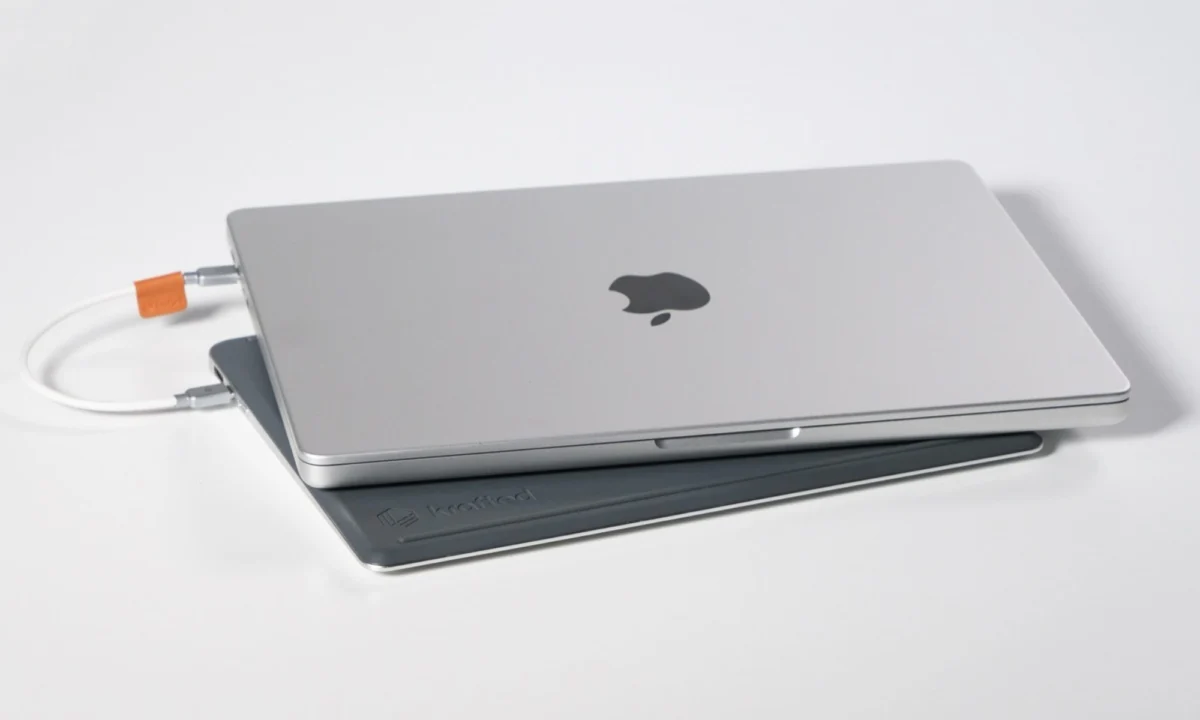
In the crowded market of mobile power solutions, innovation is often measured in millimeters and watt-hours. We have seen the evolution from bulky, industrial-grade power bricks to sleek, pocket-sized gallium nitride (GaN) chargers. Yet, a persistent ergonomic frustration remains: the "laptop power bank problem." Most portable batteries are either too thick to slip into a sleeve or too awkward to manage while working on the go.
Enter the Krafted Edge, a 20,000 mAh power bank that promises to solve this by mimicking the very form factor of the machine it is designed to charge. By adopting an ultra-slim, aluminum-clad silhouette that sits flush beneath a laptop, the device aims to redefine mobile productivity. However, while its hardware design is undeniably brilliant, the company’s ambitious performance claims have triggered a wave of skepticism from industry analysts and tech enthusiasts alike.
The Genesis of the "Laptop-First" Power Bank
The Krafted Edge is a 20,000 mAh power bank constructed within an aluminum slab measuring 27 x 19 x 1.28 cm. Its dimensions are not accidental; they are a calculated effort to match the footprint of a modern ultrabook. The core concept is elegant: rather than carrying a separate, heavy battery pack that rattles around in your backpack, the Krafted Edge is designed to reside permanently at the bottom of your laptop sleeve.

When it comes time to work, the user simply slides the power bank out, places it on the desk, and sets their laptop on top of it. Connected via USB-C, the device provides a pass-through charging experience that feels integrated rather than peripheral. For the digital nomad, this eliminates the "tangled cable" aesthetic and the need to hunt for a wall outlet in busy cafes or airport lounges.
Technical Specifications and Repairability
Beyond its striking physical design, the Krafted Edge boasts a set of specifications that, on paper, compete with high-end mobile power solutions:
- Capacity: 20,000 mAh (total).
- Output: Dual USB-C ports (up to 65W each) and one USB-A port (18W).
- Recharge Time: Approximately two hours when utilizing a 45W input.
- Form Factor: Aluminum chassis, 1.28 cm thick.
Perhaps the most commendable feature of the device is its internal architecture. The 20,000 mAh capacity is divided into four discrete 5,000 mAh cells. In a move that defies the industry’s trend toward disposable, glued-shut electronics, these cells are user-replaceable. This commitment to repairability significantly extends the product’s lifecycle, allowing users to swap out degraded batteries years down the line rather than discarding the entire aluminum housing. This "right to repair" philosophy is a major selling point that distinguishes Krafted from mass-market competitors.

A Chronology of the Kickstarter Campaign
The product was launched on Kickstarter in May 2026, quickly capturing the attention of the tech community. As of the current reporting, the campaign has successfully raised over $45,000 from 295 backers.
- Early May 2026: Initial teasers and technical specifications were released to technology publications, emphasizing the "laptop-flush" design.
- Mid-May 2026: The campaign went live, garnering immediate interest for its aesthetic and modular design.
- Late May 2026: As the initial excitement settled, independent reviewers and power-user communities began to scrutinize the company’s bold marketing claims regarding battery life, leading to the current debate surrounding the product’s feasibility.
The "Efficiency Gap": Why the Marketing Doesn’t Add Up
The central point of contention lies in Krafted’s bold assertion that the unit can provide "three to four full laptop charges." To understand why this claim is met with such intense skepticism, we must look at the physics of energy density and conversion loss.
A 20,000 mAh power bank, assuming a standard nominal voltage of 3.7V, equates to roughly 74Wh of energy. A typical 14-inch MacBook Pro, by comparison, features a battery capacity of roughly 70Wh to 72Wh.

The Math of Reality
When you account for the unavoidable energy loss during the DC-to-DC conversion process—which typically hovers around 15% to 20% due to heat and circuit resistance—a 74Wh power bank effectively delivers about 60Wh to 63Wh of usable energy.
- The "One Charge" Limit: A 14-inch MacBook Pro would barely reach a full charge from 0% to 100% using this power bank. Claiming "three to four" charges is mathematically impossible for a laptop of this class.
- The Efficiency Assumption: Even if the user were charging a significantly smaller, lower-power device, the claim of four full cycles would require an efficiency level that defies the laws of thermodynamics.
- Smartphone Discrepancies: While the device could indeed provide multiple charges for a small-battery smartphone like an iPhone 17e, the marketing materials seem to imply these performance metrics apply to high-drain devices like the OnePlus 15R, which is misleading.
While Krafted has clearly "nailed the design," their marketing department appears to be relying on theoretical maximums that ignore the realities of energy conversion and laptop power consumption.
Industry Implications and Future Outlook
The controversy surrounding the Krafted Edge highlights a broader issue in the crowdfunding ecosystem: the tension between innovative hardware and hyperbolic marketing. In the race to stand out on platforms like Kickstarter, companies often feel pressured to inflate performance metrics to secure early funding.

The Trust Factor
For established accessory makers, this kind of discrepancy is damaging. Trust is the currency of the crowdfunding world. When a product is marketed with claims that do not survive a basic "back-of-the-envelope" calculation, it alienates the very power users who are most likely to adopt new technology.
What Should Consumers Expect?
As we approach the expected July 2026 delivery date, prospective backers should adjust their expectations. The Krafted Edge is likely an excellent, durable, and highly portable power bank that will serve as a convenient top-up for a laptop during a workday. It is not, however, a "four-charge" miracle device.
If Krafted chooses to walk back these claims and focus on the device’s undeniable strengths—its modularity, its slim aluminum construction, and its portability—they may still foster a loyal user base. If they persist in the hyperbole, they risk turning a genuinely cool piece of hardware into a cautionary tale about the perils of over-promising in the tech industry.

Conclusion: A Product Worth Watching
The Krafted Edge sits at a fascinating intersection of industrial design and engineering. It is rare to see a product that so perfectly addresses the physical annoyance of carrying portable batteries. The modular, repairable nature of the battery cells is a blueprint that more manufacturers should follow.
However, the disparity between the product’s physical utility and its marketing narrative is a significant hurdle. For potential backers, the takeaway is clear: buy the Krafted Edge for its form factor, its thoughtful design, and its repairability. Do not buy it because you believe it will keep your laptop running for four full days without a wall outlet.
As the project moves from the digital campaign page to the manufacturing floor, the tech community will be watching closely. Whether the Krafted Edge becomes a staple of the mobile office or a forgotten Kickstarter curiosity will depend on the brand’s ability to pivot toward transparency. For now, it stands as a reminder that even the most well-designed hardware needs the foundation of honest communication to succeed.

 Laily UPN
 Azzam Bilal Chamdy