

By [Your Name/Journalistic Staff]
The Denver science fiction and computing communities are mourning the loss of a multifaceted talent, a dedicated enthusiast, and a cherished friend. Margret Lull Rosenberg, a woman whose life bridged the gap between the tactile arts of fiber crafting and the digital frontiers of early microcomputing, passed away peacefully at her home on May 5, 2026. She was 72.
Her passing marks the end of an era for many who knew her through the Denver Area Science Fiction Association (DASFA), the Denver Filk community, and the 6502 Group. Known for her intellect, her understated humor, and her profound influence on local subcultures, Rosenberg leaves behind a legacy that is as diverse as her interests.
The Passing of a Community Pillar
Margret Rosenberg died in her sleep at the age of 72. According to friends and close associates, she was attended by a professional nurse and her long-time housemate, Dolores—who had previously served as the lifelong office manager for Margret’s late husband, Roger Rosenberg.
Her final days were marked by the same quiet resilience that characterized much of her life. Jeanne Grace Jackson, a longtime friend and collaborator, noted that the last communication from Rosenberg occurred on April 28, 2026. In that message, Rosenberg excused herself from an upcoming online meeting of the 6502 Group, citing minor computer issues. True to her private nature, she gave no indication of the severity of her declining health.
"It was quite in character for her to never mention how ill she was," Jackson wrote in a remembrance originally published in DASFAx. "I am grateful that her passing was peaceful, and that she was not alone."
A Life Lived at the Intersection of Technology and Art
Born in 1954, Margret Lull Rosenberg was a woman of many worlds. Her life was defined by a rare ability to excel in both the technical and the creative spheres.
The Computing Trailblazer
In the early 1980s, when the personal computer revolution was in its infancy, Rosenberg was already a veteran of the field. While many were still adjusting to the idea of a machine on their desk, she was an early adopter of the legendary Osborne 1—the world’s first commercially successful portable computer. Weighing a formidable thirty pounds and folding into a suitcase-style box, the Osborne 1 was a behemoth that required significant dedication to operate.
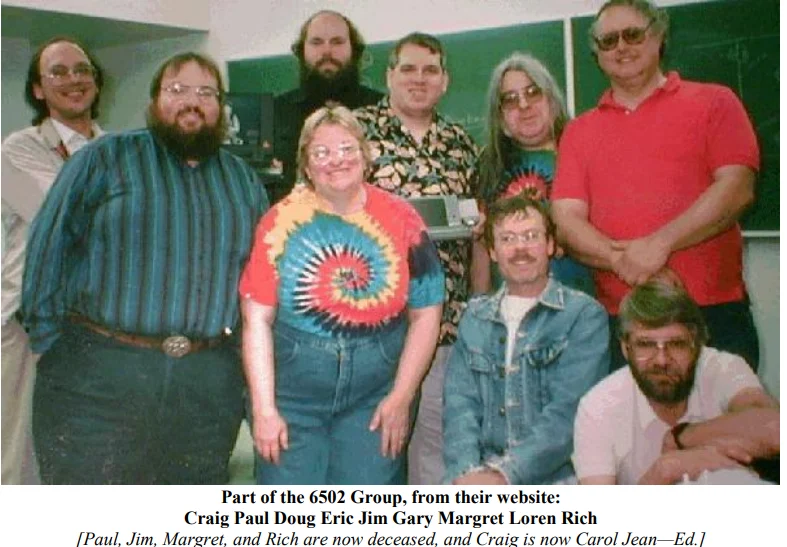
Her expertise was not merely a hobby; it was a professional pursuit. She served as an assistant or associate editor for Micro Cornucopia, a cult-classic journal for microcomputer enthusiasts that provided a lifeline for hackers, hobbyists, and early adopters navigating the hardware landscape of the 1980s. Her involvement with the 6502 Group—named after the influential microprocessor that powered the Apple II, the Commodore 64, and the Nintendo Entertainment System—cemented her status as a local authority on computing.
The Fiber Artist and Filksinger
While her mind was often occupied by the logic of circuits and code, her hands were equally adept at the delicate art of fiber work. Friends recall that she produced "truly awesome" pieces of tatted lace, an intricate form of needlework that requires immense patience and mathematical precision.
Parallel to her technical interests was her deep immersion in the "peculiar sub-fandom" of filksinging—the folk music tradition specific to science fiction and fantasy conventions. Through her involvement with Denver Filk and her attendance at events like MileHiCon, she became a cornerstone of the local community, using music to connect with fellow fans of the genre.
Chronology of a Shared Life: The Rosenbergs
Margret’s life became deeply intertwined with that of Roger Rosenberg, a fellow fan and wargamer whom she married in the mid-1970s. Roger, an Enrolled Agent—a tax practitioner authorized by the U.S. Department of the Treasury—ran his own independent income tax preparation office for decades.

The couple’s home was a hub of intellectual activity, filled with books, music, and the technological detritus of a lifetime of discovery. When Roger passed away during the COVID-19 pandemic, the loss was felt deeply throughout the Denver fandom. Margret continued to hold the space they had built together, supported by her housemate, Dolores, until her own passing.
She is survived by two brothers, as well as a niece and grandniece from the Rosenberg family.
Supporting Data and Community Impact
The impact of Margret Rosenberg’s work is best understood through the institutions she nurtured. Her influence extended well beyond her immediate circle of friends:
- DASFA (Denver Area Science Fiction Association): A vital organization in Colorado’s literary and fan culture.
- The 6502 Group: A niche, highly technical computer club that owes much of its longevity to her sustained participation and organizational help.
- Denver Filk: A community that thrived under her mentorship and her introduction of new members, including Jeanne Grace Jackson, to the group’s activities.
Her career at Micro Cornucopia provided a vital historical record of the 1980s microcomputing explosion. As historians of technology look back at the era of CP/M operating systems and early hardware experimentation, the contributions of editors like Rosenberg remain essential to understanding how the personal computer became a household necessity.
Official Responses and Memorial Plans
The news of her passing has prompted an outpouring of tributes from the Denver fan community. Jeanne Grace Jackson, assisted by Robin Baylor, Blind Lemming Chiffon, and Loren Blaney, led the effort to formalize these remembrances.
"She was a good friend of mine and of many others in and around Denver fandom," Jackson stated. "She will be dearly missed by all of us."
At the time of this writing, a memorial service is in the planning stages. The community is coordinating to ensure that the service reflects her diverse interests, potentially incorporating elements of her love for music and technology. Official announcements regarding the time and location will be disseminated through:
- The upcoming issue of DASFAx.
- Electronic mailing lists managed by DASFA.
- Denver Filk social channels and the 6502 Group’s internal communication network.
Implications: A Legacy of Inclusion
The loss of Margret Rosenberg highlights a critical transition in the history of science fiction fandom. As the generation that pioneered the "small computer" revolution and built the infrastructure of local fan clubs enters its later years, the importance of documenting these individual stories becomes paramount.
Rosenberg’s life serves as a reminder that the early days of computing were not just about the technology itself, but about the communities that formed around it. By marrying the precision of tatted lace with the logic of the 6502 processor, she demonstrated that the humanities and the sciences were never truly separate.
For the members of the 6502 Group and the Denver Filk community, the void she leaves behind is significant. However, the networks she fostered—the friendships built at MileHiCon, the knowledge shared in the pages of Micro Cornucopia, and the quiet, supportive presence she maintained in her home—continue to inform the culture of the groups she served.
As the Denver community prepares to honor her, they do so not just by mourning a loss, but by celebrating a life that was lived with curiosity, technical rigor, and an unwavering commitment to the people and hobbies she loved.
For those wishing to contribute to the memorial planning or share their own memories, please monitor the official DASFA and 6502 Group electronic newsletters for further instructions.









No comments yet. Be the first to join the conversation!