

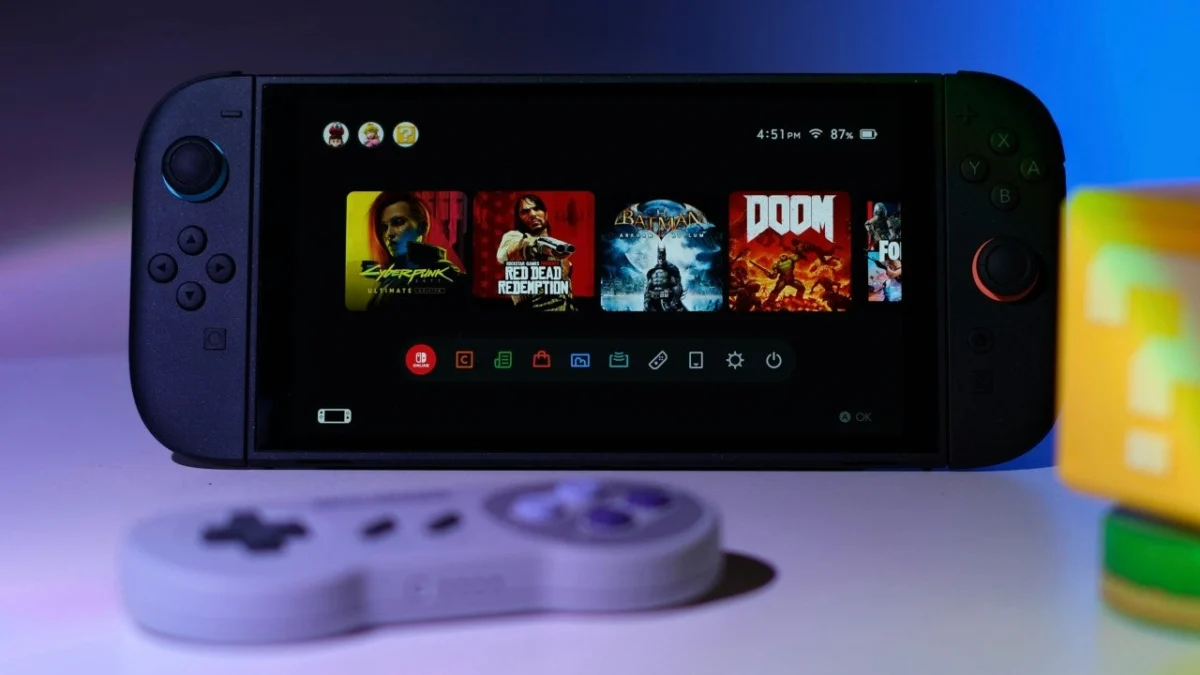
TOKYO, Japan – [Date of Article Generation, e.g., October 26, 2024] – Nintendo Co., Ltd. has delivered a significant announcement that will impact consumers globally, revealing substantial price increases for its next-generation console, the Nintendo Switch 2, as well as the existing Nintendo Switch family of systems and its popular Nintendo Switch Online subscription service. The company cited "changes in market conditions" and a "global outlook" as primary drivers for these revisions, which are slated to take effect in various regions throughout 2026.
The move comes as Nintendo released its latest financial results, showing robust performance, yet underscoring underlying economic pressures that are now translating into higher costs for consumers. While the original Switch lineup and the Nintendo Switch Online service will see price adjustments exclusively in Japan, the more recently introduced Nintendo Switch 2 console is set to become more expensive in major markets including the United States, Canada, and Europe. This strategic realignment of pricing reflects broader industry trends of rising manufacturing costs and inflationary pressures, marking a pivotal moment in Nintendo’s hardware and service monetization strategy.
The Core Announcement: Price Hikes Across the Board
Nintendo’s decision to raise prices on its gaming hardware and subscription services signals a direct response to a complex global economic environment. The announcement, embedded within its latest financial disclosures, conveyed a tone of reluctant necessity, with the company expressing sincere apologies for the potential impact on its customer base and stakeholders. This comprehensive revision affects both the company’s established and its nascent console offerings, reflecting a calculated effort to maintain profitability amidst escalating operational expenses.
Japan Sees Broadest Increases
Japanese consumers are poised to experience the most extensive price adjustments. Effective May 25, 2026, the price of the Nintendo Switch 2 Japanese-Language System will jump from ¥49,980 to ¥59,980, representing a significant ¥10,000 increase. This 20% hike is particularly notable for a console that, by 2026, would presumably be in a relatively early stage of its lifecycle, indicating strong underlying cost pressures.
Beyond the new hardware, the existing Nintendo Switch lineup in Japan will also see considerable price revisions. The flagship Nintendo Switch (OLED Model) will increase from ¥37,980 to ¥47,980, a ¥10,000 surge. The standard Nintendo Switch console will rise from ¥32,978 to ¥43,980, an ¥11,002 increase, which is approximately a 33.3% jump. Even the portable-only Nintendo Switch Lite will not be spared, moving from ¥21,978 to ¥29,980, an ¥8,002 increase. These changes underscore the pervasive nature of the cost pressures Nintendo is facing within its domestic market.
International Markets Primarily Affect Switch 2
For consumers in the United States, Canada, and Europe, the focus of the price increases will be solely on the Nintendo Switch 2. These changes are scheduled to take effect slightly later, on September 1, 2026.
In the United States, the Nintendo Switch 2 will see its price rise from $449.99 to $499.99, a $50 increase. Canadian gamers will face a similar adjustment, with the console’s price moving from $629.99 to $679.99, a $50 CAD increase. Across Europe, the Nintendo Switch 2 purchased via the My Nintendo Store will increase from €469.99 to €499.99, a €30 rise. These regional adjustments, while specific to the new console, highlight a global strategy to realign pricing with the realities of production and distribution costs. It is important to note that, as per Nintendo’s announcement, these prices do not include local taxes, which will add further to the final consumer cost.
Nintendo Switch Online Also Impacted in Japan
Further affecting Japanese customers, the Nintendo Switch Online subscription service, including its Expansion Pack tier, will also undergo price revisions. These changes will become effective on July 1, 2026.
Individual memberships for Nintendo Switch Online will see increases across all durations: the 1-month plan from ¥306 to ¥400, the 3-month plan from ¥815 to ¥1,000, and the 12-month plan from ¥2,400 to ¥3,000. The 12-month Family membership will also rise from ¥4,500 to ¥5,800. For those subscribed to the more premium Nintendo Switch Online + Expansion Pack, the 12-month Individual membership will increase from ¥4,900 to ¥5,900, and the 12-month Family membership from ¥8,900 to ¥9,900. These adjustments reflect an approximate 25-30% increase across the board for online services, a significant shift for a service that provides access to online multiplayer, cloud saves, and a growing library of classic titles.
Notably, South Korea’s planned price revisions are yet to be announced, indicating ongoing internal evaluations specific to that market.
Detailed Breakdown of Price Revisions
To fully grasp the scope of these changes, a granular examination of the announced price points and their corresponding increases is essential. The revisions represent a substantial shift in Nintendo’s pricing structure, signaling a new cost paradigm for its hardware and services.
Nintendo Switch 2 Pricing
The Nintendo Switch 2, representing Nintendo’s foray into the next generation of handheld-console hybrid gaming, is at the forefront of these price adjustments in international markets.
| Region | Model | Current Price | Revised Price | Absolute Increase | Percentage Increase (approx.) | Effective Date |
|---|---|---|---|---|---|---|
| Japan | Japanese-Language System (Japan Only) | ¥49,980 | ¥59,980 | ¥10,000 | 20.0% | May 25, 2026 |
| United States | Nintendo Switch 2 | $449.99 | $499.99 | $50.00 | 11.1% | Sept 1, 2026 |
| Canada | Nintendo Switch 2 | $629.99 | $679.99 | $50.00 | 7.9% | Sept 1, 2026 |
| Europe | Nintendo Switch 2 (My Nintendo Store) | €469.99 | €499.99 | €30.00 | 6.4% | Sept 1, 2026 |
Note: Prices shown do not include tax unless specified. The price of the Nintendo Switch 2 multilanguage system available from the My Nintendo Store will remain unchanged.
The Japanese market sees the most substantial proportional increase for the Switch 2, reflecting potentially unique cost pressures or market positioning within Nintendo’s home territory. The relatively lower percentage increases in North America and Europe might indicate different manufacturing or distribution cost structures, or a strategic decision to maintain a more competitive price point against rival consoles in those regions. The unchanged price for the multilanguage system sold via My Nintendo Store suggests a specific targeting of the domestic-only model for the price hike, perhaps due to specific component sourcing or local market dynamics.
Original Nintendo Switch Family Pricing (Japan)
The original Nintendo Switch models, which have dominated the console market for years, will also see significant price hikes in Japan. This is a notable development, as consoles typically see price drops over their lifecycle, not increases.
| Model | Current Price | Revised Price | Absolute Increase | Percentage Increase (approx.) | Effective Date |
|---|---|---|---|---|---|
| Nintendo Switch (OLED Model) | ¥37,980 | ¥47,980 | ¥10,000 | 26.3% | May 25, 2026 |
| Nintendo Switch | ¥32,978 | ¥43,980 | ¥11,002 | 33.3% | May 25, 2026 |
| Nintendo Switch Lite | ¥21,978 | ¥29,980 | ¥8,002 | 36.4% | May 25, 2026 |
These increases are substantial, particularly for the standard Switch and Switch Lite, which see jumps of over 33% and 36% respectively. Such significant revisions for established hardware suggest that the underlying cost pressures, particularly for components and logistics, are severe enough to necessitate moving away from the typical console lifecycle pricing model. This could potentially deter new buyers or those looking for an entry-level console in Japan.
Nintendo Switch Online Subscription Adjustments (Japan)
The Nintendo Switch Online service, a cornerstone of the modern Nintendo gaming experience, will also become more expensive for Japanese subscribers.
| Membership Type | Current Price | Revised Price | Absolute Increase | Percentage Increase (approx.) | Effective Date |
|---|---|---|---|---|---|
| Individual Membership | July 1, 2026 | ||||
| 1 month | ¥306 | ¥400 | ¥94 | 30.7% | |
| 3 months | ¥815 | ¥1,000 | ¥185 | 22.7% | |
| 12 months | ¥2,400 | ¥3,000 | ¥600 | 25.0% | |
| Family Membership | |||||
| 12 months | ¥4,500 | ¥5,800 | ¥1,300 | 28.9% | |
| Nintendo Switch Online + Expansion Pack | |||||
| Individual membership (12 months) | ¥4,900 | ¥5,900 | ¥1,000 | 20.4% | |
| Family membership (12 months) | ¥8,900 | ¥9,900 | ¥1,000 | 11.2% |
The increases for Nintendo Switch Online range from approximately 11% to over 30%, with the short-term individual memberships seeing the steepest proportional rises. These changes reflect an adjustment to the perceived value of the service, which includes online multiplayer, cloud save data, a growing library of classic NES, SNES, N64, and Sega Genesis titles, and exclusive offers. For the Expansion Pack, which adds N64, Sega Genesis games, and DLC for select titles, the price increases are also significant, though the Family membership for the Expansion Pack sees a comparatively smaller proportional increase.
The Rationale: Market Conditions and Supply Chain Pressures
Nintendo’s decision is not an isolated incident but rather a symptom of broader economic forces impacting the technology and entertainment sectors. The company’s official statement, though brief, points to "changes in market conditions" and the "global outlook" as the primary justifications. Delving deeper, these phrases encompass a range of challenges that have plagued industries worldwide for the past few years.
Official Statement and Apology
In their announcement, Nintendo conveyed a clear message of regret regarding the necessity of these price adjustments. "We sincerely apologise for the impact these price revisions may have on our customers and other stakeholders, and we deeply appreciate your understanding," the company stated. This empathetic tone is typical of Nintendo, a company that historically prides itself on delivering value and accessibility to a broad audience. However, the apology underscores the severity of the underlying issues that compelled them to make such an unpopular decision. The commitment to provide further details through its overseas subsidiaries suggests a tailored communication strategy for different regions, acknowledging the diverse market dynamics at play.
The Specter of Component Shortages
A significant factor contributing to rising costs, particularly in the electronics industry, has been the persistent global shortage of semiconductor chips and other critical memory components. Nintendo President Shuntaro Furukawa had previously signaled that such shortages could eventually lead to price increases. In a past statement, he indicated that the firm was "not ruling out future price increases" due to these supply chain challenges.
Furukawa elaborated on the intricate decision-making process: "Any decision to change the price will be determined comprehensively, taking into consideration not only profitability, but also other factors like the platform’s installed base, sales trends, and the market environment." He further warned, "If the rise in memory prices continues for longer than expected, it may start to have an effect on hardware profitability. In this case, we will examine various factors to determine how to handle the situation."
The current announcement confirms that the prolonged and exacerbated nature of these component shortages has indeed crossed the threshold Furukawa described. Memory components, essential for consoles like the Switch and Switch 2, have seen their prices soar due to high demand, limited production capacity, and disruptions in the global supply chain. These increased input costs directly translate into higher manufacturing expenses for Nintendo, making it difficult to maintain existing retail prices without significantly eroding profit margins.
Economic Headwinds and Currency Fluctuations
Beyond component shortages, broader macroeconomic factors are undoubtedly playing a role. Global inflation has surged in recent years, increasing the cost of raw materials, labor, energy, and logistics across the board. Shipping costs, for instance, have experienced unprecedented volatility, adding to the expense of bringing consoles from manufacturing hubs to markets worldwide.
Furthermore, currency fluctuations, particularly the weakening of the Japanese Yen against major currencies like the US Dollar and Euro, can significantly impact a Japanese multinational like Nintendo. When the Yen is weak, importing components priced in foreign currencies becomes more expensive in Yen terms. Conversely, converting revenue from overseas sales back into Yen can yield more, but the dominant effect for hardware manufacturing, where many components are sourced internationally, is often an increase in domestic production costs. This could partly explain why Japan is seeing such widespread and substantial price increases across all Switch models and online services, beyond just the new Switch 2. The company must balance its global pricing strategy while mitigating the impact of these exchange rate dynamics on its consolidated financial performance.
Implications for Consumers and the Market
The announced price increases carry significant implications for consumers, Nintendo’s competitive standing, and the broader video game industry. These adjustments will inevitably force potential buyers to reconsider their purchasing decisions and might reshape market dynamics.
Impact on Purchasing Decisions
For consumers, the immediate impact is financial. The higher price tags for both the new Switch 2 and the older Switch models could lead to several behavioral shifts. Some potential buyers might accelerate their purchases of existing Switch models before the May 2026 deadline in Japan, hoping to secure a console at the current, lower price. This could lead to a short-term surge in sales for the original Switch lineup, particularly in Japan.
Conversely, for the Nintendo Switch 2, the higher launch price in international markets, or an earlier-than-expected price hike in Japan, might deter some early adopters. Consumers might adopt a "wait and see" approach, hoping for future price drops or bundles, or simply delay their purchase until it aligns better with their budget. This could potentially slow the initial adoption rate of the Switch 2, especially in an economic climate where discretionary spending is often scrutinized.
The price increases for Nintendo Switch Online in Japan are also noteworthy. While subscription services are generally accepted, a significant price jump for existing services might lead some subscribers to downgrade their plans, switch to family memberships to split costs, or even cancel if they perceive the value proposition no longer justifies the increased expense. This could particularly affect casual gamers who primarily use the service for online multiplayer and might not heavily utilize the retro game libraries.
The Value Proposition of Nintendo Switch Online
Nintendo Switch Online, especially the Expansion Pack, has often been a point of debate among fans regarding its value compared to competitor offerings like PlayStation Plus and Xbox Game Pass. While Nintendo’s service provides unique access to classic titles from its storied history, the online infrastructure and breadth of modern games have sometimes been criticized. These price increases, particularly the substantial percentage jumps, will intensify scrutiny of what Nintendo offers for its subscription fee. For Japanese consumers, the decision to maintain or upgrade their subscription will hinge on their perception of the service’s indispensable features and exclusive content. Nintendo will need to continue adding compelling value, such as new classic games or exclusive content, to justify the higher cost and retain its subscriber base.
Competitive Landscape
The price revisions also have ramifications for Nintendo’s competitive position against rivals Sony (PlayStation) and Microsoft (Xbox). While the Switch 2’s price is increasing, it’s crucial to compare its new price point with that of the PlayStation 5 and Xbox Series X/S, which have also seen their own price adjustments in various regions. If Nintendo’s new console, even with its higher price, still offers a unique value proposition (e.g., hybrid portability, exclusive IPs, family-friendly appeal) that distinguishes it sufficiently from its more powerful, living-room-centric competitors, it might weather the storm.
However, if competitors manage to hold their prices steady or offer more aggressive bundles, Nintendo could face increased pressure. The fact that the original Switch models are seeing price increases in Japan, a market typically less affected by such moves for aging hardware, could make them less attractive as budget options, potentially driving some consumers towards pre-owned markets or even rival platforms for their next gaming purchase. The industry is highly sensitive to price, and even marginal differences can sway consumer decisions.
Nintendo’s Long-Term Strategy
This move signals a strategic shift for Nintendo, prioritizing profitability and sustainable business operations over aggressive market share expansion at all costs. It reflects a maturing market where the luxury of absorbing rising costs is no longer viable. By announcing these changes well in advance (for 2026), Nintendo provides consumers with ample time to plan, potentially mitigating some of the immediate backlash. It also allows the company to adjust its production and inventory management with greater foresight.
The decision to increase prices, particularly for the new Switch 2, implies that Nintendo is confident in the console’s inherent value proposition and the strength of its exclusive software lineup. They are betting that consumers will be willing to pay a premium for the unique experiences Nintendo offers, even in the face of economic headwinds. This strategy might also be aimed at securing better margins for reinvestment into game development, research, and future hardware innovation.
A Look Ahead: Unanswered Questions and Future Considerations
While Nintendo has laid out its plans for price adjustments, several questions remain, and the long-term ramifications will unfold over the coming years.
The lack of specific details for South Korea indicates that Nintendo is still navigating complex market conditions in certain regions. Similar announcements might follow for other territories not explicitly mentioned, depending on local economic factors, currency rates, and competitive landscapes. The timing of these future announcements and the specific price points will be critical for those markets.
Furthermore, the gaming industry is dynamic. Technological advancements, shifts in consumer preferences, and evolving geopolitical circumstances could all influence Nintendo’s strategy beyond 2026. The company will need to continuously monitor these factors and be prepared to adapt its pricing and product offerings. The success of the Nintendo Switch 2, its exclusive software, and the continued appeal of the Nintendo Switch Online service will be paramount in justifying these higher price points to a global audience.
Conclusion
Nintendo’s announcement of widespread price increases for its Switch 2 console, original Switch family, and online services marks a significant moment in the company’s recent history. Driven by a confluence of challenging market conditions, persistent component shortages, and broader economic inflation, these revisions reflect a pragmatic approach to maintaining financial health in an increasingly complex global economy. While the company has expressed regret for the impact on consumers, the necessity of these adjustments underscores the severity of the pressures faced by hardware manufacturers.
For consumers, these changes necessitate careful consideration of future purchases, with varying impacts across regions and product lines. For Nintendo, the strategy represents a bold commitment to value and profitability, betting on the enduring appeal of its unique gaming experiences to sustain demand even at higher price points. As the industry navigates these economic shifts, all eyes will be on Nintendo to see how these price adjustments influence sales, market share, and consumer loyalty in the years to come. The gaming landscape of 2026 is poised for a notable shift, shaped by these strategic decisions from one of its most iconic players.











No comments yet. Be the first to join the conversation!