Evan Lee Salim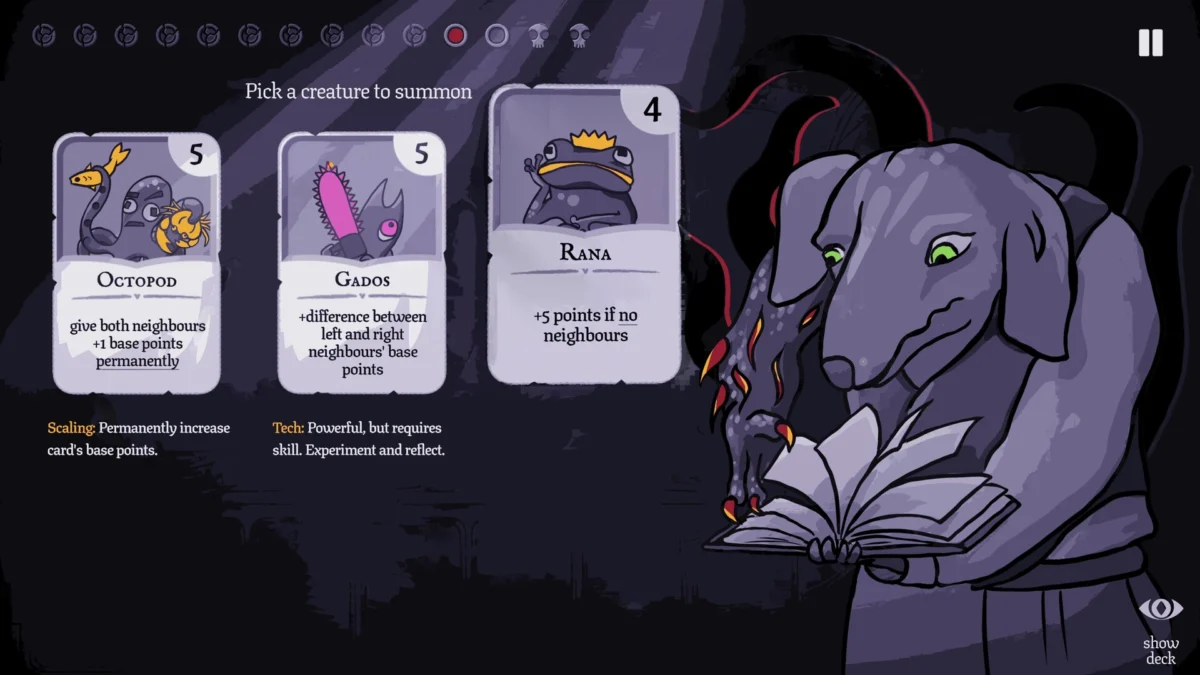
In the crowded landscape of independent gaming, where deckbuilders have become a saturated sub-genre, Burn With Me emerges as a haunting anomaly. While its aesthetic and mechanical core borrow from the lexicon of collectible card games, it defies the traditional expectations of deck construction. Instead, it offers an atmospheric, high-stakes puzzle experience that prioritizes tactical planning over long-term deck optimization. Developed as an evocative exploration of forbidden knowledge, Burn With Me forces players into the role of a desperate practitioner, tasked with executing occult rituals by burning away their very tools of survival.
The Core Concept: Rituals Over Roguelikes
At its heart, Burn With Me is a game about transformation through destruction. The player is thrust into an unsettling narrative frame: a passionate, perhaps fanatical, teacher who has begun to share forbidden, ancient secrets with their class. This isn’t a simple history lesson; it is an indoctrination into a world of eldritch rites.
Unlike conventional deckbuilders—where the goal is to curate a lean, efficient library of cards—Burn With Me utilizes a shifting, ephemeral deck. Each round, players are presented with a selection of three sacrificial creature cards. The challenge lies not in building a permanent synergy, but in making the most of the resources provided for the current cycle. Players must navigate these rounds with surgical precision, as every card played is effectively a countdown to a boss encounter. To succeed, one must balance point accumulation with the literal sacrifice of their deck, ensuring that by the time the boss arrives, the player has accumulated enough power to "overflow the vial" and claim victory.
Chronology of the Occult: A Gameplay Loop
The gameplay loop of Burn With Me is meticulously designed to create a sense of mounting tension. The progression is defined by the following phases:
- The Selection Phase: At the start of each round, the player chooses from a limited pool of creature cards. Each card acts as a vessel for ritualistic potential. Some cards possess inherent passive abilities that buff adjacent cards, while others are "high-risk, high-reward" entities that grant massive point totals but self-destruct upon use.
- The Ritual Phase: Players arrange their cards on a board, observing strict spatial constraints. Some creatures refuse to be placed near others; some require specific numerical values—odd or even—on their flanks to activate their potency. The spatial puzzle element transforms the board into a delicate ecosystem of sacrifices.
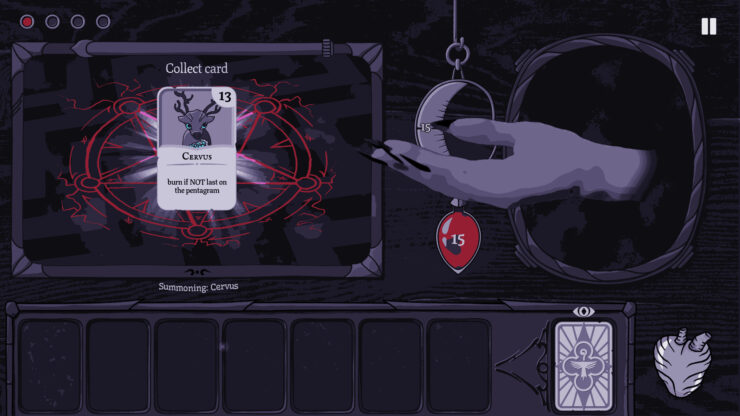
- The Combustion Phase: Once the board is set, the "burning" occurs. This is the visual and mechanical climax of the turn. As cards are sacrificed, they generate the spiritual energy required to fill the vial. The animation of an on-screen hand guiding these cards into the flame adds a tactile, visceral quality to the digital experience.
- The Overflow: Once the ritual reaches critical mass, the accumulated power leaks into the player’s "heart," a metaphor for the deepening of the narrative mystery. This constant influx of dark knowledge acts as both a reward and a narrative hook, driving the player to survive the next, increasingly difficult round.
Strategic Complexity: Beyond the Deck
The distinction between a deckbuilder and a strategy game is vital here. In a traditional deckbuilder, the player is the architect of their own destiny, refining their deck over hours of play. In Burn With Me, the player is a tactician working with the hand they are dealt. This shift in perspective forces the player to focus on the immediate board state.
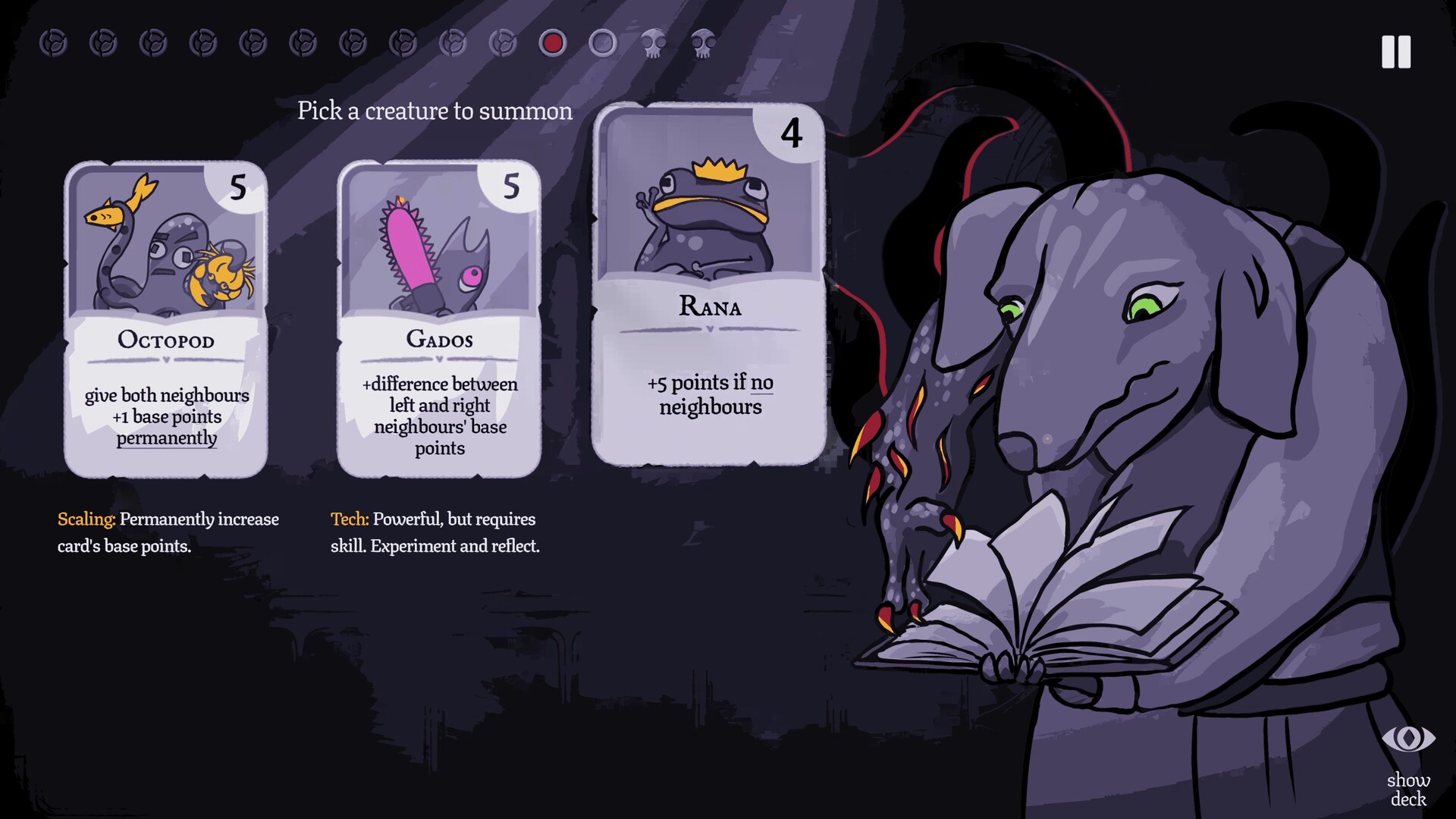
Strategic depth is found in the constraints. Because many cards destroy themselves after a single use, the player cannot rely on a "favorite" card to carry them through the entire game. The player must constantly adapt to the loss of their best pieces. This creates a "scarcity mindset" that mirrors the thematic desperation of the narrative. By the time a player faces a boss, they are often left with a depleted, ragtag group of cards, forcing them to rely on the synergy of their final, desperate choices.
The Aesthetic of Dread: Visual and Narrative Design
One of the most striking aspects of Burn With Me is its commitment to mood. The game uses color palettes and interactive story elements to create an immersive, unsettling environment. The visual feedback—the way the cards react to being burned, the eerie hand that orchestrates the ritual, and the haunting illustrations on the creatures—all serve to ground the player in the teacher’s strange, obsessive world.
The narrative is told through these incremental revelations. As the player burns through their deck, they are also burning through the mystery of what the teacher has seen. The game avoids the "lore dump" common in modern titles, choosing instead to drip-feed information through the act of play. It feels less like a game and more like a séance, where the player is an active participant in uncovering something that perhaps should have remained buried.
Official Perspectives and Development Status
While Burn With Me is currently in the active stages of development, its presence on platforms like Steam has already generated significant curiosity within the indie scene. The developer has maintained a transparent approach, highlighting the game’s unique mechanical identity—specifically, its departure from the "roguelike deckbuilder" tropes that have dominated the market since the success of titles like Slay the Spire.
By focusing on "sacrificial" mechanics rather than "collection" mechanics, the developers aim to differentiate the title. Their focus remains on the pacing of the ritual; the goal is to make the player feel the heat of the fire, both metaphorically and mechanically. As the project moves toward a full release, the development team is reportedly refining the balance between the "odd-number" placement requirements and the sheer destructive power of the cards, ensuring that every run feels unique but remains fair.
Implications for the Genre
The success of Burn With Me could signal a shift in how indie developers approach card-based mechanics. For years, the industry has chased the "infinite replayability" model of deckbuilders, where the focus is on building the most broken, powerful combination of cards possible. Burn With Me suggests an alternative path: the "finite, tactical puzzle."
By limiting the player’s ability to control their deck, the developers have stripped away the "power fantasy" and replaced it with a "survival fantasy." This is a significant design choice. It suggests that players are looking for more than just statistical optimization; they are looking for narrative stakes. When a card represents a sacrifice rather than just a utility, the decision to play it carries emotional weight. If Burn With Me succeeds, it may encourage a wave of strategy games that prioritize the story of the game over the stats of the game.
Conclusion: A Ritual Worth Watching
Burn With Me is a daring experiment in atmosphere and constraint. By subverting the expectations of the deckbuilding genre, it creates an environment where every decision is heavy with consequence. The game’s commitment to its occult theme—from the teacher’s haunting dialogue to the visceral satisfaction of burning cards to power a vial—makes it a title to watch closely.
For those tired of the traditional roguelike formula, Burn With Me offers a refreshing, if slightly unnerving, alternative. It is not about building the perfect deck; it is about surviving the ritual. As the project continues to evolve in development, it stands as a testament to the power of indie games to take a well-worn genre and set it on fire, creating something entirely new from the ashes. With its unique blend of strategic depth, narrative mystery, and occult horror, it is a game that promises to leave a lasting impression on anyone brave enough to pick up the cards.
Players interested in exploring this dark, ritualistic journey are encouraged to add Burn With Me to their Steam wishlist, keeping a watchful eye on its progress as it nears its final, sacrificial form.


 Lina Hope
 Pevita Pearce