

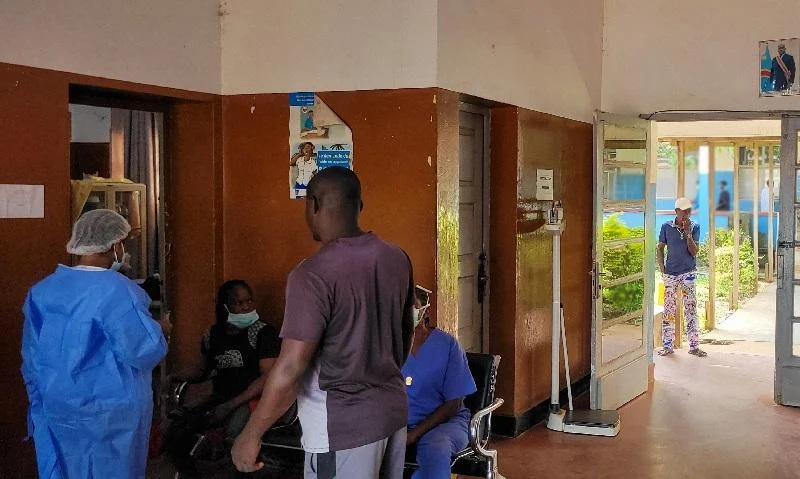
GENEVA/KINSHASA – The World Health Organization (WHO) officially declared a "public health emergency of international concern" (PHEIC) on Sunday, signaling a critical escalation in the fight against a rapidly evolving Ebola outbreak centered in the Democratic Republic of the Congo (DRC) and spilling over into neighboring Uganda.
While the UN health agency stopped short of labeling the event a pandemic, the classification underscores the precarious nature of this specific outbreak. Unlike the more common Ebola-Zaire strain, for which effective vaccines and therapeutics have been refined over the last decade, this outbreak is driven by the Bundibugyo virus, a pathogen for which no specific medical countermeasures currently exist.
The Gravity of the Situation: Main Facts and Current Status
As of Saturday, the statistical landscape of the outbreak presents a sobering picture of a health system under immense pressure. The WHO reports 246 suspected cases, eight laboratory-confirmed infections, and a staggering 80 suspected deaths linked to the current wave. The epicenter is concentrated in the DRC’s eastern Ituri province, specifically impacting the health zones of Bunia, Rwampara, and Mongbwalu.
The declaration of a PHEIC serves as a formal international rallying cry, designed to trigger coordinated global funding, resource mobilization, and heightened surveillance protocols. The WHO has cautioned that the current data likely represents only a fraction of the true scope of the crisis, citing a high positivity rate in initial samples and a mounting backlog of suspected cases that suggests widespread, community-level transmission.
"This is an extraordinary situation," a senior WHO spokesperson noted during a Sunday briefing. "We are dealing with a strain that lacks the robust pharmacological arsenal we have become accustomed to with the Zaire strain. Our response must be swift, clinical, and collaborative to prevent a regional catastrophe."
Chronology of a Crisis: From Ituri to Kinshasa
The timeline of the current outbreak has been defined by rapid movement and the challenges of regional transit.
- Mid-Week Realization: Local health authorities in the DRC first sounded the alarm in Ituri, noting a spike in hemorrhagic fever-like symptoms. By Friday, the DRC Ministry of Health confirmed 80 deaths related to the mysterious outbreak.
- Friday’s Escalation: The situation shifted from a localized issue to a transnational threat on Friday. Reports emerged from Uganda’s capital, Kampala, confirming two laboratory-positive cases—individuals who had recently transited from the DRC. One of these cases resulted in a fatality, marking the first confirmed international spread of this outbreak.
- Saturday’s Expansion: Evidence of the virus’s reach was further solidified when a case was confirmed in Kinshasa, the DRC capital. The patient, having recently returned from the affected Ituri region, highlighted the extreme difficulty of containing the virus in a highly mobile, urbanized population.
- Sunday’s Emergency Declaration: Recognizing the breach of international borders and the high risk of further regional proliferation, the WHO Director-General invoked the highest level of alert, declaring the PHEIC.
Supporting Data: Why the Bundibugyo Strain is Different
Epidemiologists are particularly concerned about the "immunological blind spot" created by the Bundibugyo virus. During previous outbreaks involving the Ebola-Zaire strain, global health bodies deployed the rVSV-ZEBOV vaccine and monoclonal antibody treatments like mAb114. These tools were instrumental in bringing the 2018-2020 Kivu outbreak under control.
The Bundibugyo strain, however, does not respond to these established medical interventions. This "extraordinary" hurdle means that the public health response must rely entirely on the "three pillars" of classic epidemic control: rapid identification, strict isolation, and meticulous contact tracing.
Data from the affected health zones indicates that the transmission rate is bolstered by the high density of informal trade routes in Ituri. With 246 suspected cases, the sheer volume of contact tracing required is straining local health infrastructure. Health officials are monitoring hundreds of secondary contacts, a process that is often hindered by the rugged geography of eastern DRC and the inherent insecurity in the region.
Official Responses and Strategic Recommendations
The WHO’s response strategy is a delicate balancing act between containment and economic stability. The agency has issued a series of directives to regional governments:
- Border Security: Countries sharing land borders with the DRC are urged to activate national disaster and emergency-management mechanisms. This includes cross-border screening at designated checkpoints and enhanced surveillance along major internal transit arteries.
- Travel Restrictions: The WHO has implemented a travel ban for all confirmed cases and high-risk contacts. No international travel is permitted for those who have been exposed until a full 21-day incubation period has elapsed. Medical evacuation is the only exception.
- The "No-Closure" Mandate: Perhaps the most counterintuitive piece of advice is the WHO’s firm stance against blanket border closures. The agency warns that shutting down trade and travel out of fear will force populations into "shadow" migration patterns. When official borders close, individuals often utilize unmonitored bush trails, making it impossible for health authorities to track potential vectors of the disease.
"We are urging our member states to maintain open, monitored channels of communication and trade," the WHO statement read. "The goal is to manage the flow of people so that we can screen them, not to create a black market for travel that effectively hides the virus from our surveillance teams."
Implications for Regional Stability and Public Health
The emergence of the Bundibugyo virus in urban centers like Kampala and Kinshasa suggests that the threat is no longer confined to remote rural health zones. The movement of infected individuals to capital cities—which serve as hubs for international aviation and regional commerce—presents a "worst-case scenario" for containment efforts.
The Economic Cost
For the DRC and Uganda, the economic implications are severe. The region is already navigating the post-pandemic recovery, and the stigma associated with an Ebola outbreak often triggers an immediate collapse in tourism, a reduction in foreign direct investment, and a sharp decline in cross-border trade. Local markets, which are the lifeblood of communities in Ituri, face the risk of total paralysis.
The Social and Political Challenge
The success of the WHO’s intervention depends heavily on community trust. In areas where government presence has historically been contested or viewed with suspicion, health workers often face resistance. The "extraordinary" nature of this outbreak requires an unprecedented level of transparency. If the public perceives that the government is underreporting cases or implementing overly draconian measures, compliance with isolation orders will diminish.
A Call for Global Solidarity
The WHO is calling for a massive influx of funding and specialized medical personnel. While the focus is currently on the DRC and Uganda, the international community is being asked to view this as a potential global challenge. The absence of a vaccine creates a "race against the virus" to stop transmission before it reaches an international airport hub, where the potential for global dissemination increases exponentially.
As of today, the situation remains fluid. The WHO has established regional command centers in Bunia and Kampala to harmonize the data reporting process and ensure that clinical management of patients follows the highest international standards.
The coming three weeks will be critical. If the surveillance teams can successfully isolate the current chains of transmission, the outbreak may be contained. However, if the "silent" cases—those currently being reported as suspected but not yet confirmed—continue to rise, the region may be looking at a prolonged crisis that will test the resilience of Central Africa’s health systems to their absolute limit.
For now, the mandate is clear: monitor, isolate, and remain vigilant. The world is watching, and the clock is ticking.












No comments yet. Be the first to join the conversation!