

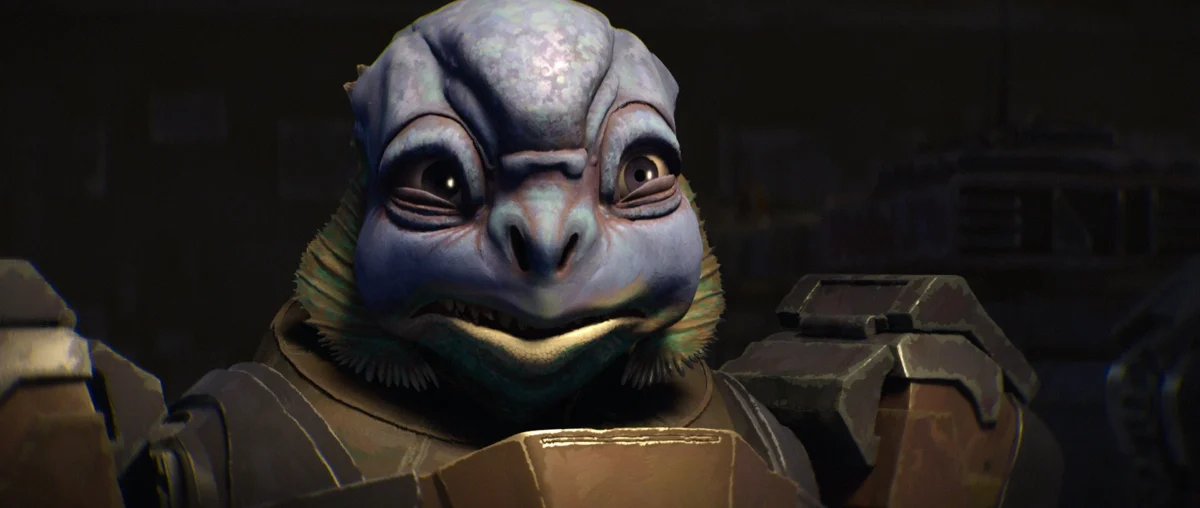
The Star Wars galaxy has long been defined by the binary struggle between the light and the dark, yet few characters have occupied the treacherous gray spaces between these extremes as effectively as Maul. From his striking, horned introduction in The Phantom Menace to his tragic, meditative end in Rebels, the former Sith Lord has remained an enigmatic fixture of the franchise. Now, with the premiere of Star Wars: Maul – Shadow Lord on Disney+, Lucasfilm offers an unprecedented deep dive into the character’s most volatile period: the chaotic early years of the Galactic Empire.
Spearheaded by Lucasfilm President and Chief Creative Officer Dave Filoni and developed by Head Writer Matthew Michnovetz and Supervising Director Brad Rau, this animated series promises to bridge the gap between Maul’s criminal syndicate power-grabs and his eventual descent into isolation. Featuring a powerhouse vocal performance by franchise stalwart Sam Witwer, the series does more than just fill in the gaps—it recontextualizes the tragedy of a man who, despite his immense power, remains fundamentally broken.
A Chronology of Vengeance: Setting the Stage
To understand Shadow Lord, one must understand the state of the galaxy at the dawn of the Imperial era. The Clone Wars have concluded, the Jedi Order has been decimated by Order 66, and the shadows are lengthening across the stars. For Maul, this is a time of profound disorientation. He is a man without a master, having been cast aside by Darth Sidious, and he is still reeling from the devastating losses of his brother, Savage Opress, and his mother, Mother Talzin.
The series finds Maul navigating the gritty, neon-soaked underworld of Janix. Unlike the grand, sweeping theaters of war seen in the prequel films, Shadow Lord focuses on the "seedy underbelly"—a place where crime syndicates maneuver for influence while the Empire solidifies its grip on the galaxy. It is here that Maul attempts to rebuild his criminal empire, not through the grand politics of the Senate, but through the desperate, pragmatic alliances of the underworld.
The Humanization of a Monster
Perhaps the most compelling aspect of Shadow Lord is its commitment to exploring the interior life of its antagonist. Dave Filoni, who has long been the architect of Maul’s journey, suggests that the audience’s enduring sympathy for the character stems from his profound relatability.
"I think people feel bad for Maul because he’s so relatable," Filoni notes. "He makes mistakes. He’s not perfect. He desires power, and then he gets toppled. That’s relatable. You know, we all probably feel like that when we have a low moment. He just doesn’t deal with it well. He keeps trying to attack his problems the same way. He can’t ever really let go of his hatred and his anger."
Sam Witwer, who has lent his voice to the character for over a decade, approaches the role with the nuance of an actor who understands that even the most "monstrous" figures are driven by human fragility. Drawing a parallel to J.R.R. Tolkien’s Gollum, Witwer emphasizes that Maul possesses the same emotional capacity as any other being, yet he is trapped by a lack of the "tools" required to process trauma. "All he has in front of him are supervillain tools," Witwer observes, noting that this makes the character’s downward spiral not just inevitable, but deeply tragic.
A Diverse Cast of Characters
While Maul is the gravitational pull of the series, the ensemble cast surrounding him provides the necessary tension to ground the narrative. The series introduces a tapestry of new characters whose lives intersect with Maul’s pursuit of power.
Devon Izara: The Reluctant Survivor
Played by Gideon Adlon, Devon Izara represents the shattered remnants of the Jedi Order. A former Padawan forced into hiding on Janix, Devon is a character defined by the "angst" of living in a post-Order 66 world. Adlon’s performance highlights the moral ambiguity of survival, as the character struggles to determine where the lines of right and wrong are drawn in an age where the light side is effectively outlawed.
Brander Lawson and the Law of the Underworld
Wagner Moura makes his Star Wars debut as Brander Lawson, a police captain on Janix who represents the "grounded realism" of the show. A single parent struggling to maintain order in a lawless sector, Lawson serves as a mirror to the galaxy’s broader decline. The showrunners were so taken by Moura’s performance that they expanded the character’s role significantly, allowing for deeper exploration of the struggle to balance familial duty with professional integrity. His partnership with the droid Two-Boots, voiced by Richard Ayoade, provides both humor and a necessary moral anchor for the series.
The Underworld Ecosystem
The cast is rounded out by a fascinating array of personalities:
- Looti Vario: Voiced by Chris Diamantopoulos, this Aleena crime boss serves as a "space cockroach" of the underworld—a character defined by insecurity and overcompensation.
- Master Eeko-Dio Daki: Legendary actor Dennis Haysbert brings a sense of gravitas to this surviving Jedi Master, who remains committed to the defunct ideals of the Jedi Order.
- Dryden Vos: Scott Whyte takes on the challenge of voicing the fan-favorite criminal leader, drawing on Paul Bettany’s live-action portrayal to craft a character defined by mercurial sociopathy.
Production Insights and Technical Artistry
The production of Shadow Lord was a collaborative effort that blurred the lines between voice acting and creative authorship. Supervising Director Brad Rau notes that the cast was hand-picked for their ability to bring "authentic" life to the characters.
The sound design, particularly regarding the character of Spybot, showcases the immersive nature of the Lucasfilm process. David W. Collins, who voices Maul’s feline-like droid, not only provided the voice but also served as the sound engineer, allowing him to improvise lines that directly informed the emotional beats of the scenes. This level of granular collaboration—where a droid’s purr or a subtle vocal tic informs the animation—is a hallmark of the high production value associated with modern Star Wars animation.
Implications for the Galaxy
Star Wars: Maul – Shadow Lord does not exist in a vacuum. By placing the narrative in the immediate aftermath of the Clone Wars, the series offers a vital perspective on how the transition to the Imperial era impacted the lives of everyday citizens and criminals alike.
For the fans, the series serves as a critical bridge. It explains how a man who was once at the center of the galaxy’s conflict retreated into the shadows to become the figure we encounter in Rebels. Furthermore, the inclusion of characters like Rook Kast and Marrok ensures that the series remains deeply connected to the broader Star Wars canon, rewarding long-time viewers while providing a fresh, self-contained story for newcomers.
A Legacy Continued
The series is a testament to the enduring appeal of the Star Wars animated format. Under the stewardship of executive producers including Filoni, Athena Yvette Portillo, and the creative team of Michnovetz and Rau, Shadow Lord captures the pulpy, adventurous spirit of the saga while simultaneously engaging in a mature exploration of morality, power, and the impossibility of moving past one’s own hatred.
As the series concludes its run, the central question remains: can a man defined by the dark side ever truly find redemption, or is he destined to remain a prisoner of his own making? With all episodes now streaming on Disney+, audiences are finally invited to witness the answers to these questions. The age of Maul may be one of shadows, but it is a period that illuminates the very core of the Star Wars experience.
In the words of the creative team, this is not a show that spoon-feeds the audience. It is a mystery, a tragedy, and a high-stakes adventure that reminds us why the galaxy far, far away continues to captivate the imagination of millions. Whether you are a devotee of the animated lore or a newcomer to the journey of the former Sith Lord, Maul – Shadow Lord is an essential chapter in the evolving history of the Star Wars universe.











No comments yet. Be the first to join the conversation!