

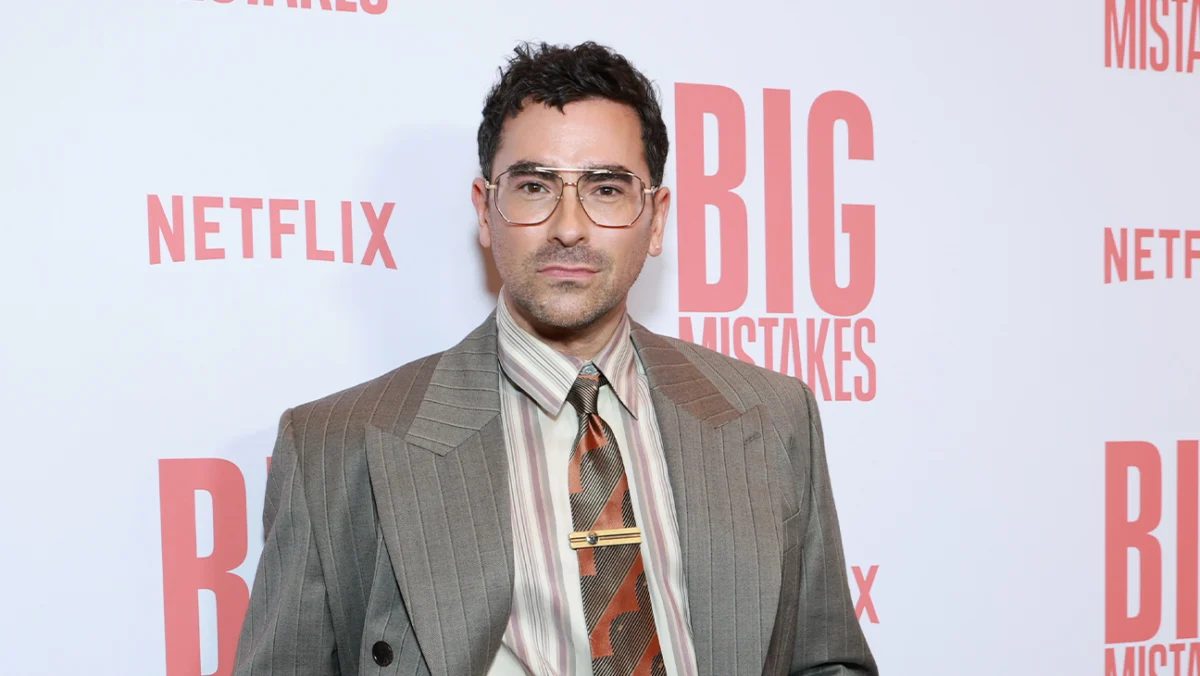
The landscape of modern television comedy is defined by its ability to balance absurdity with grounded, human performances. Netflix’s breakout series Big Mistakes, co-created by Dan Levy and Rachel Sennott, has masterfully navigated this terrain, offering audiences a darkly comedic look at the lives of two directionless siblings, Nicky and Morgan, who find themselves unexpectedly entangled in the high-stakes world of organized crime.
While the show has garnered critical acclaim for its sharp writing and chemistry, it is the commitment to performative detail—specifically regarding a notorious season one sequence—that has recently captured the industry’s attention. During a recent Netflix FYSEE event, Dan Levy pulled back the curtain on the meticulous, and often humorous, process of crafting the series’ most high-octane moments.
The Pursuit of Perfection: Crafting the Miami Drug Scene
At the heart of the conversation in Los Angeles was a specific, gritty sequence involving a drug-fueled Miami escapade. For Levy, who serves as both co-creator and lead actor, the goal was never just to portray the character’s descent into chaos; it was to do so with such technical precision that even the most cynical viewer would find it indistinguishable from reality.
"Doing lines and lines of cocaine was really fun," Levy joked to the audience, his deadpan delivery eliciting immediate laughter. However, the humor belied a serious professional anxiety. "I have never done cocaine before, and actors doing bad drugs, looking like somebody who’s never done drugs before, is my worst nightmare as an actor."
Levy’s concern highlights the "uncanny valley" of acting: when an audience can instantly spot the artificiality in a performance, the immersion of the narrative is shattered. To avoid this, he turned to the most reliable resource available: his crew.
A Chronology of Collaboration: The "Welcome Space"
The production of Big Mistakes was marked by a collaborative spirit that extended far beyond the traditional writer’s room. Levy’s approach to the scene was systematic, moving from the conceptualization of the character’s state of mind to the physical execution of the "drug" consumption, which utilized icing sugar as a prop substitute.
The Preparation
Before cameras rolled, Levy addressed the crew with a candid request. Aware of the sensitivity of the subject matter—and mindful that he was speaking at Netflix headquarters—he framed his plea as an invitation to expertise. He asked any crew members who had "dabbled" in such experiences to act as consultants. He promised anonymity and a "welcome space" for constructive feedback.
The Execution
Levy’s insistence on long, uninterrupted takes was rooted in a desire to remove the possibility of "cheating" through clever editing. "I need you to get me doing the entire line, camera up," he recalled instructing the camera department. "I want the audience to know that I actually downed this thing. I don’t want to cut away. I don’t want it to look like I cheated."
The Refinement
The result was a series of retakes where the crew provided real-time, nuanced direction. From the timing of the physical effects to the subtle "glassy-eyed" glaze one exhibits after the substances take hold, the crew’s feedback allowed Levy to calibrate his performance with clinical accuracy. This level of dedication transformed a simple prop-based sequence into a masterclass in character acting.
Supporting Data: The Impact of Creative Control
The success of Big Mistakes is not merely anecdotal; it is part of a broader trend of "auteur-led" comedy where the creator’s vision is given the space to flourish without excessive interference.
Big Mistakes features a sprawling, high-caliber cast, including Taylor Ortega as Morgan, alongside Abby Quinn, Boran Kuzum, Jack Innanen, Laurie Metcalf, and Elizabeth Perkins. The show’s ability to attract such veteran talent as Laurie Metcalf and Elizabeth Perkins is a testament to the script’s quality and the collaborative environment Levy and Sennott have fostered.
Furthermore, the show’s renewal for a second season—confirmed shortly after its initial run—indicates that Netflix is satisfied with the metrics of audience retention and critical reception. In the competitive streaming era, where content is often churned out at high volumes, a series that prioritizes the "craft" of the performance—even down to the micro-movements of an actor—often stands out as a brand-building asset for the platform.
Official Responses and Creative Direction
Levy’s recent comments during the FYSEE event serve as an official look into the "second-year slump" mitigation strategy. He confirmed that he is currently deep into the writing process for season two.
"I’m halfway through season two. I know what half the season looks like, and I know how it ends," Levy noted. His philosophy on television writing is notably rigid: he believes that to write a series effectively, one must have a clear understanding of the finale from the outset. This "end-to-end" planning is a stark contrast to shows that rely on improvisational plot progression, which can often lead to narrative drift.
Levy’s vision for the sophomore season is clear: "It’s bigger, bolder, sexier. It’s really sexy this season, everybody." He also spoke to the responsibility he feels toward his cast. He views his role as a writer-actor not just as a creator, but as a servant to the talent on screen, aiming to "pedestalize" his co-stars by providing them with dialogue that challenges their range.
Implications for the Future of the Series
The implications of this behind-the-scenes transparency are significant for both the show’s legacy and the industry.
- Raising the Bar for Authenticity: By inviting crew members to act as informal consultants, Levy has set a high bar for physical performance in the series. This sets a precedent that the audience can expect a level of granular realism in future seasons, potentially increasing the show’s cult following.
- The "Showrunner-as-Auteur" Model: Levy’s deep involvement in the scripting and performance of the show reinforces the trend of the "Showrunner-as-Auteur." This model, while demanding, allows for a cohesive tone that is often lost in larger, committee-led productions.
- Netflix’s Investment in Human-Centric Comedy: By hosting events like FYSEE and promoting the specific creative processes of its stars, Netflix is signaling a commitment to "prestige" comedy. This helps differentiate the platform from competitors who may focus more on pure volume.
As Big Mistakes moves into its second season, the focus will undoubtedly shift from the frantic, drug-fueled errors of youth to the more complex consequences of the siblings’ criminal entanglement. With a solidified writing room and a star who is willing to obsess over every "glassy-eyed" detail, the show appears poised to maintain its trajectory as one of the most compelling comedies on television.
The success of the series, however, remains rooted in the small, seemingly insignificant moments—like the one Levy described—where the line between the character and the actor is blurred in the name of artistic truth. For fans of the show, the wait for season two is not just about seeing what Nicky and Morgan do next; it is about witnessing the next iteration of a project that, by all accounts, is being built with an uncompromising attention to detail.
As Levy concluded, "The goal is to keep raising the bar and to keep telling the story and to keep letting more and more warmth and love into the show as it’s earned." It is this combination of dark, criminal absurdity and genuine, earned heart that will likely keep Big Mistakes at the top of the queue for the foreseeable future.











No comments yet. Be the first to join the conversation!