

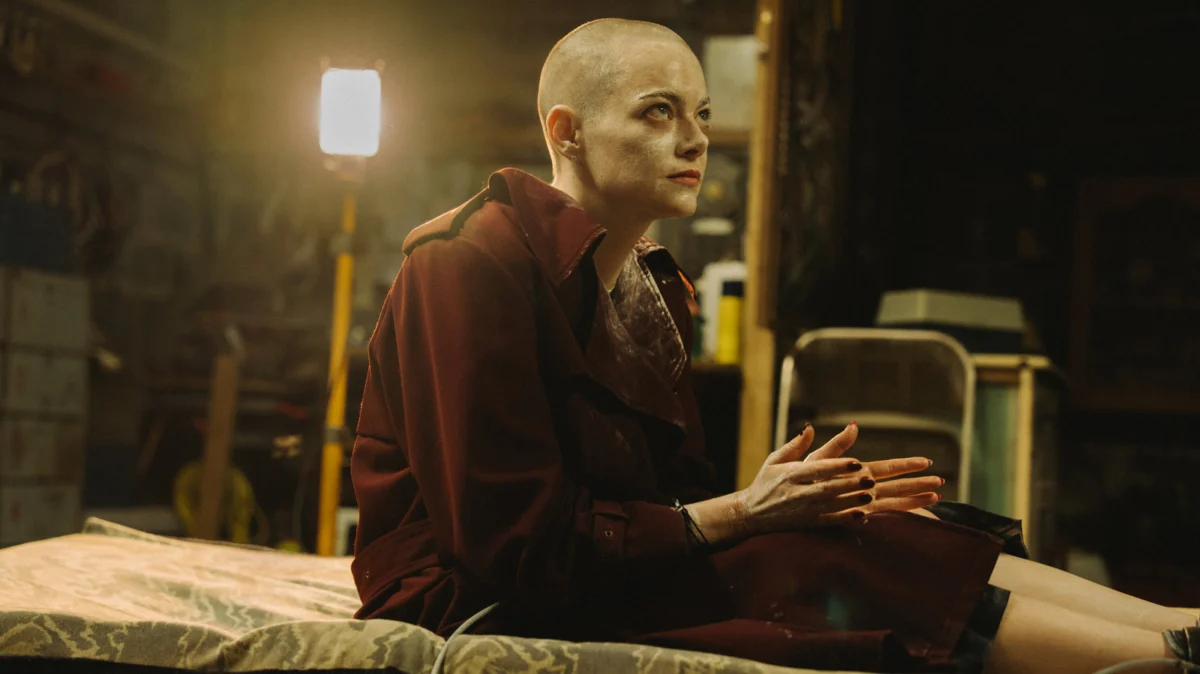
In the landscape of modern cinema, few creative partnerships have been as consistently provocative as that of director Yorgos Lanthimos and muse Emma Stone. Since their first collaboration on 2018’s The Favourite, the duo has carved out a niche for the surreal, the grotesque, and the deeply human. Their 2025 project, Bugonia—a daring, chaotic reimagining of Jang Joon-hwan’s 2003 South Korean cult classic Save the Green Planet!—serves as the apex of their collaborative trajectory.
Bugonia is a film that refuses to be categorized. It is part hostage thriller, part sci-fi satire, and part existential horror. By casting Jesse Plemons as a volatile conspiracy theorist and Stone as his enigmatic, potentially extraterrestrial captive, Lanthimos delivers a biting critique of contemporary capitalism, the erosion of empathy, and the climate catastrophe. To understand the film’s shocking conclusion, one must first look at the volatile anatomy of its central conflict.
The Anatomy of a Conspiracy: Plot Overview
The narrative centers on Teddy Ganz (Jesse Plemons), an isolated, paranoid warehouse worker residing in a dilapidated home alongside his cousin, Don (Aidan Delbis). The pair operate in a vacuum of misinformation and trauma. Teddy is convinced that the pharmaceutical giant Auxolith is orchestrating a global genocide, led by their CEO, Michelle Fuller (Emma Stone). Teddy’s central obsession is the belief that Michelle is an Andromedon—an alien invader harvesting human resources and destroying honeybees to prepare the Earth for colonization.
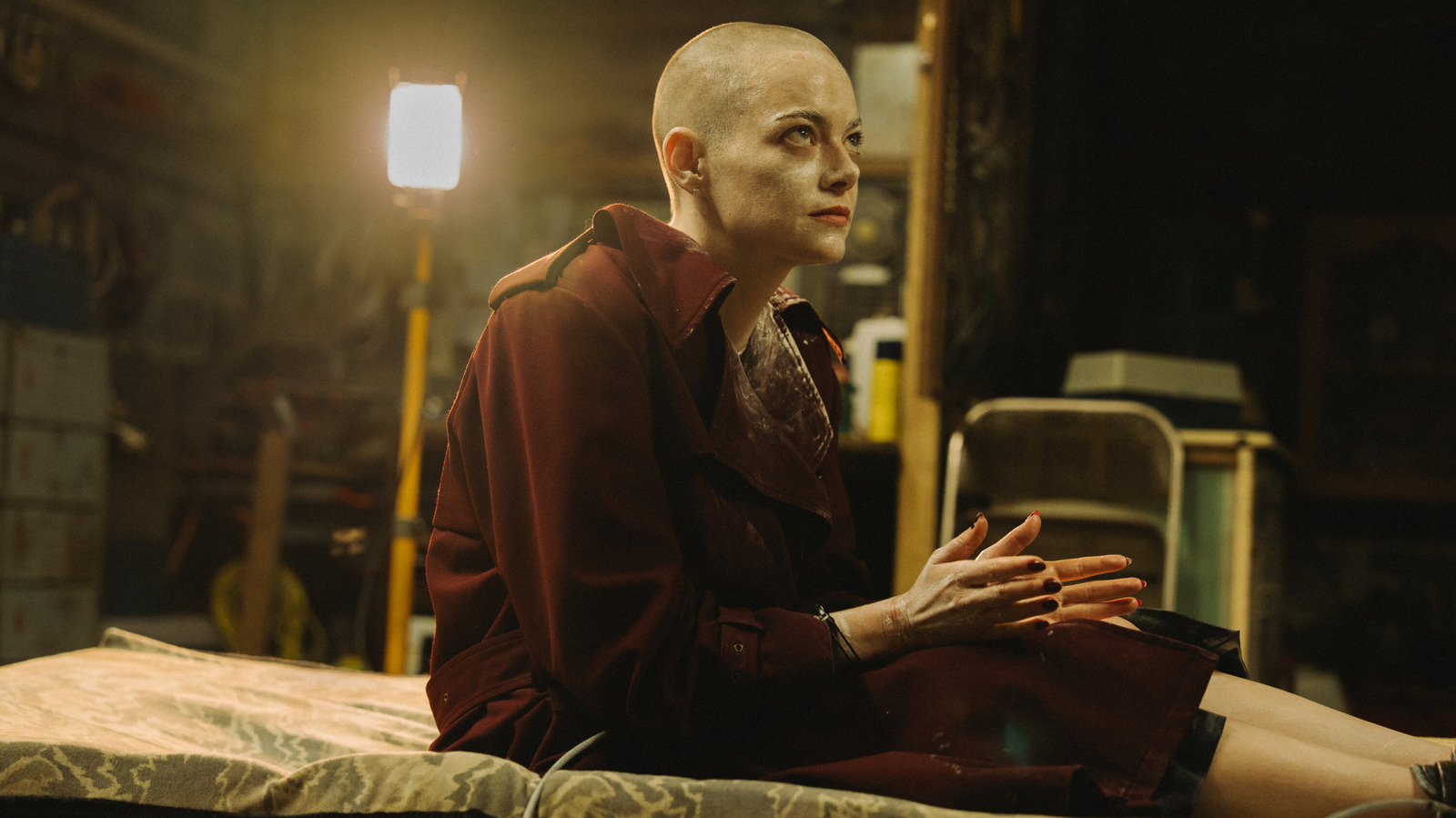
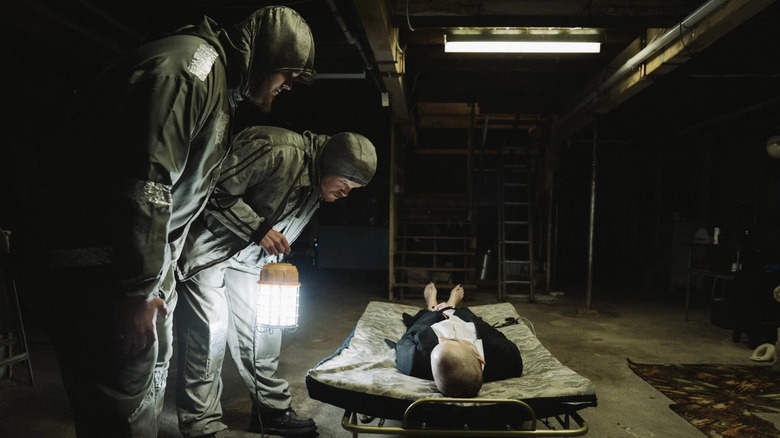
The inciting incident is as brutal as it is absurd: Teddy and Don kidnap Michelle, holding her hostage in their basement. To "extract the truth" from her, they subject her to a series of escalating tortures, including a harrowing sequence involving electrocution set to the jarring irony of Green Day’s "Basket Case."
As the film progresses, the boundaries between Teddy’s madness and reality blur. The audience learns of the death of Teddy’s mother, Sandy (Alicia Silverstone), which Teddy attributes to Auxolith’s clinical trials. However, as the body count in Teddy’s basement rises—including the murder of a local sheriff—the film forces the viewer to confront a chilling question: Is Teddy a murderer, or is he the only person on Earth who sees the truth?
Chronology of the Climax: A Descent into Chaos
The final act of Bugonia is a masterclass in narrative subversion. As Michelle manages to manipulate Teddy, she exploits his fanaticism to convince him that his mother’s condition could be reversed with an "alien antidote"—which is, in reality, a fatal dose of antifreeze.
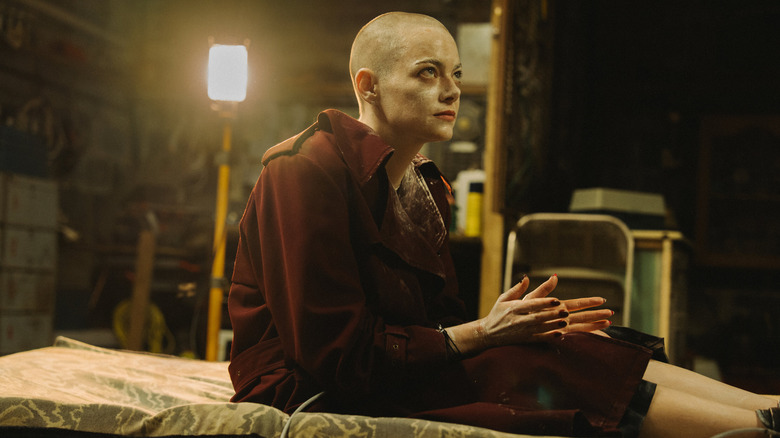
In a moment of discovery that shifts the tone from dark comedy to psychological horror, Michelle explores a secret room in the basement, uncovering the grisly evidence of Teddy’s previous "investigations": the preserved body parts of victims he suspected were aliens.
The climax forces a collision between the domestic scale of the basement and the cosmic scale of the Andromedon agenda. Michelle eventually convinces a distraught Teddy that the only way to reach her home planet is by traveling to the Auxolith corporate headquarters. The resulting sequence is a chaotic blend of farce and tragedy. Upon entering a specialized closet—which Teddy believes to be an interdimensional portal—his homemade suicide vest detonates, decapitating him. In a visceral, darkly comedic stroke of irony, his severed head strikes Michelle, marking her as the catalyst for the film’s final, planetary-scale event.
The Great Filter: Understanding the Andromedon Agenda
The film’s final revelation is that Teddy was, in fact, correct about Michelle’s identity. She is an Andromedon royal. However, where he failed was in his assessment of their intentions.
The Andromedons did not arrive to enslave humanity for labor; they arrived to observe a species that had become a terminal threat to the planet’s biosphere. After witnessing the extreme cruelty demonstrated by individuals like Teddy—a microcosm of humanity’s capacity for senseless violence—the Andromedons conclude that the "human experiment" has reached its expiration date.
In a sequence defined by stark, haunting imagery, the Andromedons deploy a planetary shield. This "dome" effectively terminates human life across the globe. Notably, the film depicts this mass extinction as a surgical process; the fauna and flora are spared. The final montage, set to Marlene Dietrich’s "Where Have All the Flowers Gone?", shows a world stripped of its human occupants, leaving behind a verdant, flourishing ecosystem.
Official Perspectives: The Cast and Crew Weigh In
The production team behind Bugonia has been vocal about the film’s thematic weight. Screenwriter Will Tracy, in discussions regarding the script’s development, noted that the film serves as a reaction to the prevailing sense of hopelessness regarding climate change. "The ending feels a bit more reactive," Tracy stated, suggesting that the film is a meditation on our role as stewards—or destroyers—of the planet.
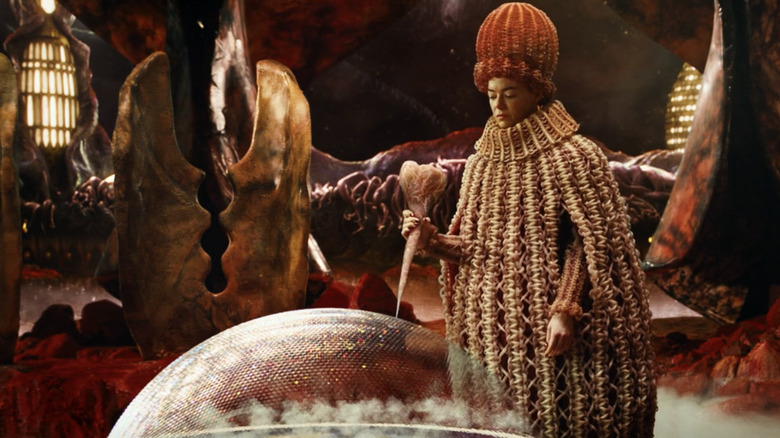
Emma Stone and Jesse Plemons have offered unique insights into the film’s most debated moment: the explosion in the closet. While some fans speculated that Michelle used an alien device to trigger the blast, both actors maintain a more grounded, albeit gruesome, theory. Stone and Plemons discussed the "friction" caused by the homemade bomb’s instability, suggesting that Teddy’s own volatile, amateurish engineering was his ultimate undoing. For Stone, the scene was a testament to the film’s production design, particularly the hyper-realistic prosthetic head used for the final stunt, which she described as "one of the most incredible pieces of prosthetic work" she had ever encountered.
Implications: A Pessimistic or Optimistic Conclusion?
The most contentious element of Bugonia is its director’s insistence that the ending is, in fact, "optimistic." To the average viewer, a film that concludes with the extinction of the human race is inherently nihilistic. Yet, Lanthimos argues that the optimism lies in the potential for a fresh start.
The Philosophical Dichotomy
Lanthimos posits that the film serves as a mirror for the viewer’s own worldview. If one views humanity as inherently flawed and destructive, the film’s ending is a relief—a necessary cleaning of the slate. If one views humanity as capable of redemption, the ending is a tragedy.
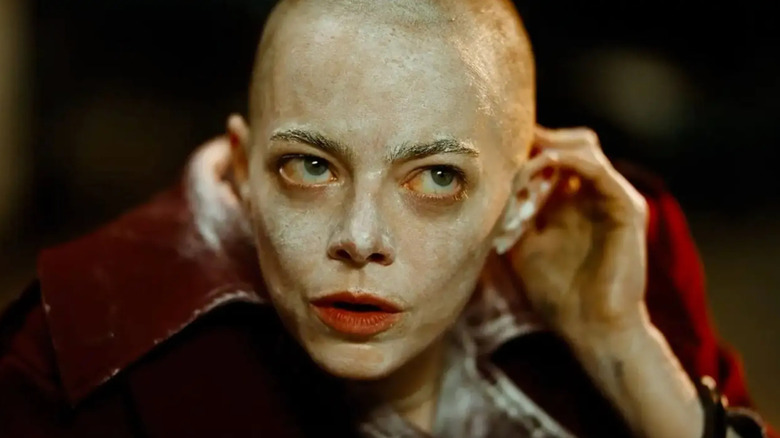
- The Environmental Argument: By showing the Earth thriving after the extinction of humanity, Lanthimos aligns the film with deep ecology, suggesting that the planet’s health is inversely proportional to human dominance.
- The Psychological Bias: Lanthimos challenges the audience to recognize their own biases. Throughout the film, we are conditioned to side with Teddy, the "underdog" conspiracy theorist, only to realize he is a violent murderer. When we are then forced to side with the alien "invader," the film demands that we re-evaluate our definition of "good" and "evil."
Societal Reckoning
The film concludes not with a whimper, but with the silence of a world reclaiming itself. By centering the story on a "conspiracy theorist" who is actually right, Bugonia comments on the fractured state of truth in the digital age. It suggests that while the individual may grasp fragments of the truth, the context in which they place that truth—and the actions they take in its name—can be catastrophic.
Ultimately, Bugonia is a film that refuses to offer comfort. It suggests that our collective path—driven by unchecked consumerism and the destruction of the natural world—has set us on a collision course with a reality that may not care for our survival. Whether one walks away from the theater feeling horrified or liberated depends entirely on whether they believe humanity is worth saving. Lanthimos leaves that judgment entirely to the audience, inviting us to look at the ruins of his film and decide for ourselves if we are looking at an end, or a beginning.











No comments yet. Be the first to join the conversation!