

“The ship has sailed,” declared film producer Serge Hayat during his opening remarks at the Marché du Film’s inaugural Creator Economy Summit in Cannes. His message was unequivocal: the debate regarding whether digital content creators belong in the film industry is officially over. They have not only arrived; they are actively dismantling and rebuilding the traditional architecture of film production and distribution.
As the lines between viral internet content and cinematic releases continue to blur, the industry is witnessing a tectonic shift. What was once dismissed as a transient trend of “YouTubers” playing filmmaker has evolved into a sophisticated, multi-million-dollar economic force that is proving capable of solving one of the industry’s most persistent post-pandemic challenges: how to bring Gen Z back to the cinema.
The Convergence of Two Worlds: Main Facts
The Creator Economy Summit, held during the prestigious Cannes Film Festival, highlighted a pivotal moment for global cinema. The industry is moving away from a hierarchical structure—where gatekeepers decide what constitutes “prestige” content—toward a decentralized model driven by established, loyal communities.
The central thesis of the summit was simple: the infrastructure of traditional film distribution is being augmented, and in some cases replaced, by the massive, highly engaged audiences found on platforms like YouTube. Companies like mk2, a powerhouse in international film distribution, are leading this charge. By launching the “YouTube Ciné-Club” in 2023, mk2 has formalized the process of bringing digital-first projects into the traditional theatrical fold. This is not merely an experiment in crossover content; it is a calculated effort to revitalize the cinema-going experience by meeting audiences where they already live—online.
A New Cinematic Chronology
To understand the current momentum, one must look at the recent timeline of creator-led success stories.
The Catalyst: The Post-COVID Crisis
Following the pandemic, the global box office faced a existential question: Would the digital-native generation, accustomed to streaming and short-form content, ever return to the theater? Executives were paralyzed by falling attendance rates among the 18–25 demographic.
The Rise of the “Ciné-Club” (2023–2024)
In 2023, mk2 launched its dedicated label to bridge the gap between digital creators and theatrical release strategies. The first major success under this banner was Kaizen, a feature-length documentary directed by the prolific creator Inoxtag. The results were staggering: the film secured over 300,000 admissions in a single day across France. This success was not built on traditional marketing spend, but on the authentic, pre-existing relationship between Inoxtag and his community.
The Iron Lung Phenomenon (January 2024)
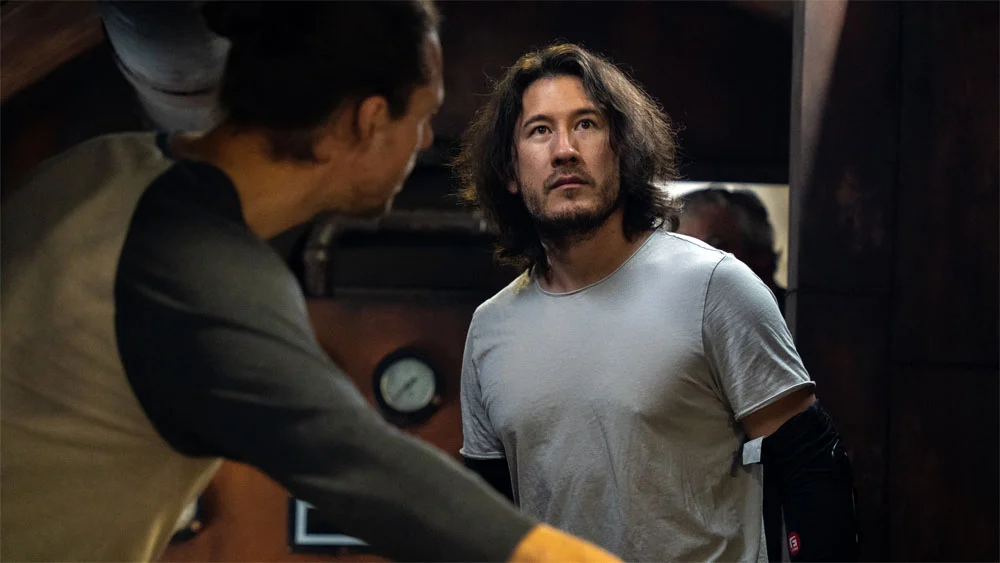
Perhaps the most potent case study is Markiplier’s Iron Lung. Produced, directed, and self-distributed by the creator (whose real name is Mark Fischbach), the film represents the pinnacle of the creator-led model. Opening in cinemas on January 30, 2024, the film turned a modest $4 million budget into a $50 million global box office haul. The film had virtually no conventional marketing budget, relying instead on Markiplier’s massive social media presence—a following exceeding 12 million on YouTube alone.
Supporting Data: Why the Model Works
The data suggests that the "creator-to-cinema" pipeline is not just a fluke, but a scalable business strategy.
- Lower Overhead, Higher Engagement: In the case of Iron Lung, the lack of a traditional marketing budget was not a hurdle; it was a feature. By leveraging a direct-to-audience channel, creators bypass the expensive and often inefficient media buying processes that plague traditional studio releases.
- The "Facilitator" Model: Elisha Karmitz of mk2 emphasized that the company’s role is no longer to "discover" talent in the traditional sense, but to act as a facilitator. By providing the infrastructure—the screens, the ticketing, and the professional post-production support—mk2 allows the creator to focus on what they do best: storytelling and community management.
- Conversion Rates: The success of Kaizen proves that digital audiences are willing to pay for a communal experience if the content is "sincere." This implies that the value proposition of cinema is shifting from "watching a movie" to "participating in an event."
Official Responses and Industry Perspectives
The summit featured a chorus of voices from both the traditional film world and the digital tech giants.
Elisha Karmitz (mk2):
Karmitz argued that cinema has historically been a place for community and shared passion. "YouTube is now a place where fans gather," he noted. "We wanted to build these bridges to keep cinema relevant." He underscored that mk2’s success with creators is predicated on respecting the creator’s vision. "We are simply the facilitators. It was that sincerity that made the release a success."
Markiplier (Creator/Director):
Markiplier provided a sobering look at the "stigma" that has historically plagued his cohort. During his panel, he revealed that he initially attempted the traditional route, pitching Iron Lung to major distributors and entering it into film festivals. He was rejected across the board. "I tried to show it to distributors, and they turned it down. I submitted to film festivals, and it got rejected. After that, I finally decided to just bet on my audience." His experience serves as a cautionary tale for traditional studios that continue to dismiss digital creators as "lesser" artists.
Angela Courtin (YouTube):
As the Vice President of Marketing at YouTube, Courtin challenged the industry to drop its biases. "If you look at any creator who has been on the platform for many years… they create every day. They’re artists," she asserted. She argued that the success of creators like Markiplier is inherently replicable if studios learn to stop viewing creators as a "special interest" and start viewing them as high-volume, high-quality content producers.
Implications for the Future of Film
The implications of this shift are profound and far-reaching:
1. The Death of the "Stigma"
The traditional "snobbery" surrounding digital content is becoming a liability for studios. As creators continue to generate revenue that rivals mid-budget studio films, the industry is forced to reconcile with the fact that these creators possess something money cannot buy: a pre-sold, hyper-loyal audience.
2. A New Distribution Paradigm
We are moving toward a hybrid distribution model. Films may debut on digital platforms to build hype and then transition to theatrical runs for the "event" experience. Alternatively, they may follow the Kaizen model, where a theatrical release serves as a premium "preview" before the film is released for free or on-demand, creating a sense of urgency and exclusivity.
3. Democratization of Risk
For years, the film industry has been obsessed with "de-risking" projects by casting A-list stars. The creator economy suggests that the "star" is no longer the actor on the screen, but the person behind the camera. When a creator like Markiplier finances their own film, the risk is distributed differently, allowing for more creative freedom and experimentation with genres that traditional studios might consider "too niche."
4. Cultural Permeability
As Angela Courtin noted, creators have the power to "move culture." By allowing these artists to work across different mediums—from YouTube to the big screen—the film industry gains access to a fresh influx of storytelling styles, visual languages, and perspectives that have been tested and refined in the crucible of daily digital engagement.
Conclusion
The Creator Economy Summit at the Marché du Film was more than just a panel discussion; it was a signal that the traditional film industry is entering a new era of cooperation. As executives from Meta, Prime, and Banijay joined the conversation, it became clear that the integration of digital creators into the cinematic fold is not a temporary trend but a permanent restructuring of the entertainment landscape.
The barriers between the "influencer" and the "filmmaker" are dissolving. In their place, a new model is emerging—one that prioritizes community, authenticity, and the direct relationship between storyteller and fan. As the industry looks toward the future, the message from Cannes is clear: the creators have the keys to the kingdom, and the cinema is all the better for it.











No comments yet. Be the first to join the conversation!