

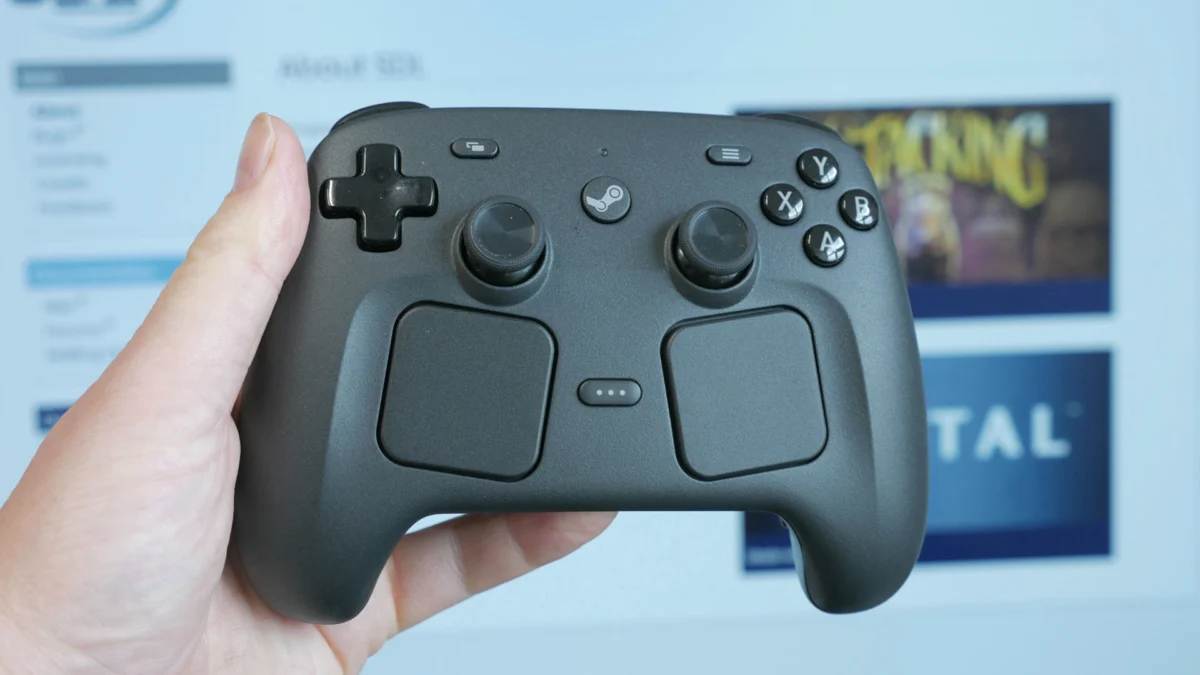
In a move that promises to breathe new life into Valve’s iconic but often restricted hardware, the Steam Controller is shedding its reliance on the Steam client. Through a comprehensive update to the Simple DirectMedia Layer (SDL)—the cross-platform development library that serves as the backbone for countless applications and games—the Steam Controller can now interface directly with software, bypassing the need for Steam’s background input translation services. This development marks a significant shift in how developers can treat Valve’s flagship peripheral, potentially elevating it from a niche Steam-bound tool to a versatile, platform-agnostic controller for the wider gaming ecosystem.
The Core Development: Direct Hardware Access
For years, the Steam Controller has occupied a unique space in the gaming market. Renowned for its dual trackpads, haptic feedback, and gyroscopic precision, it was designed to bridge the gap between mouse-and-keyboard strategy titles and the comfort of a couch-based controller setup. However, the hardware’s complexity was its primary hurdle: to function, it required Steam to run in the background to translate its unique inputs into signals the operating system could recognize.
The latest integration into SDL—a cross-platform software library that acts as a hardware abstraction layer—effectively removes this middleman. SDL is to cross-platform gaming what DirectX or OpenGL are to graphics rendering. By integrating the full suite of Steam Controller features—including its sophisticated touchpads, capacitive stick touch, and rear grip sensors—directly into the SDL library, Valve and the open-source community have opened the door for any developer utilizing SDL to bake native support for the controller into their applications.
A Chronology of the Steam Controller’s Evolution
To understand the significance of this update, one must look at the trajectory of Valve’s hardware efforts over the last decade.
- 2015: The Launch. The Steam Controller arrived with a bold promise: to bring the precision of a mouse to a controller form factor. While met with critical acclaim for its innovation, it faced immediate friction due to its proprietary software dependency.
- 2019: Discontinuation. Valve officially ceased production of the Steam Controller, shifting its focus toward the development of the Steam Deck. Many analysts at the time declared the hardware a "failed experiment," despite a passionate, dedicated fanbase that continued to utilize the devices.
- 2022-2024: The Steam Deck Renaissance. The success of the Steam Deck reinvigorated interest in Valve’s input technology. The Steam Deck’s controls are essentially a refined evolution of the Steam Controller’s philosophy, prompting a renewed interest in the original hardware’s capabilities.
- 2026: The SDL Breakthrough. A community-led push, culminating in the recent pull request to the SDL repository, marks the "liberation" of the hardware. This update ensures that the device is no longer just a Steam accessory, but a standardized input device recognized by any engine or emulator built upon the SDL framework.
Supporting Data: Why SDL Matters
SDL (Simple DirectMedia Layer) is a powerhouse in the world of software development. It is the silent engine behind thousands of projects, ranging from high-end indie games to essential system utilities. Because SDL is cross-platform, this update means the Steam Controller’s feature set is now natively supported on:
- Windows: Broadening compatibility for non-Steam games and Windows-based emulators.
- Linux: Solidifying the controller’s role as the gold standard for open-source gaming.
- macOS: Bringing sophisticated input options to a platform often ignored by mainstream controller manufacturers.
- Android and iOS: Enabling mobile developers to leverage advanced controller features for touch-intensive games.
Previously, SDL supported basic gamepad functionality for the Steam Controller, but the "special" features—the capacitive touchpads and grip sensors—remained locked behind Valve’s proprietary software. By unlocking these, developers can now implement "Steam Controller profiles" directly into their code, ensuring that a game running on a Linux emulator or an open-source engine can utilize the trackpads as mouse emulators without needing a Steam installation.
Implications: The Potential for Retro Gaming and Emulation
The most immediate impact of this update will likely be felt in the world of emulation and open-source game ports.
Many emulators, such as RetroArch or standalone ports of classic titles, rely heavily on SDL for input management. In the past, users would have to use complex "Steam Input" workarounds to get the trackpads working in an emulator—a process that often resulted in input lag or configuration headaches. With this native support, the Steam Controller could become the definitive way to play classic strategy games (like Age of Empires or Civilization) or mouse-heavy CRPGs (like Baldur’s Gate or Planescape: Torment) on a television screen.

Furthermore, this update democratizes the hardware. By moving the driver logic into a public, open-source library, the Steam Controller is effectively "future-proofed." Even if Valve were to shut down the Steam servers tomorrow, the community now has the technical framework to ensure the hardware remains functional across generations of operating systems.
A Note on Implementation: Developer Responsibility
It is crucial for users to manage their expectations regarding "automatic" support. The integration of these features into SDL does not mean that every game currently using SDL will suddenly recognize the Steam Controller’s advanced features.
The update provides the capability for developers, but the implementation remains in their hands. A developer must specifically update their game or engine to poll for these new inputs. For triple-A titles, which often rely on proprietary engines or custom middleware, this update might have little to no impact. However, for the vibrant indie scene and the robust emulation community, this is a call to action. Developers who take the time to map their games to the Steam Controller’s unique layout will likely find an appreciative and loyal audience among the device’s die-hard users.
Official Responses and the Road Ahead
While Valve has not released a formal press release regarding this specific pull request, the company’s ongoing commitment to the Steam Input API—which heavily influences how these drivers are written—suggests that this development aligns with their long-term goal of "input sovereignty."
The industry at large has responded with cautious optimism. For hardware enthusiasts, this is the final piece of the puzzle. The Steam Controller was always a visionary piece of hardware that was hampered by its ecosystem. By decoupling the hardware from the storefront, the community has effectively saved the device from obsolescence.
As we look toward the future, the question remains: will Valve return to hardware production? With the Steam Controller waiting list continuing to attract new names, the demand is clearly there. Whether or not a "Steam Controller 2" ever hits the shelves, the original device has been given a new lease on life. It is no longer a relic of a failed experiment; it is now a fully supported, cross-platform input powerhouse.
For those still waiting for their chance to own one, the advice remains the same: sign up for the reservation list. Even if you aren’t a "Steam power user," the ability to use the world’s most sophisticated trackpad-based controller on any platform, in any emulator, and in any open-source port, makes it an essential tool for the modern PC gamer.
In a world where hardware is increasingly locked behind walled gardens, this update serves as a rare, refreshing example of what happens when the power of open-source development meets visionary hardware design. The Steam Controller isn’t just back—it’s finally free.










No comments yet. Be the first to join the conversation!