

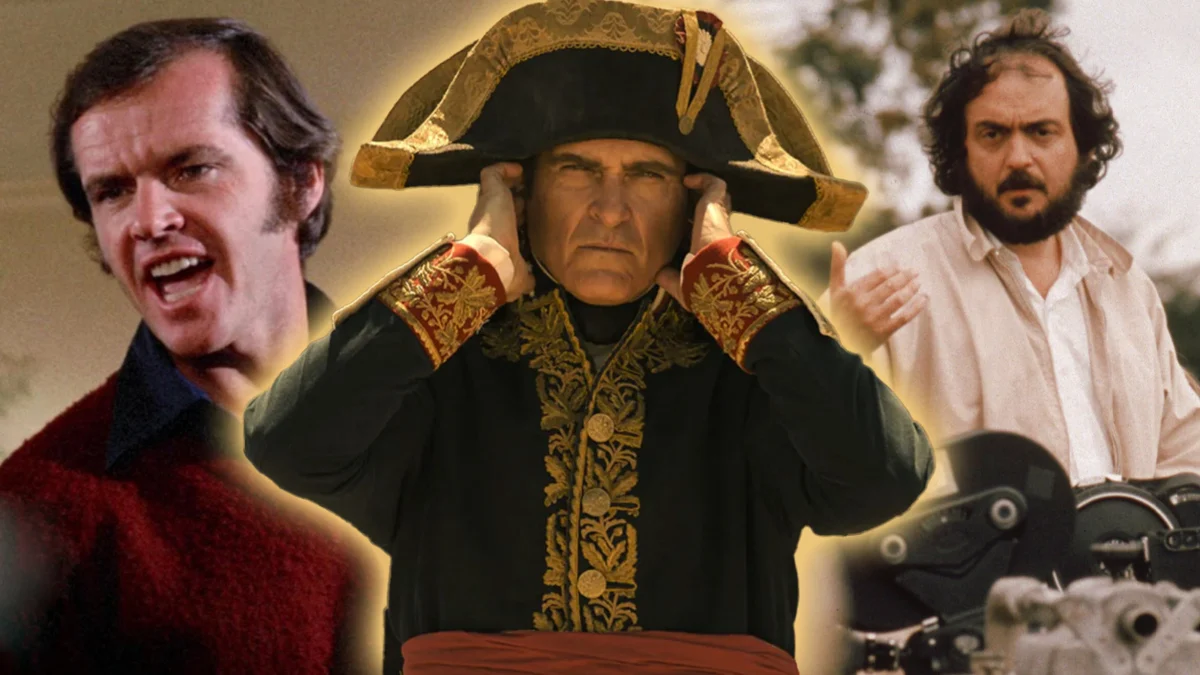
In the annals of cinema history, few "what-ifs" carry the gravitational pull of Stanley Kubrick’s Napoleon. It was intended to be the magnum opus of a director who had already redefined science fiction with 2001: A Space Odyssey. It was to be a film of unprecedented scale, psychological depth, and technical innovation—a "cradle-to-the-grave" epic that would not merely depict the life of the French Emperor, but inhabit his very consciousness. Yet, despite years of obsessive research, a finished screenplay, and a star-studded vision, the project famously collapsed.
Decades later, Napoleon remains the quintessential "greatest movie never made," a phantom limb of 20th-century art that continues to haunt film historians, archivists, and fans alike.
The Genesis of an Obsession
Stanley Kubrick’s fascination with Napoleon Bonaparte long predated his status as a legendary filmmaker. Even before the massive success of 2001: A Space Odyssey gave him the artistic capital to pursue such a gargantuan undertaking, he was captivated by the duality of the man: a military genius capable of reshaping the map of Europe, yet a man whose personal failings—specifically his volatile marriage to Joséphine de Beauharnais—ultimately led to his undoing.
After the release of 2001 in 1968, Kubrick felt the time was right. His vision was not to create a standard historical drama, but to utilize the medium of film to perform a deep-tissue scan of a historical giant. In a legendary, albeit minimalist, pitch to his backers, Kubrick declared: "It’s impossible to tell you what I’m going to do except to say that I expect to make the best movie ever made." At the time, with the cultural weight of 2001 behind him, no one had any reason to doubt he would succeed.
A Meticulous Invasion: The Research Phase
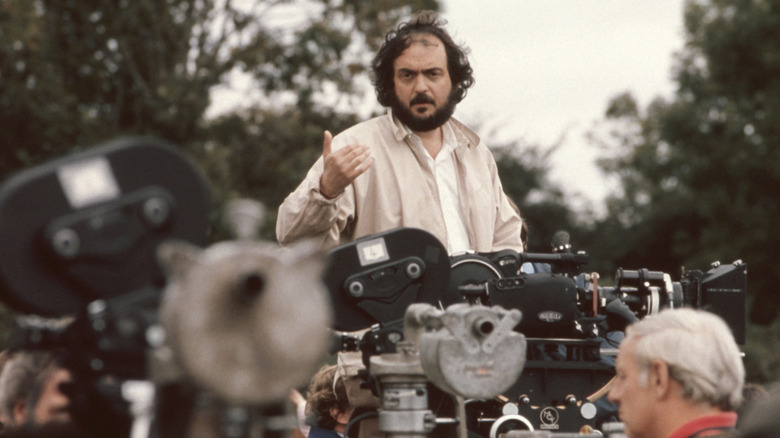
Kubrick approached pre-production with the strategic intensity of a general preparing for the Battle of Austerlitz. He viewed filmmaking not as an expressive art alone, but as a discipline requiring total data saturation.
He hired a small army of research assistants to scour archives across Europe. The result was a bibliographical feat: Kubrick reportedly read 278 books and thousands of scholarly articles on the Napoleonic era. His office became a command center, housing a staggering 25,000 index cards, each cataloging specific details of the Emperor’s life, his military maneuvers, his political correspondence, and his daily habits.
This was not merely for set decoration. Kubrick intended to capture the "genetic" truth of the man. He even adopted Bonaparte’s own dietary quirks, as noted by actor Malcolm McDowell, who observed the director eating specific, strange combinations of food because "Napoleon did."
The Screenplay: A 148-Page Blueprint
By 1969, the research had crystallized into a 148-page screenplay. The draft, later recovered from a salt mine in Kansas in 1994, is a lean, fast-paced document. It eschews the bloated, sentimental tropes of the historical epic in favor of a cold, analytical progression through Napoleon’s life.
It was, in the words of his brother-in-law and producer Jan Harlan, a "psychologically complex" skeleton. The script covered everything from military triumphs to the most intimate details of the Emperor’s sex life. However, Harlan noted that the screenplay was only a starting point. Kubrick’s genius lay in the "meat"—the camera movement, the lighting, and the performances—which he would have layered over the script during filming.
Casting the Emperor: The Jack Nicholson Connection
Kubrick was notoriously selective about his leads, and for Napoleon, he set his sights on the burgeoning talent of the era: Jack Nicholson. Following Nicholson’s breakout performance in Easy Rider, Kubrick saw the actor as the perfect vessel for the mercurial, intense, and often contradictory nature of Bonaparte.
Kubrick had envisioned a lean production budget that avoided the pitfalls of "overpriced movie stars." He believed that by filming in Romania, he could secure the cooperation of the government, which offered the use of 30,000 troops for a mere $2 per man. While the scale was immense, Kubrick remained adamant about maintaining control over the budget. He hoped to cast Audrey Hepburn as Joséphine, though she eventually declined, and planned to fill the remaining ranks with character actors of "impeccable caliber" rather than bankable celebrities.
The Waterloo of the Project
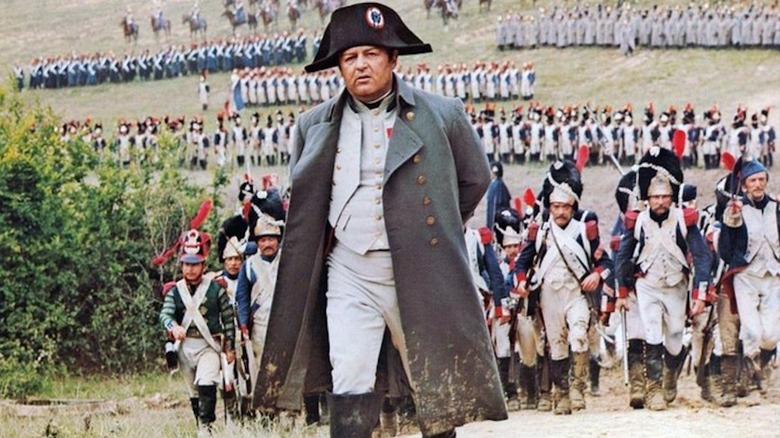
Despite the meticulous planning, the project began to falter in the early 1970s. The primary catalyst for its cancellation was the 1970 release of Sergei Bondarchuk’s Waterloo. Produced by Dino De Laurentiis, the film was a massive, $25 million endeavor that featured thousands of extras and a sprawling, albeit critically panned, narrative.
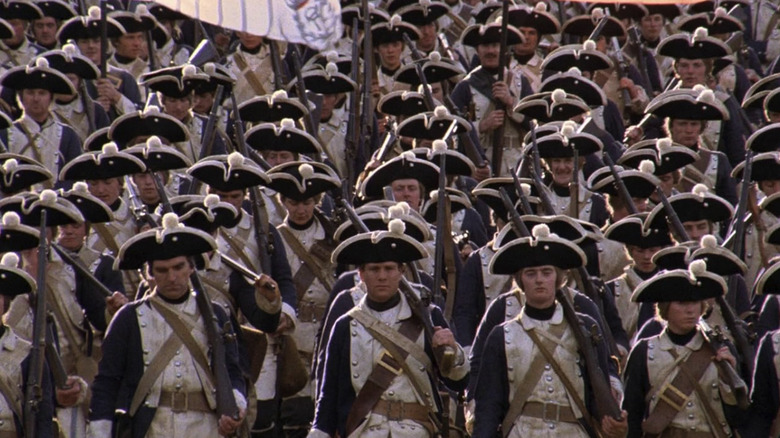
The failure of Waterloo at the box office sent a chill through the major studios. MGM, which had only agreed to fund the pre-production phase of Kubrick’s film, was suddenly terrified of the prospect of another expensive, large-scale Napoleonic epic. The "stink" of Waterloo proved impossible for Kubrick to overcome. Despite his attempts to secure joint financing between MGM and United Artists, the studio doors remained firmly shut.
The Emotional Toll
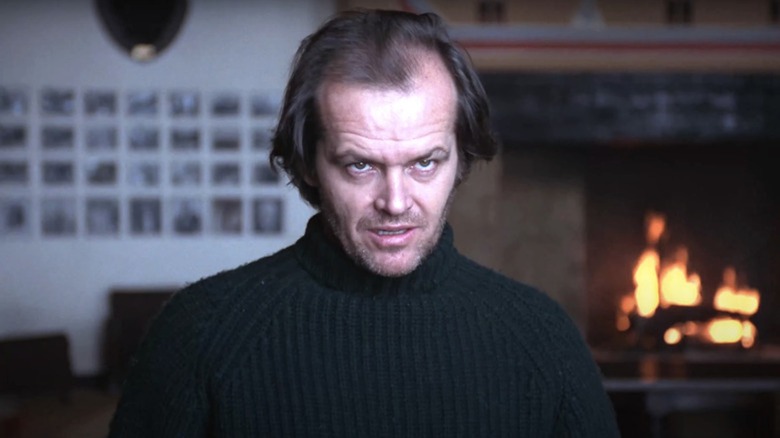
For those involved, the project’s collapse was a profound professional and personal loss. Jack Nicholson, in particular, was devastated. He had become deeply invested in the project, eventually optioning a book titled The Murder of Napoleon in hopes that Kubrick might still direct it. Nicholson viewed the story as a Shakespearean tragedy, a narrative of a man who conquered the world only to be undone by his own ego and the machinations of those around him.
Implications and Legacy
Though Napoleon was never filmed, its DNA can be found throughout Kubrick’s later work. The technical innovations he planned—particularly his use of high-speed lenses and natural "available light"—found their ultimate expression in Barry Lyndon. That film, often cited as one of the most visually stunning in history, serves as a haunting proxy for what Napoleon might have looked like.
The archival material remains a subject of intense academic and artistic interest. Taschen’s comprehensive volume, Stanley Kubrick’s ‘Napoleon’: The Greatest Movie Never Made, provides a deep dive into the sheer volume of work Kubrick put into the project, serving as a testament to his uncompromising creative process.
Will the Emperor Rise Again?
The story of Kubrick’s Napoleon is not entirely a closed book. Steven Spielberg, a close friend of Kubrick and an executor of his creative legacy, has long expressed interest in bringing the vision to fruition. In 2021, Spielberg confirmed that he was working on adapting Kubrick’s script into a limited series, potentially for HBO. While updates have been sparse, the project remains a "priority" for the Spielberg team.
Whether the miniseries eventually materializes or remains a dream, the legacy of Kubrick’s Napoleon persists. It serves as a stark reminder of the fragile intersection between genius, commerce, and timing in the film industry. As Jan Harlan once noted, the themes that drew Kubrick to the subject—the self-destruction of brilliant people, the corrosive nature of power, and the weight of vanity—are universal.
Even without a single frame of film produced, Napoleon stands as a monument to the ambition of the medium. It is a cautionary tale for directors and a sacred text for cinephiles, representing a time when a filmmaker’s reach could—and perhaps should—exceed his grasp.











No comments yet. Be the first to join the conversation!