Muslim
[Main Facts]
In a move poised to reshape industry practices, Pearl Abyss, the developer behind the highly anticipated open-world action RPG Crimson Desert, has released its official PC and console specifications with an extraordinary level of detail and transparency. Just over a week shy of its global launch, the South Korean studio has not only provided comprehensive hardware requirements for PC players but has also extended this granular insight to console gamers – a demographic traditionally left in the dark regarding performance targets. This unprecedented release specifies exact resolution and framerate goals for various graphical presets across PC, PlayStation, and Xbox platforms, marking a significant departure from conventional, often vague, industry announcements.
What truly distinguishes this reveal is Pearl Abyss’s commitment to clarity. For PC players, the specifications are broken down into five distinct tiers: Minimum, Low, Recommended, High, and Ultra. Crucially, each tier explicitly states the target resolution and framerate, offering a clear expectation of performance relative to a player’s hardware investment. Remarkably, with the sole exception of the "Minimum" preset, none of the listed PC configurations appear to rely on upscaling technologies, such as DLSS or FSR, for achieving their stated targets. This suggests a native rendering approach for higher settings, a welcome detail for enthusiasts seeking uncompromised visual fidelity. While the inclusion of ray tracing and its performance impact remains an unaddressed variable, the existing transparency is a considerable step forward.
The innovation doesn’t stop at PC. Console players, who typically receive little more than vague promises of "dynamic 4K" or "60fps mode," are treated to an equally detailed breakdown. Pearl Abyss has meticulously outlined performance profiles for PlayStation 5, Xbox Series X, and Xbox Series S, specifying base resolutions, target upscaled resolutions, and framerates. This includes particular attention to the PlayStation 5 Pro, clearly detailing its utilization of Sony’s proprietary PlayStation Spectral Resolution (PSSR) upscaling technology, alongside the AMD FSR implementation seen on standard PS5 and Xbox consoles. Furthermore, the developer has even extended this transparency to niche platforms, providing dedicated specifications for Mac devices (segmented by Apple silicon chips) and popular handheld PC gaming devices like the ROG Ally. This holistic approach signals a profound respect for player choice and a genuine effort to empower consumers with accurate performance expectations across a diverse ecosystem of gaming hardware.
[Chronology]
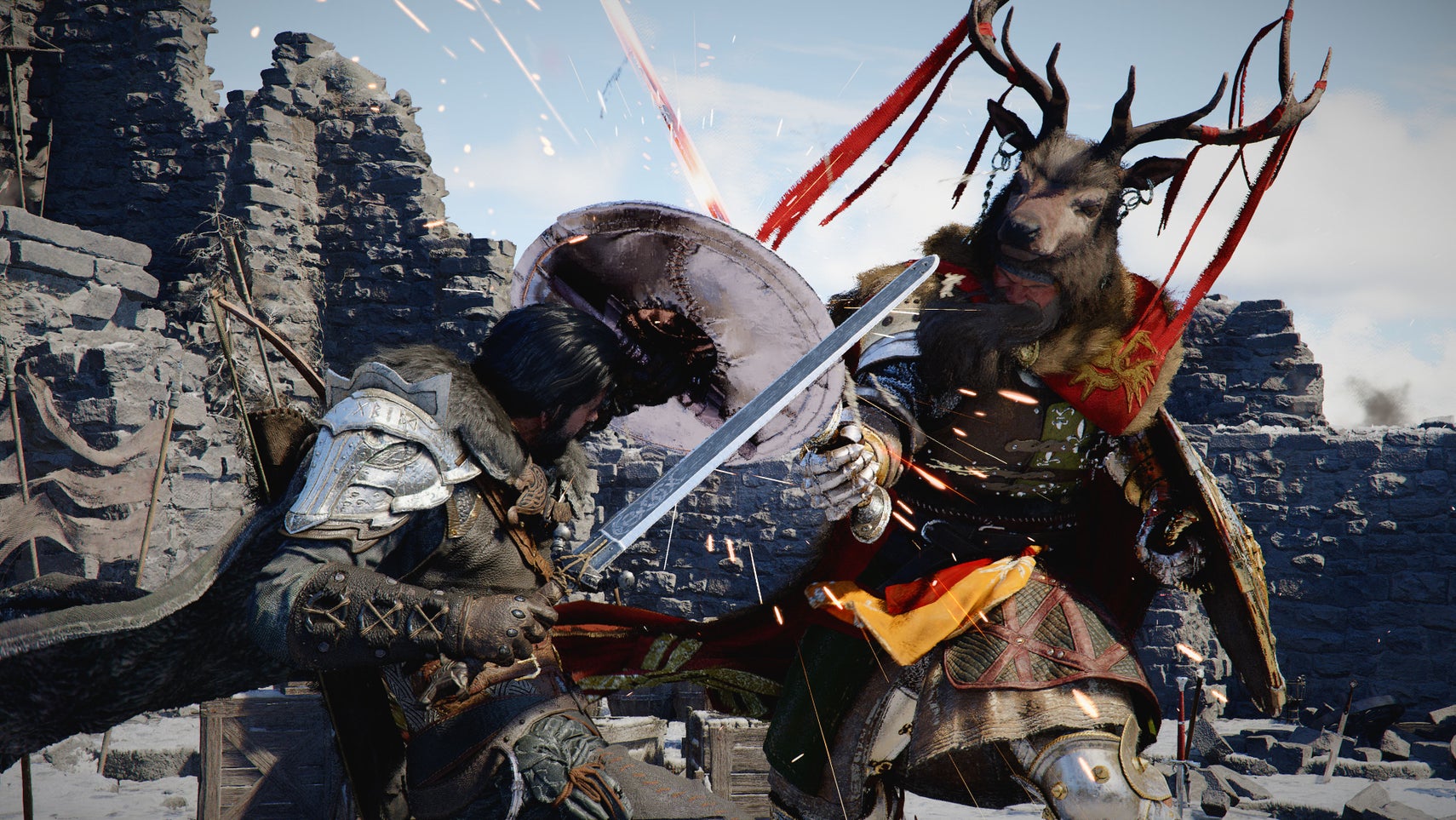
The journey of Crimson Desert from its initial reveal as a prequel to Black Desert Online to its current standalone, open-world action RPG identity has been characterized by high expectations and significant anticipation. First unveiled in 2019, the game quickly captured attention with its stunning visuals and ambitious scope. Early glimpses showcased a vast, living world, intricate combat mechanics, and a compelling narrative, positioning it as a potential AAA contender in the crowded RPG landscape. Pearl Abyss, known for the technically impressive and visually rich Black Desert Online, has been under scrutiny to deliver a title that pushes graphical boundaries while maintaining robust performance.
Historically, the release of game specifications has been a source of frustration for the gaming community. Developers often provide minimum and recommended PC requirements that are either too generic, fail to specify target performance (resolution, framerate), or implicitly rely on upscaling without stating it explicitly. This ambiguity frequently leads to player disappointment, performance issues, and widespread confusion post-launch, as players struggle to match their hardware against vague promises. Console players, meanwhile, have traditionally been afforded even less information, often having to wait for post-launch analyses from tech reviewers to understand a game’s true performance metrics.
Against this backdrop, Pearl Abyss’s decision to release such exhaustive specifications for Crimson Desert just a week before its March 20th launch is highly strategic and timely. It arrives at a critical juncture in the game’s marketing cycle, providing prospective players with crucial information needed to make informed purchasing decisions. This move can be seen as a direct response to years of player feedback across the industry, addressing a pervasive desire for greater transparency from developers. By detailing performance targets for every major platform and hardware configuration, Pearl Abyss is not merely listing requirements; it is setting a new benchmark for how developers communicate with their audience, aiming to build trust and manage expectations proactively rather than reactively. This proactive stance distinguishes Crimson Desert not only as a visually ambitious title but also as one committed to a transparent and player-centric launch experience.
[Supporting Data]
The detailed specifications released by Pearl Abyss for Crimson Desert are a masterclass in comprehensive information delivery. Unlike typical lists that merely state CPU, GPU, and RAM requirements, these specs delve into the nuances of expected gameplay performance, offering clear targets for resolution and framerate under various graphical presets.

PC Specifications Breakdown
Pearl Abyss has segmented the PC requirements into five distinct categories, each designed to cater to a different range of hardware and performance expectations:
- Minimum: This tier represents the absolute baseline for running Crimson Desert. It targets a foundational gameplay experience, likely at 1080p resolution and a framerate of 30 frames per second (FPS), often with visual settings tuned to "Low." Crucially, this is the only tier where Pearl Abyss explicitly indicates the potential reliance on upscaling technology to achieve its performance target. This transparency is vital for players with older or less powerful hardware, allowing them to understand that visual compromises might be necessary for playability.
- Low: Stepping up slightly, the "Low" preset is designed for accessible performance, potentially targeting a stable 1080p at 60 FPS or 1440p at 30 FPS. This tier would likely involve a slight bump in visual quality over "Minimum" but still prioritize framerate over graphical fidelity. Significantly, from this tier upwards, Pearl Abyss’s specifications do not mention upscaling, implying native rendering for these performance targets.
- Recommended: This is the sweet spot for the majority of PC gamers, representing the intended experience for Crimson Desert. The "Recommended" specifications are likely geared towards delivering a smooth 1440p resolution at 60 FPS, with a balanced mix of "Medium" to "High" graphical settings. This tier typically implies a modern mid-to-high-range GPU (e.g., an NVIDIA RTX 30-series or AMD RX 6000-series equivalent) and a robust multi-core processor, ensuring a visually pleasing and fluid gameplay experience without requiring top-tier hardware.
- High: For enthusiasts seeking enhanced visual fidelity, the "High" preset aims for a premium experience, possibly targeting 4K resolution at 30 FPS or a very stable 1440p at 90+ FPS, with "High" to "Very High" graphical settings. This tier would demand more powerful hardware, pushing into the upper echelons of current-generation GPUs and CPUs to maintain visual richness and smooth performance.
- Ultra: The pinnacle of graphical excellence, the "Ultra" preset is designed for top-tier systems, targeting uncompromised visual quality. This would likely mean native 4K resolution at 60 FPS or higher, with all graphical settings maxed out. Achieving this level of performance without upscaling implies the need for the latest flagship GPUs (e.g., RTX 40-series or RX 7000-series equivalents) and high-end processors, offering the most immersive and visually stunning rendition of Crimson Desert.
One notable omission across all PC tiers is the explicit mention of ray tracing. While its absence from the specification list could imply it’s not a primary feature, or its performance impact is so variable it wasn’t included, its potential inclusion (even if toggled) would significantly alter performance expectations. Players will need to await further details or launch-day benchmarks to understand how ray tracing, if present, affects these targets.
Console Specifications Breakdown
The transparency extends seamlessly to console platforms, offering a level of detail rarely seen from developers. This approach acknowledges the growing sophistication of console hardware and the diverse expectations of players.
- PlayStation 5 and Xbox Series X: For the current-generation flagship consoles, Crimson Desert will offer distinct performance modes. Typically, these include a "Quality Mode" prioritizing resolution and graphical effects, often targeting a base resolution upscaled to 4K at 30 FPS, and a "Performance Mode" prioritizing framerate, often targeting 1440p or 1080p upscaled to 4K at 60 FPS. Pearl Abyss has specified the exact base rendering resolution for each mode, the upscaling technology used (AMD FSR), and the final output resolution and framerate. This clarity empowers players to choose the experience that best suits their preferences.
- PlayStation 5 Pro: The inclusion of PS5 Pro-specific details is a significant highlight. Pearl Abyss has confirmed support for Sony’s PSSR (PlayStation Spectral Resolution) upscaling technology, indicating how the game will leverage the Pro’s enhanced hardware. This likely means higher base resolutions for upscaling, improved graphical effects, or more stable framerates compared to the base PS5, offering a genuinely enhanced experience for Pro owners. The breakdown will detail the PSSR-enabled resolutions and framerates.
- Xbox Series S: Recognizing the Xbox Series S as a powerful yet more budget-friendly console, Pearl Abyss has provided tailored specifications. These will likely target a native 1080p or 1440p resolution upscaled to a higher output, aiming for either 30 FPS in a "Quality Mode" or 60 FPS in a "Performance Mode," with optimized graphical settings to ensure a smooth experience on the less powerful hardware. Again, the specific base resolutions, FSR usage, and framerate targets will be explicitly stated.
Mac and Handheld PC Specifications
Pearl Abyss’s commitment to broad platform support is further underscored by its inclusion of specifications for niche, yet growing, segments of the gaming market:
- Mac Devices: Catering to Apple’s burgeoning gaming ecosystem, Crimson Desert will feature Mac support. The specifications are segmented by Apple’s proprietary silicon chips (e.g., M1, M2, M3), indicating different performance profiles based on the integrated GPU and CPU capabilities. While the specific graphical presets for Mac might not be as explicitly detailed as for PC, this inclusion demonstrates a forward-thinking approach to platform diversification.
- Handheld PCs (e.g., ROG Ally, Steam Deck): Acknowledging the rise of portable PC gaming, Pearl Abyss has also provided specific performance targets for devices like the ROG Ally. These specs will likely focus on achievable resolutions (e.g., 720p or 1080p) and framerates (e.g., 30-60 FPS) that balance visual quality with battery life and the unique constraints of smaller screens. The detail will help handheld gamers optimize their settings for the best portable experience.
This exhaustive presentation of performance data across all relevant platforms establishes a new benchmark for game specification releases. It provides players with an unparalleled understanding of what to expect from Crimson Desert on their chosen hardware, fostering informed decision-making and potentially reducing post-launch technical complaints.

[Official Responses]
While Pearl Abyss has not issued a formal "statement" specifically outlining their philosophy behind this unprecedented spec release, their actions speak volumes. The level of detail provided for Crimson Desert can be interpreted as a direct and emphatic response to years of collective player frustration regarding opaque and often misleading performance specifications.
The implied official response from Pearl Abyss is a clear commitment to transparency and player empowerment. By meticulously outlining resolution and framerate targets for every conceivable platform and hardware configuration, the developer is signaling a desire to:
- Build and Maintain Player Trust: In an era where game launches are frequently marred by performance issues and unmet expectations, Pearl Abyss is proactively addressing these concerns. Providing clear, actionable data before launch helps establish trust, assuring players that the developer is confident in their game’s optimization and honest about its capabilities. This fosters a positive relationship with the community, reducing the likelihood of post-launch backlash related to performance.
- Set Realistic Expectations: Vague "minimum" and "recommended" specs often lead to players purchasing a game only to find it runs poorly on their system, or not at the desired quality. By specifying "1080p/30fps on Low" or "1440p/60fps on Recommended," Pearl Abyss is giving players the tools to accurately gauge whether their hardware can deliver the experience they desire, preventing disappointment and wasted purchases.
- Demonstrate Confidence in Optimization: Releasing such granular data implies a high degree of confidence in Crimson Desert‘s underlying engine and its optimization across a wide array of hardware. Developers typically shy away from such specificity if they are uncertain about their game’s performance, as it creates easily verifiable targets that can expose shortcomings. Pearl Abyss’s move suggests they are proud of their technical achievements.
- Acknowledge Platform Diversity: The inclusion of dedicated specs for consoles (with detailed upscaling info), Mac, and handheld PCs demonstrates an understanding of the modern gaming landscape. It acknowledges that players engage with games on a multitude of devices, and each platform deserves tailored information, not just a PC-centric overview. The specific mention of PS5 Pro’s PSSR integration is particularly noteworthy, recognizing the growing importance of mid-generation console upgrades.
- Elevate Industry Standards: By taking this bold step, Pearl Abyss is implicitly challenging other developers to follow suit. This kind of transparency could become a new benchmark, pushing the industry towards more honest and informative pre-release communication. It signals a move away from marketing-speak towards concrete performance data.
In essence, Pearl Abyss’s comprehensive spec release for Crimson Desert is an official communication, albeit through action rather than words, that prioritizes the player experience and seeks to foster an environment of clarity and confidence ahead of its highly anticipated launch.
[Implications]

The innovative approach taken by Pearl Abyss with Crimson Desert‘s performance specifications carries significant implications, potentially reverberating across the gaming industry, influencing player experience, and shaping future development practices.
Impact on the Gaming Industry
This level of transparency could very well set a new precedent for how game developers communicate system requirements. For years, players and tech journalists have advocated for more detailed performance targets, and Pearl Abyss has delivered.
- Elevating Communication Standards: Other developers of multi-platform AAA titles may now face increased pressure to adopt similar practices. The "Crimson Desert Standard" could emerge, where players expect explicit resolution and framerate targets for various settings across all announced platforms. This would mark a significant shift from the often vague and PC-centric specifications currently prevalent.
- Increased Consumer Confidence: When players have clear, verifiable data, they can make more informed purchasing decisions. This reduces buyer’s remorse and the frustration associated with unclear performance expectations. Over time, this could lead to a more trusting relationship between developers and their communities.
- Competitive Advantage: For Crimson Desert, this transparency acts as a strong marketing tool. It positions the game as technically polished and the developer as player-friendly, potentially attracting a wider audience who value clarity and reliable performance.
- Driving Optimization Efforts: If detailed performance targets become the norm, developers will be implicitly pushed to ensure their games are well-optimized across a broader range of hardware. It makes it harder to hide poor optimization behind ambiguous specifications, potentially leading to higher quality releases overall.
Player Experience
The direct beneficiaries of Pearl Abyss’s transparency are the players themselves, who gain an unprecedented level of control and insight.
- Empowered Decision-Making: Players no longer have to guess if their PC can run the game at a desirable framerate or if their console’s "performance mode" truly delivers 60 FPS. They have concrete numbers to compare against their hardware, enabling them to decide whether to pre-order, wait for patches, or even upgrade their system.
- Reduced Pre-Launch Anxiety: The common "can my PC run it?" anxiety is significantly mitigated. Players can cross-reference their hardware with specific targets, understanding exactly what kind of experience to expect, whether it’s a stable 1080p/30fps or a pristine 4K/60fps.
- Optimized Settings Guidance: The detailed breakdown by presets (Minimum, Low, Recommended, etc.) also serves as an excellent guide for in-game settings. Players can easily identify which preset aligns with their hardware’s capabilities and desired performance, streamlining the initial setup process.
- Validation for Console Players: For console players, especially those with a PS5 Pro, the explicit mention of base resolutions, upscaling technologies (PSSR, FSR), and target performance validates their investment and provides a clear understanding of the graphical and performance enhancements they can expect.
Future of Game Development and Optimization
This move by Pearl Abyss also hints at broader trends and challenges within game development.
- Responsible Upscaling Implementation: By explicitly stating when upscaling is used (and notably, when it isn’t for higher PC presets), Pearl Abyss champions a responsible approach to these technologies. Upscaling is a powerful tool, but its over-reliance, especially at lower tiers, can diminish visual quality. This encourages developers to use it strategically rather than as a crutch.
- Growing Complexity of Hardware: The need for such detailed specs underscores the increasing complexity of the gaming hardware landscape, encompassing diverse PC configurations, multiple console variants (including mid-gen upgrades like PS5 Pro), and the rise of handheld PCs and Macs. Developers must now optimize for an unprecedented array of systems.
- The Importance of Technical Marketing: This spec release demonstrates that technical details, when presented clearly and comprehensively, can be a powerful marketing tool. It appeals to a segment of the gaming audience that values technical prowess and transparency.
- Challenges of Living Up to Promises: While highly beneficial, this transparency also places immense pressure on Pearl Abyss to deliver. Any significant deviation from the stated performance targets post-launch would be immediately apparent and could severely damage the game’s reputation and the developer’s credibility. The challenge now is to ensure the game lives up to these meticulously detailed promises.
In conclusion, Crimson Desert‘s approach to system specifications is more than just a list of requirements; it’s a statement. It reflects a growing maturity in the gaming industry’s communication with its audience and sets a bold new standard for transparency. As Crimson Desert prepares for its launch, its technical honesty may prove to be as impactful as its gameplay, potentially ushering in a new era of clarity and trust between developers and players.


 Lina Irawan
 Sagoh
Sagoh