Neng Nana
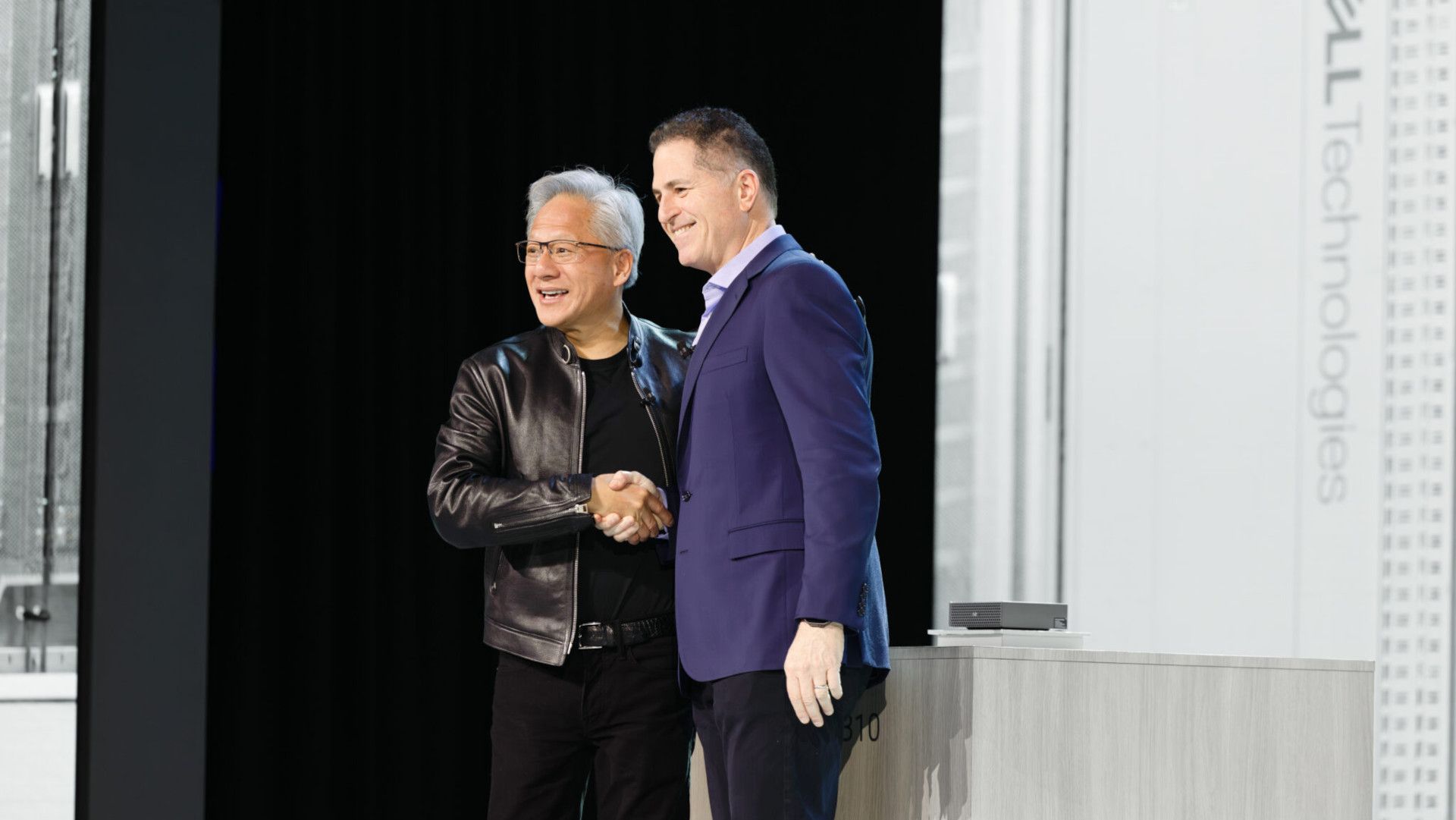
The trajectory of the global technology landscape shifted in real-time this week as Nvidia CEO Jensen Huang and Dell Technologies CEO Michael Dell took to the stage at Dell Technologies World 2026. Their keynote was not merely a product showcase; it was a manifesto for the next phase of the industrial revolution, a period both leaders described as the arrival of "useful, agentic AI."
As the conversation surrounding Artificial Intelligence pivots from experimental chatbots to autonomous, task-oriented systems, the partnership between the world’s leading AI chipmaker and the preeminent server infrastructure provider has reached a fever pitch. For businesses globally, the message is clear: the era of AI-driven efficiency is no longer a prospect—it is an existential imperative.
The Core Transformation: From Assistants to Agents
For the past two years, the corporate world has been preoccupied with generative AI—tools that draft emails, summarize meetings, and generate creative copy. While these applications provided incremental productivity gains of 20% to 30%, Jensen Huang argues that we have now crossed a threshold into a far more consequential epoch.
"We’ve now arrived at the era of useful AI, which is the reason why demand is going parabolic, utterly parabolic," Huang told the audience. He illustrated the compression of timeframes that this new technology facilitates: "What took months now takes weeks. What took weeks now takes days. And what takes days now takes hours. Things that would have taken an hour, you and I expect instantly now."
This shift is characterized by the transition from "passive" AI to "agentic" AI. Unlike static models that wait for a prompt, agentic systems are designed to reason, plan, execute, and adapt across a continuous loop of operations. As Michael Dell succinctly put it: "Now we’re deploying agentic AI—autonomous agents that plan, reason, execute, and adapt and close a loop."
Chronology of a Paradigm Shift
The journey to this moment has been marked by rapid acceleration in both hardware capability and software sophistication.
- Early 2025: The industry saw the stabilization of large language models (LLMs) in enterprise settings, primarily for document processing and customer service automation.
- Late 2025: The emergence of "multi-agent" architectures began to gain traction, allowing different AI models to collaborate on complex tasks, such as end-to-end software development.
- GTC 2026 (Earlier this year): Nvidia unveiled its latest generation of Blackwell and subsequent Rubin architecture hardware, designed specifically to handle the massive computational overhead required for autonomous agent networks.
- Dell Technologies World 2026 (This week): The formal integration of these technologies into the "AI Factory" ecosystem, signaling the readiness for mass-market enterprise deployment.
Throughout this timeline, the focus has shifted from the mere availability of computing power to the orchestration of that power. As Huang noted, the hallmark of the elite engineer in this new age will not be their ability to write code manually, but their ability to act as an "orchestrator" of dozens of specialized AI sub-agents.
Supporting Data: The Productivity Multiplier
The economic implications of this transition are staggering. While early AI adopters saw modest double-digit gains, the integration of agentic workflows promises a fundamental re-rating of corporate productivity.
Michael Dell, whose company sits at the center of the hardware supply chain, was explicit about the stakes: "This is going to lead us to gains of 20 times and 30 times in terms of productivity improvement."
These projections are supported by the sheer scale of the hardware being deployed. The newly announced Dell PowerEdge XE9880L, XE9885L, and XE9882L servers represent a significant leap in performance. Built on the Nvidia HGX Rubin NVL8 architecture, these units support up to 144 GPUs per rack with 100% direct liquid-cooled compute nodes. The performance metrics are equally eye-watering: the system delivers up to 5.5 times the performance of the preceding HGX B200 series.
For the end user, this translates to a massive reduction in the "cost-per-token." The Dell PowerRack with Nvidia Vera Rubin NVL72 is specifically engineered to lower inference costs by 10x compared to earlier iterations, making it economically viable for companies to run thousands of autonomous agents simultaneously.
Official Responses and Strategic Vision
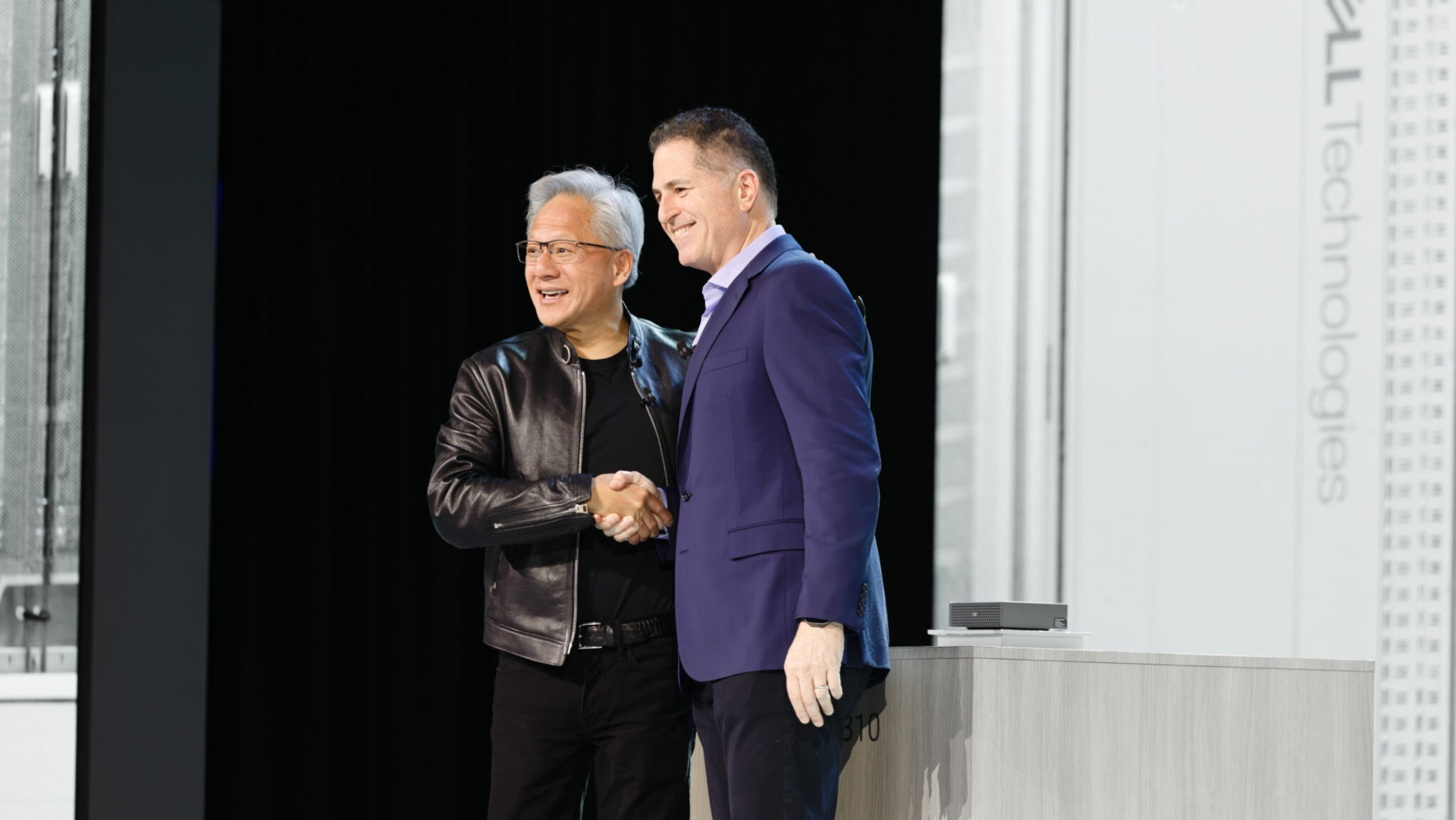
The stage at Dell Technologies World served as a display of mutual reinforcement. Michael Dell praised Huang as a "true leader and visionary of the AI age," emphasizing that the next stage of infrastructure will not be built by hardware or software alone, but by the deep, symbiotic partnership between those creating the chips and those building the physical "AI Factories" that house them.
Jensen Huang, ever the charismatic salesman, leaned into his growing role as the architect of this new era. When reflecting on his personal evolution, he noted, "I wanted to be somebody to do something, make a contribution, but that was the old Jensen. The new Jensen: I’ve got big ambitions now!"
This shift in ambition reflects a broader change within Nvidia itself. The company is no longer just selling components; it is selling the infrastructure for a global, autonomous, and highly efficient workforce.
The Strategic Implications for Businesses
The most profound takeaway from the summit is the warning issued to laggards. Michael Dell did not mince words regarding the survival of modern enterprises: "The companies that do not become agentic AI-driven businesses I think will struggle to survive."
1. Reimagining Workflows
Businesses must move beyond "bolt-on" AI solutions. The new mandate is to "completely rethink and reimagine" workflows. This means auditing existing processes to identify where agents can replace manual input, reasoning, and execution.
2. The Rise of the AI Factory
The concept of the "AI Factory" is now the industry standard. Organizations are shifting from general-purpose cloud computing to specialized infrastructure that prioritizes low-latency inference and high-density liquid cooling. If your infrastructure cannot handle the computational load of agentic workflows, you are effectively locked out of the next level of productivity.
3. The New Skill Set
The human role in the workplace is being fundamentally rewritten. We are moving toward a future where "really great" employees are those who can effectively manage, monitor, and refine the output of agentic networks. The ability to articulate business objectives to an AI agent—and then audit the agent’s logic—will become the most valuable soft skill in the coming decade.
Conclusion: The Path Forward
The partnership between Nvidia and Dell serves as a bellwether for the broader economy. By providing the raw, liquid-cooled power of the Rubin architecture and the operational framework of the AI Factory, they are providing the foundational layers upon which the next decade of economic activity will be built.
As Huang quipped on stage, "I’m here every year selling Dell!"—a lighthearted remark that hides the serious reality: the alliance between these two giants is the engine room of the AI era. For leaders in every industry, the challenge is no longer about whether to adopt AI, but how quickly they can transition from using "novel" AI assistants to building the autonomous, agentic infrastructures that will define the market leaders of 2030 and beyond.
The era of useful AI is here. The question remains: who is prepared to orchestrate it?


 Azzam Bilal Chamdy
 Suro Senen