

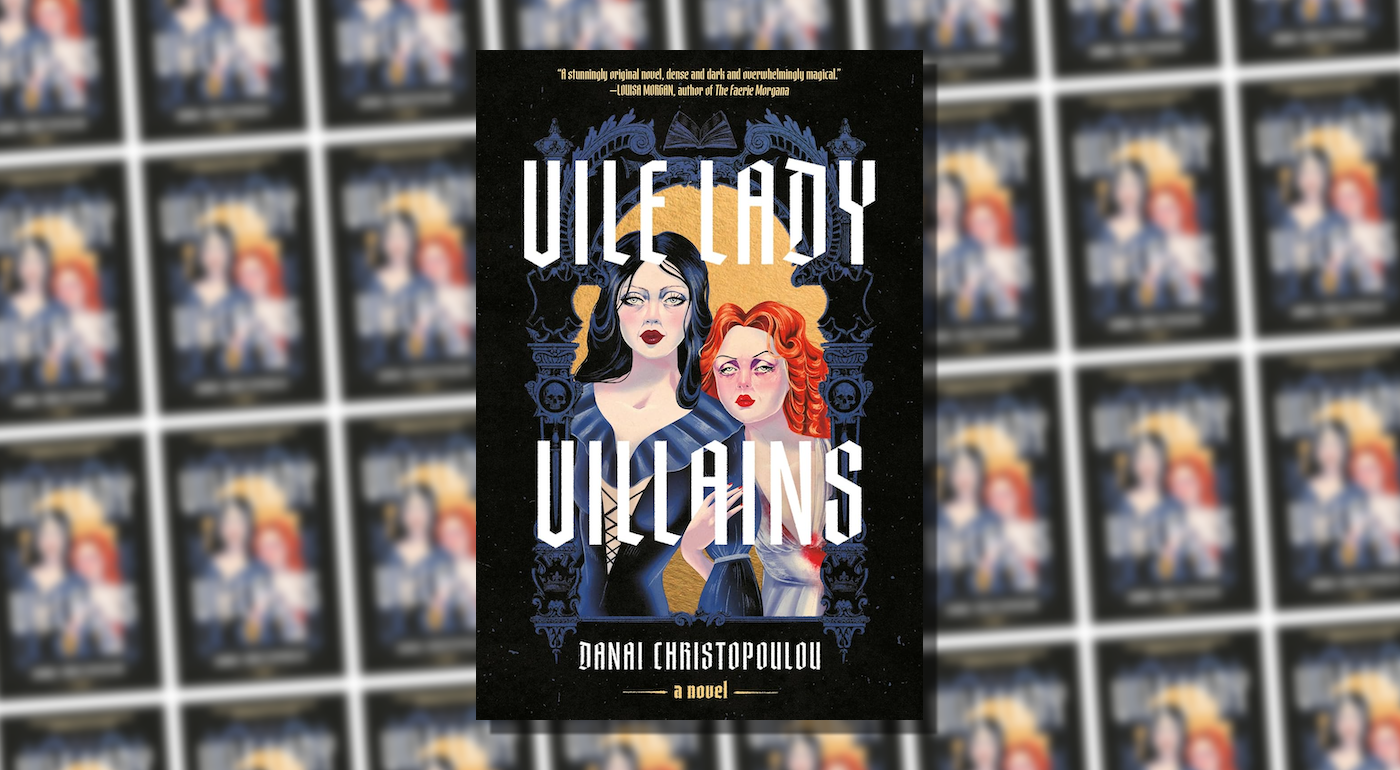
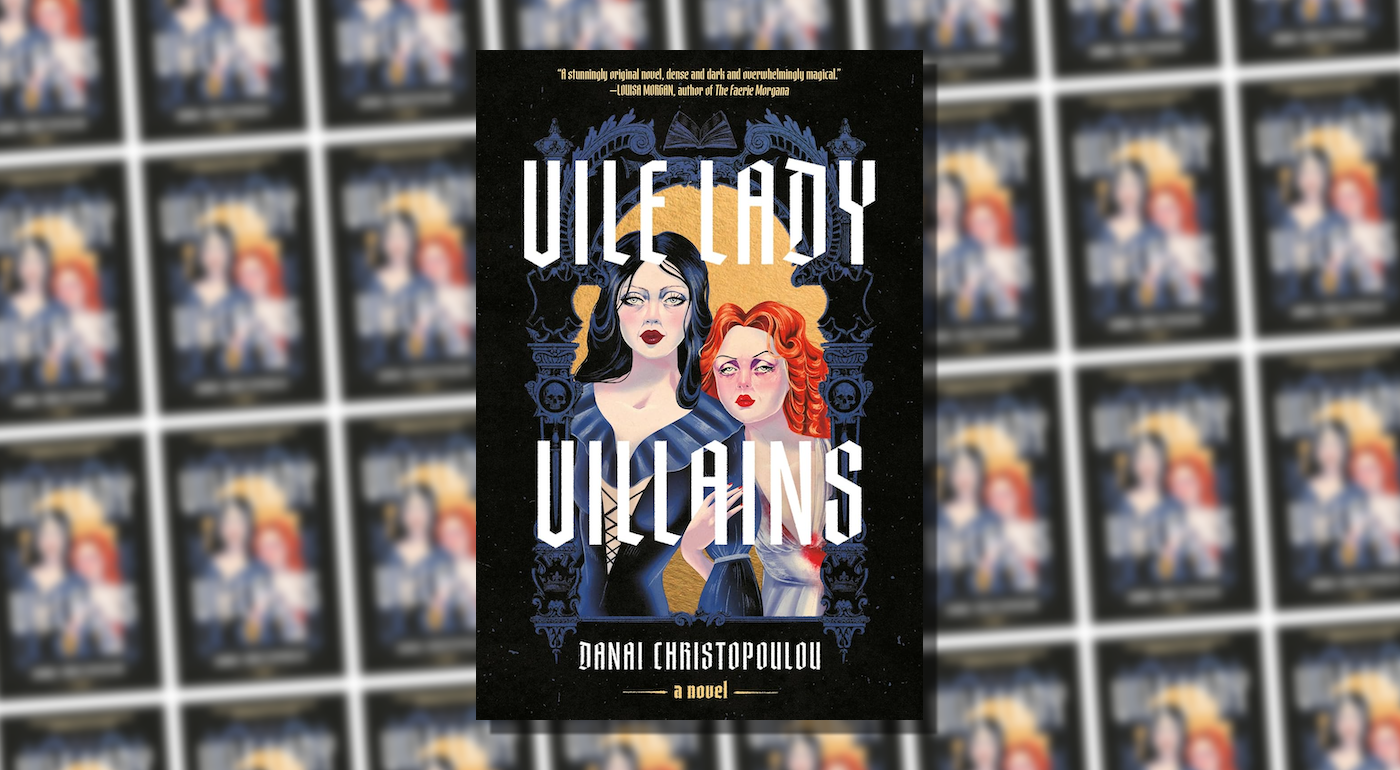
“What’s done cannot be undone.” This chilling refrain, famously uttered by Shakespeare’s Lady Macbeth, serves as the thematic anchor for Danai Christopoulou’s audacious new novel, Vile Lady Villains. In a literary landscape increasingly interested in "villain origin stories" and the reclamation of maligned historical women, Christopoulou offers a radical departure from traditional retellings. By yanking two of literature’s most notorious women from their respective tragic timelines, the author forces a confrontation between the characters and the oppressive, patriarchal narratives that have defined them for millennia.
Main Facts: A Meeting of Minds and Mythologies
Vile Lady Villains centers on two figures who have long served as shorthand for feminine malice: Lady Macbeth, the Scottish queen consumed by murderous ambition, and Klytemnestra, the Mycenaean queen who executed her husband, Agamemnon, to avenge the sacrifice of their daughter.
After committing the atrocities for which they are condemned, both women are plucked from their tragic worlds—Macbeth’s Scotland and the blood-soaked palace of Aeschylus’s Oresteia—and deposited into a liminal, surreal dimension. This strange world is populated by the physical manifestations of the forces that authored their downfalls: the Three Witches for Lady Macbeth and the Moirai (the Fates) for Klytemnestra.
Tasked with a journey they initially fail to comprehend, the queens—who eventually discard their historical monikers to adopt the chosen names "Claret" and "Anassa"—find themselves under the observation of a figure who serves as both their architect and their antagonist: William Shakespeare. In this meta-fictional reality, the Bard is not merely a playwright but a curator of "trapped" fictional characters, holding them within a pocket dimension to serve as muses for his historical canon. As Claret and Anassa navigate this nightmare landscape, collecting magical artifacts and dodging the machinations of the "Shepherd"—the overseer of this fictional prison—they begin to shed the identities forced upon them, ultimately finding solace and power in a burgeoning, complex sapphic romance.
A Chronology of Culpability: From History to Fiction
To understand the scope of Christopoulou’s ambition, one must look at the historical and literary timelines that inform these characters.
- 1587: Raphael Holinshed publishes The Chronicles of England, Scotland, and Ireland. Shakespeare mines this text for Macbeth, transforming the historical Gruoch into a creature of pure, guilt-ridden ambition.
- 1602: Shakespeare pens The Tragedy of Troilus and Cressida, featuring the arrival of Agamemnon, the husband Klytemnestra would later be known for murdering.
- 1606: The approximate time of Macbeth’s composition. In the world of Vile Lady Villains, this is the era when Shakespeare is granted "entry" into the Shepherd’s pocket world, harvesting the trauma of these women to fuel his plays.
- Present Day: Vile Lady Villains releases, positioning itself as a meta-commentary on how historical figures are distilled into archetypes through the selective, often biased lens of the author.
Christopoulou masterfully weaves these disparate threads together. While Klytemnestra and Lady Macbeth appear to be separated by geography and era, their literary echoes are strikingly similar. As scholar J. Churton Collins once noted in Studies in Shakespeare, "Klytemnestra… might well be the archetype of Lady Macbeth. Both [are] possessed by one idea… without pity and without scruple, [they] have nerves of steel and wills of iron." Christopoulou’s narrative validates this scholarly observation while simultaneously challenging the "vile" label that has been applied to them for centuries.
Supporting Data: The Anatomy of a Maligned Archetype
The novel functions as a rigorous interrogation of why we label women as villains. In the early chapters, the characters reflect the "one-note" versions of themselves found in the source texts: Klytemnestra is a singular engine of vengeance; Lady Macbeth is a fractured psyche defined by her inability to wash away her guilt.
However, as the narrative progresses, the "data" of their internal lives shifts. By forcing them to encounter the "real" versions of themselves—such as Anassa’s confrontation with the historical Gruoch—Christopoulou exposes the discrepancy between human reality and literary performance.
Thematic Parallels
- The Muses: In the book’s logic, writers are parasitic. They are granted access to fictional realms to extract emotional fuel, essentially colonizing the lives of their characters.
- The Sapphic Rallying Cry: The romance between Claret and Anassa is not merely a plot point; it is a rejection of the patriarchal structures that forced them into isolation. Their love blooms, as the text suggests, from "pools of blood," representing a shared trauma turned into a source of mutual liberation.
- Agency vs. Authorship: The central conflict of the book is the battle for narrative control. Can a character transcend the ending written for them by a man centuries dead?
Official Responses and Literary Critiques
Critics have noted that while the book’s conceptual framework is profound, its execution is not without friction. The novel struggles with structural consistency; some readers may find the pacing uneven, particularly in the middle acts where the characters’ journeys loop back on themselves.
Furthermore, the "deus ex machina" employed to explain the initial entrapment of the queens has been described as "too pat," occasionally undermining the stakes of their odyssey. The secondary sapphic romance, while emotionally resonant, arrives and departs with a velocity that suggests it deserved more page space. Despite these technical critiques, the consensus remains that Christopoulou’s prose is undeniably "sumptuous." Her ability to transition between the high-drama tone of ancient tragedy and the more intimate, introspective language of contemporary fiction is a triumph of style.
Implications: The Story of Stories
Ultimately, Vile Lady Villains is a meta-fictional treatise on the act of reading itself. It argues that history is not a static set of facts but a fluid collection of contradictory narratives. The book implies that every time a reader picks up Macbeth or The Oresteia, they are participating in a cycle of interpretation that either reinforces or dismantles the patriarchy.
The implications for the "romantasy" genre are significant. Christopoulou refuses to allow her protagonists to be easily categorized as "femme fatales" or "maligned mothers." Instead, she presents them as women who refuse to be defined by the male gaze—even when that gaze belongs to William Shakespeare.
By the novel’s conclusion, the question is no longer whether Claret and Anassa are "vile." The question is whether they will choose to return to their ill-fitting, tragic roles or if they will use their newfound self-awareness to author an entirely different destiny. In doing so, Vile Lady Villains positions itself as more than a retelling; it is a katabasis—a descent into the underworld of literature—and a triumphant, fiery return to the surface.
For readers who have ever felt that the classics were hiding the true, complex humanity of their most controversial women, this novel provides not just an answer, but a new way of seeing the past. It is a defiant, beautiful, and necessary addition to the feminist literary canon, reminding us that no matter how much the ink dries, the story is never truly finished.










No comments yet. Be the first to join the conversation!