

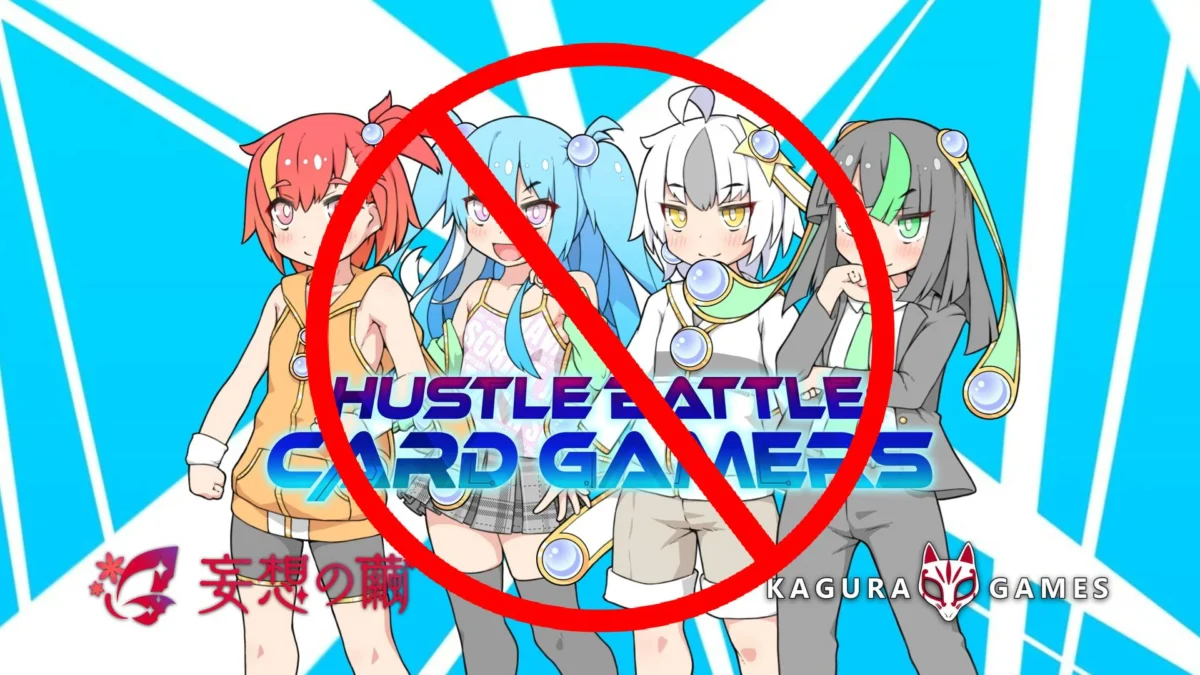
In an alarming development for the intersection of independent game development and global finance, a Japanese developer has reported being denied essential revenue by their own domestic bank. The developer behind the title Hustle Battle: Card Gamers, operating under the handle "Mousou no Mayu," publicly disclosed that their bank refused to process a routine payout from their English-language publisher, Kagura Games.
The rejection highlights a growing trend: the increasing influence of financial institutions and payment processors in dictating the artistic boundaries of digital creative works. Despite the fact that the version of Hustle Battle: Card Gamers currently hosted on Steam is an all-ages product—devoid of any explicit or "ecchi" content—the developer found their professional earnings effectively frozen, sparking a broader debate regarding corporate censorship and the erosion of creative autonomy in the digital age.
Chronology of a Financial Blockade
The incident came to light in mid-May 2026, when Mousou no Mayu shared their frustrations on social media. According to the developer, the attempt to receive a standard royalty payment from Kagura Games was rejected by the Daishi Hokuetsu Bank, a regional Japanese financial institution.
The Breakdown of the Event:
- May 12, 2026: Mousou no Mayu first signals difficulties, noting the refusal of the transfer. They express disbelief, given that the Steam version of their game is strictly compliant with all-ages standards.
- May 13, 2026: Further details emerge as the developer clarifies that the bank cited the nature of the game’s content as the primary reason for the refusal. The developer notes that this is despite the fact that they have other avenues for their more mature works (such as DLsite or FANZA), but the specific revenue in question was generated via the sanitized Steam storefront.
- Post-Incident: Following the refusal, the developer took immediate steps to pivot, successfully transitioning their business finances to a digital-first "netbank." This move has, thus far, allowed for the seamless processing of funds, highlighting that the issue was not with the legality of the earnings, but with the specific internal policies of the legacy banking institution.
The Role of Global Financial Hegemony
The involvement of Daishi Hokuetsu Bank has raised questions about the downstream influence of global investment firms. Industry analysts, including those reporting via Automaton, have pointed to the bank’s ownership structure. One of the largest institutional investors in Daishi Hokuetsu is BlackRock, the New York-based asset management giant.
The "BlackRock Effect" and Payment Processors
The connection to BlackRock serves as a focal point for critics who argue that global financial entities are fostering a culture of risk aversion that trickles down to local banks. BlackRock holds significant sway over major payment processors, including Visa and Mastercard.
For years, these payment processors have implemented "brand safety" guidelines that are often applied with a broad, ambiguous brush. Because these processors facilitate the vast majority of digital transactions, their internal policies—which often target adult-oriented content—have forced platforms like Patreon, Pixiv, and itch.io to self-censor or pivot their business models to avoid being "de-platformed" by the financial giants. The case of Hustle Battle: Card Gamers suggests that this pressure is no longer limited to Western platforms but is actively impacting Japanese domestic banking operations.
Supporting Data: A Pattern of Institutional Interference
This incident is not an isolated occurrence but rather a symptom of a larger, systemic shift in how digital content is monetized. Over the last three years, we have observed a tightening of the "financial noose" around independent creators.
The Erosion of "Content Neutrality"
Historically, banks operated under the premise of neutrality: as long as a business was legal and properly registered, the nature of its products was irrelevant to the processing of funds. However, the rise of "ESG" (Environmental, Social, and Governance) scores and internal corporate morality mandates has empowered compliance departments to act as de facto content moderators.
- Platform Policy Changes: Major storefronts, including Steam, have been forced to navigate a minefield of payment processor demands. While Steam has historically maintained a "anything goes" policy for games that aren’t illegal, the payment processors acting behind the scenes have often threatened to pull support unless platforms implement stricter oversight.
- The Japanese Context: In Japan, where the adult game industry is a legitimate and significant cultural export, this creates a bizarre legal paradox. A developer can produce a game that is perfectly legal under Japanese law, yet be unable to access the funds generated by that game due to a bank’s internal "reputational risk" policy.
Official Responses and Governmental Scrutiny
The Japanese government has begun to take notice of these trends. As creators find themselves increasingly at the mercy of non-governmental financial institutions, there is growing legislative interest in protecting the "digital livelihood" of the nation’s creative sector.

Legislative Inquiries
Following previous reports of payment processors withholding revenue from Japanese adult game developers, members of the Japanese Diet have expressed concern regarding the suppression of legitimate businesses. The core issue for the government is the infringement on economic freedom: if a company is operating within the bounds of Japanese law, can a private bank arbitrarily decide that a specific industry is "unbankable"?
While the government has yet to pass binding regulations, the conversation has shifted toward potential anti-monopoly investigations. The goal is to ensure that payment processors and banks cannot collude to blacklist specific sectors of the creative economy without clear, transparent, and legally mandated justifications.
Implications: The Future of Creative Expression
The situation faced by Mousou no Mayu serves as a cautionary tale for the global indie scene. When financial infrastructure becomes a tool for social or moral regulation, the consequences for artistic expression are profound.
1. The Rise of "Financial Decentralization"
As traditional banks become more restrictive, we can expect a migration toward digital-first, net-native financial institutions. These entities, often less beholden to legacy institutional investors, are currently providing the necessary safe harbor for creators. However, if the pressure from global firms like BlackRock continues to scale, even these netbanks may eventually face similar compliance demands.
2. The Chilling Effect
The most dangerous outcome is not necessarily the loss of revenue for one specific developer, but the "chilling effect" on the industry at large. When developers realize that even their all-ages, compliant products could be targeted due to their association with a broader brand or genre, they may begin to engage in self-censorship to preemptively satisfy banking compliance teams. This threatens to sanitize the indie scene, leading to a homogenization of content that caters to the lowest common denominator of corporate acceptability.
3. The Fight for Financial Neutrality
The ultimate implication is a call for "financial neutrality." Just as net neutrality was a defining battle for the open internet, the right to access banking services regardless of the content produced is becoming a defining battle for the creative economy. If the financial system is allowed to pick winners and losers based on moral posturing rather than financial risk, the diversity of the global gaming market will inevitably contract.
Conclusion
The ordeal of Mousou no Mayu and Hustle Battle: Card Gamers is a stark reminder that the digital storefront is only as free as the financial plumbing that supports it. While the developer has successfully mitigated the immediate crisis by moving to a more accommodating bank, the broader issue remains unresolved.
For the creative community, the path forward requires a unified approach to ensure that payment processors and financial institutions remain what they were always intended to be: neutral facilitators of commerce. Without such protections, the future of independent creative work—both in Japan and abroad—remains in a state of precarious instability, waiting for the next "content-based" rejection to threaten their survival. As we move further into the decade, the ability to secure independent, un-censorable financial pipelines will likely become the most critical skill for any independent developer operating in the digital age.












No comments yet. Be the first to join the conversation!