

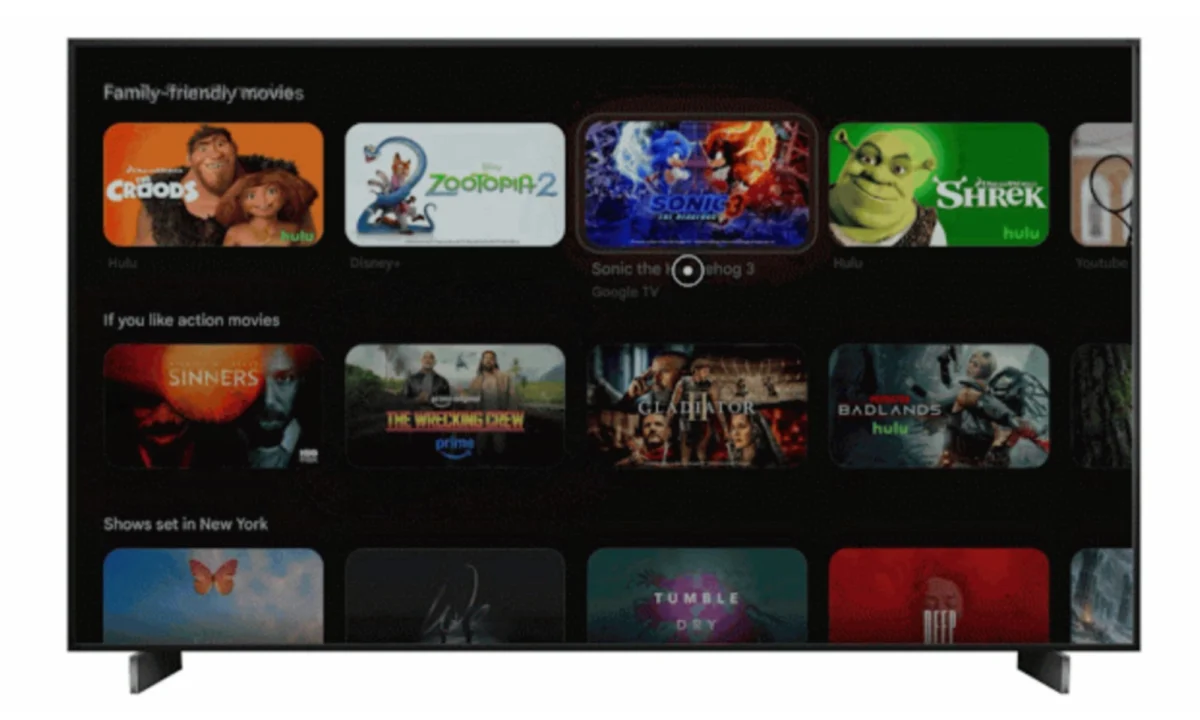
The television set, once a static "black box" relegated to the corner of the living room, is undergoing a profound metamorphosis. At Google I/O 2026, the tech giant signaled a decisive shift in its home entertainment strategy, moving beyond mere content aggregation to transform the television into an active, AI-powered computing environment. With over 300 million monthly active devices running Google TV and Android TV, the stakes for Google are immense as it positions the living room as the next major battleground for generative AI and intuitive human-computer interaction.
Main Facts: The AI-Driven Pivot
The core of Google’s new strategy lies in the integration of its Gemini AI model into the fabric of the Google TV interface. Rather than functioning as a simple search utility, Gemini is being repositioned as an intelligent content guide.
Historically, users have navigated streaming services through a fragmented, siloed experience—opening individual apps to find content. Google’s new approach aims to elevate the OS to a centralized layer that sits above these apps. By leveraging Gemini, Google TV can now synthesize natural language queries into comprehensive, multimedia-rich responses. A user no longer needs to hunt for a specific genre; they can ask, "Show me a gripping sci-fi thriller featuring a strong female lead that is currently streaming," and Gemini will curate a list of recommendations, complete with contextual snippets, video previews, and metadata, pulling from across the entire ecosystem of installed apps.
Complementing this intelligence is a hardware-focused shift: the introduction of "pointer remotes." By transitioning away from the rigid, decades-old D-pad (directional pad) navigation, Google is enabling a cursor-based, fluid interaction model that mimics the responsiveness of a desktop computer or tablet.
Chronology of the Shift
The transition to this new era of TV interaction did not happen overnight. The path to the 2026 announcements can be traced through several critical milestones:
- 2023–2024 (The Aggregation Phase): Google focused on refining the Google TV UI to act as a "content-first" home screen, heavily integrating Watchlists and cross-app recommendations.
- Early 2025 (The AI Experimentation Phase): Early versions of generative search began appearing in limited regions, allowing for basic voice queries that went beyond simple keyword matching.
- May 2026 (The I/O Paradigm Shift): Google formally announced the integration of Gemini into the core OS and issued developer guidelines for the "Pointer Remote" interface.
- Q3 2026 and Beyond: Developers are currently being onboarded to optimize their applications for the new cursor-driven environment, with the first wave of pointer-compatible remotes expected to ship with new hardware in the holiday season.
Supporting Data: The Scale of the Ecosystem
Google’s dominance in the smart TV space provides the necessary leverage for such a sweeping interface overhaul. With more than 300 million monthly active devices, the platform represents one of the largest computing footprints in the world.

The rationale for the "pointer" transition is rooted in usability data. Research into TV interface fatigue suggests that the average user spends upwards of 10 minutes navigating through multiple menus to reach their desired content. By implementing cursor-based navigation, Google aims to reduce "time-to-content" by nearly 40%. Furthermore, the move to Jetpack Compose for Android TV allows developers to build responsive UIs that scale across different input methods, ensuring that the transition from a traditional remote to a motion-controlled pointer is seamless.
Official Responses and Developer Guidance
The transition is not without its technical hurdles. During the developer sessions at I/O 2026, Google representatives emphasized that "legacy" TV design patterns are no longer sufficient.
"We are asking developers to move away from the ‘focus-based’ navigation of the past," noted one lead engineer during a keynote. "The introduction of hover states, free-form scrolling, and cursor-based clicks requires a fundamental rethink of UI layouts."
Google has provided several resources to assist in this transition:
- Native Support: Apps built using Jetpack Compose are already largely prepared, as the framework natively supports cursor interactions.
- Mouse Testing: Developers are being encouraged to test their current apps using Bluetooth mice to understand how their UI elements respond to hover effects and click events.
- UI Accessibility: Recognizing that pointer remotes—which rely on physical motion—are less precise than a desktop mouse, Google is mandating larger "touch targets" to ensure that users do not experience accidental clicks or navigation errors.
Implications: A New Era of Interaction
The implications of these changes are far-reaching for the streaming industry, the hardware market, and the end-user.
For Streaming Platforms
The days of streaming apps existing in a vacuum are coming to a close. As Google TV becomes more "intelligent," the platform will exert more control over how content is surfaced. This could lead to a "discovery war," where streaming platforms must optimize their metadata for Gemini’s ingestion process to ensure their content is recommended when users ask broad, natural language questions.

For Hardware Manufacturers
The remote control, often the most overlooked piece of home technology, is suddenly a competitive feature. Manufacturers will likely race to integrate motion sensors and high-precision accelerometers to support the new pointer-based navigation, potentially driving a new upgrade cycle for TV sets and set-top boxes.
For the End User
The primary impact on the user is the shift from "scrolling" to "searching." The goal is to move the TV experience closer to the web-browsing experience. If Google succeeds, the "paradox of choice"—where users spend more time browsing than watching—could be significantly mitigated. However, there is a risk of interface bloat. If every app interprets "pointer support" differently, the living room could become a chaotic landscape of inconsistent navigation styles.
The Human Factor
Finally, there is the question of ergonomics. While waving a remote may seem futuristic, it remains to be seen if users will find it intuitive. Traditional D-pad navigation is deeply ingrained in the cultural consciousness of television viewers. Transitioning to a "point-and-click" model requires a shift in muscle memory. Google’s success will ultimately depend on whether the AI, combined with the new hardware, feels like a genuine improvement or a gimmick that complicates a simple task.
Conclusion: The Future is Conversational
Google’s vision for 2026 and beyond is clear: the television is no longer just a passive display. It is an active participant in the user’s decision-making process. By marrying the vast information-processing capabilities of Gemini with a more fluid, mouse-like navigation paradigm, Google is attempting to solve the "discovery problem" that has plagued streaming for over a decade.
Whether this marks the end of the traditional remote remains to be seen, but one thing is certain: the era of simply pressing "up, down, left, right" to find something to watch is rapidly drawing to a close. Google is betting that by making the TV experience smarter, more conversational, and more precise, they can secure their place as the primary gateway to the home entertainment experience for the next generation. As developers scramble to update their apps and hardware partners prepare the next wave of remotes, the living room is set for its most significant transformation since the switch from analog to digital.












No comments yet. Be the first to join the conversation!