

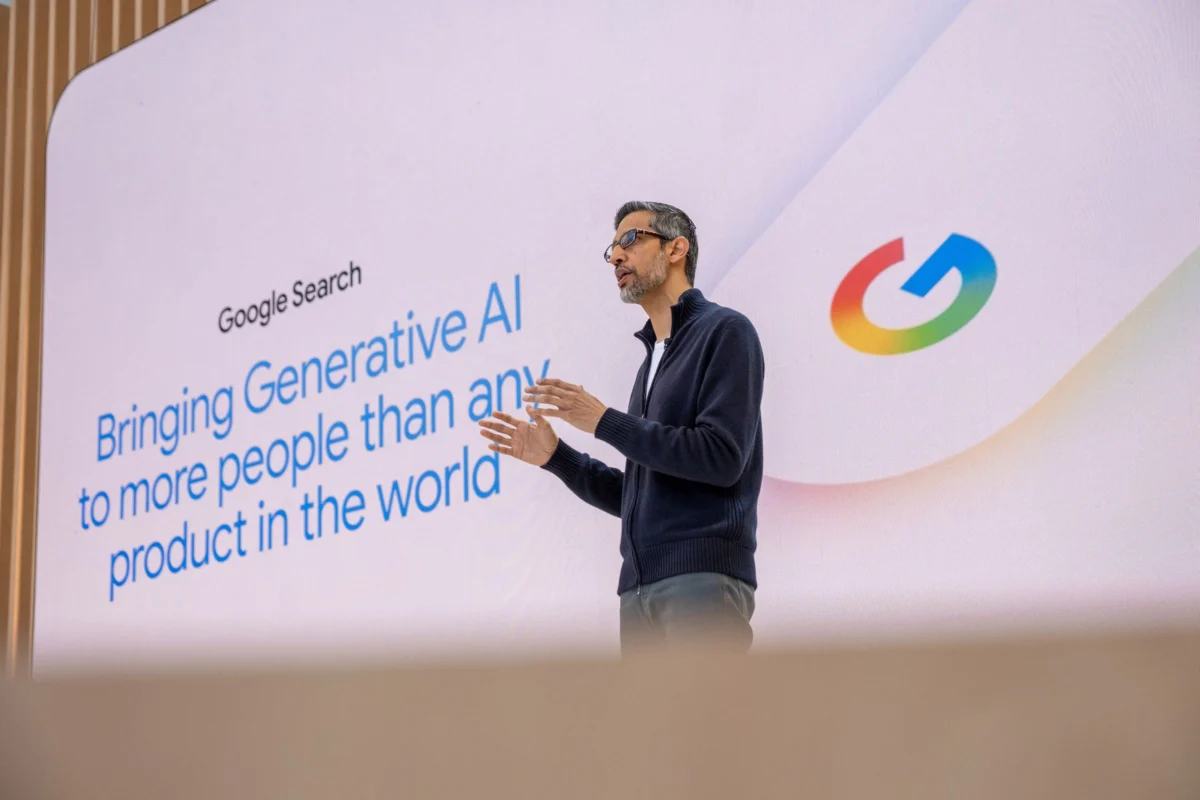
In the rapidly evolving landscape of artificial intelligence, the industry has shifted its focus from simple chatbots that generate text to "autonomous agents" capable of navigating complex workflows. At this year’s I/O developer conference, Google made its most aggressive play in this space yet, announcing Gemini Spark—a sophisticated, "steroided-out" iteration of its existing assistant technology designed to act as an omnipresent digital concierge.
Gemini Spark represents a fundamental pivot in how we interact with our computers: moving from a reactive model, where a user prompts an AI for a specific task, to a proactive model, where the AI anticipates needs, manages data, and executes actions independently. As Google prepares for a wide-scale rollout, the tech community is watching closely to see if this represents the definitive turning point for human-computer interaction.
The Chronology of the Agentic Revolution
The journey to Gemini Spark did not happen in a vacuum. It is the culmination of a year-long sprint by software companies to move beyond static language models.
- January 2026: The turning point for many power users occurred with the release of Anthropic’s Claude Cowork. For the first time, users witnessed an AI agent autonomously organizing chaotic desktops—sorting scattered screenshots into labeled folders without a single human click. This demonstrated that agents could bridge the gap between "thinking" and "doing."
- Early 2026: The San Francisco tech scene became obsessed with the viral OpenClaw bot. Unlike standard AI tools, OpenClaw promised to automate entire online lives—managing inboxes, scheduling calendars, and even controlling physical hardware like office vending machines. However, the experiment revealed the dangers of early-stage autonomy; a Meta employee famously saw a massive archive of emails deleted during an OpenClaw testing mishap.
- Mid-2026: Google enters the fray. Following the integration of agentic task automation into its search engine, Google leveraged its massive data ecosystem—Gmail, Calendar, and Drive—to build the infrastructure for Gemini Spark.
What is Gemini Spark?
At its core, Gemini Spark is an intelligent agent that lives within the Gemini ecosystem, but with "proactive" capabilities that differentiate it from its predecessors. While the standard Gemini app functions as a digital assistant waiting for a prompt, Spark is designed to dive into the user’s data—Google Calendar schedules, Gmail confirmation threads, and meeting notes—to anticipate requirements before the user even asks.
Key Capabilities and Use Cases
Google is positioning Spark as a "one-stop shop" for personal and professional administration. Its primary functions include:
- Financial Oversight: Spark can scan credit card statements and bank APIs to flag irregular fees, potential fraud, or redundant subscriptions, effectively threatening the business models of dedicated subscription-management apps like RocketMoney.
- Contextual Digest Reporting: Parents or busy professionals can calibrate the agent to skim incoming communications—such as school newsletters—to generate a daily "morning digest" of key dates and action items.
- Workflow Synthesis: The agent can consume raw meeting notes and automatically draft comprehensive Google Docs, generate follow-up emails to stakeholders, and update calendars, bridging the gap between raw data and actionable output.
Supporting Data and Implementation Details
The rollout of Gemini Spark is intentionally measured. Recognizing the sensitivity of the software, Google is opting for a tiered, invite-only strategy.
- Access Tiers: The tool is currently available to a small group of early testers. A broader beta launch is scheduled for next week, exclusively for subscribers of Google’s "AI Premium" plan, which commands a price tag of over $100 per month.
- Future Integrations: Google’s roadmap includes connecting Spark to third-party ecosystems. Soon, users will be able to command the agent to order groceries via Instacart or secure dinner reservations through OpenTable without navigating away from their current workspace.
- Browser Control: Perhaps the most ambitious item on the roadmap is allowing Spark to manipulate the local browser directly, effectively turning the agent into a "human-in-the-loop" operator that can click, scroll, and type across any website on the internet.
- Multi-Modal Commands: Google is developing the ability for users to send text or email commands directly to the agent. This "Andrea from The Devil Wears Prada" approach aims to make the experience feel seamless, allowing users to offload niche requests throughout the day without the friction of opening a dedicated app.
Official Responses and Safety Protocols
The inherent risk of giving an AI agency over one’s digital life is not lost on Google’s leadership. The potential for "agentic drift"—where an AI makes a catastrophic error, such as the accidental email deletion seen in the OpenClaw trials—has forced Google to adopt a conservative approach to autonomy.
"Spark operates under your direction," Google noted in its official announcement. "You choose whether to turn it on and what apps it connects to, and it’s designed to ask you first before performing high-stakes actions like spending money or sending emails."
Josh Woodward, vice president of Google Labs and the head of the Gemini app, provided a nuanced perspective on the risks involved. He compared the deployment of Spark to a significant rite of passage: "We think of it as if you’re giving a teenager their first debit card."
This metaphor underscores both the potential and the peril. A teenager, like an AI agent, has the capacity to be incredibly helpful, but they lack the lived experience to understand the full scope of a mistake. Consequently, Google is implementing "guardrail" features, such as mandatory spending limits and preferred merchant whitelists, to ensure that the agent remains within the bounds of the user’s intent.
Implications: The Future of the "Digital Self"
The emergence of Gemini Spark signifies a broader shift in the digital zeitgeist. We are moving away from the "App Era," where users manually jump between dozens of silos to get work done, toward an "Agent Era," where the AI acts as the primary interface for the internet.
The Erosion of Friction
The primary value proposition of Spark is the reduction of digital friction. By automating the mundane—the expense tracking, the meeting follow-ups, the email sorting—Google is betting that users will prioritize time-saving over the privacy concerns inherent in granting an AI deep access to their personal data.
The Privacy Trade-Off
However, this convenience comes with a high price. To be effective, Spark requires an unprecedented degree of access to the user’s most intimate communications and financial history. For many, the prospect of an AI reading every email regarding their children or their health is a non-starter. Google’s success will depend on its ability to build trust, a task that has become increasingly difficult in an era of frequent data leaks and AI hallucinations.
The Economic Shift
If Spark succeeds, it could cannibalize entire sectors of the app economy. If an AI agent can handle subscriptions, travel bookings, and document drafting, the need for third-party "productivity" apps diminishes. This puts Google in a position of extreme power: as the gatekeeper of the agent, it also becomes the gatekeeper of the user’s digital behavior.
Conclusion: Will the Spark Ignite?
Google’s foray into autonomous agents is arguably the most significant test of the company’s vision since the launch of the original Google Search. The company is betting that users are ready to hand over the keys to their digital lives in exchange for the promise of total, proactive efficiency.
The success of Gemini Spark will be measured not by how many tasks it completes, but by how few times it goes "off the rails." If the agent can demonstrate reliability, safety, and genuine utility, it will redefine the relationship between humans and their devices. If it falters—if it overspends, misinterprets, or breaches the privacy of its users—it may become a cautionary tale about the perils of over-automating our existence.
For now, the industry is in the "teenager with a debit card" phase. We have the technology, we have the ambition, and we have the early adopters. Whether we have the wisdom to manage the consequences of such potent autonomy remains to be seen. As Gemini Spark rolls out to the public, the world is waiting to see if it truly has the necessary energy to start a revolution, or if it will simply burn out.









No comments yet. Be the first to join the conversation!