Dwi Wanna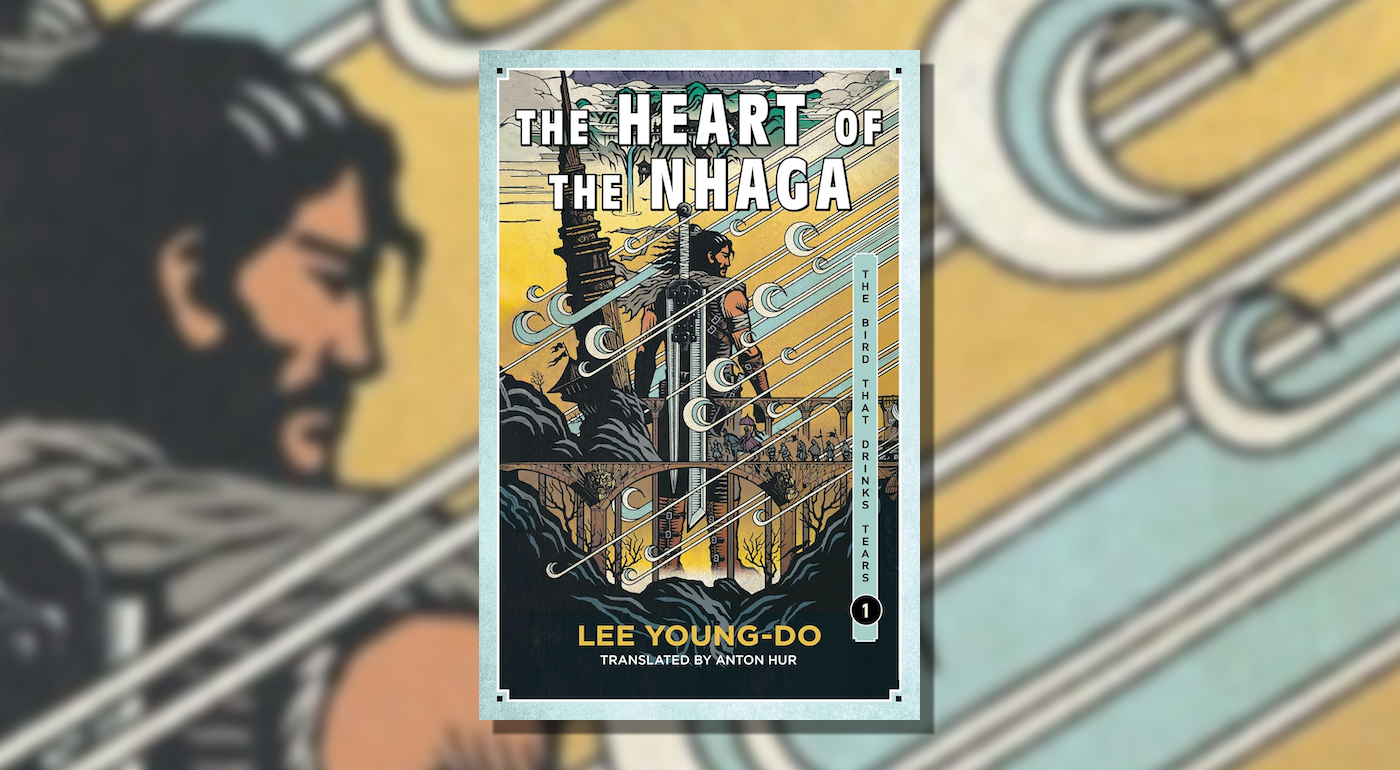
On June 2nd, the literary world will witness the English-language debut of one of South Korea’s most celebrated voices in speculative fiction. Harper Voyager is set to publish The Heart of the Nhaga, a monumental epic fantasy novel by Lee Young-do, translated by the acclaimed Anton Hur. The work promises to redefine the genre by blending high-stakes geopolitical tension with profound philosophical inquiry, all set against a backdrop of a world severed by a singular, immutable boundary.
The Core Premise: A World Divided
The narrative of The Heart of the Nhaga centers on a world partitioned by the "Line of Limit," a geographic and metaphysical barrier that has kept four distinct races in a fragile, centuries-old equilibrium.
To the north reside the Tokkebi—a race of flame-manipulators known for their unpredictable nature and affinity for illusion—alongside the Rekon, towering bird-warriors defined by their immense strength and martial traditions. Completing the northern triumvirate are the humans, whose internal divisions stand in stark contrast to the relative homogeneity of their neighbors.
To the south lies the domain of the Nhaga, a reptilian people whose culture is defined by a chilling biological and spiritual sacrifice: they relinquish their physical hearts in exchange for immortality. For generations, the Line of Limit has served as a silent guardian, ensuring that the disparate races remained isolated. However, that silence is breaking. When a high-stakes mission demands that a Nhaga agent be safely escorted to the North, a unique, unstable team is formed: one representative from each of the three northern races.
Chronology of the Unfolding Crisis
The complexity of the mission is compounded by the inherent flaws of the chosen representatives. The Tokkebi delegate is a scholar, not a soldier; the Rekon warrior suffers from an incapacitating phobia of water; and the human member, a notorious Nhaga-hunter named Kagan Draca, harbors a visceral, violent prejudice against the very species he is tasked to protect.
The situation reaches a breaking point when the original Nhaga envoy is murdered within the depths of the Kiboren forest. The replacement agent, however, is a deviation from the norm: he still possesses his heart, rendering him profoundly vulnerable in a landscape that is already hostile to his kind.
The ensuing narrative traces the desperate, forced alliance of these four individuals. They must not only navigate the physical dangers of the Kiboren forest but also overcome the deep-seated mistrust that threatens to tear them apart from within. As the mission progresses, the stakes expand from a simple extraction to a global crisis; it becomes increasingly clear that the survival of the world itself may hinge on this single, fragile Nhaga successfully crossing the Line of Limit.
Supporting Data: The Legend of the Kitaljer Hunters
Central to the mystery of the human participant, Kagan Draca, is the legacy of the Kitaljer hunters. As revealed in the recently published excerpt from the novel, Draca is not merely a hunter; he is a survivor of a tradition that has been largely lost to history.
The Kitaljer tradition dictates that when a hunter is killed by a tiger, the community adopts the fallen man’s son, training him in the art of the hunt until he is capable of consuming the liver of the beast that killed his father. Kagan Draca has applied this brutal, ancestral methodology to the Nhaga. His name itself—a combination of the Kitaljer words for "black lion" and "dragon"—serves as a grim epitaph for his lost family.
For the reader, this provides critical context: Draca’s motivation is not mere malice, but a deeply ingrained, ritualistic grief. He is a man who has lost everything to the Nhaga, making him both the most dangerous and the most knowledgeable guide for a journey into their heartland.

Official Perspectives: The Lord of Jumunuri
Within the narrative, the politics of the North are anchored by Bao Moridol, the eleventh lord of the castle of Jumunuri. A Tokkebi of singular, if eccentric, vision, Moridol’s perspective on the mission provides a window into the broader geopolitical landscape.
Moridol acknowledges that the "Three handles one" philosophy—the ancient justification for the tripartite alliance—is often dismissed as archaic nonsense. Yet, he recognizes the necessity of the mission. When pressed by his head of sentries, Sabin Hasu’un, regarding the sanity of employing a man who eats his own prey, Moridol provides a chilling, tactical defense:
"Kagan’s rage is directed exclusively at the Nhaga. He is capable of no other rage at this point… For anyone who isn’t a Nhaga, Kagan may be the safest person to be with in the world."
This official, albeit cynical, endorsement underscores the desperation of the northern powers. In a world where the Nhaga are near-invulnerable, the northern coalition is forced to rely on a man whose humanity has been eroded by the very enemy they now seek to navigate.
Philosophical and Genre Implications
The Heart of the Nhaga transcends standard fantasy tropes by interrogating the nature of identity and the cost of survival. By forcing a scholar, a phobic warrior, a genocidal hunter, and a vulnerable outsider into a singular unit, Lee Young-do crafts a microcosm of a fractured world.
The Cost of Immortality
The Nhaga’s choice to trade their hearts for immortality is a central philosophical pillar of the book. It raises the question: what is left of a person when the physical and metaphorical center of their emotional life is removed? The "heartless" nature of the Nhaga is both a biological fact and a moral indictment, setting the stage for a conflict that is as much about ethics as it is about territory.
The Architecture of Distrust
The inclusion of the castle Jumunuri, with its shifting corridors and traps, serves as a metaphor for the social and political state of the North. The Tokkebi’s obsession with illusion, concealment, and the subversion of reality mirrors the characters’ internal struggles. In a world defined by secrets and "the Line of Limit," the journey toward the truth becomes as difficult as the journey through the forest.
Conclusion: A Must-Read for Epic Fantasy Fans
As the publication date of June 2nd approaches, the buzz surrounding The Heart of the Nhaga continues to grow. Anton Hur’s translation promises to capture the nuances of Lee Young-do’s prose, ensuring that the emotional weight of the Kitaljer legacy and the complex internal politics of the North are delivered to an international audience with clarity and impact.
Whether one is drawn to the high-stakes action of a rescue mission in a lethal jungle or the deep, character-driven questions regarding prejudice and the nature of the "enemy," this novel offers a compelling, sprawling narrative. It is a story that dares to ask what happens when the lines that divide us are crossed, and what remains of our humanity when we are forced to confront the things we hate the most.
As the four companions venture into the dark, one thing is certain: in the world of Lee Young-do, no one emerges from the forest unchanged. The mission to save the heart of the Nhaga is, ultimately, a mission to recover the lost hearts of the heroes themselves.

 Sagoh
Sagoh
 Raul Delapena Setiawan