

In a significant move to bolster its surveillance capabilities, the Federal Bureau of Investigation (FBI) has officially launched a search for private-sector vendors capable of providing near real-time access to a massive, nationwide network of automated license plate readers (ALPRs). According to a Request for Proposals (RFP) published on May 14, the FBI’s Directorate of Intelligence is seeking to secure contracts that would grant federal agents the ability to track vehicles across the United States, its territories, and the District of Columbia.
The proposed initiative, which could be worth up to $36 million over a five-year period, marks a deepening of the relationship between federal law enforcement and private surveillance firms. By tapping into existing commercial and law enforcement camera networks, the FBI aims to create a pervasive monitoring system that transcends state lines and local jurisdictional boundaries.
The Core Proposal: A Digital Dragnet
The FBI’s RFP outlines a sophisticated set of requirements for potential contractors. The bureau is not merely looking for raw data; it is looking for an analytical ecosystem. The winning bidder—or bidders, as the agency has signaled a willingness to divide the contract across six geographic regions—must provide a platform that enables FBI personnel to perform complex queries.
The system must allow agents to search for vehicles based on partial or full license plate numbers, state of registration, specific geographic locations, and time-date criteria. Furthermore, the FBI is demanding the ability to correlate this data with vehicle descriptions, including make and model, to refine their target tracking.
Crucially, the RFP requires the system to provide "near real-time" notifications. This functionality would allow agents to receive instant alerts when a vehicle associated with a specific investigation passes a monitored location. The bureau has set an ambitious coverage target: the selected systems must be capable of monitoring at least 75 percent of the locations within the designated regions, effectively creating a high-resolution digital map of vehicle movement across the country.
Chronology of Surveillance Integration
The push for this centralized database is the latest evolution in a long-standing effort by federal agencies to gain access to the granular data collected by local police and private entities.
- Pre-2024: Federal agencies relied on ad-hoc information sharing, often utilizing "hot lists"—databases of license plates associated with criminal activity—shared between federal and local law enforcement partners.
- January 2024: The Electronic Frontier Foundation (EFF) and other privacy advocates exposed that dozens of California law enforcement agencies had been violating state law by sharing sensitive ALPR data with out-of-state and federal entities.
- March 2025: Flock Safety, a major player in the surveillance market, announced it was "defining a new relationship with federal law enforcement," aiming to establish protocols for data sharing while attempting to maintain the veneer of local control.
- May 14, 2026: The FBI officially published its RFP, formally requesting bids for a comprehensive, nationwide license plate tracking system.
Supporting Data: The Scale of the Network
The potential for this system is vast, primarily because it leverages the existing, rapidly expanding infrastructure of private and public surveillance. Companies like Flock Safety and Motorola Solutions are the primary candidates to fulfill the FBI’s requirements.
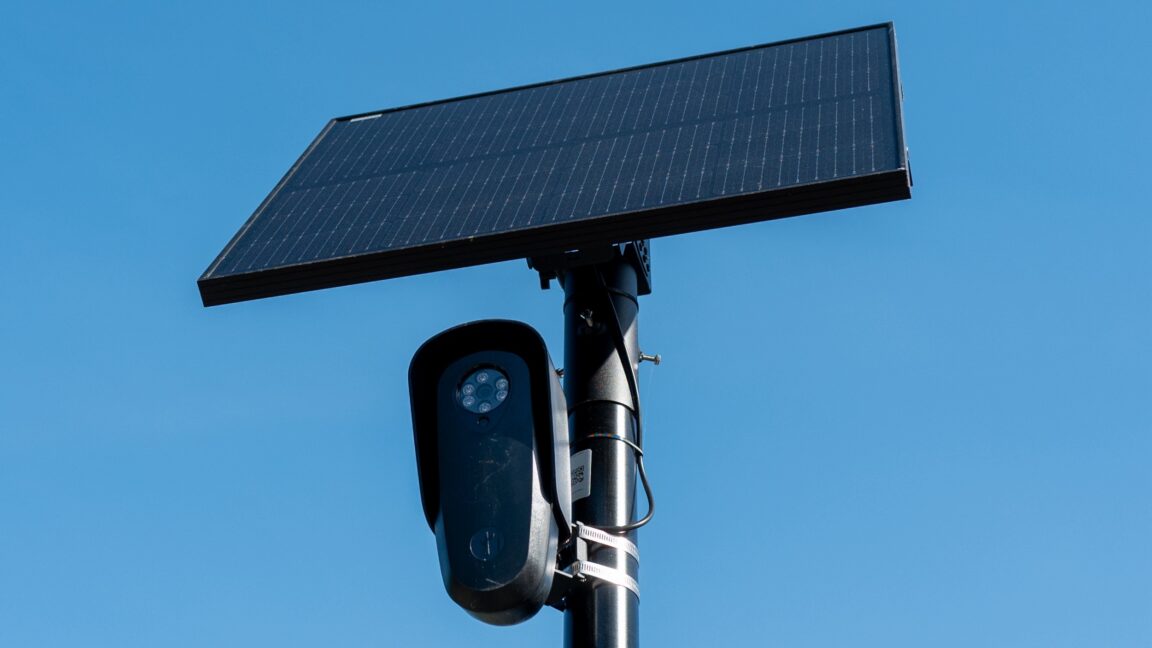
Flock Safety, for instance, boasts a network of over 12,000 public safety customers. Their business model involves installing solar-powered, motion-activated cameras in cities, neighborhoods, and business complexes. Motorola Solutions, a titan in the public safety sector, provides hardware that ranges from fixed roadway cameras to mobile units mounted on police cruisers.
The FBI’s plan to divide the US into six regions—covering the continental states, Hawaii, Alaska, Puerto Rico, and various territories—suggests an intent to achieve total geographic saturation. With $36 million in potential funding, the agency is signaling to these corporations that their data is a high-value commodity. By aggregating this information into a centralized, web-accessible dashboard for FBI agents, the government is essentially building a "super-network" that bypasses the traditional necessity of filing requests with individual local police departments.
Official Responses and Corporate Stance
The role of private corporations in this initiative is contentious. Privacy advocates argue that these companies are essentially acting as an extension of the state, collecting and monetizing the movements of everyday citizens.
In response to the growing scrutiny, Flock Safety has maintained that its data remains under the control of the agency that owns the cameras. "There is no backdoor into Flock," the company stated in a recent blog post. "Any access is explicitly permission-based and opt-in by the local agency."
However, this "opt-in" structure is exactly what critics fear. If local police departments are pressured or incentivized to grant the FBI access to their local camera networks, the "local control" argument may become a bureaucratic formality. Furthermore, the FBI’s own RFP requires contractors to detail where data is stored, a direct response to state-level laws—such as those in California and Virginia—that strictly prohibit local authorities from sharing ALPR data with federal agencies. The FBI is essentially looking for vendors who can navigate, or perhaps bypass, these legislative hurdles to ensure a seamless flow of intelligence.
Implications for Privacy and Civil Liberties
The implications of the FBI’s move are profound, raising significant questions about the erosion of the "expectation of privacy" in public spaces.
The Death of Anonymity
The aggregation of license plate data allows for the creation of movement profiles. If the government can track a vehicle’s path through a city, or across multiple states, the concept of anonymous travel effectively disappears. This level of surveillance has a chilling effect on First Amendment rights; for example, the ability to track who attends a protest, a political rally, or a place of worship is a powerful tool for potential government overreach.

Data Security and Error Rates
The history of ALPR technology is riddled with high error rates. Systems often misread characters, leading to "false positives." The Electronic Frontier Foundation and other civil liberties groups have documented numerous instances where these errors have resulted in wrongful stops, police confrontations, and, in some cases, arrests. Centralizing this data increases the impact of these errors, as a mistake in one local jurisdiction could trigger a nationwide alert for an innocent driver.
Furthermore, the security of these databases is a persistent concern. As 404 Media reported in early 2025, misconfigured license plate readers have previously leaked real-time video and data to the public internet. By creating a centralized FBI portal, the agency is creating a "honeypot" for malicious actors—a single point of failure that, if breached, could expose the travel history of millions of Americans.
Federalism and State Sovereignty
The FBI’s RFP directly challenges the ability of states to regulate their own surveillance ecosystems. When states like California and Virginia enact laws to prevent the federal government from "side-dooring" their local camera data, the FBI’s move to sign contracts with private, national vendors is an attempt to override these protections. This creates a fundamental conflict between federal investigative mandates and state-level protections for citizens’ privacy.
Conclusion: A New Frontier of Oversight
The FBI’s plan to purchase nationwide access to license plate reader data is a landmark shift in the scale of domestic surveillance. By moving from a model of reactive information sharing to one of proactive, real-time, nationwide tracking, the Bureau is setting the stage for a new era of intelligence gathering.
As the bidding process moves forward, the focus will remain on whether these private corporations can truly balance the profit-driven expansion of their surveillance networks with the constitutional rights of the citizens they monitor. For now, the prospect of a $36 million federal contract serves as a powerful incentive for the industry to prioritize government access over the privacy concerns of the public. As this technology becomes more pervasive, the question for society is not just whether this system can be built, but whether it should be.












No comments yet. Be the first to join the conversation!