

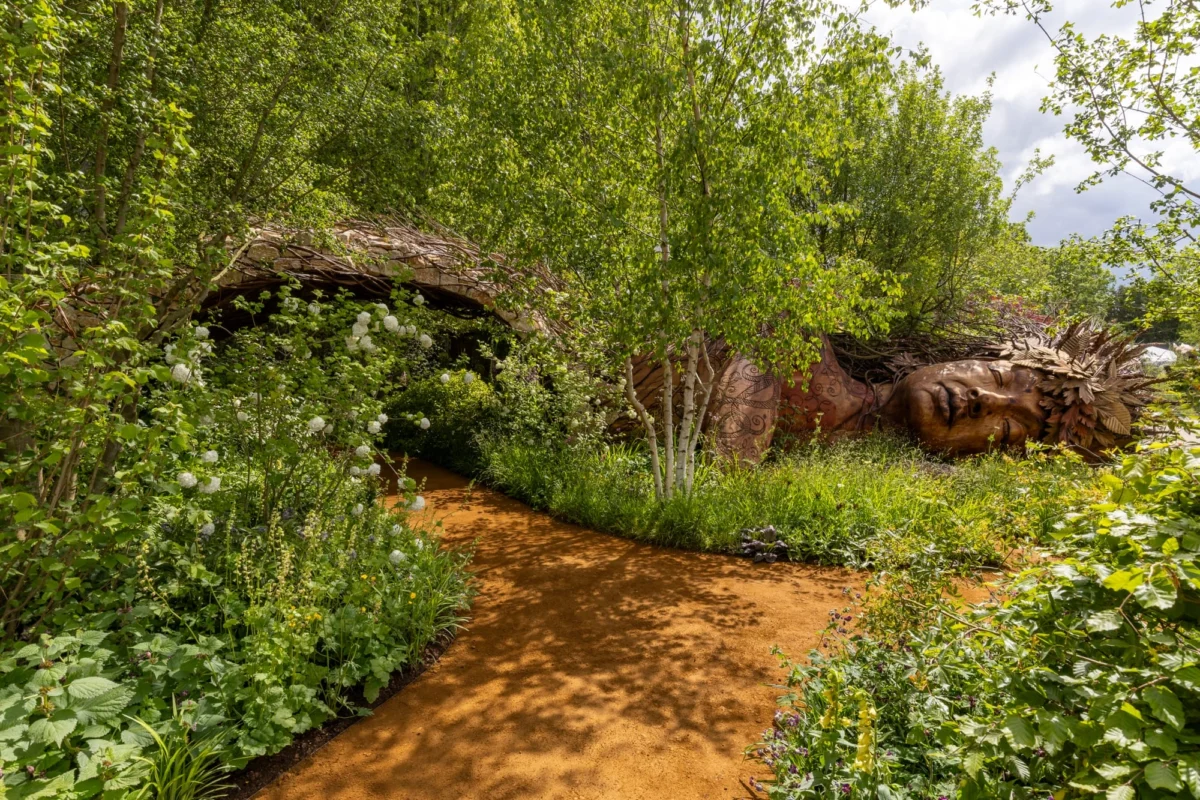
At the heart of the prestigious Royal Horticultural Society (RHS) Chelsea Flower Show, amidst a sea of meticulously manicured hedges and hyper-curated floral displays, a singular, slumbering figure has captured the imagination of critics and the public alike. Known as "Gaia," this monumental sculpture of Mother Nature—fashioned from willow, fallen timber, and reclaimed stone—lies peacefully within a garden titled "On the Edge."
The installation, a collaborative triumph between renowned garden designer Sarah Eberle and the Campaign to Protect Rural England (CPRE), has been awarded the prestigious "Garden of the Year" title. More than just a visual spectacle, the project serves as a provocative manifesto for the "edgelands"—the overlooked, untamed, and often undervalued spaces that exist on the periphery of our urban and rural lives.
The Anatomy of an Icon: Crafting Gaia
The physical manifestation of Gaia is a feat of collaborative artistry, merging traditional craftsmanship with an environmental ethos. The sculpture itself is a tapestry of natural textures. Artist Tom Hare, celebrated for his intricate willow-branch structures, sculpted the figure’s flowing, organic hair, which appears to merge seamlessly with the surrounding native U.K. flora.
The structural core—the face and torso—was carved by wood artist Tim Wood from a fallen mature tree, imbuing the figure with a sense of gravity and history. The figure’s torso extends into an architectural archway, a nod to the U.K.’s historic dry-stone bridge heritage. This component was meticulously assembled by the family-run Noble Stonework, utilizing ancient dry-stone techniques that eschew mortar in favor of balance and gravity. Together, these artisans have created a figure that feels not placed in the garden, but grown from it.

Chronology of a Vision: From Concept to Gold Medal
The journey of "On the Edge" from an abstract environmental concept to the toast of the London horticultural scene did not happen overnight. The project’s timeline reflects a deliberate, slow-burn approach to design that mirrors the very ecosystem it seeks to champion.
- Initial Conceptualization (Early 2025): Sarah Eberle and the CPRE team began mapping out a design that challenged the traditional "show garden" aesthetic. The goal was to move away from the pristine, unsustainable luxury often associated with Chelsea, focusing instead on biodiversity and the reclamation of neglected spaces.
- Artistic Collaboration (Spring 2025): The selection of artists began. The team prioritized creators who worked with reclaimed or sustainable materials, leading to the involvement of Hare, Wood, and Noble Stonework.
- Site Preparation (Winter 2025–2026): Because the garden relies on native species and "wild" growth, the planting schedule required careful coordination to ensure the flora appeared established and authentic by the time the show opened in May.
- The Reveal (May 2026): "On the Edge" was unveiled to the public, immediately drawing attention for its departure from the high-maintenance horticultural standards of previous years.
- Judging and Accolades (Late May 2026): The RHS panel, citing the project’s innovative use of materials, its powerful narrative on ecological connectivity, and its technical mastery, awarded the garden the "Garden of the Year" prize.
Defining the "Edgelands": The Science of Neglect
Central to the exhibit is the concept of "edgelands"—a term popularized by researchers to describe the spaces between the clearly defined urban and the distinctly rural. These are the strips of land beside railway lines, the verges of motorways, the unkempt banks of canals, and the wild corners of residential gardens.
For decades, these areas have been treated as "leftover" space—non-places that serve little purpose other than to be cleared or paved. However, recent ecological studies suggest these spaces are critical. According to the CPRE, these "in-between" zones are essential biodiversity corridors. They provide the necessary, albeit messy, habitats for pollinators, small mammals, and native plants that are increasingly squeezed out by industrial agriculture and urban sprawl.
By elevating these spaces to the center of the world’s most famous flower show, Eberle is making a scientific argument: "weeds" are often vital native species, and "disorder" is often the visual signature of a thriving, resilient ecosystem.

Supporting Data: Why Biodiversity Matters
The importance of the "On the Edge" project is backed by a growing body of evidence regarding U.K. wildlife decline. Data from environmental agencies indicates that the loss of hedgerows, field margins, and wild patches has led to a significant decrease in local insect populations.
- Pollinator Decline: Over 40% of U.K. bee species have faced population stress due to habitat fragmentation.
- Carbon Sequestration: The use of native, permanent vegetation—even in small "edgeland" pockets—is significantly more effective at carbon sequestration than traditional, high-maintenance lawns.
- Wildlife Corridors: Research shows that when urban gardens are connected by "wild" corridors, the movement of hedgehogs, birds, and insects increases by nearly 30%, fostering a healthier, more diverse urban ecology.
The "On the Edge" garden acts as a pilot program for these principles, demonstrating that even a small, strategically planted space can act as a "micro-refuge" for local wildlife.
Official Responses and Public Reception
The reception to "On the Edge" has been overwhelmingly positive, marking a shift in the cultural zeitgeist toward "rewilding" and environmental stewardship.
In a formal statement, the CPRE noted: "These spaces connect millions of people to nature in everyday life, yet they’re undervalued and under constant pressure. This garden is an invitation to see them differently: not as ‘leftover’ land, but as living places that can recover and thrive with the right care."

Sarah Eberle, the mastermind behind the project, has been vocal about the emotional and psychological impact of the garden. "It’s about how it makes you feel," she remarked during the opening ceremony. "It’s almost a homecoming, an embrace, a hug. We want people to see the beauty in the ordinary and realize that we don’t need to conquer nature to make it beautiful; we just need to let it breathe."
Social media and horticultural journals have echoed this sentiment, with critics praising the garden for its lack of pretense. The sight of Gaia, seemingly at peace in a landscape of "controlled chaos," has resonated deeply with visitors, many of whom have described the installation as a "meditative sanctuary" in the midst of the bustling show grounds.
Implications: A New Era for Landscape Design
The victory of "On the Edge" at the Chelsea Flower Show carries profound implications for the future of landscape architecture and residential gardening. It signals a departure from the "Tesco-style" gardening—where plants are treated as disposable decorations—toward a philosophy of "regenerative gardening."
H3: Shifting the Aesthetic
For centuries, the British garden aesthetic was defined by control: the lawn, the clipped hedge, the seasonal annuals. This design forces a paradigm shift, suggesting that the most beautiful gardens are those that mirror the innate rhythms of the local landscape. By embracing "flaws"—deadwood, rocky outcrops, and spontaneous wildflower growth—gardeners can create spaces that are not only more sustainable but also more emotionally resonant.

H3: Policy and Preservation
The project has also sparked calls for better protection of urban edgelands. If these spaces are valuable enough to win the world’s top horticultural prize, advocates argue, they should be protected by local planning authorities as essential ecological infrastructure rather than being viewed as prime real estate for development.
H3: The Personal Impact
Finally, the garden serves as a reminder to the individual. By demonstrating that one does not need vast acreage to support the planet, "On the Edge" empowers homeowners to rethink their own backyards. It encourages the abandonment of chemical pesticides and the adoption of native plant varieties, turning every residential patch into a vital link in a larger chain of environmental restoration.
Conclusion
The RHS Chelsea Flower Show has long been a bellwether for societal attitudes toward nature. By crowning "On the Edge" as the winner, the committee has acknowledged that our relationship with the environment is changing. We are moving away from the era of dominating nature and into an era of reconciliation.
As Gaia sleeps peacefully under her canopy of leaves, she represents more than just a sculpture; she is a symbol of our own potential to heal the land. As the show continues through May 23 in London, the legacy of this project will undoubtedly linger, challenging us to look at the "leftover" spaces in our own lives and see them not as voids, but as the foundations of a wilder, more vibrant future. For those interested in witnessing this transformation firsthand, tickets remain available through the official RHS website—a small investment for a profound lesson in the art of living with the earth.











No comments yet. Be the first to join the conversation!