Reynand Wu
By Jamie Lang | May 12, 2026
Japanese animator Honami Yano has never been one to shy away from the precipice of emotional discomfort. Her breakthrough short, A Bite of Bone, introduced audiences to a singular voice drawn to the unsettling intersections of desire, memory, and the physical body—all rendered in an animation style that seemed to simultaneously pulse with life and succumb to decay.
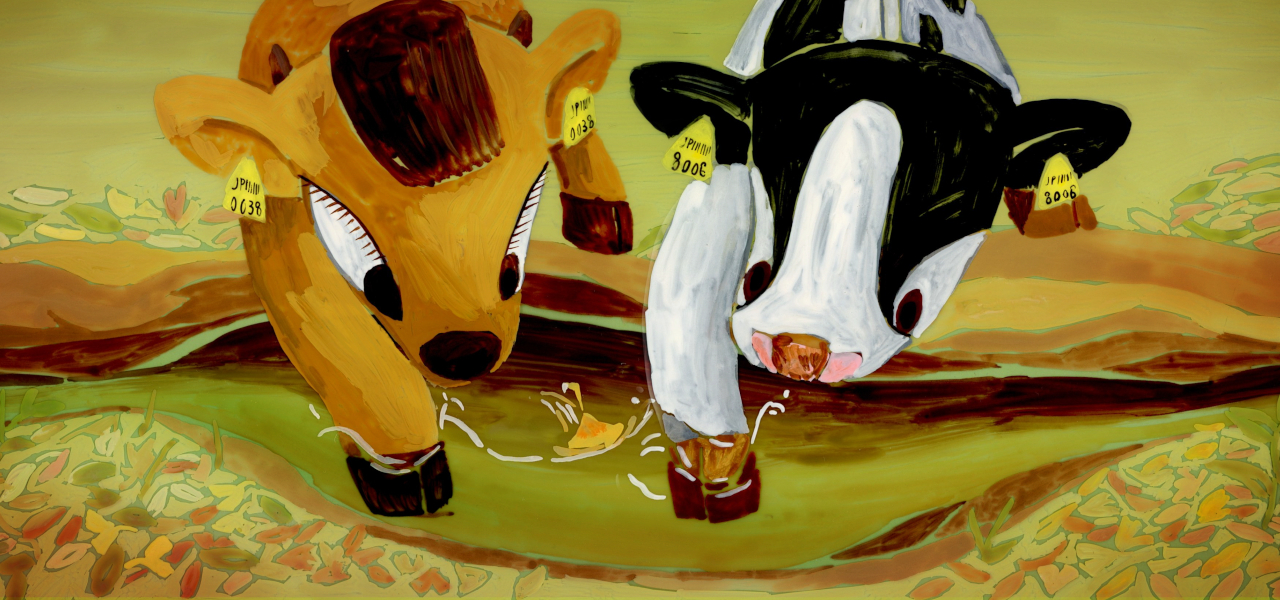
With her latest 12-minute short, Eri, currently preparing for its prestigious premiere at the Cannes Directors’ Fortnight, Yano once again challenges the boundaries of her medium. The film is a tactile, hand-painted odyssey of windswept mountains, yearning glances, and the crushing weight of systemic existence. As we exclusively debut the film’s first trailer, it becomes clear that Yano has crafted a work that is as visually sculptural as it is emotionally devastating.
The Premise: A Surreal Leap into Hard Truths
Eri follows the life of a Holstein cow living in a rigid, industrial dairy environment where survival is predicated on a single, biological requirement: the bearing of calves. Within this bleak, utilitarian structure, Eri experiences a profound, all-consuming love for another cow named Sawa.
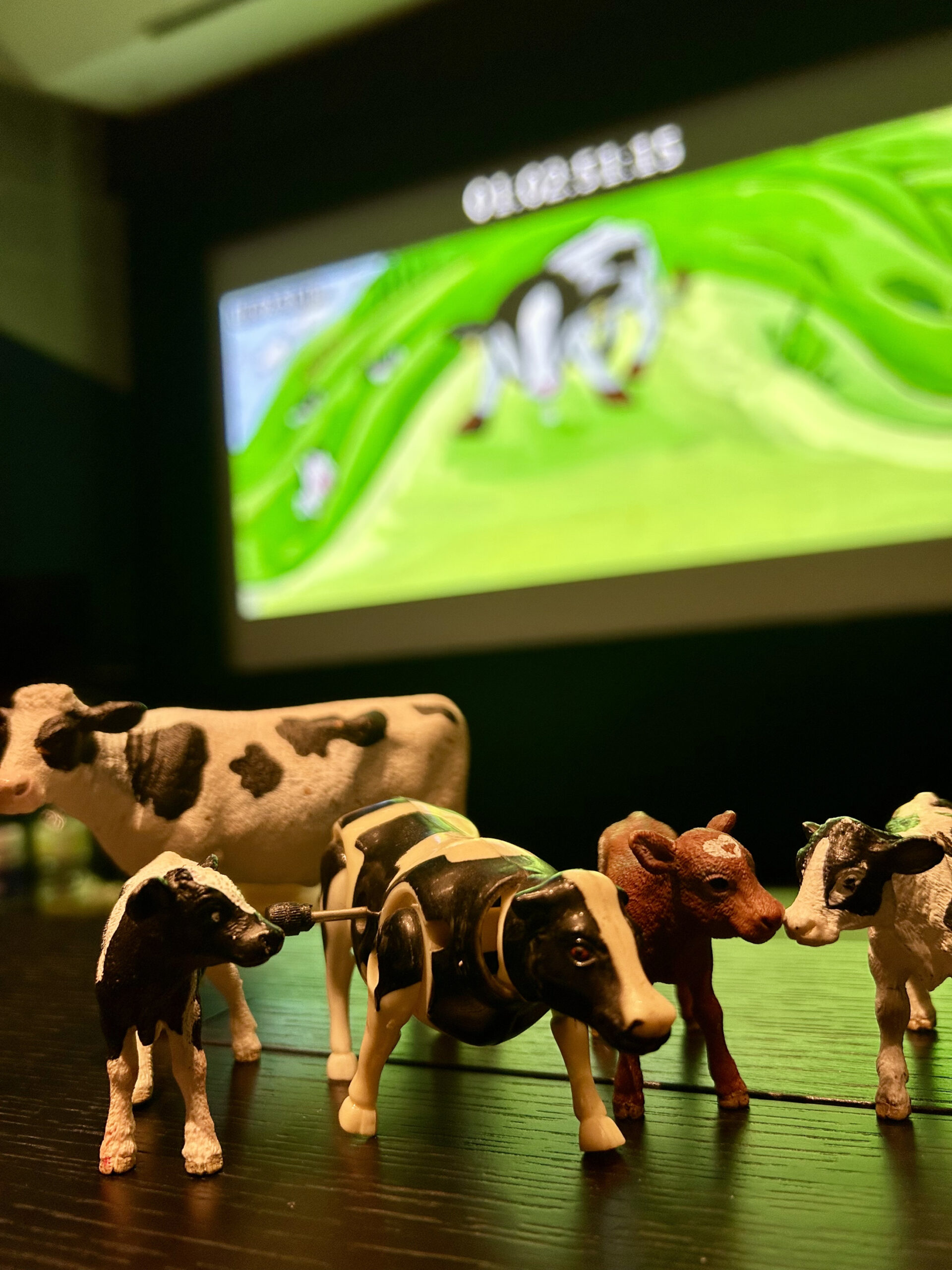
Adapted from Kasumi Asakura’s acclaimed novel Who Else Is There?, the film makes a daring conceptual shift by transposing the book’s human protagonists into the bodies of cattle. While the premise may initially appear surreal, it functions as a potent, metaphorical distillation of the original text’s themes of bodily autonomy and social marginalization.
"This novel has been precious to me since my student days," Yano explains to Cartoon Brew. "When I began thinking about how to bring Kasumi Asakura’s words to life in animation, I had a feeling that keeping the characters human would somehow close the work in, limit what it could become."
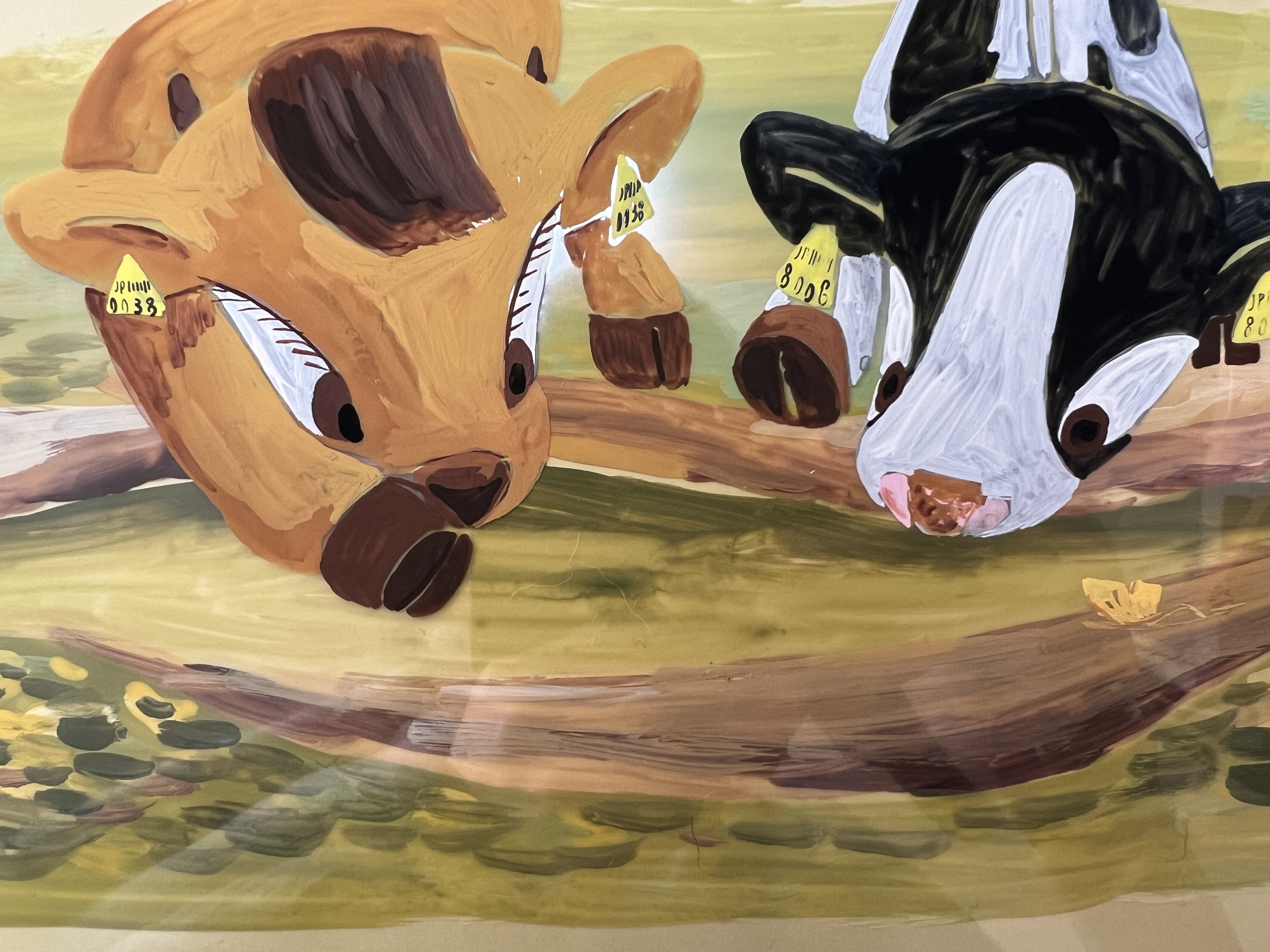
The inspiration for this animal transposition was born from a specific meditation on the text. "The novel deals heavily with self-consciousness regarding skin color," Yano notes. "One character is troubled by the lightness of her skin, the other by its darkness. White and black. That thought led me to a farm. And when I met the cows there, I knew: these were the ones I wanted to draw."
Chronology: From Dreams to Cels
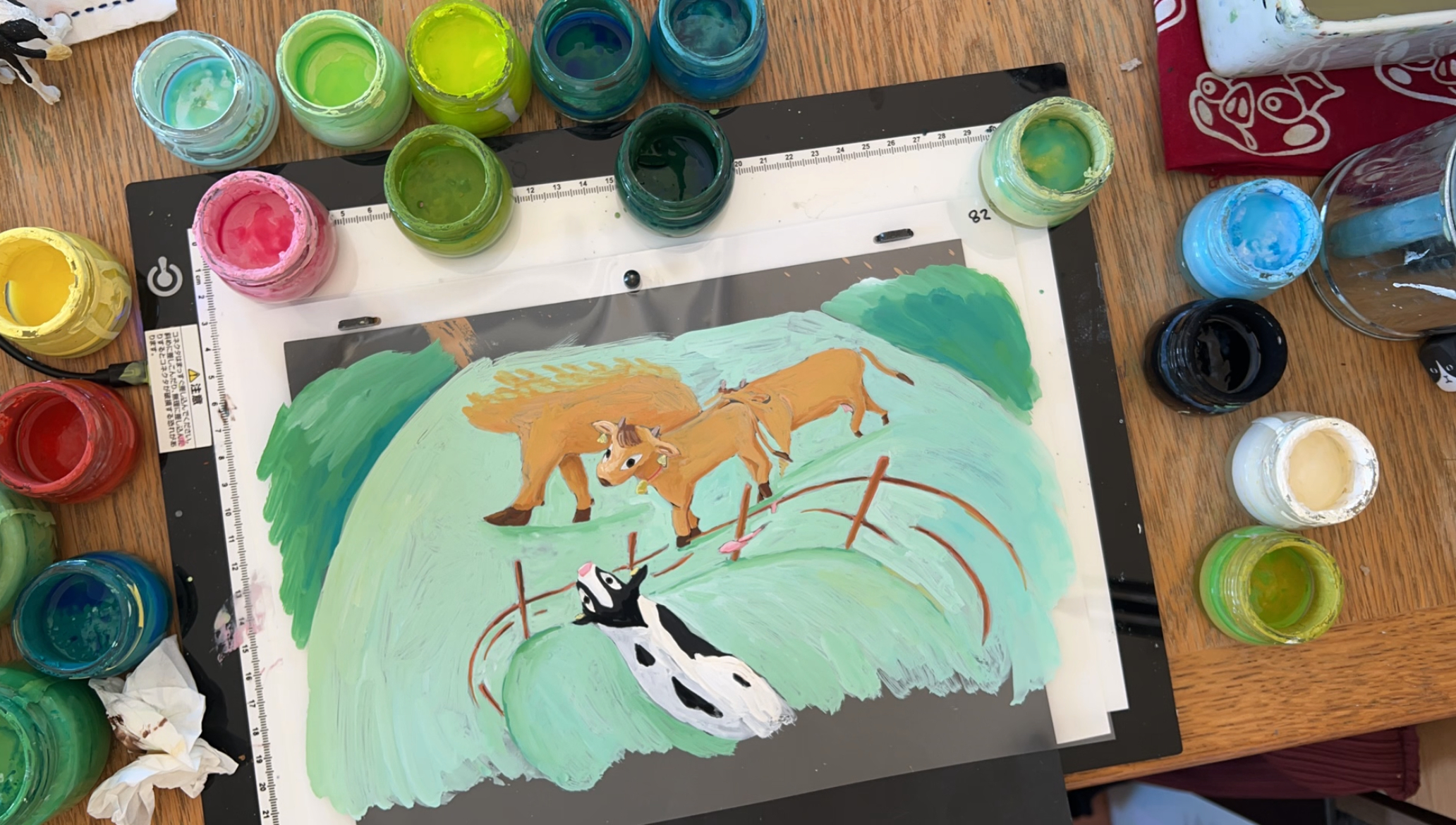
The development of Eri was a multi-year, iterative process that saw Yano move from traditional paper animation to a complex, multi-layered technique. Her journey began with a simple desire to capture the warmth of the animals she encountered on rural Japanese dairy farms.
The Experimental Phase
Initially, Yano attempted to animate the film on standard animation paper. "I started working on paper, but after around two hundred paintings, something still wasn’t right," she recalls. The emotional stakes—and the physical weight of the cows—weren’t translating.
The "Dream" Realization
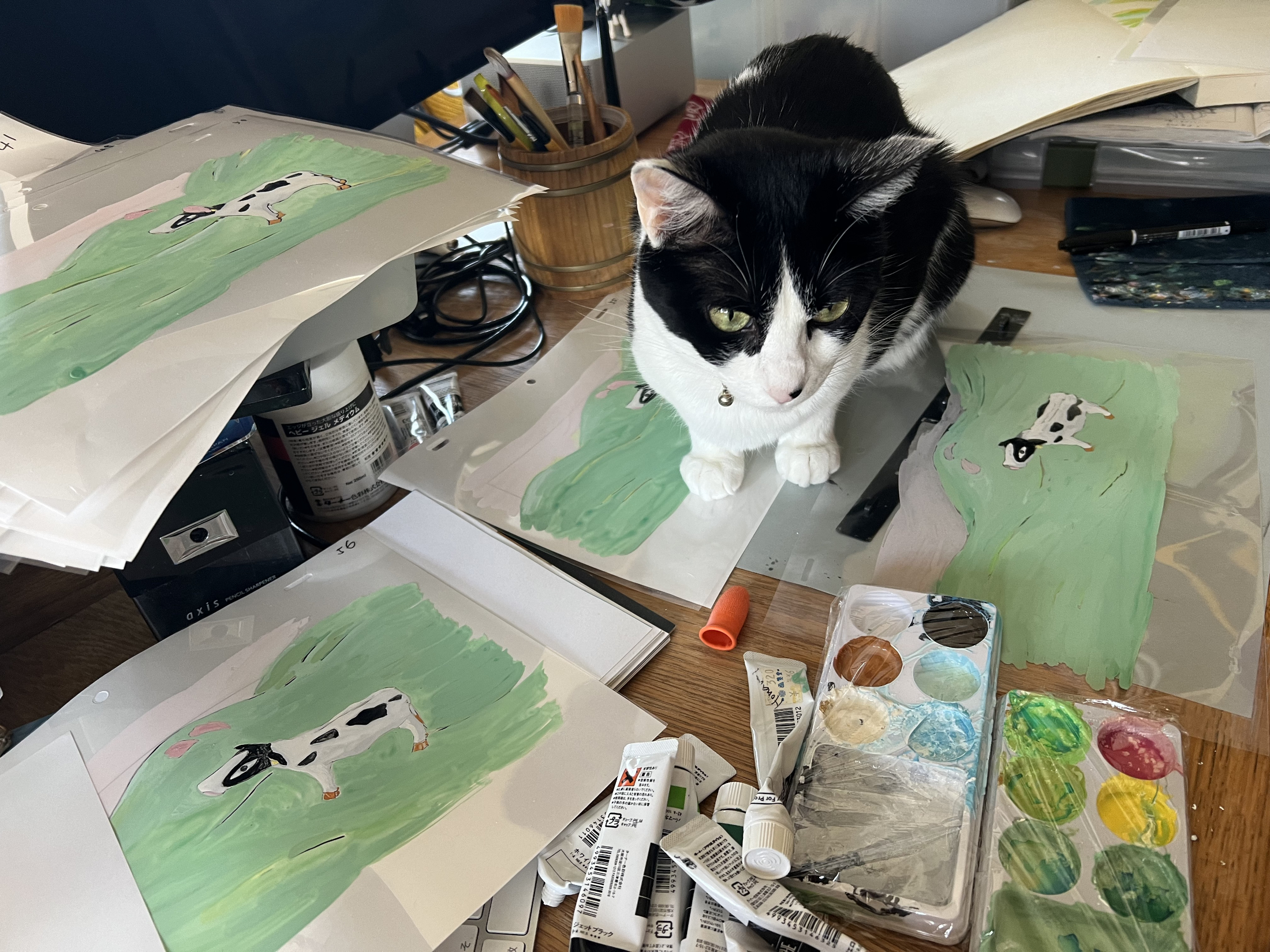
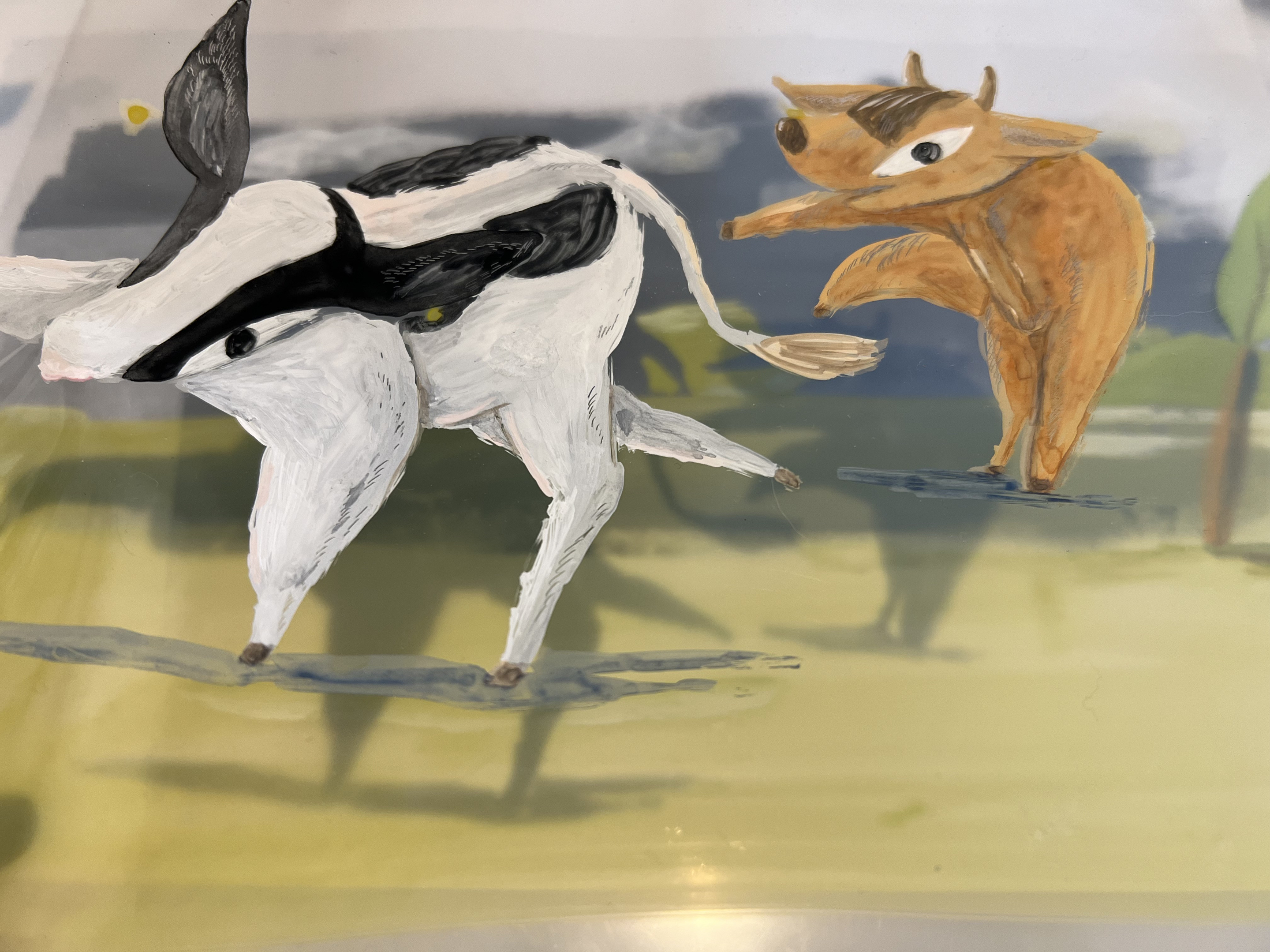
The breakthrough arrived, quite literally, in a dream. Yano recalls a vision where she was painting the characters on transparent sheets, with the background and foreground occupying distinct physical spaces. "The shadows of the characters fell onto the background beneath them," she says. "It was extraordinarily beautiful. When I woke up, I knew with complete certainty: I would paint on transparent cel."
Production and Collaboration
The film is a France-Japan co-production between Miyu Productions and the Tokyo-based studio Au Praxinoscope. Notably, the project benefited from the mentorship of Oscar-nominated animator Koji Yamamura, who served as supervising producer. This collaboration aligns Yano with a lineage of "formally adventurous" cinema, cementing her status as an auteur whose work bridges the gap between high art and narrative animation.
Supporting Data: The Craft of the "Real"
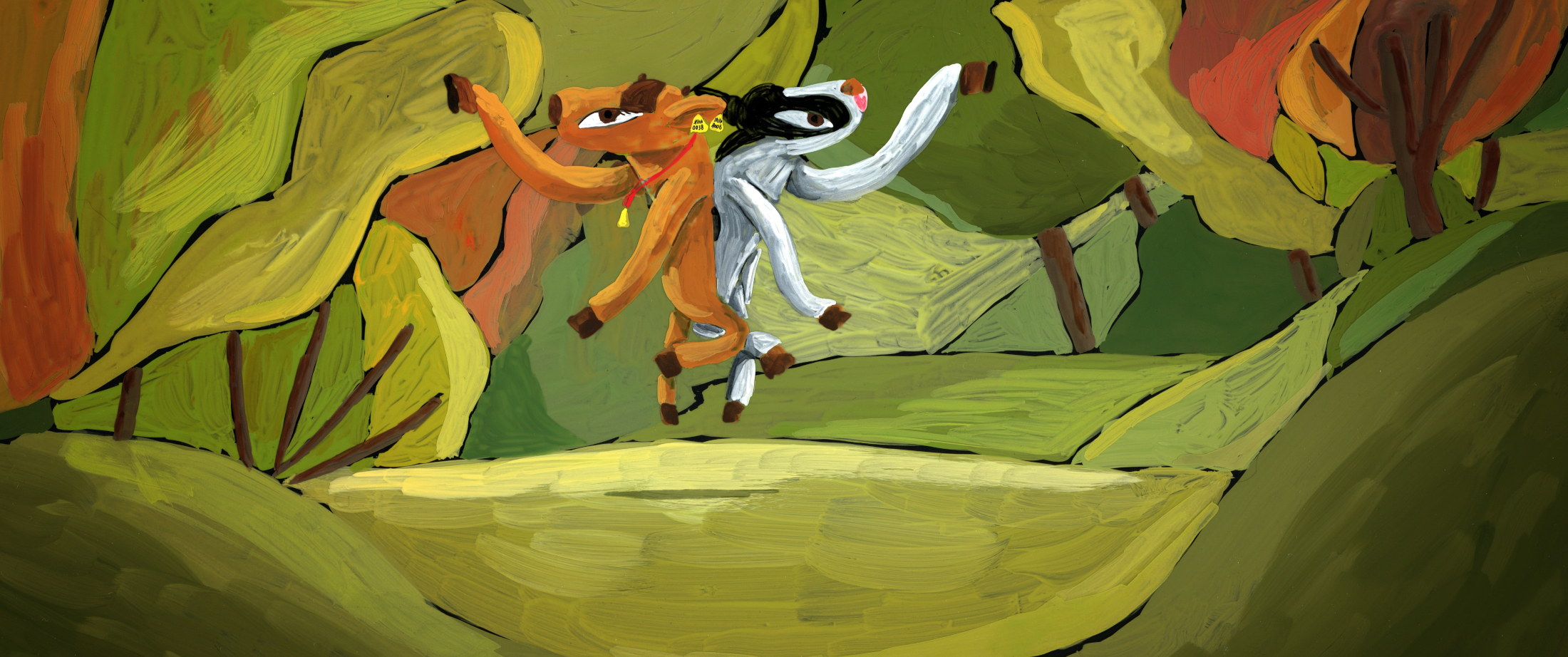
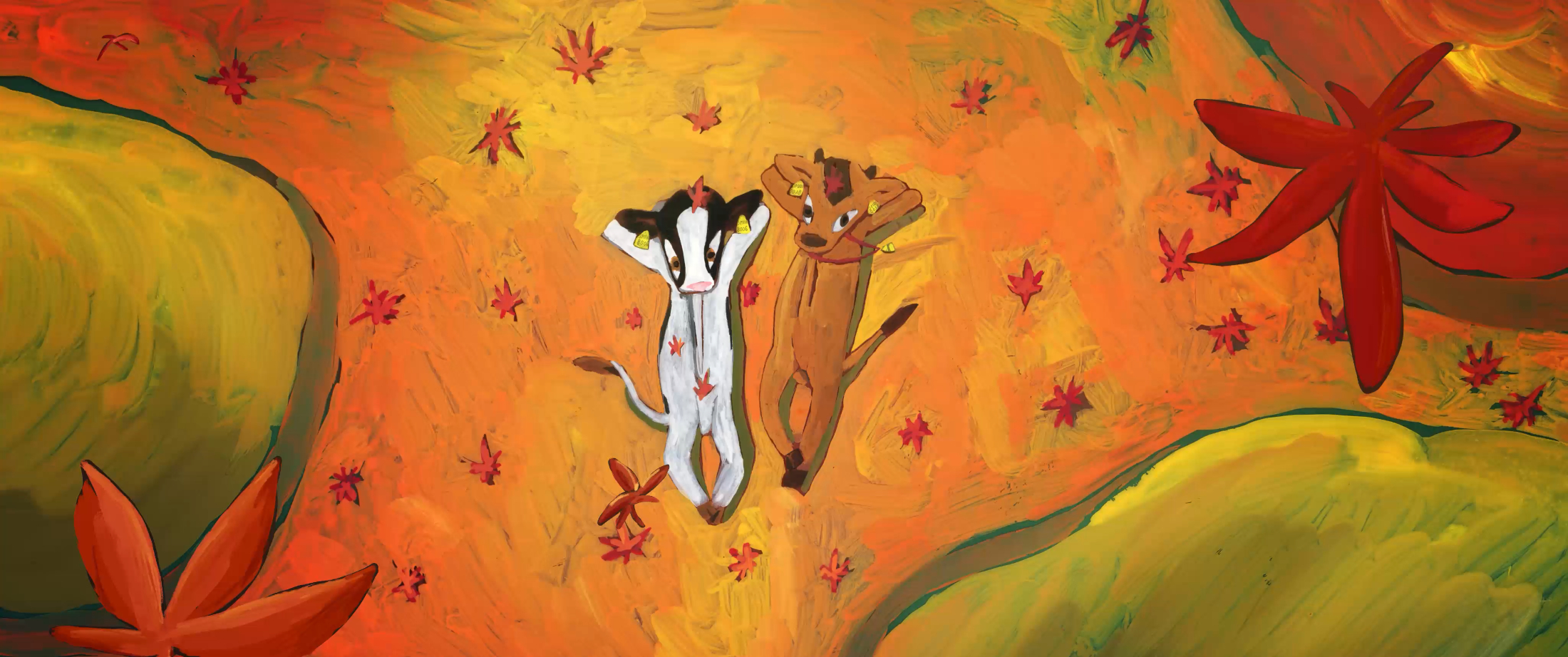
The visual density of Eri is a direct result of its laborious production method. Every frame was hand-painted using acrylics directly onto transparent cels. This technique gives the film a sculptural dimensionality; the viewer can see the physical accumulation of paint at the edges of figures and the subtle, tactile texture of the brushstrokes.
Expanding the Frame
To capture the scale of the mountain landscapes and the expansive worldview of the cattle, Yano opted for the CinemaScope aspect ratio. She notes that a cow’s field of vision is approximately 330 degrees. By utilizing a wide frame, Yano attempts to replicate the sensory experience of a creature that is constantly aware of the vast, surrounding horizon.
The Sound of Silence
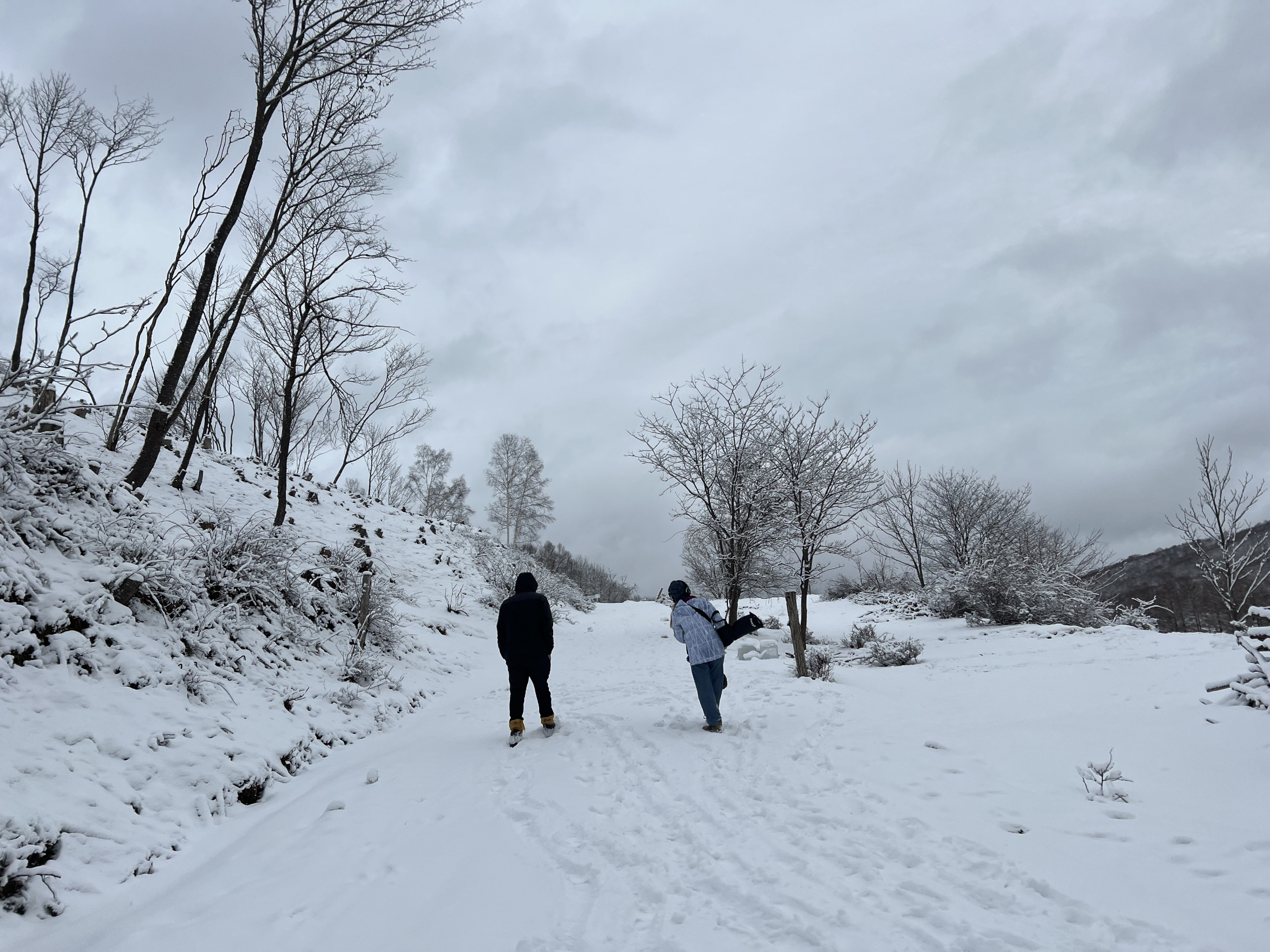
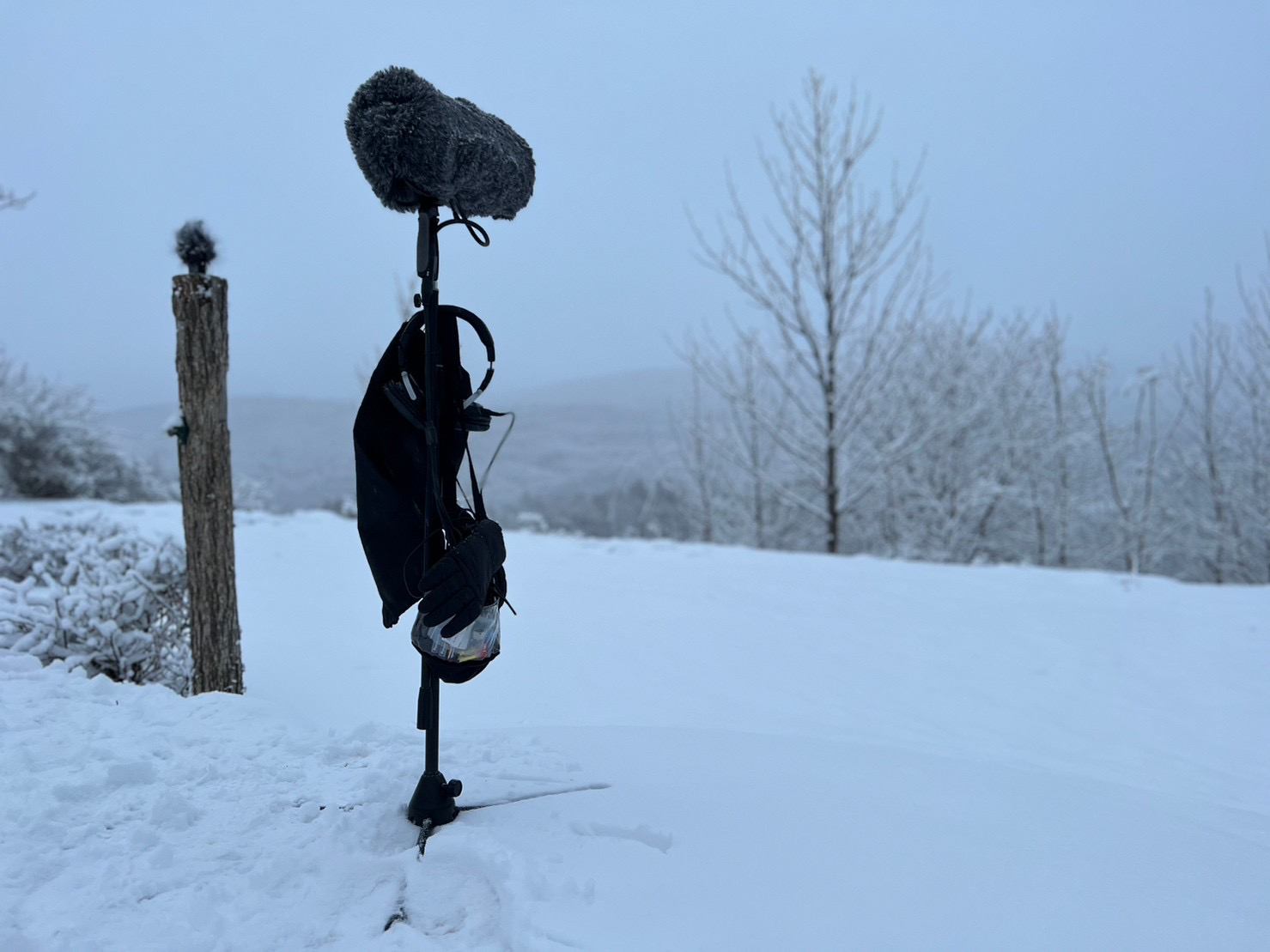
The sonic landscape of Eri was built on a foundation of authentic field recordings. Yano and sound designer Masumi Takino traveled to eastern Japan to record ambient sounds directly from the source. Eschewing stock audio, they focused on the subtle, intimate sounds of farm life: the rhythmic breathing of calves, the faint hum of electric fences, and the profound, heavy silence of the mountain winter.
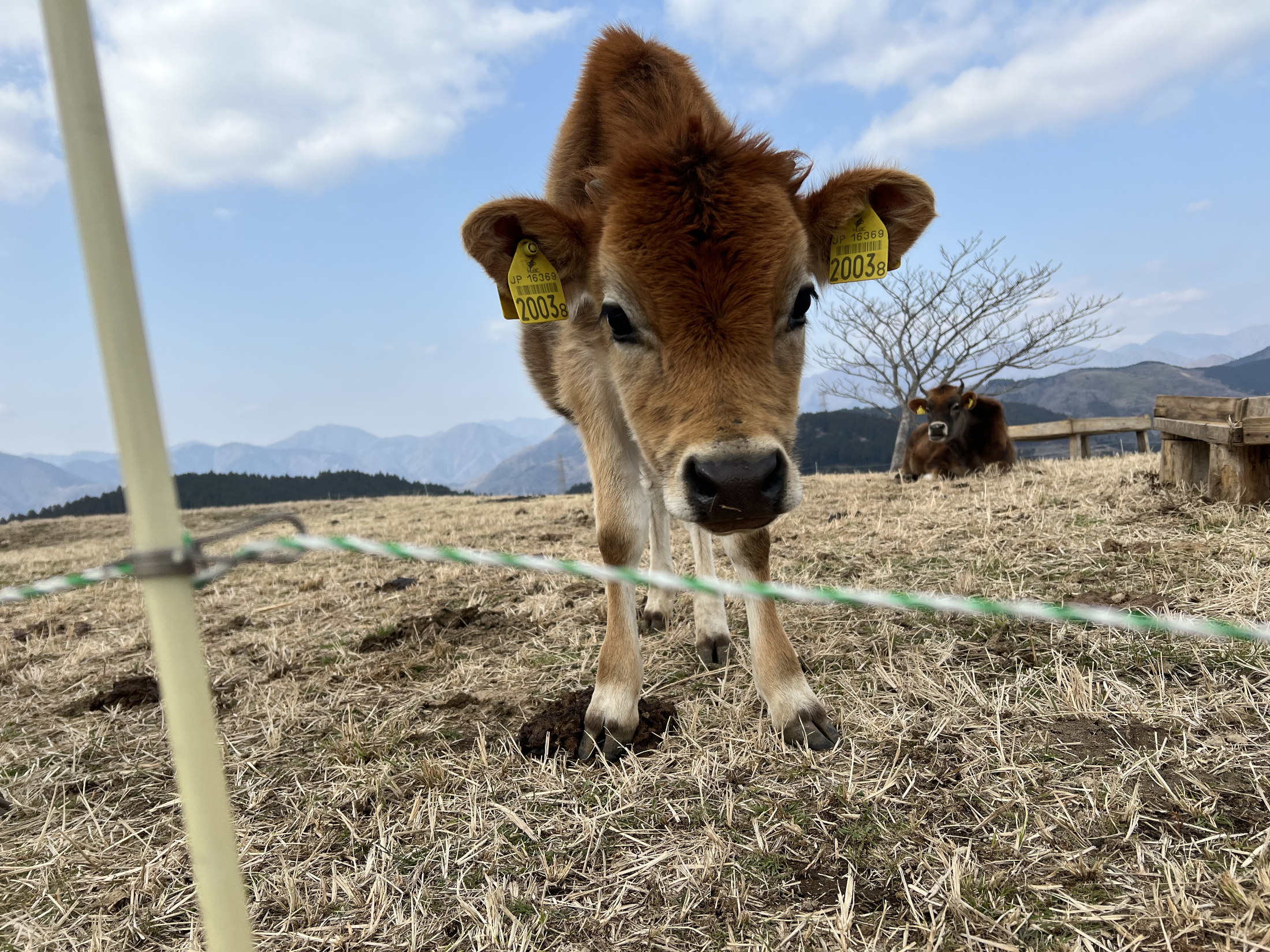
"Masumi turned her microphone toward a small calf wearing a little scarf, and we carefully recorded the sounds of her breathing, her ruminating," Yano shares. "We called her our actress."
The score, composed by Montreal-based musician Judith Gruber-Stitzer, rounds out the auditory experience, providing an emotional scaffolding that echoes the work of the National Film Board of Canada’s most celebrated animators.
Official Responses: Navigating the Politics of the Farm
Throughout the production, Yano grappled with the ethics of her subject matter. She was acutely aware of the danger of aestheticizing the suffering of dairy animals—a system she was using to mirror a queer love story.
"A dairy farm is, at its foundation, a world of females," Yano says. "The cows exist to produce milk, and to produce milk, they must give birth. From the time they are just over a year old, reproduction begins to define their existence."
The realization that her story carried such heavy, systemic weight initially gave her pause. However, an encounter with a mother cow during her research provided the perspective she needed. "A mother cow raised her head and looked at me," Yano recalls. "She let out a low sound, a ‘moo,’ and her calf immediately moved behind her. It was as if she were saying: ‘a strange one has come, stay close to me.’ In that moment, I understood that I was an outsider, but I also saw the unmistakable intention—the will to protect."
This "will" became the heart of the film. Yano posits that the characters in Eri are not merely passive victims of their environment; they are active agents of desire.
Implications: The Unanswerable Question
Ultimately, Eri functions as an inquiry into the nature of forbidden love. It does not offer a moralistic conclusion or a tidy resolution. Instead, it invites the audience to inhabit the space between existence and erasure.
"What happens when someone who is not permitted to exist loves another person anyway?" Yano asks.
By refusing to answer this question cleanly, Yano forces the viewer to confront the endurance of the human (or in this case, bovine) spirit. The film’s centerpiece—an elaborate dance sequence where Eri mimics the movements of her beloved Sawa—is, according to Yano, a representation of the "architecture of longing." It is a moment of humor, joy, and obsessive devotion, holding the weight of the film’s themes with a surprisingly light touch.
As Eri prepares to debut at Cannes, it stands as a testament to the power of animation to articulate the inarticulable. It is a rare film that balances the harsh realities of the physical world with the ethereal, painterly dreams of its creator. For Honami Yano, the path forward is clear: she will continue to explore the unsettling edges of the human experience, and as Eri proves, she will do so in a space entirely her own.


 Siti Muinah
 Nana
Nana