

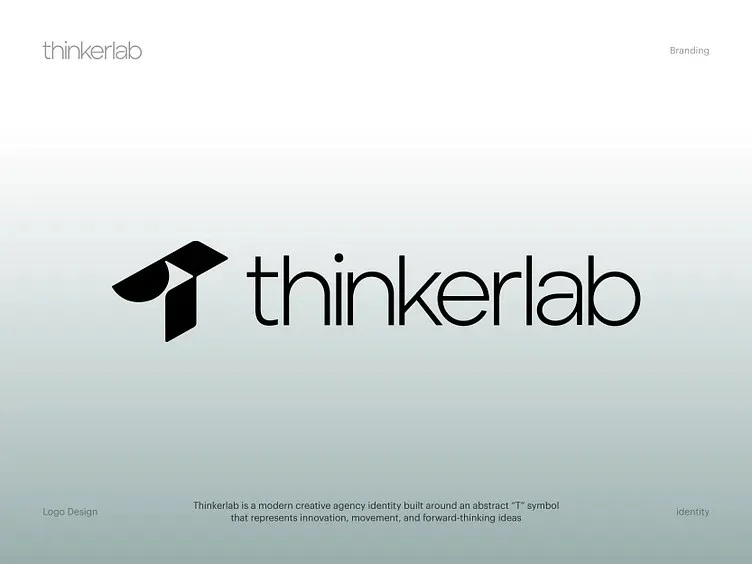
In the rapidly evolving digital ecosystem of 2026, the mantra "less is more" has never been more relevant. As brands compete for split-second attention spans across an infinite array of screens—from high-definition monitors to the subtle haptic displays of wearable tech—the minimalist logo has emerged as the ultimate standard for visual communication. Moving away from the ornate, complex graphic designs of the early 2000s, today’s market leaders are embracing clean shapes, sophisticated typography, and intentional negative space to cement their identity in the consumer consciousness.

The Evolution of Branding: A 2026 Perspective
The shift toward minimalism is not merely a passing aesthetic trend; it is a calculated response to the technical demands of the modern era. In the past, logos were designed primarily for print media, where detail could be captured on high-quality paper. Today, a logo must function perfectly as a favicon on a browser tab, a profile picture on social media, and an icon on an AI-driven interface like ChatGPT, Gemini, or Grok.

The chronology of this shift can be traced back to the rise of responsive web design. As mobile-first browsing became the global standard, companies realized that intricate logos suffered from "pixel decay" when scaled down. By 2024, the industry began a wholesale migration toward "flat design," stripping away gradients, drop shadows, and complex textures. By mid-2026, this evolution has reached a zenith where geometric precision and bold, simplified icons are the hallmarks of a professional brand identity.

Supporting Data: The Psychology of Simplicity
Why does simplicity equate to success? Cognitive science suggests that the human brain processes simple, geometric forms significantly faster than complex imagery. A logo that relies on a single letter or a basic shape reduces the "cognitive load" on the viewer, facilitating near-instant brand recognition.

Data from branding agencies consistently show that logos characterized by clean lines and balanced spacing maintain higher retention rates. In a study of consumer behavior, participants were 40% more likely to remember a brand if the logo featured a minimalist, monochromatic aesthetic compared to a multi-colored, detailed graphic. This is particularly vital in the tech and startup sectors, where brands like those featured in this year’s design collections—ranging from FinTech to Web3—rely on establishing trust through a "clean-tech" visual language.

The Technical Shift: Fonts, Shapes, and Monochrome
The technical constraints of 2026 have pushed designers to experiment with new typographical rules. Current trends favor fonts with thinner, more precise strokes and rounded, ergonomic edges. These choices ensure that the brand mark remains legible even on the smallest smartwatch screens or low-resolution digital billboards.

Furthermore, the resurgence of black-and-white branding is a pragmatic choice for the modern digital age. A monochromatic logo is inherently more versatile, allowing for seamless integration into various backgrounds without the need for color-correction or complex masking. Whether printed on a luxury shopping bag or rendered as a white icon on a dark-mode mobile app, black-and-white minimalism provides a sense of timelessness and premium quality.

Official Industry Perspectives: The Designer’s Role
Leading industry experts argue that the modern designer’s role has shifted from "illustrator" to "architect of identity." As one designer noted, "A logo today is a foundation. It needs to be structural, functional, and scalable."

Designers are currently prioritizing:

- Geometric Reduction: Stripping an icon down to its most basic, identifiable shape.
- Monogrammatic Focus: Using a single letter (such as the letter ‘A’ or ‘M’ as seen in recent tech branding) to act as a visual shorthand for the company name.
- Adaptive Spacing: Ensuring that the padding around a logo remains consistent, allowing it to "breathe" in diverse digital environments.
Implications for Businesses and Startups
For small businesses, tech startups, and e-commerce platforms, adopting a minimalist design strategy is no longer optional—it is a competitive necessity. The implications of maintaining a cluttered, outdated logo include reduced brand recall and a lack of perceived professionalism.

As we look toward the latter half of 2026, the marketplace will continue to favor brands that can communicate their value proposition through minimal effort. This "visual efficiency" signals to the customer that the company is modern, agile, and transparent.

A Collection of Fresh Minimalist Concepts for 2026
To understand how these principles are applied in practice, we have analyzed several recent branding projects that exemplify the current standard.

1. Architectural Precision in Tech (The ‘A’ and ‘L’ Monograms)
Recent exploration into letter-based branding, such as the Letter L AI Logo and various Abstract A designs, shows a move toward "smart typography." These logos use subtle modifications—such as an angled terminal or a customized curve—to infuse a sense of speed and artificial intelligence into a simple character.

2. The Return of the Abstract Wave
The Modern Wave N Logo Mark and Abstract Wave designs demonstrate how fluidity can be captured through geometry. These designs avoid realistic depiction, opting instead for a rhythmic, flowing line that suggests motion and progress. This is particularly popular in the logistics and travel sectors.

3. Luxury Through Minimalist Geometry
In the high-end sector, such as jewelry and luxury fashion branding, minimalism takes on a sharper edge. The FERANO deer-inspired logo and various diamond-inspired fintech marks use symmetry and negative space to imply exclusivity. By removing unnecessary details, these brands achieve a look of effortless sophistication.

4. Future-Proofing with Web3 and AI Branding
Brands operating in the Web3, SaaS, and data analytics spaces, such as Ospectra and Finova, are adopting a "precision-based" aesthetic. These logos often incorporate sharp angles and "tech-centric" shapes that suggest data, stability, and future-ready capabilities.

Conclusion: The Path Forward
The minimalist movement in logo design is a reflection of our times. In a world saturated with information, the ability to distill a brand’s essence into a single, clean mark is the ultimate sign of confidence. Whether you are a startup looking to define your voice or an established company undergoing a rebrand, the lesson of 2026 is clear: strip away the excess, focus on the core identity, and ensure that your logo can stand the test of every screen size, every medium, and every generation.

As we continue to navigate the complexities of the digital age, those who master the art of the minimal will continue to dominate the visual landscape. The designs highlighted in this article serve as a roadmap for anyone looking to create a brand that is not just seen, but remembered.

For those seeking to implement these styles, remember that the best logo is one that can be sketched in five seconds and recognized in one. Invest in clean typography, embrace the power of the monochromatic palette, and always design with the smallest screen in mind.










No comments yet. Be the first to join the conversation!