

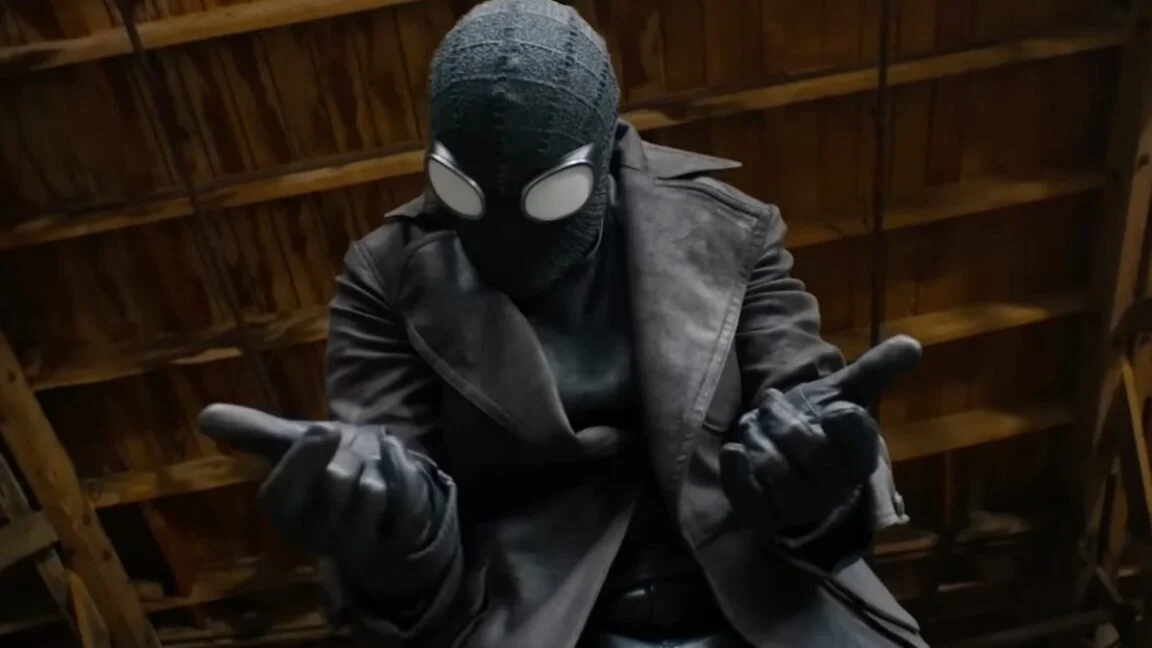
Prime Video has unveiled the final, definitive trailer for its highly anticipated live-action series, Spider-Noir. In a bold stylistic maneuver that underscores the show’s dual-natured identity, the streaming giant has released the footage in two distinct formats: a stark, high-contrast black-and-white version and a vivid, color-saturated cut dubbed "True Hue." Set to the haunting, iconic chords of Amy Winehouse’s "Back to Black," the trailer leans heavily into the deadpan humor and existential dread that have become the hallmarks of the production’s marketing campaign. As the premiere date approaches, the mounting anticipation centers on a singular question: can the series successfully bridge the gap between the stylized, colorful spectacle of modern superhero television and the grim, rain-slicked aesthetics of 1930s pulp detective noir?
The Evolution of the Noir Spider-Man
To understand the significance of Spider-Noir, one must look back to 2009, the year Marvel Comics launched its "Noir" imprint. This experimental line sought to reimagine its most iconic characters within the bleak, atmospheric landscape of the Great Depression. By stripping away the high-tech sheen of modern New York and replacing it with the shadows and moral ambiguity of the 1930s, Marvel created a sandbox where familiar archetypes were recast as hard-boiled detectives, jazz-age singers, and gritty mob enforcers.
The character of Spider-Noir gained widespread cultural cachet following his appearance in the Academy Award-winning Spider-Man: Into the Spider-Verse (2018) and its sequel, Across the Spider-Verse (2023). Nicolas Cage, who provided the voice for the animated iteration, captured the audience’s imagination with his gravelly, world-weary delivery. His return to the role for this live-action series is not merely a reprisal but an expansion, marking the first time the character has been fully realized in a long-form, live-action narrative format. While Cage is also slated to return for the animated Beyond the Spider-Verse, Spider-Noir offers him the rare opportunity to inhabit the character’s psyche in a more grounded, visceral environment.
Character Dynamics and the Narrative Premise
At the heart of the series is Ben Reilly—a departure from the traditional Peter Parker moniker, though occupying the same thematic space. As described by Prime Video, the series follows Reilly, a seasoned and perpetually down-on-his-luck private investigator in 1930s New York. The narrative is defined by a deep, personal tragedy that forces the protagonist to reconcile his history as the city’s only masked vigilante, "The Spider," with the cynical reality of his day-to-day existence.
The ensemble cast assembled for this production is equally formidable. Lamorne Morris stars as Robbie Robertson, a freelance journalist whose unwavering optimism serves as the narrative foil to Reilly’s deep-seated cynicism. Li Jun Li takes on the mantle of Cat Hardy, a nightclub singer and classic underworld femme fatale. In a recent press briefing, Li noted that her portrayal was heavily inspired by the silver-screen legends of the era, specifically citing Anna May Wong, Rita Hayworth, and Lauren Bacall.
The supporting cast rounds out a complex web of 1930s underworld figures. Karen Rodriguez appears as Janet, Reilly’s indispensable secretary; Abraham Popoola portrays a haunted World War I veteran; and Jack Huston steps into the role of Flint Marko—a bodyguard whose transformation into the iconic villain Sandman is teased with terrifying efficiency in the final trailer. Legendary actor Brendan Gleeson anchors the antagonistic front as the ruthless mob boss Silvermane, while the Daily Bugle, a staple of the Spider-Man mythos, finds its place in the 1930s under the editorial guidance of Richard Robichaux.
A Technical and Aesthetic Breakdown
The choice to release two versions of the trailer—Black and White versus "True Hue"—speaks to the show’s core identity crisis. By offering the "True Hue" version, Prime Video is signaling that this series is not merely a monochromatic homage to 1940s cinema, but a vibrant, living world that utilizes color to heighten its psychological impact.
The decision to pair the visuals with Amy Winehouse’s "Back to Black" is a masterful stroke of marketing. The song’s themes of betrayal, loss, and the cyclical nature of regret mirror the internal journey of Ben Reilly. Critics and industry analysts have pointed out that this selection of music suggests the series will not rely solely on period-appropriate jazz or blues, but will instead look to bridge the gap between historical settings and contemporary emotional resonance.
Official Responses and Production Philosophy
The production team behind Spider-Noir has been vocal about their desire to create a "character-first" superhero story. Showrunners have emphasized that while the supernatural and action elements are present, the heart of the show lies in the investigative process and the psychological toll of vigilantism.
"We aren’t interested in making a standard hero’s journey," one executive producer noted in a recent interview. "This is about a man who has seen the absolute worst of human nature and is trying to navigate a city that wants to swallow him whole. The ‘Spider’ is not a symbol of hope in this universe; he is a necessary, albeit damaged, force of nature."
This philosophy is reflected in the costume design, which favors utilitarian leather, heavy trench coats, and obscured features over the vibrant spandex of contemporary Marvel properties. The production design—recreating a sprawling, desolate 1930s New York—is rumored to be among the most expensive ever undertaken for a television series, with extensive use of practical sets and on-location shooting to maintain the authenticity of the era.
Implications for the Superhero Genre
The release of Spider-Noir comes at a pivotal time for the superhero genre. With audiences showing signs of "superhero fatigue," the pivot toward genre-blending—mixing traditional caped-crusader tropes with detective noir, horror, or period drama—is becoming a necessity rather than a luxury.
If Spider-Noir succeeds, it could set a new blueprint for how streaming platforms adapt comic book properties. By focusing on a niche, stylized version of a popular character, Prime Video is effectively targeting an audience that may have grown tired of the interconnected "cinematic universe" model. The show’s focus on a singular, isolated narrative, free from the constraints of a larger franchise, allows for a deeper, more character-driven experience.
Furthermore, the casting of Nicolas Cage suggests a commitment to high-caliber, prestige acting that elevates the material beyond its pulp origins. If the series lives up to the promise of the trailers, it will likely be viewed as a turning point in how studios approach secondary comic book characters, proving that the most interesting stories are often found in the margins of the main canon.
Looking Ahead: The Road to the Premiere
As the launch date nears, the marketing machine for Spider-Noir is expected to shift into high gear. The final trailer has served its purpose: it has generated a palpable buzz, intrigued both comic book enthusiasts and fans of hard-boiled detective fiction, and set a distinct aesthetic standard.
Whether the show can sustain its momentum throughout its debut season remains to be seen. However, the ingredients for success are all present: a compelling, unconventional lead, a stellar supporting cast, a high-concept visual style, and a premise that feels both familiar and refreshingly distinct. The streets of 1930s New York are dark, but for Prime Video, the path ahead looks brighter than ever. As the series prepares to step out of the shadows and onto our screens, the audience waits with bated breath to see if Ben Reilly will indeed be the hero the city—and the genre—needs.












No comments yet. Be the first to join the conversation!