

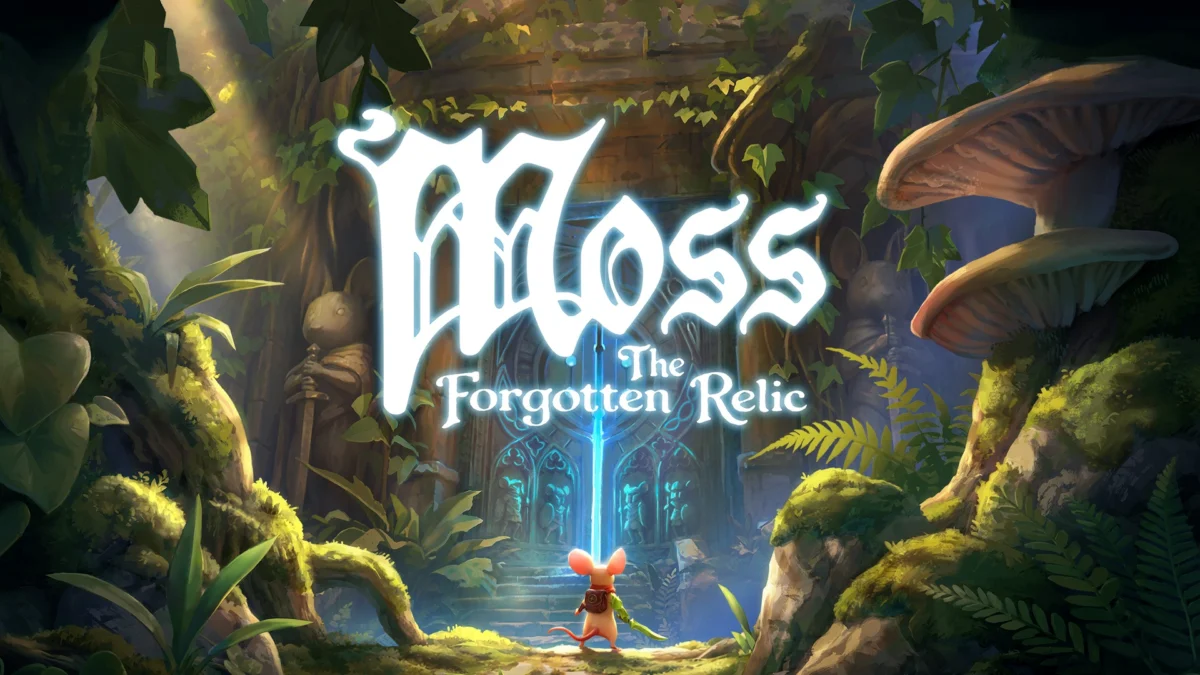
In an industry where virtual reality titles often struggle to find a long-term foothold, the Moss franchise has stood as a beacon of artistic excellence and mechanical ingenuity. Today, indie developer Polyarc has officially announced the next major milestone for the series: Moss: The Forgotten Relic. This comprehensive new release aims to consolidate the magic of the original Moss and its sequel, Moss: Book II, into a singular, enhanced, and reimagined definitive experience.
Designed to bring the complete journey of the courageous mouse hero, Quill, to a broader audience than ever before, Moss: The Forgotten Relic is slated for a worldwide release this summer across a massive spread of platforms, including Windows PC (via Steam), Xbox Series X|S, PlayStation 5, Nintendo Switch, and the highly anticipated Switch 2.
A Legacy Reimagined: The Main Facts
At its core, Moss: The Forgotten Relic is more than just a bundle; it is a technical overhaul of one of the most critically acclaimed VR series in existence. By merging the two existing chapters of Quill’s story into a cohesive, uninterrupted narrative, Polyarc is positioning this title as the ultimate entry point for newcomers and a high-fidelity revisit for long-time fans.
The game retains its signature "living storybook" aesthetic, where players act as a giant, spectral guardian watching over the diminutive protagonist. The transition to a unified experience promises to iron out the seams between the original game and the sequel, offering updated visuals, refined environmental interaction, and a more seamless progression system. For the PC gaming community, this marks a monumental moment, as it represents the first time the complete Moss saga has been optimized specifically for a high-end desktop experience, rather than just mobile VR headsets.
The Chronology of an Indie Icon
To understand the significance of The Forgotten Relic, one must look back at the meteoric rise of the Moss franchise.
The Dawn of the Hero (2018)
When the original Moss launched in 2018, it changed the perception of what a VR action-adventure could be. Instead of leaning into first-person immersion, Polyarc opted for a third-person, diorama-style perspective. This choice allowed players to bond with Quill—a mouse with a heart of gold—in a way that felt intimate and tactile. Critics praised the game for its groundbreaking interaction, where the player used their own hands to manipulate the environment, solve puzzles, and even heal Quill during combat.
The Expansion of the Mythos (2022)
Four years later, Moss: Book II arrived with higher stakes, expanded combat mechanics, and deeper lore. It picked up immediately where the first game left off, challenging Quill to save the world from the Arcane. The sequel introduced new weapons, more complex puzzle architecture, and a darker, more emotional narrative arc. It solidified Polyarc’s reputation as masters of the "VR platformer" genre.
The Modern Consolidation (2026)
Now, in 2026, The Forgotten Relic serves as the culmination of nearly a decade of iteration. By bringing these two titles into one package, Polyarc is ensuring that the legacy of these games survives the rapid hardware turnover of the VR market, securing Quill’s place in the pantheon of iconic video game heroes.
Technical Enhancements and Supporting Data
While specific patch notes are pending, Polyarc has confirmed that Moss: The Forgotten Relic will feature significant visual enhancements. This includes high-resolution textures, improved lighting engines, and refined haptic feedback integration for the various controllers across the Xbox, PlayStation, and PC ecosystems.
The decision to launch on the Nintendo Switch—and the yet-to-be-released Switch 2—is particularly intriguing. This suggests that Polyarc has developed a scalable engine capable of delivering a high-quality experience across vastly different hardware profiles.

Key Technical Pillars:
- Unified Narrative Flow: The "two-game" barrier is being dissolved to allow players to transition from the forest of the first game to the dangers of the castle in the second without returning to a main menu.
- Enhanced Fidelity: PC players will enjoy uncapped framerates and ultra-wide monitor support, a first for the series.
- Optimized Puzzles: Based on player feedback from previous years, several environmental puzzles have been tweaked for better flow and intuitive guidance, ensuring the pacing remains consistent from the beginning of the journey to the final confrontation.
Official Responses and Developer Vision
In the wake of the announcement, the team at Polyarc expressed their excitement about the project. A spokesperson for the studio noted, "With The Forgotten Relic, we wanted to create the version of Moss that we always envisioned—a seamless, epic journey that doesn’t feel like two separate pieces, but a single, grand fable. We’ve listened to years of player feedback to make sure this is the definitive way to experience the world of the mouse hero."
The developer has emphasized that this release is not just for veterans; it is designed to be the definitive "collector’s edition" of the story. By combining the emotional beats of the original with the polished gameplay of the sequel, Polyarc hopes to introduce a new generation of players to the wonder of VR storytelling.
Implications: The Future of VR Storytelling
The release of Moss: The Forgotten Relic holds significant implications for the broader gaming market.
The "Definitive Edition" Trend in VR
We are seeing a shift in the VR space. As the hardware landscape stabilizes, developers are moving away from short-form, experimental titles toward more substantial, long-form experiences. By bundling these games, Polyarc is setting a precedent that VR titles can and should be treated with the same longevity as traditional console franchises.
Accessibility and Hardware Agnostic Design
The wide platform availability is a strategic masterstroke. By targeting consoles (Xbox, PlayStation, Switch) alongside PC, Polyarc is effectively decoupling the game from the "VR-exclusive" label that has historically limited the audience for such titles. While the Moss games are inherently built for VR, the move to support a wider array of high-fidelity platforms suggests that the industry is becoming more comfortable with the idea of "hybrid" gaming, where the experience remains premium regardless of the specific headset or screen setup.
A Template for Indie Success
Polyarc continues to prove that small, agile teams can compete with AAA studios by focusing on core mechanics and emotional resonance rather than graphical brute force. The Forgotten Relic is a case study in how to build a lasting intellectual property. By curating their back catalog into a single, high-value product, they are creating a stable revenue stream that will likely fund their next original project.
Final Thoughts
As we approach the summer launch, the anticipation for Moss: The Forgotten Relic continues to build. Whether you are a veteran who has already traversed the fallen kingdom of the first two games or a newcomer looking for an entry point into one of the most charming and atmospheric universes in gaming, this release promises to be a landmark title.
Polyarc has once again proven that the most powerful stories aren’t always told through realistic graphics or massive open worlds. Sometimes, they are told in the pages of a storybook, through the eyes of a tiny, brave mouse, in a world that feels as real as our own. Moss: The Forgotten Relic is not just a game; it is an invitation to step into a fable, and this summer, the pages are waiting to be turned.











No comments yet. Be the first to join the conversation!