Raul Delapena Setiawan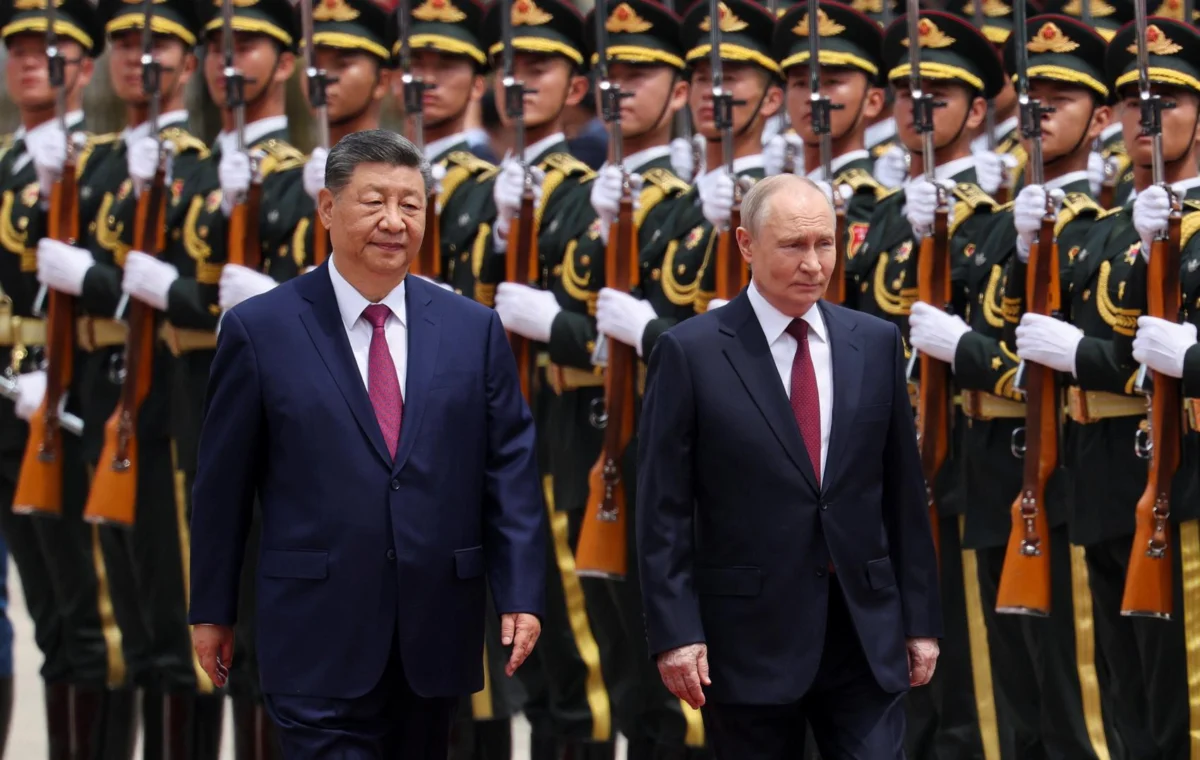
Executive Summary: A Summit of Symbolic Weight
In a display of deepening alignment that underscores the shifting tectonic plates of global geopolitics, Chinese President Xi Jinping hosted his Russian counterpart, Vladimir Putin, in Beijing this Wednesday. The summit, marked by the pomp and circumstance of a state reception at the Great Hall of the People, served as a powerful signal of the "no-limits" strategic partnership between the two nations.
As Russia seeks to insulate its economy from Western sanctions and China looks to project itself as the architect of a "more just and reasonable" global order, the meeting acted as a counterpoint to the recent visit by U.S. President Donald Trump. With an honor guard, a formal gun salute, and the rhythmic waving of flags by schoolchildren, Beijing choreographed an event designed to emphasize stability, continuity, and mutual reliance.
Chronology of a Strategic Embrace
The summit’s itinerary was meticulously structured to blend high-level statecraft with the intimate "tea diplomacy" that has become a hallmark of Xi Jinping’s engagement style.
- Arrival and Ceremony: President Putin arrived to a full state reception. The visual narrative of the day was clear: while the U.S. remains a necessary interlocutor, the Russia-China relationship is being framed as an enduring, foundational pillar of their respective foreign policies.
- Formal Deliberations: The morning was consumed by high-stakes negotiations between the two delegations, focusing on the expansion of economic corridors and geopolitical alignment.
- Strategic Afternoon: The leaders transitioned from formal conference rooms to the informal, private settings characteristic of their personal rapport. The "tea diplomacy" session, scheduled for later in the day, is intended to facilitate candid, unscripted discussions on sensitive international issues, including the ongoing war in Ukraine and the instability in the Middle East.
- The Deliverables: The Kremlin has confirmed that the visit will culminate in the signing of approximately 40 separate agreements, underpinned by a comprehensive 47-page joint statement outlining the next phase of their strategic partnership.
Supporting Data: The Economic Imperative
Behind the ceremonial rhetoric lies a pragmatic, and at times difficult, economic reality. The bilateral trade relationship, which serves as a critical lifeline for Moscow, has experienced volatility that both leaders are eager to correct.
Trade Fluctuations (2024–2026)
Following a record-breaking year in 2024, trade between the two giants saw a decline of 6.5% in 2025, totaling 1.63 trillion yuan ($240 billion). This marked the first dip in five years, a trend that caught the attention of policymakers in both Moscow and Beijing. However, the first four months of 2026 have signaled a robust recovery, with two-way trade rising by 16.1% compared to the same period in 2025.
The Energy Nexus: Power of Siberia 2
Central to the discussions is the proposed Power of Siberia 2 gas pipeline. For Russia, the pipeline is not merely an economic project but a strategic necessity, providing a reliable exit for its energy exports in the face of European embargoes and Western sanctions.
While Putin highlighted Russia’s role as a "reliable energy supplier" during times of Middle Eastern disruption, Beijing remains more cautious. China is engaged in a long-term supply diversification strategy, balancing its need for cheap energy against the risk of over-dependence on a single partner. Industry analysts suggest that while the pipeline deal is "on the cards," negotiations remain complex, with Beijing holding the leverage regarding price and volume.
Official Responses and Diplomatic Messaging
The View from Beijing
President Xi Jinping framed the relationship through the lens of long-term stability. "The reason China-Russia relations have reached this level is because we have been able to deepen political mutual trust and strategic cooperation," Xi stated in a transcript released by Xinhua. For the Chinese leadership, the summit is a platform to demonstrate that while the West may be fragmented, the Beijing-Moscow axis is growing increasingly cohesive.
The View from the Kremlin
President Vladimir Putin, who has consistently referred to Xi as his "dear friend," emphasized the resilience of the partnership. "Even against the backdrop of unfavorable external factors, our cooperation and economic ties continue to demonstrate good dynamics," Putin noted. His delegation—a powerhouse group including deputy prime ministers and the heads of Russia’s largest state corporations—suggests that the Kremlin is treating this summit as a decisive moment for securing the Russian economy’s future.
Implications: A Fragmented World Order
The juxtaposition of back-to-back visits by the leaders of the United States and Russia to the Chinese capital has provided analysts with a masterclass in modern diplomacy.
The Optics of "Tea Diplomacy"
Experts point out that the way Xi hosts his guests is as important as the what. When Xi hosted Putin in May 2024, the absence of neckties and the setting of an imperial garden signaled a level of comfort and shared vision that contrasted sharply with the more choreographed, performative nature of the meetings with Western leaders.
"Beijing is loving the optics of this," says Graeme Smith, a senior fellow at the Australian National University. "They are positioning themselves as the center of world attention, playing to a domestic audience that values the image of a China that is courted by, rather than subservient to, the world’s major powers."
Geopolitical Realignments
The "no-limits" partnership has matured into a sophisticated mechanism for challenging the U.S.-led global order. By aligning their narratives on issues ranging from global governance to the war in Ukraine, China and Russia are signaling to the Global South that there is an alternative model to Western hegemony.
However, the implications of this partnership are not solely positive for the two nations. China faces a delicate balancing act: it must support Russia sufficiently to prevent a collapse of its northern neighbor, yet avoid triggering secondary sanctions from the U.S. or jeopardizing its crucial trade ties with the European Union.
Looking Ahead
As the summit concludes, the international community will be watching the 47-page joint statement for nuances in language regarding the war in Ukraine and the future of the regional security architecture. If the Power of Siberia 2 pipeline moves toward a final, binding agreement, it will represent a permanent shift in global energy flows, tethering the Russian economy to the Chinese market for decades to come.
In the final analysis, the Beijing summit is a testament to a changing world. It is a world where the old alliances of the 20th century are being tested, and where a new, Eurasia-centric alignment is being forged in the gardens and conference halls of the Chinese capital. Whether this partnership can withstand the external pressures of a volatile global economy remains the defining question of the next decade.
© Thomson Reuters 2026. All rights reserved.


 Neng Nana
 Asro
Asro