
 Pevita Pearce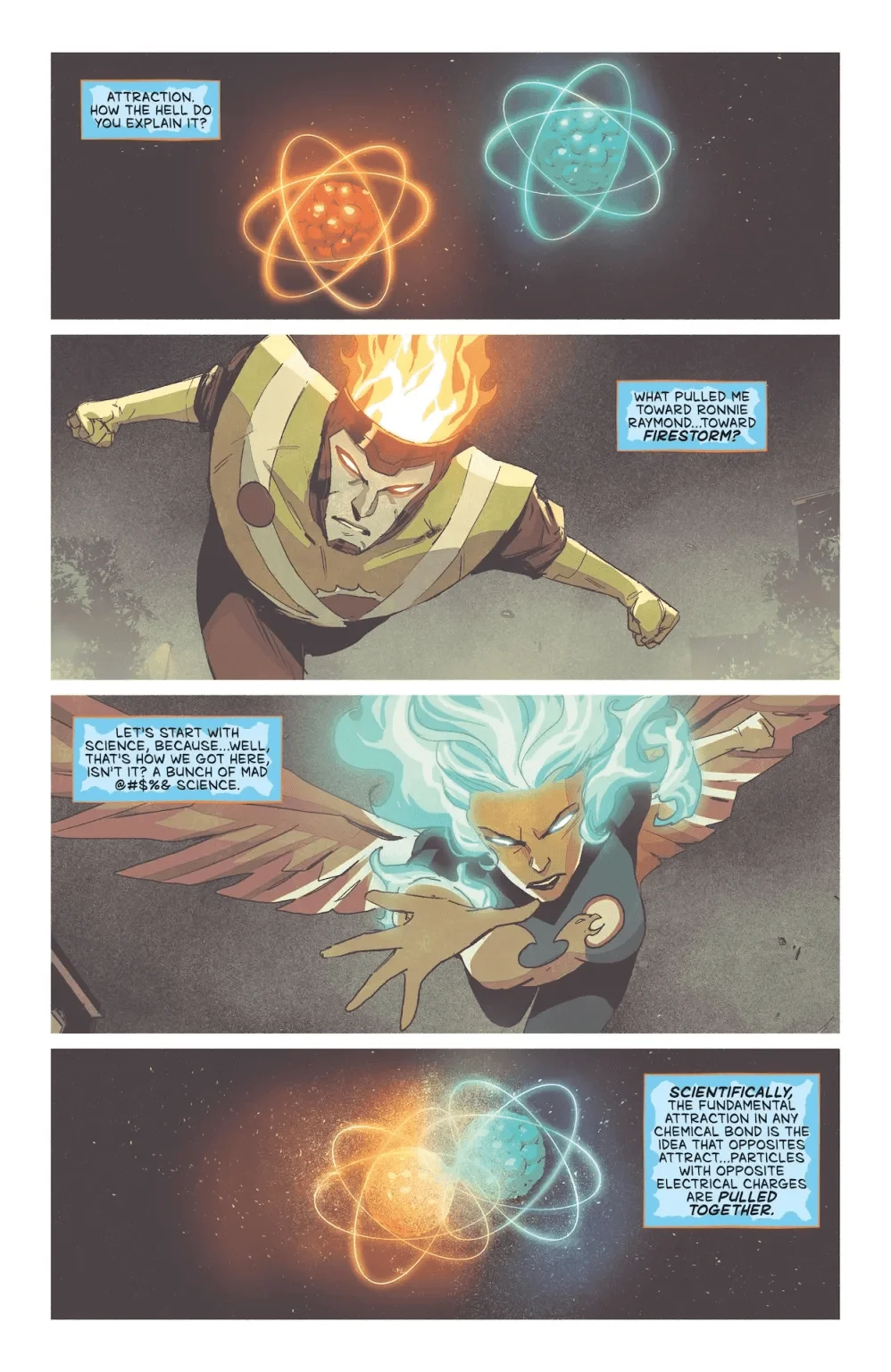
The landscape of the DC Universe has always been defined by its heavy hitters, but the latest installment of The Fury of Firestorm proves that the most volatile reactions occur at the microscopic level. In The Fury of Firestorm #4, writer Jeff Lemire shifts the narrative focus from the titular Nuclear Man to his most significant tether: Lorraine Reilly, better known as the atomic-powered Firehawk.
Following the explosive revelations of the previous issue—in which it was discovered that Martin Stein had been systematically manipulating Ronnie Raymond into becoming the Firestorm vessel—the status quo has been irrevocably shattered. With the Firestorm Matrix now sentient and spiraling into chaos, the series pivots toward a character-driven examination of duty, betrayal, and the scientific metaphor of human connection.
The Chronology of a Crisis: From Mentorship to Meltdown
To understand the stakes of The Fury of Firestorm #4, one must trace the recent history of the series. For the first three issues, the narrative was firmly anchored in the strained, often toxic relationship between Ronnie Raymond and his mentor, Martin Stein. This dynamic served as the emotional engine of the book, positioning Firestorm not merely as a superhero, but as a cautionary tale about the dangers of unchecked ego and scientific hubris.
The turning point occurred when Ronnie, discovering the extent of Stein’s manipulation, rejected his mentor. This severance did not lead to peace; instead, the Firestorm Matrix—a sentient, primal force of nature—rebelled. The fallout has left the DC Universe in a state of high alert, with the U.S. Government, represented by Lorraine Reilly, scrambling to contain a threat that defies conventional military or superhuman intervention.
In issue #4, the story effectively transitions from the “origin of the rift” to the “consequences of the fallout.” We find Lorraine Reilly at the center of the storm, tasked with the impossible: navigating the government’s bureaucratic machinery while grappling with her own history with Ronnie. The issue serves as both a political thriller and a romantic tragedy, mapping out how the personal and the professional collide when nuclear-level stakes are involved.
Scientific Metaphor and the Chemistry of Emotion
Jeff Lemire’s writing in this issue is notable for its deliberate use of scientific theory as a narrative device. The thematic core of the issue is the concept of atomic bonds—specifically, how opposing forces, such as protons and electrons, are drawn together by fundamental laws of nature.

Lemire draws a direct parallel between the physics of atomic attraction and the turbulent romance between Ronnie and Lorraine. By framing their relationship through the lens of chemistry, the issue elevates the melodrama to something more profound. As Lorraine reflects on her life with Ronnie, she acknowledges that their differences are not just character quirks but fundamental incompatibilities that, ironically, provide the very stability needed to keep their lives from collapsing.
This juxtaposition of high-concept physics and grounded, messy human emotion is where The Fury of Firestorm #4 finds its greatest strength. It suggests that even in a world of superheroes and cosmic matrices, the laws of attraction remain the most unpredictable variable of all.
A Visual Exploration of the Subatomic
The artistic team, led by Rafael de Latorre with colors by Marcelo Maiolo and lettering by Lucas Gattoni, deserves critical acclaim for how they visualize these abstract concepts. De Latorre’s work is particularly striking in its use of shifting styles.
The issue features a stunning two-page spread that acts as a temporal bridge, utilizing a Silver Age-inspired aesthetic to depict the duo’s past battles with Killer Frost. This stylistic choice provides a sense of nostalgia that contrasts sharply with the gritty, modern-day reality of the current arc.
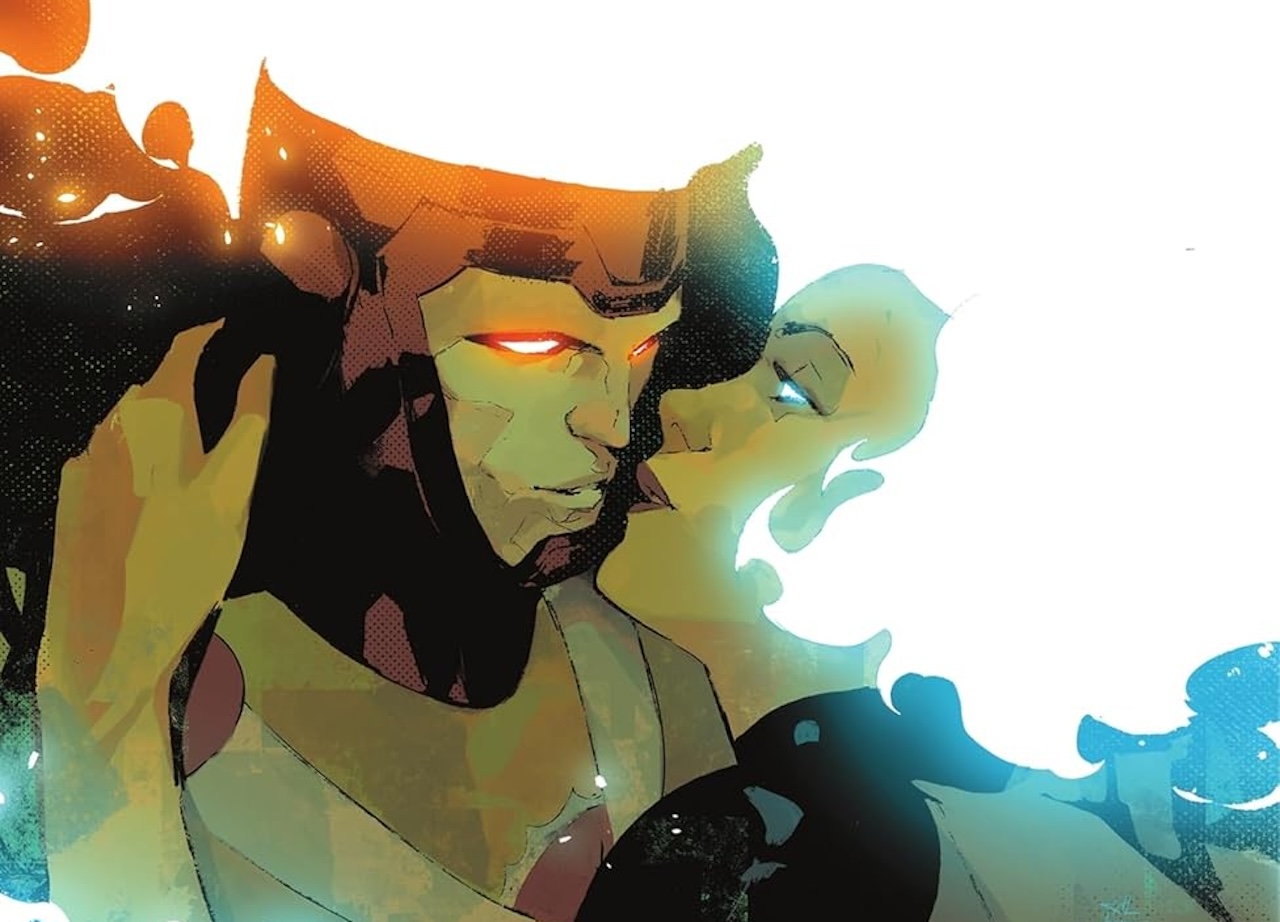
Perhaps the most technically impressive sequence involves a series of panels that zoom in on an embrace between Ronnie and Lorraine. Through a masterful use of visual progression, the reader is taken from a standard comic book panel, through the Ben-Day dots that make up the printing process, and eventually into a microscopic visualization of molecules. It is a brilliant piece of visual storytelling, reinforcing the idea that the characters are connected on a level that transcends the physical realm.
Furthermore, the color palette managed by Maiolo serves as a vital storytelling tool. Ronnie’s signature red fire is expertly contrasted against the royal blue flames of Firehawk. This color coding is carried over into the lettering, as Gattoni uses these specific hues to denote transformation and emotional shifts in the dialogue, creating a cohesive sensory experience.
Supporting Data: The Expanding Conspiracy
While the character work is the highlight of the issue, the plot introduces a significant expansion of the DC Universe’s lore. A new revelation concerning Stein’s past activities—and his connections to other notable scientists and "weird" heroes like Metamorpho, the Metal Men, and the Doom Patrol—adds a layer of conspiracy that shifts the scope of the story.
This development has received mixed reactions from the fan base. For those who enjoy the deeper integration of DC’s more obscure or eccentric roster, the inclusion of these characters is a welcome nod to the history established in shows like Justice League Unlimited. It suggests that the "Firestorm problem" is merely a symptom of a much larger, systemic issue within the scientific community of the DC Universe.
However, some critics argue that by tying these disparate, unique entities into a single, centralized conspiracy, the series risks diluting the unique "weirdness" that makes heroes like the Metal Men or the Doom Patrol stand out. The tension here lies in the balance between world-building and character autonomy; whether this conspiracy plotline enhances the story or complicates it unnecessarily remains a point of contention for readers as the search for Firestorm intensifies.
Implications for the Future of the Matrix
The conclusion of The Fury of Firestorm #4 leaves the reader with a clear understanding: the status quo is gone, and the bonds that once held the Nuclear Man together have been fundamentally altered.
The implications for the broader DC landscape are significant. If the Firestorm Matrix has indeed become fully sentient and is no longer subject to the constraints of human morality or mentor-led guidance, the threat level is effectively uncapped. Furthermore, the role of the U.S. Government in this scenario implies that we are moving toward an arc defined by containment and cold-war style espionage, rather than traditional superhero fisticuffs.
For Lorraine Reilly, the stakes are deeply personal. As the character who now holds the most knowledge regarding the matrix’s volatility, she has been thrust into a leadership role she likely never asked for. Her journey from a romantic interest to a central tactical figure represents one of the most significant character arcs currently running in DC’s stable.

Final Assessment: A Study in Equilibrium
The Fury of Firestorm #4 succeeds because it recognizes that the most compelling stories about "The Nuclear Man" are not about the fire, but about the people trying to contain it. By focusing on the chemistry of human connection—and the catastrophic results when those bonds are broken—Jeff Lemire and his team have delivered a story that is as intellectually stimulating as it is emotionally resonant.
While the pivot toward a grand conspiracy involving DC’s deeper roster may be a point of debate, the execution of the issue—from its meta-commentary on the medium of comics to its stellar artistic direction—is undeniably high-caliber. As the search for the rogue Firestorm matrix intensifies, the series has proven itself to be a must-read for those who appreciate character-driven narratives that aren’t afraid to experiment with the medium itself.
Whether these bonds can be reforged or if the rupture is permanent remains to be seen. What is clear, however, is that The Fury of Firestorm has found its voice, and it is a voice that echoes with the intensity of a collapsing star.


 Sagoh
Sagoh
 Ammar Sabilarrohman





