Nana Muazin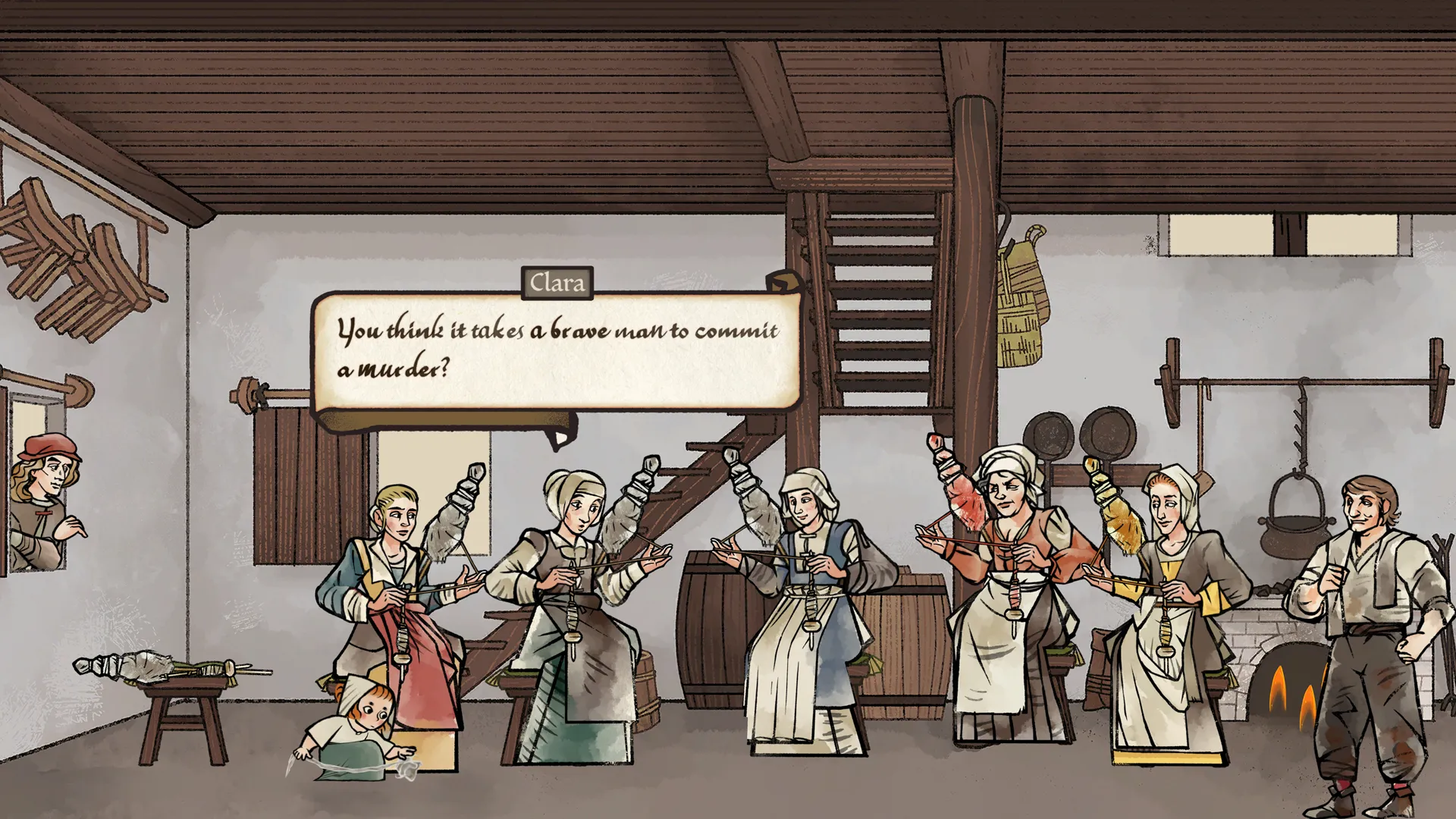
When I first joined the RPGFan editorial team, one of my inaugural assignments was to review the Nintendo Switch release of Pentiment, Obsidian Entertainment’s meticulously crafted medieval murder mystery. Even then, the game left an indelible mark on my sensibilities. While I lauded it alongside my colleagues, I suspected its appeal might be more literary than ludic—a sentiment shared by many who recognize the intellectual pedigree of its director, Josh Sawyer.
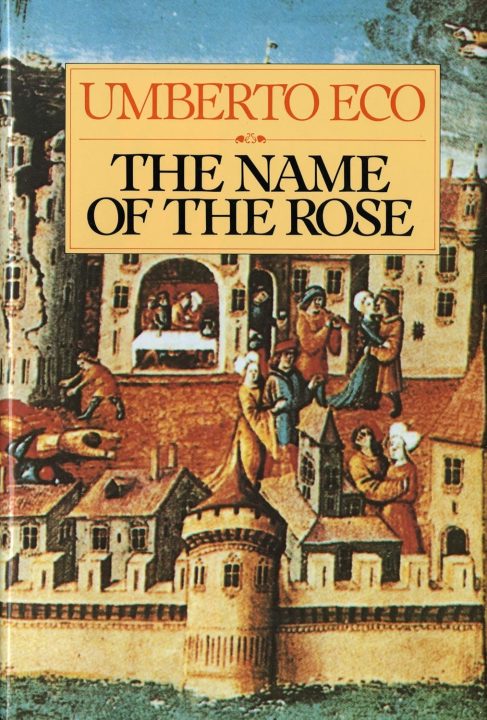
Pentiment is a game that demands contemplation, frequently prompting me to revisit the primary inspiration cited by Sawyer: Umberto Eco’s 1980 masterpiece, The Name of the Rose. By placing these two works side-by-side, we gain a profound understanding of how history, theology, and the corruption of knowledge can be translated across different mediums.
Cave argumenti patefactionem, voi ch’intrate—beware of light spoilers, ye who enter here.
A Matter of Perspective: The Monk and the Artist
The Name of the Rose unfolds over one singular, apocalyptic week in 1327 within an Italian Benedictine abbey. The premise is classic: a monk is murdered, and William of Baskerville—a sharp-witted former inquisitor—arrives to investigate alongside his young aide, Adso. The parallels to Arthur Conan Doyle’s Sherlock Holmes and Dr. Watson are intentional and structural. Much like Watson, Adso serves as our eyes and ears, recording these harrowing events decades after they transpired. William, in the Holmesian tradition, often leaps to conclusions based on microscopic observations, spending much of the novel confirming his theories against a backdrop of theological discord.
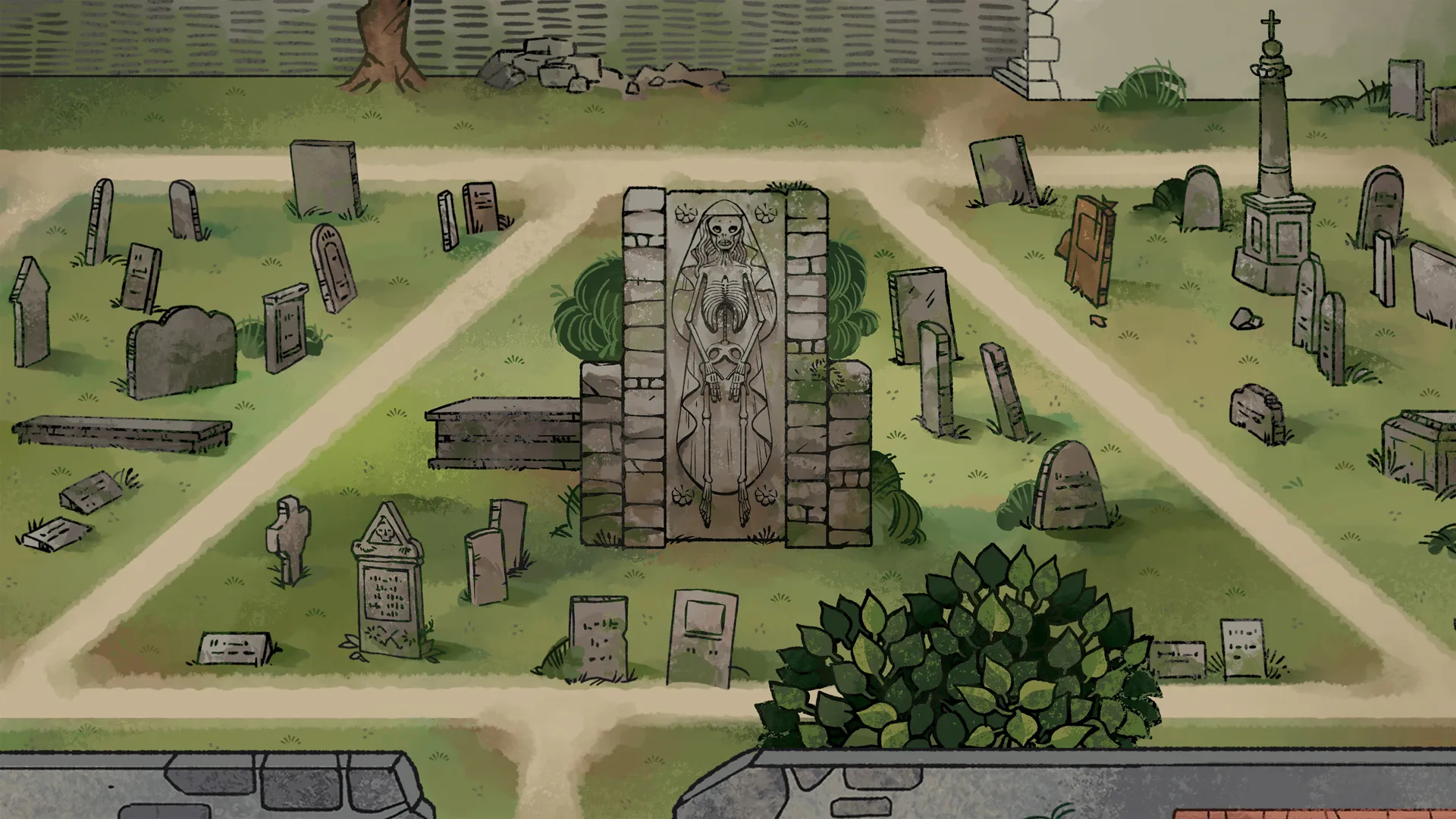
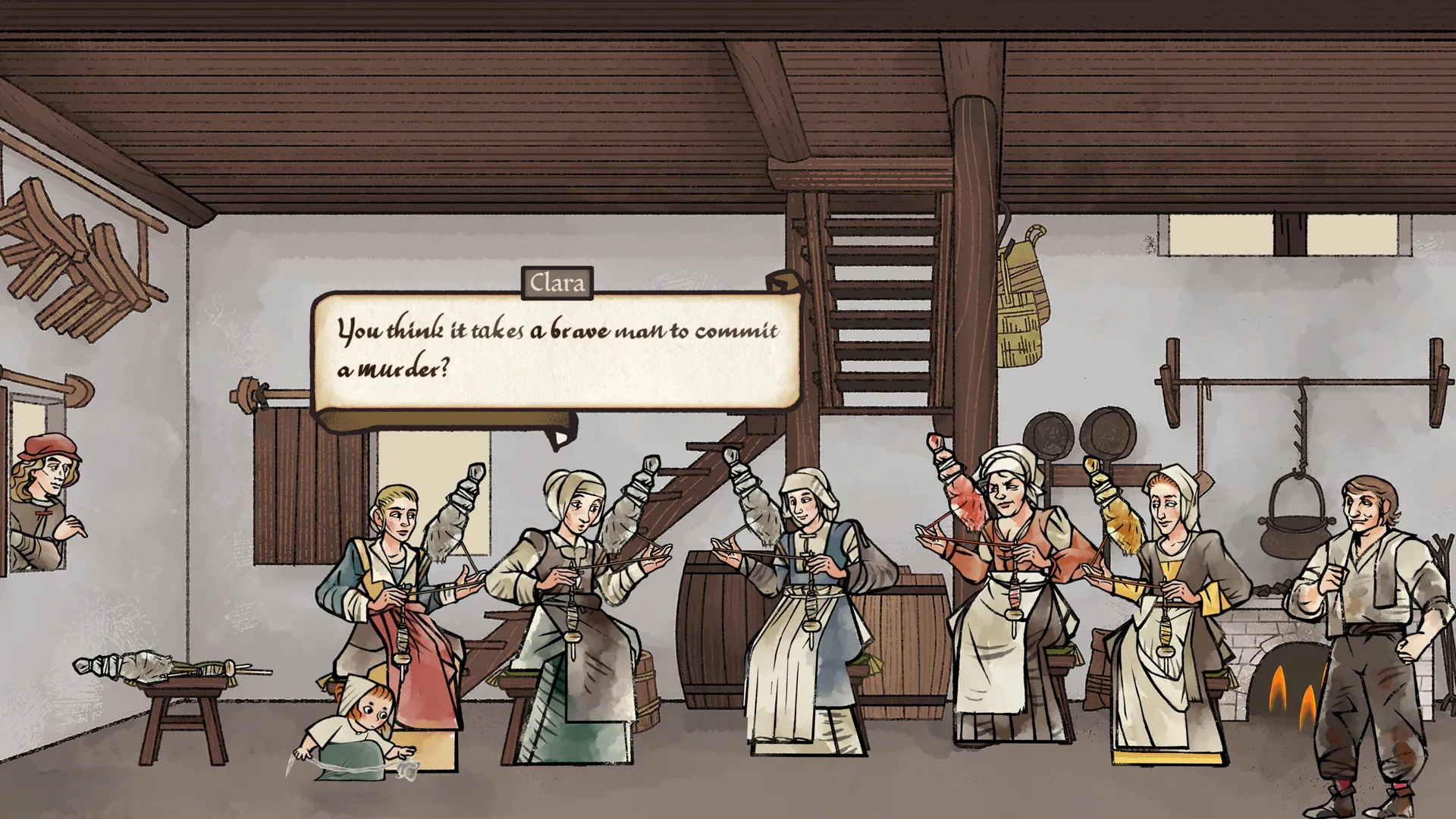
Conversely, Pentiment adopts a broader, more humanistic scope. Spanning 1518 to 1543 in the Alpine town of Tassing and the nearby Kiersau Abbey, the narrative centers on Andreas Maler, a journeyman artist. Unlike the cloistered scholars of Eco’s world, Andreas is a man of the people. When a local patron is found murdered, Andreas is forced into the role of investigator to save a friend from the gallows. Through light RPG mechanics, the player shapes Andreas—transforming him from a devout man of faith into a cynical, occult-curious skeptic. He is a middleman, bridging the gap between the rigid, high-tower theology of the abbey and the mud-caked, pragmatic lives of the peasants.
Chronology and Narrative Structure
The temporal mechanics of these works provide a fascinating contrast. Eco’s novel is a race against time, structured like a medieval clock. Each act corresponds to a day, and each chapter to a specific liturgical hour. It feels like a 14th-century iteration of 24, breathless and relentless, as dead monks appear in configurations mirroring the Seven Seals of the Book of Revelation.
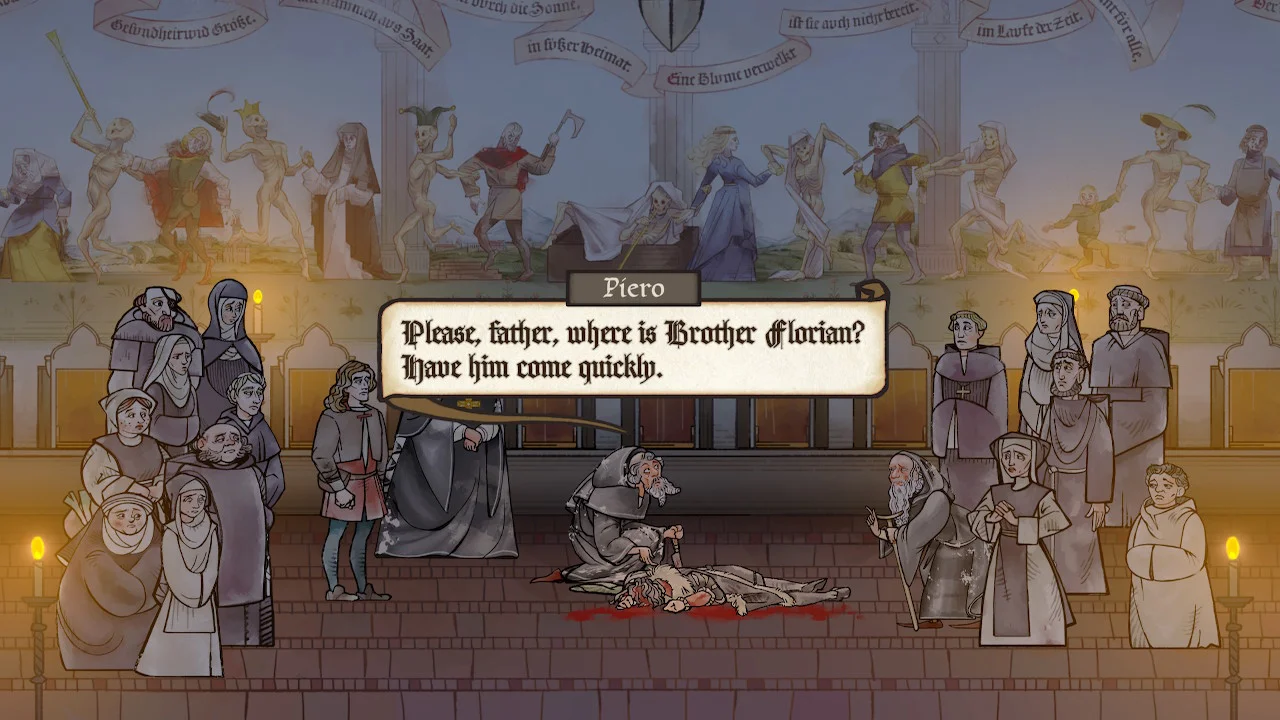
Pentiment operates on a grander, more generational scale. Divided into three acts spanning decades, it is linked by a sequence of murders orchestrated by the mysterious “Thread Puller.” Where Eco’s work focuses on the sudden collapse of a closed system, Pentiment explores the slow, creeping erosion of tradition during the dawn of the Protestant Reformation. The game allows the player to settle into the rhythms of Tassing life, only to be punctuated by violent ruptures that serve as historical pivots.
Supporting Data: The Architecture of Knowledge
Both works frame the Catholic Church through a critical, yet nuanced, lens. Neither piece attacks the fundamental faith of its protagonists; rather, both scrutinize the human element—the hubris, greed, and lust for power that masquerade as piety.
The Forbidden Library
In both narratives, the library serves as the central locus of power. In Eco’s abbey, the library is a labyrinthine trap, a fortress of secrets designed to keep forbidden knowledge out of the hands of the unworthy. In Pentiment, the scriptorium and the hidden archives serve a similar, albeit more grounded, purpose. Knowledge is the currency of both stories, and those who hoard it—the abbots and the inquisitors—are the primary antagonists.
Accessibility vs. Academic Rigor
The accessibility of these narratives diverges sharply. Eco’s prose is dense, filled with long-winded treatises on theological rhetoric and historical philosophy. It is a work that demands a high level of academic stamina. Pentiment is markedly more forgiving. It utilizes a brilliant, interactive glossary system—highlighting obscure historical terms in red—which allows the player to engage with the game’s deep research at their own pace. It is an approach that respects the player’s intelligence while avoiding the barrier to entry that often characterizes high-brow literature.
The Role of Gender and Social Hierarchy
Perhaps the most significant divergence between the two is the inclusion of the female perspective. The Name of the Rose is almost entirely devoid of women, save for a tragic, nameless peasant girl who is burned at the stake. In Eco’s world, the abbey is a vacuum, a place where the "beneath" (the commoners) is largely ignored unless they are being persecuted.
Pentiment is an inherently more feminist text. It acknowledges the vital role of women within the community, depicting nuns who are active agents of their own fate and townswomen who navigate the brutal sociopolitical traps of the 16th century. The third act’s protagonist, Magdalene, acts as a necessary corrective to the era’s patriarchal limitations. She challenges the all-male council and takes up the mantle of the investigation, highlighting how the "Thread Puller’s" influence is felt most keenly by those on the margins of society.
Implications: Truth and the "Pentimento"
The title of Eco’s novel was chosen for its ambiguity; a rose is a symbol that means something different to every observer. As Eco famously suggested, the author should "die" after completing a work, leaving the meaning entirely to the reader.
Pentiment draws its title from the art term pentimento—the ghostly traces of earlier brushstrokes that appear beneath the final layer of paint. It is a perfect metaphor for the game’s narrative philosophy. History, much like a canvas, is painted over repeatedly. Each layer obscures the last, but the truth remains beneath, waiting to be revealed by those who know how to look.
The moral weight of both works is heavy. In both the game and the novel, crimes are committed under the guise of benevolence. The perpetrators believe that by hiding the truth, they are protecting the souls of the masses. They view the average person as incapable of handling the weight of forbidden knowledge.
The Lingering Murmur
As the elderly Adso of Melk reflects on the abbey’s library:
"It was then the place of a long, centuries-old murmuring, an imperceptible dialogue between one parchment and another, a living thing, a receptacle of powers not to be ruled by a human mind."
This sentiment is the bridge between these two disparate works. Whether through the written word of Eco or the interactive artistry of Obsidian, both pieces posit that truth is not static. It is a living, breathing dialogue that survives the death of its creators.
While The Name of the Rose remains a towering monument of literary complexity, Pentiment succeeds by making that same complexity tactile and personal. By focusing on the "pentimento" of human history—the scars, the erasures, and the stories hidden beneath the surface—it invites the player to not just observe history, but to participate in the act of uncovering it. In doing so, it ensures that the "murmuring" of the past continues, loud and clear, for a new generation.


 Asro
Asro
 Muslim