Muslim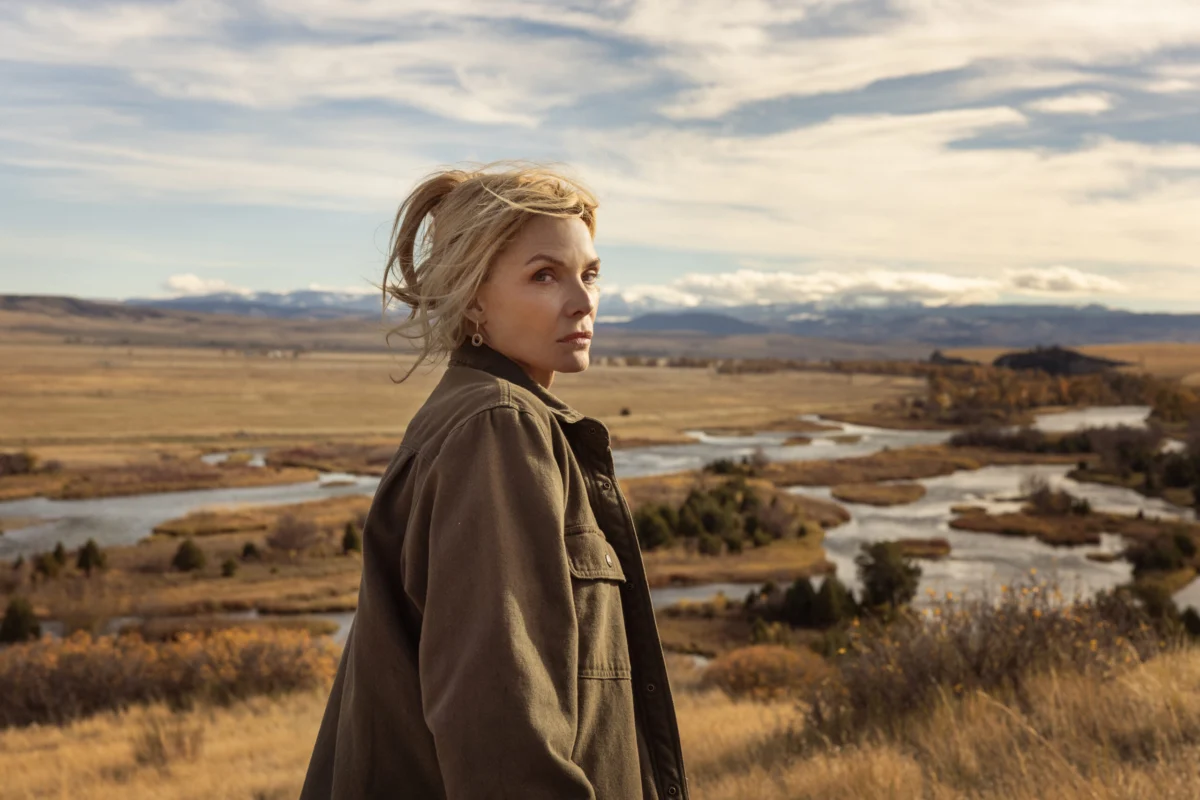
The myth of the American West is built on grit, endurance, and a refusal to bow to the elements. For the actors cast in the expansive, sprawling universe of Taylor Sheridan—the mastermind behind the Yellowstone phenomenon—that myth has increasingly become a physical reality. Recent reports from the sets of Sheridan’s latest projects, including the highly anticipated The Madison and the upcoming Dutton Ranch spinoff, reveal that the high-stakes drama on screen is often mirrored by the grueling, Spartan conditions endured by the cast and crew behind the lens.
Leading the conversation on these demanding production environments is Hollywood icon Michelle Pfeiffer. In a candid appearance on the In Conversation podcast, the actress pulled back the curtain on the rugged, minimalist reality of filming The Madison, describing a set stripped of the typical creature comforts that define modern A-list film production.
The Cost of Authenticity: Life on the Set of ‘The Madison’
For an actress of Michelle Pfeiffer’s stature, one might expect the standard luxuries of a major studio production: climate-controlled trailers, craft services, and convenient facilities. However, according to Pfeiffer, the reality of filming The Madison—a drama centered on a New York family navigating life in rural Montana following a devastating tragedy—was anything but glamorous.
"It was all a little bit rushed for everyone, and so there weren’t certain accommodations set up," Pfeiffer explained during her podcast appearance. She detailed a set where the logistical hurdles were as daunting as the terrain itself. "There is no bathroom; even the outhouse is not real. So there’s no AC, there’s no plumbing, there isn’t anything. But it is breathtakingly glorious."
The absence of infrastructure was not merely a matter of inconvenience; it was a deliberate choice driven by the aesthetic demands of director Taylor Sheridan. To capture the vast, untouched beauty of the Montana landscape, the production team utilized "360-degree shooting," a technique that requires the cameras to capture every angle of a scene without obstruction. This artistic necessity meant that the bulky infrastructure of a traditional film set—the star trailers, the catering trucks, and the portable restrooms—had to be kept far from the action.
"We didn’t really have trailers there because they were shooting 360, so they couldn’t have a bunch of trailers around," Pfeiffer noted. "So there’s really no place for us to sit. There was no bathroom nearby. There was no food. And in the winter, it was cold. It was like, ‘Could we have a heater?’ And in the summer, it was like, ‘Could I get an umbrella because the sun’s really intense?’"
A Chronology of Endurance: The Evolution of the ‘Sheridan Style’
The reports from The Madison are not isolated incidents. They represent the culmination of a production philosophy that has evolved over the course of Taylor Sheridan’s tenure as the architect of the Yellowstone franchise.
The "Sheridan Style" is characterized by a commitment to practical locations, minimal CGI, and a relentless focus on the physical authenticity of the cowboy lifestyle. This approach began in earnest with the original Yellowstone series, which was famously filmed on the real-life Chief Joseph Ranch in Darby, Montana.
As the franchise expanded into prequels like 1883 and 1923, the demands on the cast grew exponentially. Actors were required to undergo "cowboy camp," a rigorous training program designed to ensure they could handle horses, cattle, and the rugged terrain of the American West with the ease of actual ranchers. By the time the production reached the development of Dutton Ranch, the expectations for the cast had shifted from professional acting to a hybrid of performance and survival.
Supporting Data: When the Elements Become the Antagonist
The discomfort reported by Pfeiffer is echoed by other stars working within the Sheridan ecosystem. Cole Hauser, a mainstay of the Yellowstone universe, recently spoke to Variety about the extreme conditions faced by the cast of Dutton Ranch during their transition to a new location in Texas.
According to Hauser, the move from the high-altitude chill of Montana to the sweltering heat of Texas introduced a new set of physical challenges. "Coming down there, it was just a totally different world," Hauser said. "The weather was different. We started in July and August, and that was painful. It was 118 degrees, and you’re in all black, sitting on a horse. The trailers aren’t 200 yards away—they’re miles away. So you’re out there in the elements."
The data points of these production logs are startling:
- Temperature Extremes: Cast members have reported operating in environments ranging from sub-zero Montana winters to 118-degree Texas summers.
- Logistical Isolation: Due to the 360-degree filming requirements, primary support facilities are often located "miles away" from the cameras.
- Physical Tax: The requirement to perform high-stakes dramatic scenes while simultaneously managing livestock in extreme weather creates a "feat in itself" for the performers, as Hauser described.
Official Responses and the Industry Perspective
While the conditions might seem prohibitive to some, the prevailing sentiment among the cast members involved is one of professional respect for the end product. Neither Paramount+ nor Taylor Sheridan’s production team has issued a formal complaint response, as the "hardship" is widely viewed as a necessary component of the artistic process.
Industry insiders suggest that this level of commitment is what separates Sheridan’s work from standard network television. By removing the "cushion" of traditional studio life, Sheridan forces his actors into a state of vulnerability and physical exhaustion that, paradoxically, enhances the raw, unvarnished quality of the performances. When Michelle Pfeiffer says, "It is breathtakingly glorious," she is articulating the trade-off that the cast accepts: the sacrifice of comfort for the sake of unparalleled visual and emotional authenticity.
Implications for the Future of Television Production
The trend toward "extreme location filming" raises significant questions about the future of television production. As audiences increasingly demand high-fidelity, realistic depictions of the world, studios are finding that the "green screen" approach is no longer sufficient to maintain viewer engagement.
1. The Talent Retention Challenge
The physical toll described by Pfeiffer and Hauser could eventually impact casting. While A-list actors are currently drawn to the prestige of Sheridan’s projects, there is a limit to how much physical hardship even the most dedicated performers will endure. If productions continue to prioritize "no trailers, no food, no AC" as a standard, studios may face rising insurance premiums and resistance from talent unions regarding safety and welfare.
2. The Rise of ‘Authenticity’ as a Premium
There is a growing market value in the narrative that a production was "actually there." Marketing teams are already leveraging these stories of endurance to promote the shows. The fact that the audience knows the actors were sweating in 118-degree heat or shivering in the Montana wind adds a layer of myth-making to the final product, arguably increasing its value in a crowded streaming landscape.
3. Safety vs. Aesthetics
The industry will eventually need to reckon with the balance between artistic vision and occupational safety. While the Yellowstone universe has maintained a strong safety record, the logistics of keeping performers "miles away" from basic facilities in extreme weather conditions presents a complex challenge for production managers.
Conclusion: The Price of the Frontier
The stories shared by Michelle Pfeiffer and Cole Hauser serve as a poignant reminder that the modern Western is not merely a genre; it is an endurance sport. Taylor Sheridan has successfully cultivated a corner of the entertainment industry where the line between the character and the actor is intentionally blurred by the environment.
For the audience, the result is television that feels tactile, dangerous, and deeply real. For the actors, it is a test of their mettle, a grueling experience that leaves them physically depleted but artistically fulfilled. Whether this "Spartan" production model remains sustainable in the long term remains to be seen, but for now, it stands as the defining hallmark of the most successful franchise in contemporary television. As the cameras roll on The Madison and the sun beats down on the Dutton Ranch, the actors remain in the elements, proving that in the world of Taylor Sheridan, the greatest drama often happens when the cameras are off and the nearest bathroom is miles away.

 Rifan Muazin
 Nila Kartika Wati