

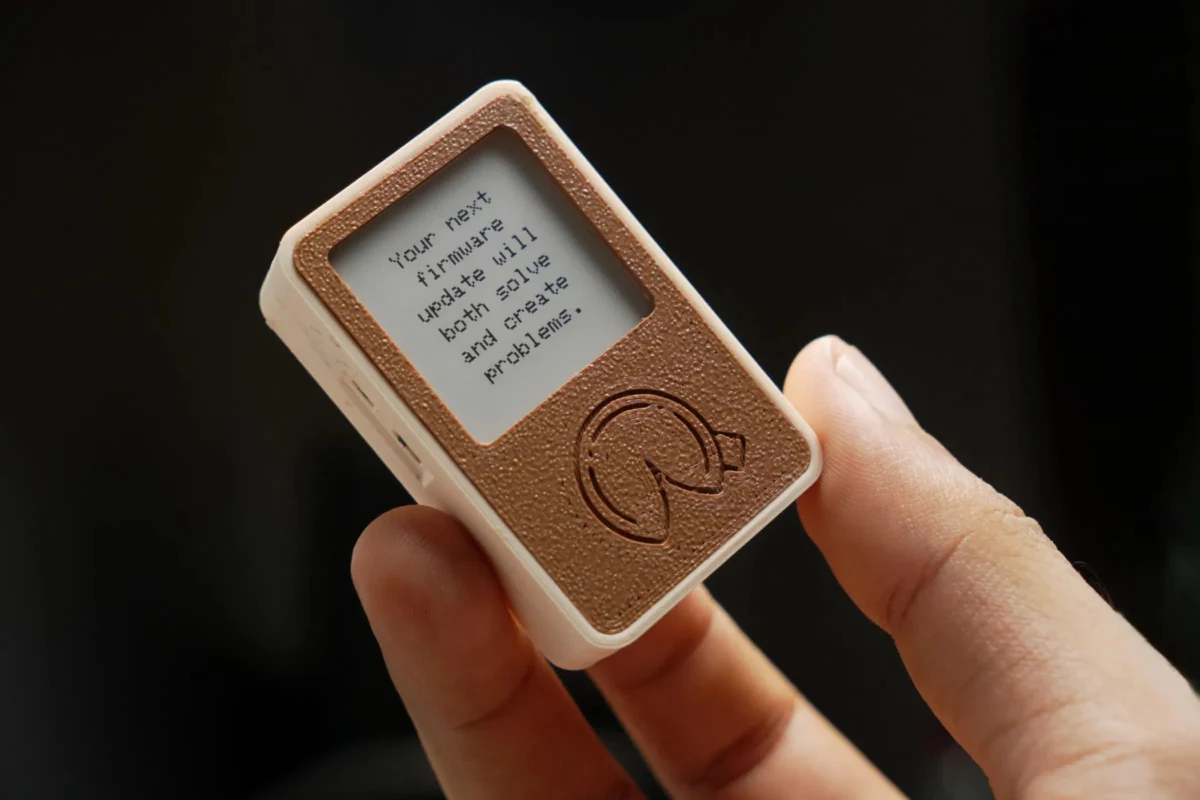
In the rapidly evolving world of DIY electronics, the ESP32 microcontroller has long served as the backbone for ambitious internet-of-things (IoT) projects. However, a recent development by hardware enthusiast "gokux" has shifted the focus from complex network-connected automation to something far more whimsical and compact: the "eFortune Cookie." By marrying the power of the Seeed Studio XIAO ESP32S3 with a low-power ePaper display, this project demonstrates how modern microcontrollers can be used to create sophisticated, offline-capable novelty devices that fit comfortably in the palm of one’s hand.
Main Facts: A Convergence of Hardware and Nostalgia
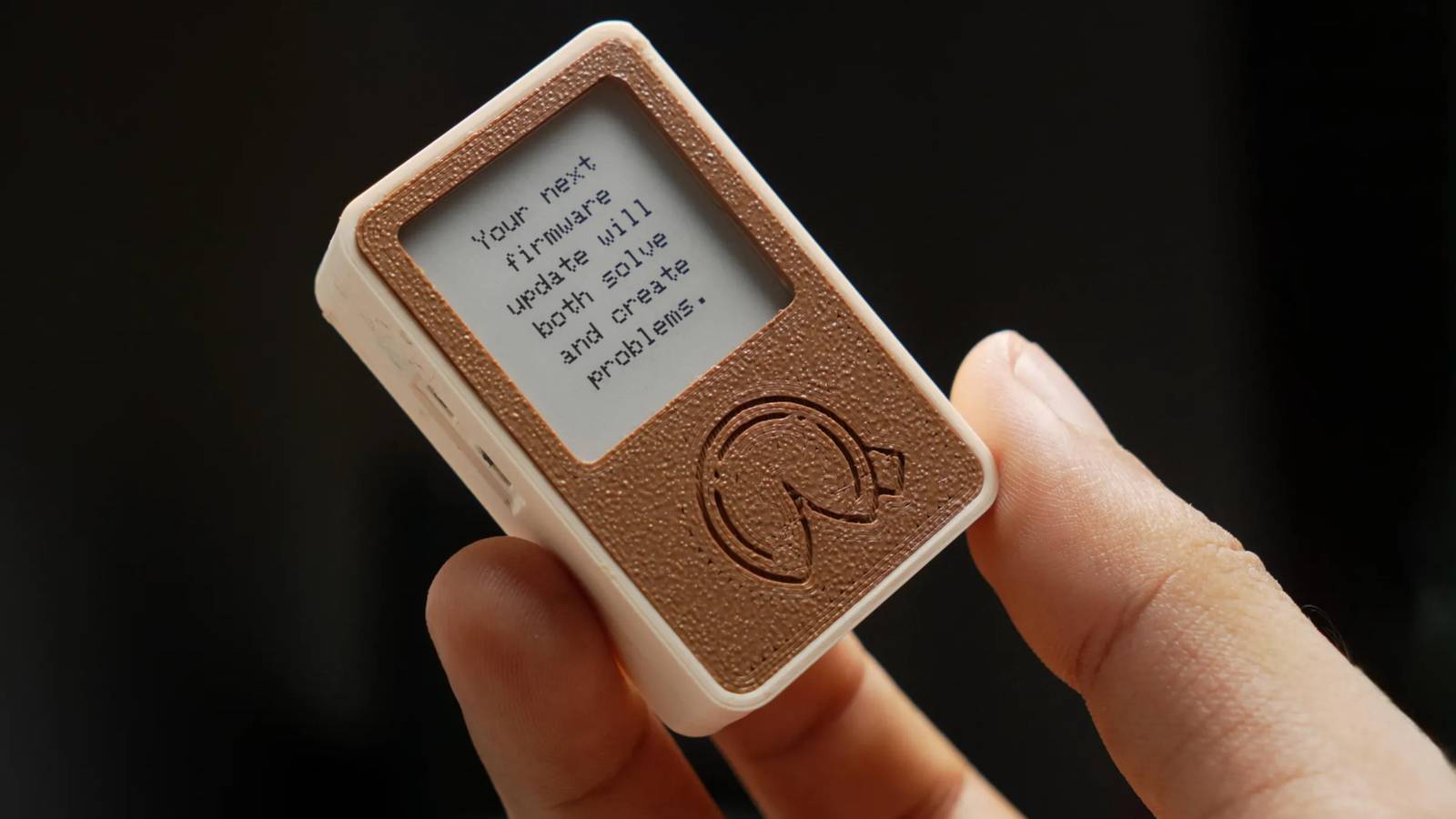
The eFortune Cookie is more than just a digital parlor trick; it is a masterclass in minimalist engineering. At its core, the device utilizes the XIAO ESP32S3, a compact yet powerful board capable of handling complex logic and sensor input with minimal power consumption. This is paired with an ePaper display—a technology celebrated for its high contrast and ability to retain an image without drawing power, making it the ideal medium for a device that mimics the static nature of a paper fortune.
Unlike many modern connected devices that rely on cloud-based APIs to generate content, the eFortune Cookie is entirely self-contained. It stores a library of fortunes directly on its internal memory, ensuring that the device remains functional even in environments without internet access. The project, documented extensively on Instructables, requires basic soldering skills, 3D printing for the enclosure, and a willingness to flash firmware onto the ESP32 chip.
Chronology: From Concept to Pocket-Sized Reality
The journey of the eFortune Cookie began as an exploration of how to effectively pair the Seeed Studio XIAO ecosystem with ePaper modules. For years, makers have struggled to find a balance between form factor and battery life.
- Early 2026 (Conceptual Phase): The designer identified the need for a portable device that could utilize the ESP32S3’s deep-sleep capabilities. By using an ePaper display, the power draw during the "idle" state is effectively zero, allowing the device to run for extended periods on a small lithium-polymer battery.
- April 2026 (Development & Prototyping): The integration of the accelerometer was the pivotal moment for the project. By adding motion sensing, the designer moved the device beyond a simple button-press interface. This transition allowed for the "shake-to-reveal" mechanism, which mimics the tactile satisfaction of cracking open a traditional fortune cookie.
- May 2026 (Refinement & Publication): After perfecting the 3D-printed chassis to ensure a professional finish, the project was published to the public. The design files, code repository, and bill of materials were released, allowing the maker community to replicate and iterate on the design.
Supporting Data: Why This Hardware Matters
The selection of the ESP32S3 for this project is not accidental. As the industry shifts toward edge computing, the S3 variant provides the necessary processing headroom to handle more than just simple text.
Hardware Specifications
- Microcontroller: Seeed Studio XIAO ESP32S3 (Dual-core, high efficiency).
- Display: 1.54-inch or similar ePaper module (1-bit monochrome).
- Input: Integrated accelerometer (for shake detection) and tactile side buttons (for menu navigation).
- Power: 3.7V LiPo battery with onboard charging circuitry.
The efficiency of this hardware is striking. When not in use, the ESP32 enters a "deep sleep" mode, consuming mere micro-amps. Because the ePaper display is bistable, the last fortune remains visible on the screen even if the battery dies. This makes the eFortune Cookie a rare example of a "set-and-forget" electronic project that prioritizes longevity and user experience over constant connectivity.
Official Responses and Community Reception
Within the maker community, the response has been overwhelmingly positive. The project has been lauded for its accessibility; by providing a clear list of parts and pre-compiled code, the creator has lowered the barrier to entry for beginners interested in the ESP32 ecosystem.
"This is the perfect ‘weekend project’ for those who are tired of building yet another weather station," noted one community moderator on the XDA forums. "It teaches you the fundamentals of GPIO handling, power management, and 3D design without the frustration of debugging complex network handshakes."

The creator, gokux, has been active in the comment sections of their Instructables page, helping users modify the source code to include their own custom messages. This adaptability has transformed the device from a mere fortune teller into a platform for customized greetings, inspirational quotes, or even secret-message decoders.
Implications: The Future of "Offline" Tech
The eFortune Cookie represents a quiet, yet significant, trend in the maker world: the return to "offline-first" computing. As society becomes increasingly reliant on constant Wi-Fi connectivity and cloud synchronization, projects like this serve as a reminder that local, hardware-level computing can be just as engaging—and often more reliable—than its connected counterparts.
Beyond the Fortune
The project’s utility is expanded by its secondary "mini-apps." By including a digital dice roller and a coin flipper, the device has utility for tabletop gamers and decision-makers alike. These features suggest that the ESP32’s potential is often underutilized when restricted to IoT sensing tasks.
Furthermore, the integration of these features demonstrates a growing sophistication in how hobbyists design their user interfaces. The use of a physical shake gesture is an intuitive interaction model that bridges the gap between digital data and physical action. It creates a "haptic" feedback loop that feels more substantial than a simple digital output.
Sustainability and Education
From an educational standpoint, this project is a goldmine. It requires the user to understand:
- Circuit Design: Understanding how to interface an I2C/SPI display with a microcontroller.
- Embedded Programming: Using C++ or MicroPython to manage state machines and input interrupts.
- Mechanical Engineering: Designing and printing a case that accommodates components while maintaining structural integrity.
As we look toward the future of DIY electronics, the eFortune Cookie serves as a blueprint for how small, inexpensive components can be combined to produce devices that feel like polished, consumer-grade products. Whether you are looking to learn the ropes of the ESP32 or simply want a unique gadget to display on your desk, this project provides a tangible look at how hardware, software, and creativity can coalesce into something truly meaningful.
In a world where technology is often characterized by constant noise and endless notifications, the eFortune Cookie offers a brief, quiet moment of digital interaction—proving that sometimes, the best technology is the kind that doesn’t need to be online to be smart.












No comments yet. Be the first to join the conversation!