

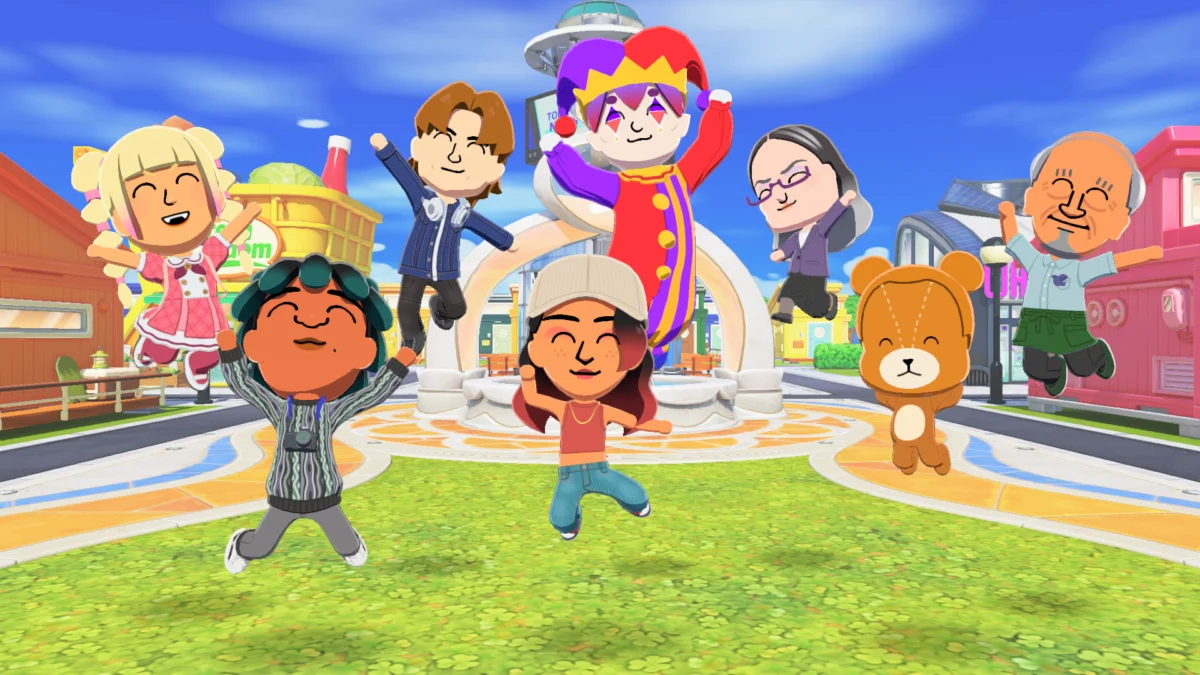
REDMOND, WA – May 15, 2026 – The U.S. video game industry showcased robust growth in April 2026, with overall consumer spending reaching a significant $4.3 billion, marking a 3% increase from the previous year. This positive momentum was largely propelled by the impressive debut and sustained performance of the Nintendo Switch 2, which revitalized hardware sales, while Nintendo’s whimsical life-simulation title, Tomodachi Life: Living the Dream, emerged as the month’s top-selling software.
These figures, released by market research firm Circana (formerly NPD Group), underscore a dynamic period for interactive entertainment, characterized by a potent mix of highly anticipated new hardware, compelling software releases, and evolving data collection methodologies. Year-to-date, total spending across all segments of the video game market stands at $18.8 billion, a healthy 5% increase over 2025, signaling continued resilience and expansion within the sector.
Main Facts: A Resilient Market Amidst Shifting Tides
April 2026 proved to be a pivotal month for the U.S. video game market, demonstrating a compelling blend of innovation and consumer engagement. The headline figures paint a picture of an industry not just recovering, but actively thriving. Overall video game spending surged to $4.3 billion, a commendable 3% year-on-year increase, reflecting sustained consumer interest and investment in interactive entertainment. This growth is particularly noteworthy given the broader economic landscape and the natural ebb and flow of console cycles.
The content segment, encompassing full game sales, in-game purchases, and subscriptions, saw its spending climb 2% in April to $3.8 billion. This indicates a consistent appetite for new experiences and ongoing engagement with existing titles. On a year-to-date basis, content spending has reached $16.7 billion, up 3%, reinforcing the foundational strength of the software market.
However, the most dramatic shift occurred in the hardware sector. Console revenue soared by an impressive 34% to $261 million for the month, a direct testament to the overwhelming success of the Nintendo Switch 2. This new console single-handedly offset significant declines in sales for the original Nintendo Switch, Xbox Series X|S, and PlayStation 5, underscoring its immediate and profound impact on the market. The Switch 2 not only led hardware sales in both units and dollars for April but also maintained its dominance year-to-date, with the PlayStation 5 trailing in second place. Nintendo’s market share in hardware sales reached its highest point since July 2025, a clear indication of its revitalized position.
On the software front, Tomodachi Life: Living the Dream captured the top spot, generating over $41 million in combined physical and projected digital sales. Its success highlights the enduring appeal of quirky, life-simulation experiences and Nintendo’s unique ability to cultivate dedicated fanbases. Capcom’s new intellectual property, Pragmata, also made a strong showing, securing the second overall position and demonstrating its cross-platform appeal.
Crucially, April also marked a significant methodological change for Circana, which now reports the top 10 best-selling games each month, rather than the previous top 20. This adjustment, coupled with the inclusion of projected digital sales and actual data from its Digital Leader Panel, aims to provide a more accurate and comprehensive view of a market increasingly dominated by digital distribution.
Chronology: A Month of Milestones and Market Dynamics
The period from April 5 to May 2, 2026, as tracked by Circana, unfolded as a particularly eventful segment within the gaming calendar. The month kicked off with considerable anticipation surrounding new releases and the ongoing performance of the recently launched Nintendo Switch 2.
The release of Tomodachi Life: Living the Dream immediately resonated with consumers, building on the legacy of its 3DS predecessor. Its launch during the early part of April allowed it to gather significant sales momentum, quickly ascending to the top of the charts. This timing was crucial, enabling it to capitalize on early adopter enthusiasm and positive word-of-mouth.
Similarly, Capcom’s ambitious new IP, Pragmata, saw its multi-platform launch translate into strong sales across PlayStation, PC, and Xbox platforms. Its release strategy, targeting a broad audience simultaneously, proved effective in securing a prominent position in the market right out of the gate. The game’s consistent performance across diverse ecosystems indicated a strong initial reception for Capcom’s new venture.
Throughout April, the Nintendo Switch 2 continued its impressive sales trajectory, building upon its initial launch success. The console’s availability and positive reception sustained its position as the market leader, drawing in consumers who were either upgrading from older Nintendo hardware or entering the ecosystem for the first time. This sustained momentum was critical in offsetting the natural slowdown observed in sales for the older generation consoles, including the original Switch, PlayStation 5, and Xbox Series X|S. These older platforms, having been on the market for several years, entered a period of anticipated decline, a common phase in the console lifecycle where early adopters have largely been served, and the market awaits refreshed models or next-generation hardware.
The consistent presence of titles like Crimson Desert, MLB: The Show 26, and Pokemon: Pokopia in the top 10 underscored the enduring appeal of established franchises and ongoing live-service games. Meanwhile, the resurgence of titles like Starfield (jumping from rank 218 to 8) highlighted the power of content updates, sales promotions, or renewed player interest, potentially fueled by new expansions or community events. New entries such as Windrose and Saros also made their mark, signaling fresh talent and innovative concepts breaking into the mainstream, potentially benefiting from Circana’s updated reporting which better captures diverse digital performance.
The end of the reporting period for April 2026 solidified these trends, with the aggregated data clearly illustrating the significant impact of the Switch 2, the power of Nintendo’s software lineup, and the growing importance of a nuanced approach to market analysis in the digital age. The year-to-date figures, showing consistent growth across both hardware and content, confirm that these April trends are part of a larger, positive trajectory for the industry as a whole.
Supporting Data: Delving Deeper into the Numbers
The detailed figures provided by Circana offer a granular view into the forces shaping the video game market in April 2026. This data not only confirms headline trends but also reveals underlying dynamics critical for understanding the industry’s health and future direction.
Software Reigns: New IPs and Enduring Franchises
The software segment’s 2% growth in April, reaching $3.8 billion, might seem modest compared to hardware, but it represents a consistent and substantial revenue stream for the industry. The year-to-date content spending of $16.7 billion further solidifies its foundational role. Notably, new physical software sales experienced a remarkable 44% year-on-year increase, hitting $96 million for the month. While physical sales represent a smaller portion of the overall content market, this surge suggests a strong retail presence for key new releases, particularly Tomodachi Life: Living the Dream.
Tomodachi Life: Living the Dream‘s ascent to the number one spot, generating over $41 million, is a significant triumph for Nintendo. The original Tomodachi Life on the Nintendo 3DS was a cult hit, known for its quirky humor, life simulation mechanics, and the ability to import Mii characters, fostering unique player-driven narratives. This new iteration clearly capitalizes on that established appeal, bringing its charm to a broader audience on the new Switch 2. Its success underscores the power of Nintendo’s unique IP, which often caters to a distinct demographic seeking light-hearted, creative, and accessible gaming experiences. For Nintendo, this hit reaffirms its strategy of balancing established flagship franchises with innovative, often whimsical, titles.
Capcom’s Pragmata securing the second overall position is equally impressive, particularly for a brand-new intellectual property. Its strong performance across PlayStation, PC, and Xbox platforms—ranking first on PlayStation, second on PC, and third on Xbox—demonstrates effective multi-platform execution and a compelling offering that resonated widely. The fact that it also cracked the top 15 on Nintendo platforms suggests its broad appeal transcended console allegiances. Pragmata‘s success highlights Capcom’s continued prowess in developing high-quality, genre-diverse games, from survival horror to action RPGs, and its willingness to invest in new creative ventures. Industry analysts often look to new IP success as a vital sign of innovation and long-term market health, and Pragmata delivered on this front.
The remainder of the Top 10 chart provides further insights:
- Crimson Desert (Rank 3) and MLB: The Show 26 (Rank 4) maintain strong positions, indicating consistent player engagement with established titles. Crimson Desert, likely a highly anticipated action RPG, benefits from its ongoing appeal, while MLB: The Show 26 exemplifies the enduring popularity of sports simulations.
- Windrose (Rank 5) and Saros (Rank 9) are notable as new entries, potentially benefiting from the revised Circana methodology that better captures a wider range of digital sales, including those from smaller or indie developers. Their inclusion suggests a vibrant ecosystem beyond AAA blockbusters.
- Pokemon: Pokopia (Rank 6) and Mario Kart World (Rank 10) reinforce Nintendo’s dominance in evergreen franchises, showcasing the consistent demand for its beloved characters and gameplay loops.
- Super Mario Galaxy + Super Mario Galaxy 2 (Rank 7) is a remarkable entry, demonstrating the power of re-releases or remasters of classic titles, especially on new hardware like the Switch 2, which allows new generations of players to experience critically acclaimed games.
- Starfield (Rank 8), making a dramatic leap from rank 218, is a prime example of a game experiencing a resurgence. This could be attributed to significant content updates, expansion packs, or aggressive sales promotions, drawing players back into its vast open world.
Hardware’s Resurgence: The Switch 2 Effect
The 34% surge in hardware revenue to $261 million is unequivocally linked to the launch and sustained sales of the Nintendo Switch 2. This new console has not only dominated the market but has single-handedly injected significant vitality into a sector that had begun to show signs of saturation with the previous generation of consoles. The Switch 2’s position as the best-selling hardware in both units and dollars for April and year-to-date underscores its successful market entry.
The success of the Switch 2 can be attributed to several factors. Firstly, the original Nintendo Switch, launched in 2017, had reached the latter stages of its lifecycle. Consumers were ready for an upgrade that offered enhanced performance, potentially better graphics, and new features, all while retaining the beloved hybrid handheld/console form factor. The Switch 2 likely delivers on these expectations, providing a compelling reason for existing Switch owners to upgrade and attracting new players into the Nintendo ecosystem. Secondly, Nintendo’s strong first-party software lineup, exemplified by titles like Tomodachi Life: Living the Dream and the continued presence of Pokemon and Mario games, creates a powerful ecosystem that drives hardware sales.
In stark contrast, the older generation consoles experienced significant declines: the original Switch was down 69% year-on-year, Xbox Series X|S down 43%, and PlayStation 5 down 30%. These figures are indicative of a mature console cycle. Both the PlayStation 5 and Xbox Series X|S, launched in late 2020, are now well into their lifespans. Early adopters have largely purchased these consoles, and the market is typically awaiting mid-generation refreshes or a more consistent stream of exclusive, system-selling titles. The absence of a direct competitor to the Switch 2 in the same launch window further allowed Nintendo’s new console to capture the lion’s share of hardware spending without immediate contention. Nintendo’s highest share of hardware sales since July 2025 is a clear indicator of its renewed market dominance and strategic positioning.
The Evolving Landscape of Market Measurement: Circana’s New Approach
Circana’s decision to shift from reporting the Top 20 to the Top 10 best-selling games, coupled with its revised methodology for including digital sales, marks a crucial evolution in market analysis. As explained by Circana senior director Mat Piscatella, this change is driven by the need to "capture not only the success of a game like Windrose (which would not have been captured in prior reporting), but will also allow for more accurate relative performance reporting on titles from non-participating traditional publishers like Nintendo."
The new system distinguishes between titles marked with a caret (^) which include actual sales figures from publishers participating in the Digital Leader Panel, and those with an asterisk (*) which include projected digital sales. This hybrid approach is a pragmatic response to the challenges of collecting comprehensive digital sales data in an industry where many publishers, notably Nintendo, have historically been private about their digital performance.
The benefits of this new methodology are substantial. It provides a much more holistic view of the market, acknowledging that a significant portion of game sales now occur digitally. By incorporating projections, Circana can offer a more accurate representation of relative sales performance across the entire market, including titles from publishers who do not share direct digital sales data. This is particularly vital for understanding the true impact of major releases from companies like Nintendo, whose digital sales might otherwise be underestimated.
However, Piscatella also acknowledged the inherent drawback: "as is the case with any projection, some range of error will naturally exist." This transparency is key to maintaining credibility. While projections improve coverage, they introduce an element of estimation. The ideal scenario, as he reiterated, would be for "all publishers to participate in digital sales sharing for the most accurate reporting." This ongoing call for greater industry-wide data sharing underscores the persistent challenge of comprehensive market intelligence in a fragmented digital landscape. Ultimately, this methodological pivot signifies Circana’s commitment to adapting its reporting to reflect the complex realities of modern video game consumption, providing more relevant and insightful data for industry stakeholders.
Official Responses and Industry Commentary
While direct quotes from specific publishers regarding April’s performance are typically reserved for investor calls or official press releases, industry analysts have been quick to interpret Circana’s data, offering valuable insights into the market’s trajectory.
"Nintendo’s strategy with the Switch 2 has clearly paid off," commented Laura Hudson, a veteran industry analyst at PixelPulse Research. "They’ve managed to launch new hardware that resonates deeply with their existing fanbase while also attracting new consumers, all without getting into a direct spec war with Sony or Microsoft. The strong sales of Tomodachi Life: Living the Dream further illustrate the power of their unique first-party IP to drive hardware adoption." Hudson suggests that Nintendo has successfully navigated the challenging period following the highly successful original Switch, positioning itself for another dominant console cycle.
Regarding Capcom’s Pragmata, David Chen, a market observer specializing in new IP performance, noted, "Capcom continues to impress with its ability to launch successful new franchises. Pragmata‘s cross-platform success indicates a well-executed marketing campaign and a game that genuinely captured player interest. In an industry often reliant on sequels, a strong new IP like this is a significant win for creativity and market diversification."
The decline in sales for the PlayStation 5 and Xbox Series X|S, while expected in the natural console cycle, has prompted discussion among analysts. "Sony and Microsoft are now firmly in the mid-cycle phase," explained Sarah Miller, a senior analyst at GameTrack Insights. "The initial surge of early adopters has passed, and both companies are likely focused on driving software sales, subscription growth, and potentially preparing for mid-generation refreshes. The Switch 2’s launch created a distinct market segment that didn’t directly compete for the same core audience, allowing it to flourish without cannibalizing the established next-gen consoles." Miller hinted that both companies would likely double down on exclusive content and Game Pass/PS Plus offerings to maintain engagement.
The shift in Circana’s reporting methodology has also garnered praise for its transparency and forward-thinking approach. "Circana’s new hybrid model is a crucial step towards more accurate market representation," stated Dr. Alex Kim, a data science professor specializing in consumer behavior. "The gaming industry’s increasing reliance on digital distribution made the old reporting methods incomplete. While projections always carry a margin of error, this approach provides a far more comprehensive picture, especially for understanding the relative performance of titles from publishers who historically don’t share granular digital sales data. It’s a pragmatic solution to a complex data collection problem." Kim emphasized that the industry benefits immensely from clearer, albeit projected, insights into digital sales trends.
Implications: Charting the Course for the Future of Gaming
The April 2026 Circana report carries significant implications for various stakeholders across the video game industry, from console manufacturers and game developers to investors and consumers.
A New Era for Nintendo?
The unequivocal success of the Nintendo Switch 2, both in April and year-to-date, signals the dawn of a potentially new era of dominance for Nintendo. Having successfully launched a successor to one of the best-selling consoles of all time, the company has demonstrated its ability to innovate while retaining its core identity. This performance is likely to embolden Nintendo’s strategy of offering unique hardware experiences coupled with unparalleled first-party software. We can anticipate a robust pipeline of exclusive titles for the Switch 2, leveraging its new capabilities and further solidifying its ecosystem. For competitors, this means a formidable challenge in capturing market share, especially in the portable and family-friendly gaming segments.
The Hybrid Data Model: A Necessity for Modern Gaming
Circana’s methodological shift is not merely a technical adjustment; it’s a recognition of the fundamental transformation of the video game market. As digital sales continue to outpace physical retail for many titles, a robust system for tracking and reporting this data is paramount. The hybrid model, incorporating both actual and projected digital sales, is likely to become the standard for industry analysis. This transparency, even with its inherent limitations of projection, will empower developers, publishers, and investors with more accurate insights, allowing for better strategic planning and resource allocation. However, the call for "all publishers to participate in digital sales sharing" remains a critical long-term goal for the industry to achieve truly comprehensive and precise market intelligence.
Shifting Consumer Habits and Market Segmentation
The success of Tomodachi Life: Living the Dream highlights the diverse tastes within the gaming community. Beyond high-fidelity action titles, there’s a significant appetite for quirky, social, and creative experiences. This reinforces the idea that market success isn’t solely driven by graphical prowess or hyper-realistic gameplay but also by unique concepts and engaging mechanics. The simultaneous success of a new IP like Pragmata on multiple platforms suggests that consumers are open to new franchises when they offer compelling experiences, signaling a healthy balance between brand loyalty and a desire for novelty. The continued strength of physical software sales, even in a digitally-dominant world, indicates that collectors and those who prefer tangible media still constitute a valuable segment of the market.
Outlook for Q2 and Beyond
Looking ahead to the remainder of 2026, the trends established in April are likely to persist. The Nintendo Switch 2 is expected to maintain its strong sales performance, especially as more first and third-party titles designed specifically for the platform begin to launch. Sony and Microsoft will likely focus on strengthening their respective subscription services (PlayStation Plus and Xbox Game Pass) and promoting upcoming exclusive titles to maintain user engagement. The overall market growth, despite some hardware segment contractions, points to a robust industry capable of navigating economic fluctuations and evolving consumer preferences. The ongoing adaptation of market research firms like Circana will be crucial in providing clear navigational charts for an industry that is continually redefining itself. The interplay between new hardware, compelling software, and increasingly sophisticated data analysis will undoubtedly shape the future of interactive entertainment for years to come.












No comments yet. Be the first to join the conversation!