

By Editorial Staff
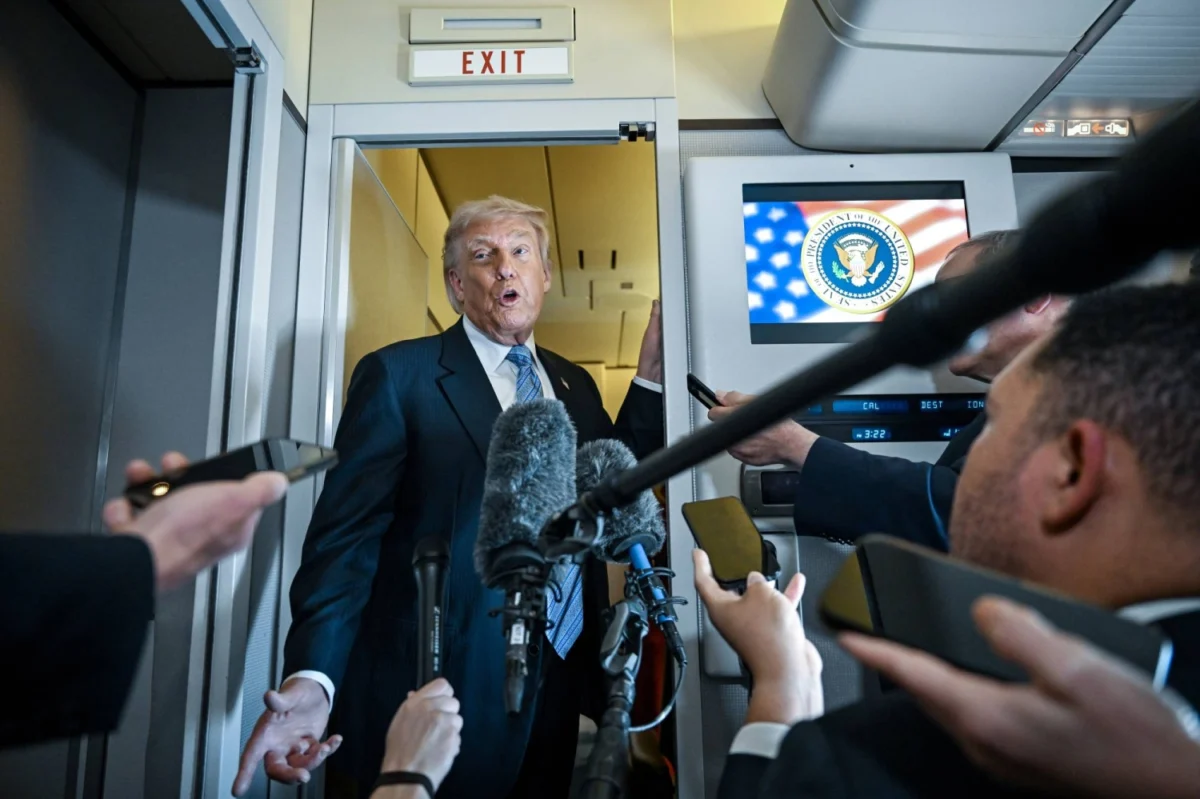
In a development that has sent tremors through diplomatic circles in Washington, Taipei, and across the Indo-Pacific, U.S. President Donald Trump has publicly cautioned Taiwan against any formal declaration of independence. The remarks, delivered aboard Air Force One during his return flight from a high-level summit in Beijing, follow intense private discussions with Chinese President Xi Jinping.
The President’s comments, which appeared to cast doubt on the ironclad nature of U.S. security guarantees for the democratic island, represent a significant pivot in the long-standing "One China" policy framework that has governed U.S.-China-Taiwan relations for decades.
Main Facts: A Pivot in Rhetoric
The core of the controversy lies in a candid interview President Trump gave to Fox News, which aired Friday. While the President insisted that "nothing has changed" regarding official U.S. policy, his subsequent rhetoric suggested otherwise. When pressed on the escalating tensions in the Taiwan Strait, Trump made his stance clear: he is explicitly opposed to any formal movement toward independence by Taipei.
Perhaps more significantly, the President questioned the strategic rationale for the United States to commit military resources to defend the island. "I’m not looking to have somebody go independent," Trump stated. "And, you know, we’re supposed to travel 9,500 miles to fight a war. I’m not looking for that."
These statements have been interpreted by geopolitical analysts as a "transactional" approach to national security, where the defense of a democratic ally is being weighed against the physical distance and economic costs of intervention.
Chronology of the Beijing Summit
The context for these remarks was the high-stakes summit in Beijing, an event that had been closely monitored for signals regarding the future of the U.S.-China relationship.
- May 12: President Trump arrives in Beijing, marking the start of a multi-day visit intended to address trade imbalances and regional security.
- May 13: The private session between President Trump and President Xi Jinping takes place. According to diplomatic sources, a significant portion of the conversation was dominated by the "Taiwan question."
- May 14: Reports emerge that President Xi delivered a stern warning to his American counterpart, characterizing Taiwan as the "reddest of red lines" and suggesting that missteps regarding the island’s political status could lead to a direct military confrontation between the world’s two largest superpowers.
- May 15: President Trump departs Beijing. During the flight, he conducts the interview with Fox News, signaling a shift in his public posture regarding Taiwan.
- May 16: The interview airs in the United States, triggering immediate concern among foreign policy analysts and international observers.
The Strategic Importance of Taiwan
To understand the gravity of these remarks, one must consider the geopolitical and economic stakes currently centered on the island of Taiwan.
1. The Semiconductor Monopoly
Taiwan is the global heart of the semiconductor industry. Taiwan Semiconductor Manufacturing Company (TSMC) produces the vast majority of the world’s most advanced microchips. A conflict in the Taiwan Strait would not only paralyze the global electronics industry but could result in a total collapse of supply chains for the U.S. defense, automotive, and telecommunications sectors.
2. The First Island Chain
From a military standpoint, Taiwan is a critical component of the "First Island Chain." U.S. military strategists have long viewed the island as a natural blockade against Chinese naval expansion into the Pacific. If Taiwan were to fall under Beijing’s control, the Chinese People’s Liberation Army (PLA) would gain unimpeded access to the deep waters of the Pacific, fundamentally altering the security architecture of the region.

3. Democratic Solidarity
Taiwan represents a success story of democratization in Asia. For decades, the United States has framed its support for Taiwan as a moral imperative, pitting a vibrant, free-market democracy against an authoritarian one-party state. Trump’s skepticism suggests a move away from this ideological framing toward a more realist—or isolationist—paradigm.
Official Responses and Diplomatic Fallout
The View from Taipei
Officials in Taiwan have responded with measured caution, likely hoping to avoid a public rift with Washington. A spokesperson for the Taiwan Presidential Office stated, "Taiwan remains committed to maintaining the status quo and preserving peace and stability in the region," while declining to address the President’s comments directly. Behind closed doors, however, observers suggest there is significant anxiety that the United States may be signaling a willingness to trade Taiwan’s security for concessions on trade or other bilateral issues.
The View from Beijing
For the Chinese government, the President’s remarks are a tactical victory. Beijing has long sought to decouple the United States from its support of Taiwan. By framing the issue as an internal matter and emphasizing the distance between the U.S. and the island, Beijing has successfully nudged the President toward a more non-interventionist stance.
The View from Washington
In Congress, the reaction has been swift and bipartisan. Several lawmakers from both the Republican and Democratic parties have voiced strong opposition to the President’s stance. Senatorial leaders have reminded the administration that the Taiwan Relations Act (TRA) requires the United States to provide Taiwan with the means to defend itself. Many analysts argue that the President’s comments undermine the "strategic ambiguity" that has kept the peace in the region for decades.
Implications for Global Stability
Erosion of Deterrence
The most immediate risk of the President’s rhetoric is the potential erosion of deterrence. If Beijing perceives that the United States is unwilling to defend Taiwan, it may feel emboldened to increase its "gray zone" activities—such as incursions into Taiwan’s Air Defense Identification Zone (ADIZ) or the imposition of a maritime blockade—believing that the U.S. response will be limited to rhetoric rather than action.
The Future of U.S. Alliances
Trump’s comments have sent shockwaves through other U.S. allies in the region, particularly Japan and South Korea. If the United States is unwilling to defend a democratic partner as vital as Taiwan, these nations may begin to question the reliability of the U.S. security umbrella. This could lead to a rapid proliferation of regional nuclear capabilities or an attempt by these nations to hedge their bets by seeking closer economic and political ties with China.
The Shift Toward Transactional Diplomacy
The underlying philosophy behind the President’s comments suggests a broader trend in his administration: a rejection of the "Global Policeman" role. By focusing on the 9,500-mile distance, Trump is appealing to an "America First" constituency that is wary of foreign entanglements. However, this approach risks creating a power vacuum in the Indo-Pacific that would be rapidly filled by China, potentially leaving the United States with fewer options and less influence in the 21st century’s most critical theater of competition.
Conclusion: A Delicate Balance
The coming weeks will be critical in determining whether the President’s remarks were a calculated negotiating tactic designed to pressure Taipei into better trade terms, or a genuine shift in U.S. defense posture.
The administration’s challenge is to balance the domestic desire to avoid war with the strategic necessity of maintaining an international order that has favored the United States for generations. As the dust settles from the Beijing summit, one thing remains certain: the status quo regarding Taiwan, which has been the bedrock of regional peace, is under more pressure today than it has been at any point in the last half-century.
The international community now waits to see if the U.S. will reinforce its commitments or if this is merely the first step toward a more profound disengagement from the democratic frontline of the Pacific.












No comments yet. Be the first to join the conversation!