Azzam Bilal Chamdy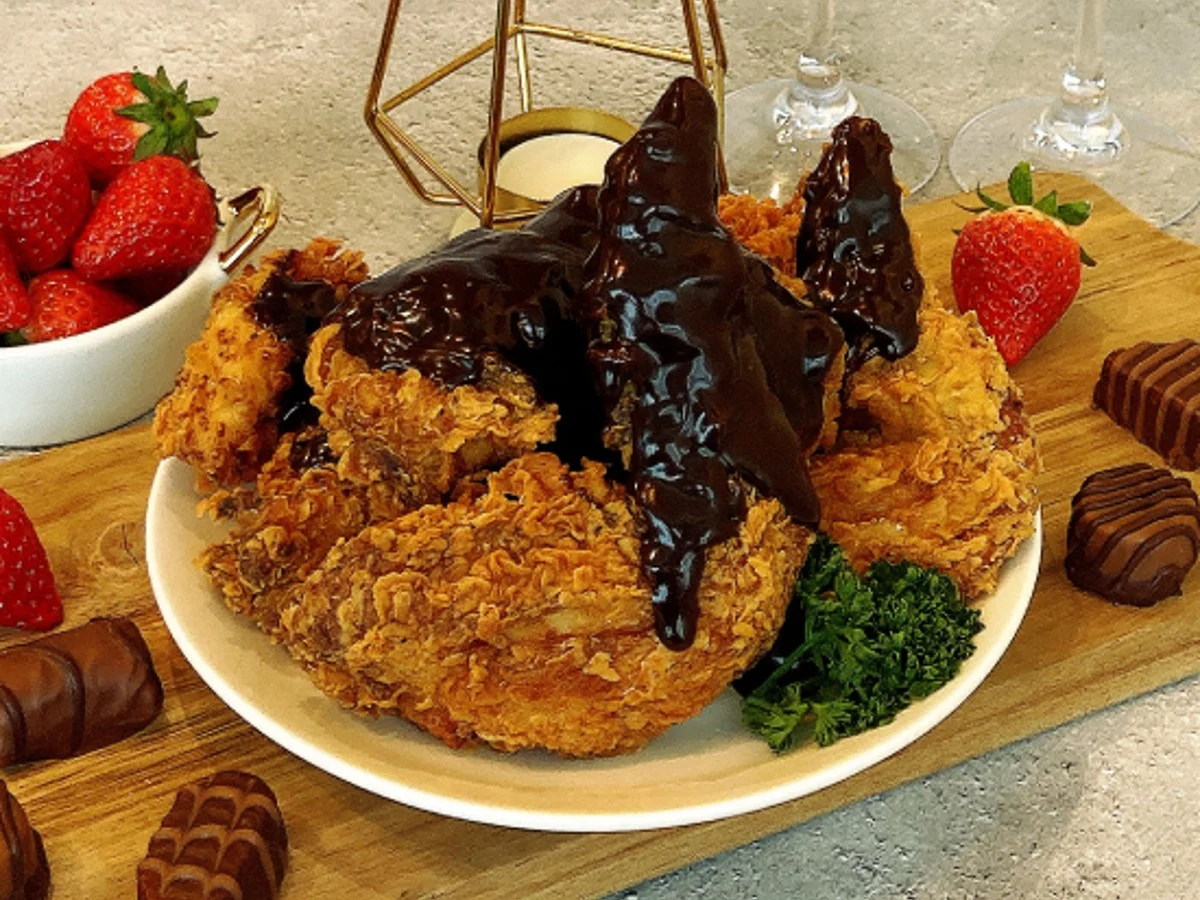
For those navigating the intricate social landscape of Valentine’s Day in Japan, the season often feels like a pre-programmed ritual. From the standardized giri-choco (obligation chocolate) distributed to coworkers to the high-end artisan truffles gifted to significant others, the holiday is historically defined by refined cocoa. However, a growing subculture of culinary experimentation is challenging these norms. This year, the Shibuya district is at the epicenter of a gastronomic trend that blurs the lines between dessert and dinner, as the Korean-style fried chicken chain, Chicken Street, announces the return of its controversial—and undeniably bold—Chocolate-Covered Fried Chicken.
The Main Facts: A Savory-Sweet Collision
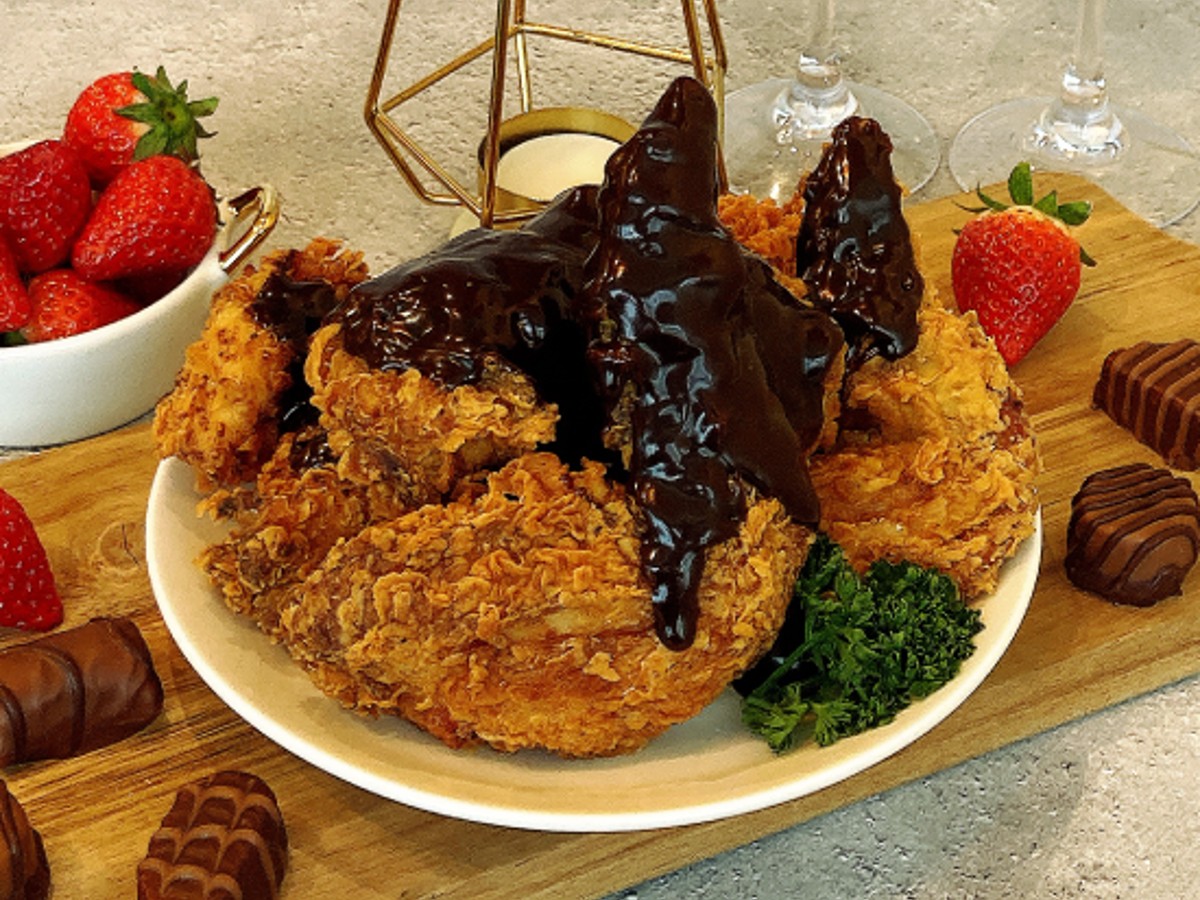
Beginning February 1st and running through February 14th, the Shibuya branch of Chicken Street is shifting its menu to include a limited-edition offering that serves as a direct antithesis to traditional Valentine’s Day confectionery. The product is simple in its construction but audacious in its execution: signature, ultra-crispy Korean fried chicken, double-fried to achieve a distinctively audible crunch, and generously coated in a rich, bittersweet chocolate sauce.
This is not a gimmick designed solely for social media engagement, though it certainly performs well on platforms like Instagram and TikTok. Rather, it is a calculated effort to cater to the "sweet and savory" palate that has gained massive traction in East Asian food culture over the last decade. By leveraging the high salt content and savory umami profile of Korean fried chicken, the restaurant aims to create a flavor profile that balances the bitterness of cocoa with the savory depth of fried poultry.
A Chronology of Culinary Daring: From Ramen to Poultry
The evolution of Japan’s Valentine’s Day food scene has been a slow transition from tradition to novelty. For decades, the focus remained squarely on luxury chocolate brands and handmade sweets. However, the mid-2010s saw a shift as consumers began seeking more "experience-based" gifts.
The Precursors to the Trend
Before the rise of chocolate-covered chicken, Japan witnessed several viral culinary experiments that paved the way for this year’s trend:
- The Demon Slayer Collaboration: Capitalizing on the immense popularity of the Demon Slayer: Kimetsu no Yaiba franchise, manufacturers released character-themed chocolate packages that turned the holiday into a collector’s event rather than just a romantic one.
- The Chocolate Ramen Phenomenon: Perhaps the most polarizing entry in the history of Japanese Valentine’s food, chocolate ramen—a dish where cocoa-infused oils and chocolate-dusted noodles meet savory tonkotsu broth—challenged the very definition of a "dessert."
The introduction of Chocolate Fried Chicken at Chicken Street follows this trajectory. It serves as a marker of a consumer base that is increasingly eager to shed the "polite" expectations of Valentine’s Day in favor of culinary humor and shared, memorable experiences.
Supporting Data: Why "Swalty" is Winning
The market for "swalty"—the portmanteau of sweet and salty—has seen exponential growth in Japan. According to consumer behavior studies conducted by retail analysts, Gen Z and Millennial consumers in urban hubs like Shibuya are 40% more likely to purchase limited-time-only (LTO) food items that feature "clashing" flavors compared to traditional seasonal staples.
The appeal lies in the texture as much as the taste. Chicken Street’s signature Korean fried chicken is known for a specific type of batter—often using starch to achieve a glass-like crunch that withstands sauce application. When the tempered chocolate is applied, it creates a shell-like layer that mirrors the texture of a chocolate-dipped strawberry, but with a more complex, savory internal structure.
While caloric data for the item has not been officially released, nutritional experts suggest that such items are designed for "shared consumption," fitting into the communal eating culture that defines Japanese nightlife and urban dining in Shibuya.
Official Responses and Culinary Philosophy
In an interview regarding the launch, the management team at Chicken Street emphasized that the goal was never to replace the traditional chocolate box, but to provide an alternative for those who find the holiday’s rigid customs tiresome.
"We recognize that for many, Valentine’s Day is a stressful period of social obligation," a spokesperson for the chain noted. "By introducing an item that is overtly playful and slightly absurd, we are allowing our customers to reclaim the holiday. It is meant to be eaten with friends, perhaps with a drink, rather than as a quiet, romantic gift."
The culinary team at Chicken Street spent months testing the viscosity of the chocolate sauce. If the sauce is too thick, it masks the crunch of the chicken; if it is too thin, it runs off the bird entirely. The final iteration uses a specific ratio of cacao butter to ensure the chocolate adheres to the crust, maintaining the structural integrity of the fried chicken while delivering a distinct chocolate hit on the first bite.
Implications: The Future of Seasonal Marketing
The move by Chicken Street is indicative of a broader shift in the Japanese restaurant industry. As the cost of premium ingredients like cocoa continues to rise due to global climate issues and supply chain instability, restaurants are looking for ways to maximize the value of their existing menu items by "seasonalizing" them through creative coatings or toppings.
The "Instagrammability" Factor
In a hyper-competitive market like Shibuya, where thousands of restaurants vie for the attention of a transient population, visual novelty is a primary driver of foot traffic. The Chocolate Fried Chicken serves a dual purpose: it acts as a functional meal and a "content piece." This viral potential lowers the cost of customer acquisition, as diners effectively provide free marketing through social media shares.
Cultural Shifts in Valentine’s Day
Sociologically, the emergence of such products reflects a softening of the rigid social codes surrounding Valentine’s Day in Japan. For years, the holiday was defined by giri-choco—a burden for many office workers. As workplace dynamics change and traditional gender roles in Japan are increasingly questioned, the holiday is pivoting toward "self-care" and "shared fun."
If an individual can walk into a fried chicken shop in the heart of Shibuya and order a box of chocolate-dusted poultry, the pressure to maintain a performative, romantic, or professional standard of gift-giving diminishes. The implication is clear: the holiday is becoming what the consumer wants it to be, rather than what tradition dictates it must be.
Conclusion: A Savory Call to Action
For those residing in or passing through Tokyo this February, the experience of visiting the Shibuya branch of Chicken Street—located just a five-minute walk from the iconic Hachiko exit—is arguably more about the spirit of the season than the flavor itself.
Whether one views this as a culinary abomination or a stroke of genius, the Chocolate-Covered Fried Chicken is a testament to the vitality and restlessness of the Japanese food scene. It invites diners to pause, take a picture, share a laugh, and perhaps reconsider the boundaries of what constitutes a "Valentine’s treat."
As the calendar turns to February 1st, the Shibuya streets will once again be filled with the scent of frying oil and tempered chocolate. It is a strange, uniquely modern marriage of flavors—a reminder that in a world of predictable rituals, sometimes the most memorable celebrations are the ones that dare to be a little bit messy.
By – grape Japan editorial staff.


 Neng Nana
 Asro
Asro