

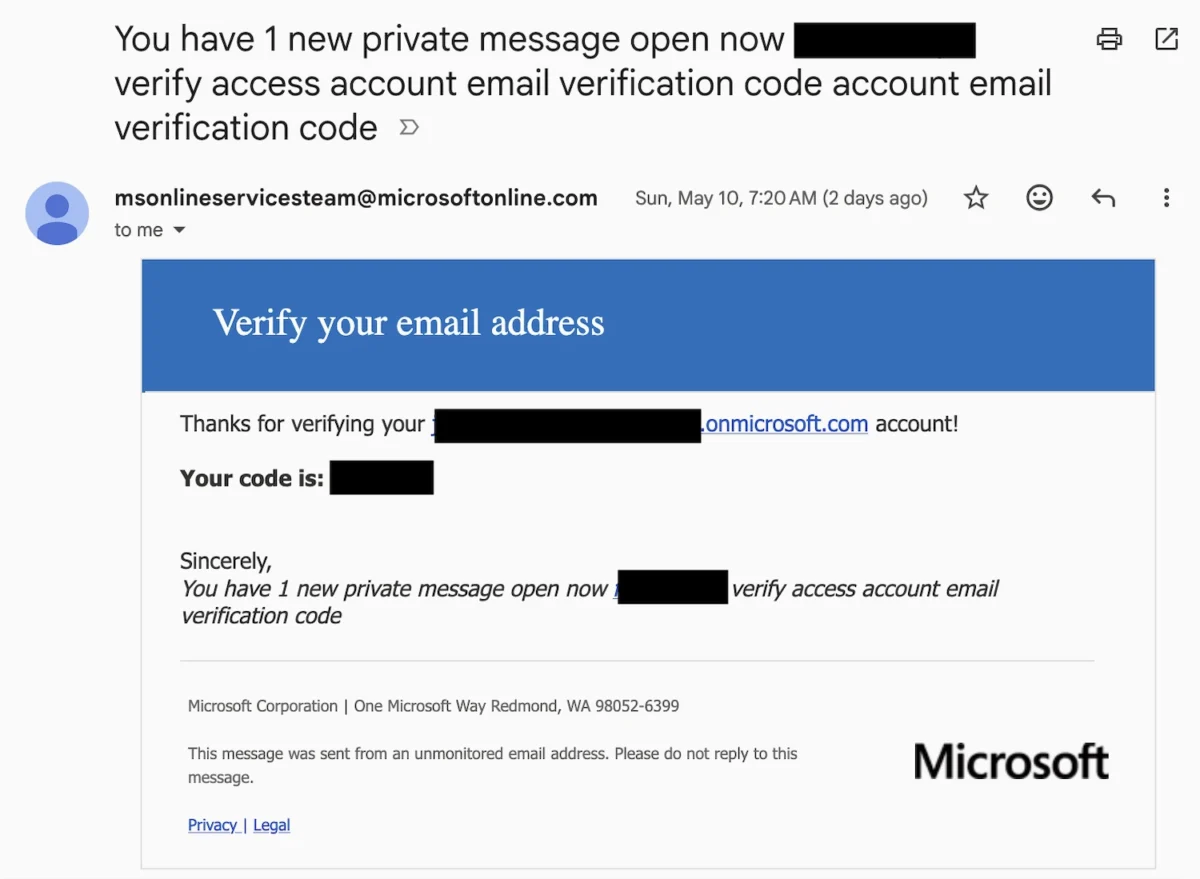
For months, a persistent and sophisticated campaign has been operating in plain sight, leveraging Microsoft’s own internal infrastructure to deliver malicious spam and phishing content directly to the inboxes of millions. The vulnerability centers on a glaring loophole in Microsoft’s automated account notification system, which bad actors are using to masquerade as official representatives of the tech giant. By bypassing traditional email authentication filters, these scammers are turning a symbol of trust—the microsoftonline.com domain—into a delivery vehicle for digital fraud.
The Anatomy of the Loophole
At the heart of this controversy is the email address [email protected]. This address is globally recognized by Microsoft users as a secure, legitimate channel for critical account alerts, such as two-factor authentication (2FA) codes, password reset requests, and security notifications. Because these emails originate from Microsoft’s own servers, they typically sail through spam filters, email gateways, and security protocols that would flag similar messages from unauthorized domains.
The scammers appear to be exploiting a flaw in how new Microsoft accounts are provisioned and how the notification system handles outbound communications. By creating new, legitimate-looking accounts, the attackers seem to be gaining access to the automated notification pipeline. This allows them to craft custom messages that, while appearing to come from the official Microsoft team, contain deceptive subject lines, malicious links, and instructions designed to steal credentials or financial information.
Chronology of the Exploitation
While reports of these spam messages have spiked in recent weeks, security researchers note that the abuse has been ongoing for several months.
- Late 2025 – Early 2026: Initial signs of automated abuse began appearing in niche cybersecurity forums, though the volume remained low, likely as scammers tested the delivery mechanism to ensure they wouldn’t be flagged by Microsoft’s automated security systems.
- Early 2026: The frequency of these emails began to rise significantly. Users reported receiving messages with subject lines mimicking official fraud alerts or claims of "private messages" waiting for the user at external links.
- Last Week: Security experts, including TechCrunch’s own staff, began receiving an influx of these crudely crafted emails across multiple accounts, confirming that the scope of the campaign had expanded significantly.
- Tuesday: The non-profit organization The Spamhaus Project issued a formal notice via social media, publicly identifying the abuse of the
[email protected]address and confirming that the malicious activity had been observed for "several months."
A Pattern of Systemic Vulnerability
The abuse of Microsoft’s notification system is not an isolated incident; rather, it is part of a worrying trend where attackers "live off the land" by hijacking the trusted infrastructure of major corporations to deceive users.
Earlier this year, the fintech firm Betterment was targeted by hackers who breached a third-party platform to send out fraudulent crypto-related notifications. The messages, which appeared to come from a legitimate source, claimed to "triple the value" of cryptocurrency assets sent to a specific wallet address—a classic "doubling scam" that preys on the trust users place in their financial service providers.
Similarly, in 2023, Namecheap suffered a high-profile breach of its internal email system. Hackers used the company’s access to distribute sophisticated phishing emails targeting DHL and MetaMask users. By leveraging a company’s own email domain, the attackers effectively neutered the effectiveness of DMARC, SPF, and DKIM protocols, which are designed to verify that an email is genuinely from the purported sender.

The Spamhaus Critique: "Automated Systems Shouldn’t Allow Customization"
The Spamhaus Project, a globally respected authority on spam mitigation and threat intelligence, has been vocal about the technical failure that allows this to happen. In their statement on Tuesday, they pointedly criticized the lack of guardrails within Microsoft’s notification architecture.
"Automated notification systems should not allow this level of customization," Spamhaus wrote. The implication is clear: Microsoft’s system is designed for utility and ease of integration, but it lacks the necessary sanitization layers to prevent user-defined content from being injected into official notifications. By failing to restrict the body and subject lines of automated alerts, Microsoft has inadvertently provided a "golden ticket" for scammers to bypass modern email security.
The Silence from Redmond
When contacted by media outlets regarding the ongoing exploitation, a Microsoft spokesperson confirmed receipt of the inquiry but stopped short of providing a substantive update. As of the time of writing, the company has not issued an official statement regarding whether the vulnerability has been patched or what steps are being taken to prevent future abuse of its notification services.
This silence is particularly frustrating for cybersecurity advocates who argue that transparency is the first step toward remediation. If Microsoft has identified the specific account creation process being used to trigger these emails, the lack of a public-facing fix leaves users in a state of perpetual vulnerability, forced to discern between genuine security alerts and malicious imitations.
Implications: The Erosion of Trust
The implications of this breach extend far beyond the immediate risk of phishing. When a tech giant like Microsoft loses control over its own notification infrastructure, it fundamentally undermines the "security-by-default" paradigm that companies promote to their customers.
- Normalization of Phishing: By receiving spam from a trusted sender, users are trained to lower their guard. If a legitimate notification address can be used for a scam today, the user may ignore a critical security warning from that same address tomorrow.
- Failure of Email Authentication: Modern email security relies on the assumption that if an email passes SPF/DKIM/DMARC checks, it is safe. This campaign demonstrates that these protocols are useless if the internal systems of the trusted sender themselves are compromised.
- The "Third-Party" Problem: Many companies now outsource their notification and alert services to internal or third-party automated platforms. This campaign highlights the urgent need for these platforms to implement strict content-filtering layers that prevent the injection of user-controlled text into outbound, system-generated emails.
Protecting Yourself in an Age of Spoofed Trust
While Microsoft works toward a resolution, users must exercise extreme caution. Even when an email appears to originate from a verified source like Microsoft, users should follow these best practices:
- Scrutinize the Content: If an email asks you to click a link to "claim a message" or "verify a transaction," navigate to the official website manually by typing the URL into your browser rather than clicking any embedded links.
- Check for Inconsistencies: Scammers often struggle to replicate the professional tone and design language of official Microsoft communications. Look for spelling errors, strange phrasing, or mismatched fonts, which are common indicators of a "crudely made" phishing attempt.
- Enable Additional Layers of Security: While 2FA is the gold standard, consider using hardware-based security keys (such as YubiKeys) which are immune to most phishing attacks, as they require physical interaction with the device rather than the entry of a code that could be intercepted via a phishing link.
- Report, Don’t Engage: If you receive a suspicious email from a known corporate domain, report it to the company’s abuse department immediately. Do not reply, as this can confirm that your email address is active and potentially lead to more spam.
Conclusion: A Call for Accountability
The incident at Microsoft serves as a stark reminder that the digital infrastructure supporting our modern lives is fragile. When corporations prioritize the scalability of their notification systems over the integrity of the content being sent, the consequences are felt by the end-user. As the frequency of these attacks grows, the tech industry must move toward a more rigorous verification standard for automated communications. Until then, the responsibility falls on the consumer to remain vigilant against the growing tide of "official" spam.












No comments yet. Be the first to join the conversation!