Neng Nana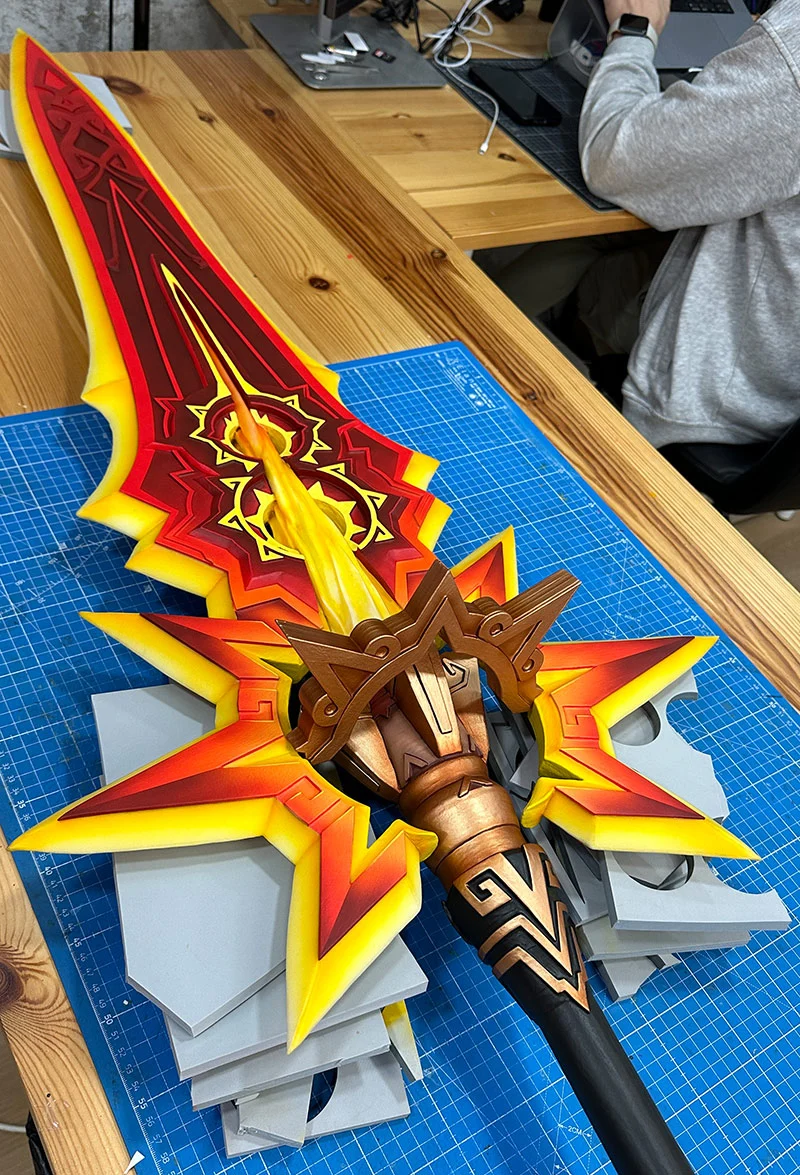
In the high-stakes world of professional cosplay, few names carry the weight and technical reputation of Kamui Cosplay. Known for pushing the boundaries of material science and lighting integration, the duo has consistently set the gold standard for game-accurate prop fabrication. Their latest endeavor—a collaboration with HoYoverse to bring "A Thousand Blazing Suns," the massive sword belonging to Mauvika, the Fire Archon of Natlan, to life—represents a new pinnacle in their portfolio. This project is not merely a costume piece; it is a complex engineering feat that bridges the gap between digital asset and physical reality.
The Convergence of Passion and Partnership
Cosplay is fundamentally an exercise in passion, a bridge between the digital worlds we inhabit and the physical reality we build. For the creators at Kamui Cosplay, the design of Mauvika—the formidable Fire Archon from Genshin Impact—was an immediate point of fascination. Her aesthetic, characterized by vibrant, elemental intensity, is perfectly encapsulated by her signature weapon: "A Thousand Blazing Suns."
The project gained official momentum when HoYoverse reached out to the duo for a collaborative partnership. Tasked with creating promotional content to celebrate the launch of the new Fire Archon, the creators found themselves in a unique position: their creative desire to replicate such an iconic weapon perfectly aligned with the publisher’s promotional roadmap. This synergy allowed for a level of detail and production quality that would be difficult to achieve in a non-professional setting.

Phase I: Blueprints and Digital Archaeology
The creation of a prop of this scale requires more than just artistic flair; it demands precision, data analysis, and technical foresight. The primary challenge in recreating a weapon from a modern video game is translating a 3D model, designed for a virtual environment where physics do not apply, into a weight-balanced, functional physical object.
To begin, the team utilized official 3D assets provided by HoYoverse via aplaybox.com. This platform is a vital resource for cosplayers looking for high-fidelity references, though it presents its own barriers to entry. Navigating the repository requires cross-referencing Chinese character names and utilizing real-time translation tools to ensure the correct model files are retrieved.
Once the digital geometry was secured, the team proceeded to the blueprinting phase. The 3D model is instrumental here, as it provides the exact silhouette needed to map out the weapon’s structural integrity. A critical decision made early in the design process was the scaling of the sword. While the in-game weapon is, by definition, massive—often bordering on the impossible—the builders opted for a final length of two meters. This adjustment was a deliberate design choice; at two meters, the sword maintains an imposing, larger-than-life presence while remaining a "natural" extension of the cosplayer’s frame. It is a reminder that in professional prop-making, "accurate" does not always mean "identical to the game scale."

Phase II: Engineering the Foam Core
The structural foundation of a two-meter sword is where most amateur projects fail, but the pros rely on structural engineering. The core of "A Thousand Blazing Suns" is reinforced by a rigid PVC pipe running through the entire length of the blade. This provides the necessary spine to prevent the EVA foam from warping or bending under its own weight.
The team utilized 10mm high-density EVA foam to build the body of the blade. This choice of material is deliberate; it provides the balance of weight and structural rigidity required for large-scale props. The construction process was bolstered by the use of a CO2 laser cutter. While traditionalists might prefer a box cutter, the laser cutter allows for surgical precision and drastically reduces the time spent on manual cutting. However, the team notes that this is a "force multiplier" rather than a shortcut—without a perfectly designed vector blueprint, the laser cutter is essentially useless.
Beyond the structural elements, the sword needed to feature a "rocket-engine" aesthetic, glowing with intense, fiery light. This was achieved by layering the EVA foam around the PVC core, carefully hollowing out channels to conceal the wiring for nearly 300 individual LEDs.

Phase III: The Electronics and Lighting Architecture
The "fire" of the Fire Archon is not merely a visual texture; it is a dynamic, light-based performance. To achieve the pulsing, volatile glow of the weapon, the team utilized a robust electronics suite centered around an Adafruit Feather M4 Express and a Prop-Maker FeatherWing.
The choice of the Feather M4 is significant; it offers the processing power needed to handle complex light animations without stuttering. These were paired with 300 NeoPixel digital RGB LEDs. The programming allows for a reactive lighting effect: the sword features a pulsing fire animation that, upon the physical action of stomping the weapon on the ground, triggers a bright white "impact" flash. This interaction between the prop and the performer’s physical performance is what elevates the piece from a static statue to a narrative prop.
The integration of these electronics requires a deep understanding of circuit design, as the power source—the battery—and all wiring must be seamlessly integrated into the hilt. This ensures the sword remains cordless, allowing for dynamic posing and movement during filming.

Phase IV: The Marathon of the Paint Job
Painting is often perceived as the most relaxing stage of a build, but for a project of this magnitude, it is a high-pressure, time-sensitive operation. The team employed airbrushing techniques using Vallejo metallic model paints. The challenge lies in the "translucency" requirement: the paint must be opaque enough to look like metal but thin enough to allow the LEDs to diffuse through the foam, creating a glowing effect.
The process is governed by the limitations of masking tape. Because the team had to paint the weapon in sections, they were forced to apply layers of tape to protect previously finished areas. Due to the chemical composition of the tape’s adhesive, it cannot remain on the foam for more than 12 hours without risking damage to the base coat. This transformed the painting process into a 12-hour endurance test, with the team working through the night to ensure that no single section of the paint was compromised by the adhesive.
Following the airbrushing, Benni provided the final polish by hand-painting the intricate details using highly pigmented acrylics and precision brushes. This final touch adds the necessary "depth" to the weapon, distinguishing it as a handcrafted piece of art.

Supporting Data: Material Breakdown
To achieve a professional-grade finish, the team relied on specific, industry-standard materials:
- Structural: 10mm High-Density EVA Foam (The Foamory).
- LED Diffusion: 2mm LED-specific Plastazote LD45 foam.
- Electronics: Adafruit Feather M4 Express, Prop-Maker FeatherWing, and NeoPixel RGB strips.
- Adhesives: Professional-grade contact cement (sourced via specialized cosplay distributors).
- Coating/Color: Vallejo Model Air metallic paints, applied via Iwata Eclipse HP-CS airbrush system.
Official Responses and Collaborative Impact
The collaboration between Kamui Cosplay and HoYoverse highlights a growing trend in the gaming industry: the formal recognition and investment in high-end fan content. By commissioning creators who understand the lore and the technical requirements of cosplay, publishers like HoYoverse are able to create marketing assets that resonate deeply with the community.
For the team, the collaboration was validation of their craft. "Mauvika’s Sword, A Thousand Blazing Suns, looks like I grabbed it directly from the Fire Archon’s hands," the creators stated upon completion. This sentiment echoes the primary goal of any high-end cosplayer: to suspend disbelief.

Implications for the Future of Prop-Making
The successful completion of this project underscores several shifts in the cosplay industry:
- Digital Integration: The reliance on official 3D models and laser cutting represents a move toward "Industry-Adjacent" workflows. Professional cosplayers are increasingly adopting the same tools as film prop studios.
- Interactive Performance: As LEDs and microcontrollers become more accessible, the standard for props is moving away from static foam pieces toward interactive, reactive items that respond to the user’s movement.
- Community Knowledge Sharing: By documenting the entire process—including the use of specialized books like The Book of Light and Sound Effects—the team is not just building a sword; they are raising the skill floor for the entire community.
In conclusion, the recreation of Mauvika’s weapon is more than just a promotional stunt. It is a case study in how modern creators are leveraging technology to honor the characters they love. As the lines between digital and physical continue to blur, projects like this serve as a testament to the dedication required to bring the fire of Teyvat into our own world.

 Siti Muinah
 Azzam Bilal Chamdy