Pevita Pearce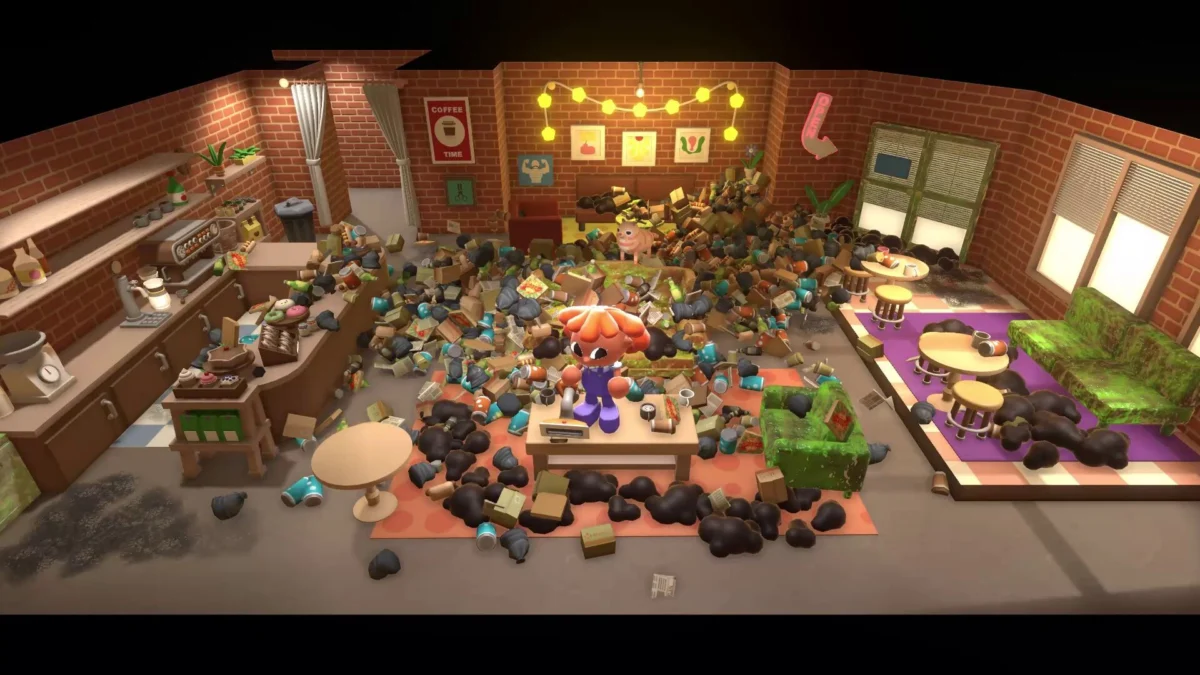
In the landscape of modern gaming, there is a burgeoning sub-genre that defies the high-octane thrills of battle royales and the complex narratives of open-world RPGs: the "chores simulator." Titles like PowerWash Simulator and Viscera Cleanup Detail have proven that players are more than willing to trade their virtual swords for sponges. The latest entry in this oddly therapeutic category is Cleaning Up!, a vibrant, physics-based title that invites players to turn chaotic, garbage-strewn environments into pristine sanctuaries.
While most of us shy away from housework in our daily lives, Cleaning Up! taps into that peculiar human desire to impose order upon chaos. By combining tactile physics with a self-aware sense of humor, the game manages to transform the mundane act of tidying into a delightful, dopamine-inducing gameplay loop.
The Core Concept: From Filth to Fulfillment
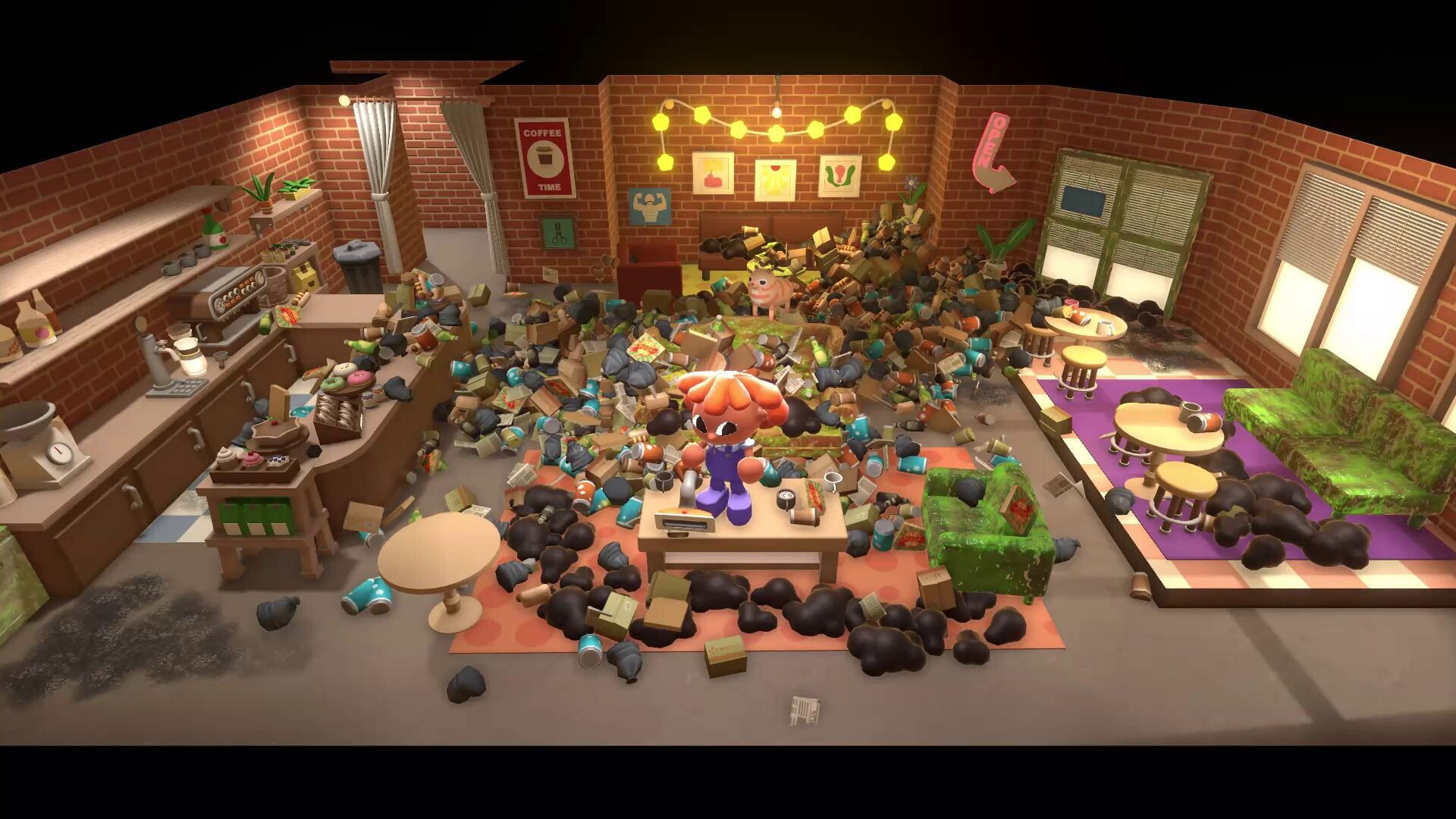
At its heart, Cleaning Up! is refreshingly straightforward. Players are dropped into various levels—ranging from cafes to schools—that have been decimated by what can only be described as a disaster of epic proportions. Armed with an initial set of tools, the player must systematically remove debris, clear away refuse, and restore order.
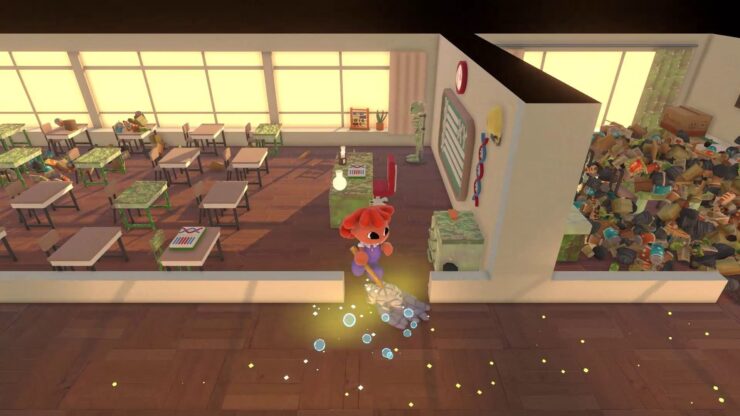
The primary tool of the trade is a vacuum cleaner. It’s an intuitive starting point; you suck up loose trash, manage your capacity, and deposit the haul into a designated bin. However, the game quickly evolves beyond basic suction. As you progress, you gain access to an arsenal of cleaning implements. A broom is essential for gathering piles of viscous black goo into manageable chunks; a mop handles liquid spills with ease; and a power washer—the crown jewel of any cleaning enthusiast—brings a satisfying level of intensity to furniture scrubbing and plant watering.
There is even a "smelly spray" included in your inventory. While it stands out as the most unconventional tool in the kit and requires a bit more finesse to master, it adds a layer of depth to the environmental interaction. There are no ticking clocks or high-pressure timers here; the game respects the player’s pace, allowing them to transform a pigsty into a showroom at their own leisure. A progress bar at the top of the screen provides a subtle nudge, indicating exactly how much cleaning remains, ensuring that players always have a clear goal in sight.
A Chronology of Chaos and Polish
The development trajectory of Cleaning Up! reflects a growing trend in the indie scene: the move toward "low-stakes, high-satisfaction" gameplay. Since its reveal, the title has been positioned as a direct response to the increasing complexity of modern gaming.
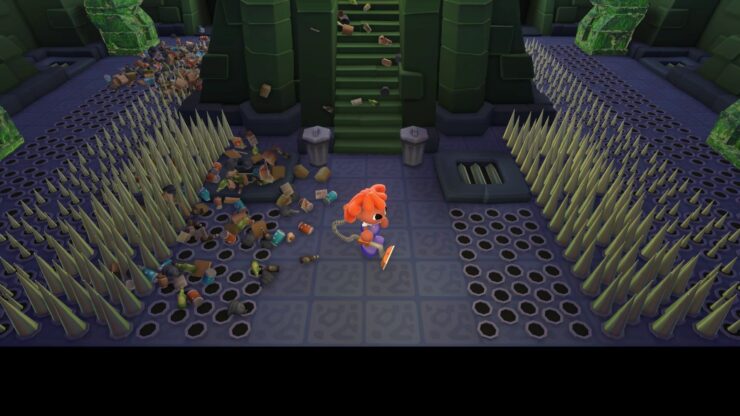
The game’s structure follows a logical progression of escalation. Early levels serve as a tutorial, teaching the player the nuances of physics-based vacuuming and bin management. As the player moves through the world, the environments become more sophisticated. You aren’t just cleaning a floor; you are navigating around spikes, managing zombie outbreaks, and dealing with sentient, grumpy house pets.
What makes the chronology of the game’s levels particularly interesting is the "one-and-done" nature of certain mechanics. The developers often introduce a specific obstacle—such as the aforementioned dangerous packages that must be avoided during vacuuming—only to cycle it out in favor of new challenges. While some critics argue that this prevents the game from building toward a "final boss" level of difficulty, it arguably benefits the game’s pacing. By constantly rotating mechanics, Cleaning Up! keeps the experience fresh, preventing the repetitive motion of cleaning from ever feeling like a true grind.
Supporting Data: Why We Love to Clean
Psychologically, the appeal of Cleaning Up! is backed by the concept of "Flow." When a player enters a state of flow, they become fully immersed in an activity, losing track of time as they focus on a singular, achievable task. In the real world, cleaning is often interrupted by fatigue, stress, or the sheer scope of the project. In Cleaning Up!, the feedback loop is instantaneous.
- The Reward System: Every piece of trash removed triggers a visual or auditory cue, providing the brain with a micro-dose of satisfaction.
- Environmental Transformation: The visual contrast between a "dirty" state and a "clean" state provides a sense of tangible progress.
- Low Cognitive Load: By removing time constraints, the developers have eliminated the anxiety-inducing elements of traditional gaming, making it an ideal "cozy game."
These elements have contributed to the game’s positive reception on platforms like Steam. Players report that the game acts as a form of active meditation. Furthermore, the inclusion of cosmetic upgrades—such as frog hats and various character accessories—provides a secondary layer of motivation, allowing players to express their personality while they scrub away the grime.
Official Perspectives: The Voice of the Sponge
Perhaps the most charming aspect of Cleaning Up! is its meta-humor. The game is narrated and guided by an AI-chat-bot sidekick in the form of a sponge. Much like the infamous Microsoft Office Paperclip, the sponge is self-deprecating and constantly cracking jokes about the absurdity of the situation.
When you start a job, the game’s characters often provide dialogue that highlights the sheer scale of the mess, shouting lines like "This is a cafe full of trash!" before leaving you to your work. This tone serves to ground the game in its "silly" identity. It doesn’t take itself seriously, and by extension, it gives the player permission to relax. The developers clearly understood that for a game about cleaning to succeed, it couldn’t be a dry, academic simulation. It had to be a playground.
Implications for the Indie Market
The success of Cleaning Up! points to a wider shift in the gaming industry. As triple-A titles become increasingly expensive and demanding of a player’s time, there is a massive gap in the market for titles that offer immediate, low-stress gratification.
Cleaning Up! proves that an indie game does not need a sprawling open world or a 60-hour campaign to be considered "worth it." Instead, it emphasizes:
- Iterative Gameplay: Small, focused mechanics that are executed perfectly.
- Accessibility: The lack of a time limit makes the game inclusive for players of all skill levels.
- Community-Driven Design: The focus on user feedback—such as the player-expressed relief that certain "dangerous package" levels were not repeated—shows that the developers are listening to their audience.
However, there is a missed opportunity for potential expansion. If the developers were to introduce a "stacking" mechanic where previous challenges are integrated into later, more complex levels, Cleaning Up! could easily evolve into a deeper puzzle-platformer. As it stands, the game is a masterclass in "cozy" game design, but it leaves the door wide open for future sequels or DLC that could push the complexity even further.
Final Thoughts: Should You Pick Up the Broom?
In conclusion, Cleaning Up! is a delightful anomaly. It is a game that turns a chore into a hobby and makes the virtual act of tidying feel like a genuine accomplishment. Whether you are power-washing a couch or carefully avoiding a ghost while you mop, the experience is consistently rewarding.
For those who enjoy the "satisfaction" genre, this title is a must-play. It is currently available on both the Nintendo eShop and Steam, making it easily accessible for console and PC players alike. While it may not offer the narrative depth of an epic saga, it offers something arguably more important in our busy, chaotic lives: a quiet, humorous, and deeply satisfying space to tidy up and clear your mind.
The next time you look around your own home and feel overwhelmed by the mess, perhaps you should fire up your PC or Switch, put on a digital frog hat, and let the sponge-bot guide you through a much more manageable, much more hilarious version of the job. In the world of Cleaning Up!, the only thing you have to lose is the grime.


 Sagoh
Sagoh