Ammar Sabilarrohman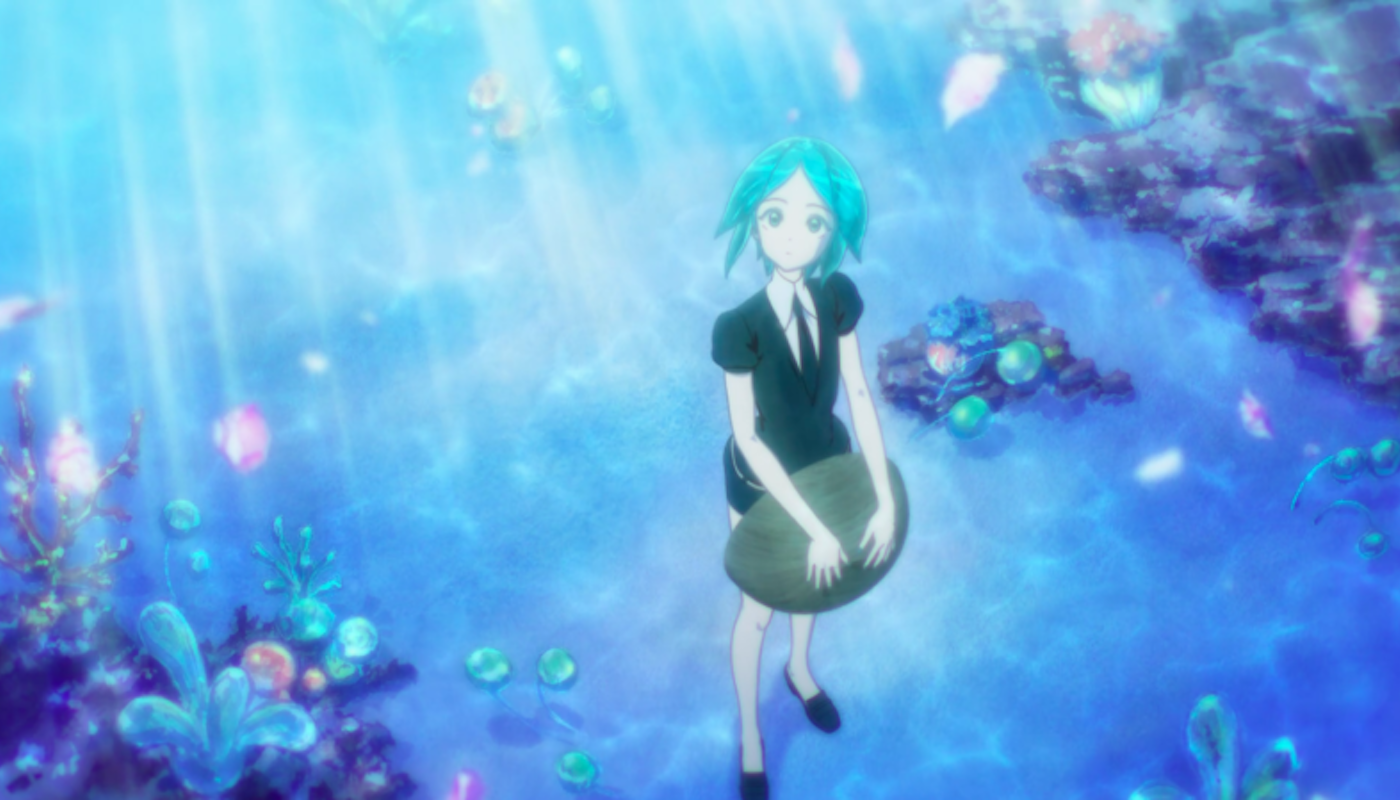
Last fall, amidst the relentless, rhythmic crush of Tokyo’s Shibuya Station during the height of the morning rush, I found solace in an unlikely place: the sprawling, archipelago-bound world of Ursula K. Le Guin’s Earthsea. While my physical reality was defined by the claustrophobic proximity of a salaryman’s suit and the accidental elbows of commuters, my consciousness was anchored firmly in the archipelago. I spent those weeks consuming an anthology of the first four novels, becoming thoroughly intoxicated by Le Guin’s singular approach to worldbuilding, her evocative, sparse prose, and her signature brand of philosophical ennui.
In those moments, the indignities of the commute dissolved. It mattered little if I were being pressed against a stranger’s nape; in my mind, I was witnessing Ged struggle with the dissociation that defines his island homeland, or following Tenar as she navigated the labyrinthine burdens of her life. Le Guin’s work is, and has always been, deeply humbling. She remains, for many, the North Star of speculative fiction, and her influence on my own intellectual development—specifically regarding the dismantling of gender and social binaries—is profound.
The Le Guinian Legacy: A Chronology of Influence
To understand why searching for the "Le Guinian spirit" in anime is a pursuit of both great reward and immense frustration, one must first recognize the temporal audacity of her writing. The Dispossessed provided me with a roadmap for anarchist thought when I lacked the vocabulary to articulate my own restlessness. As a young queer person, the unflinching, revolutionary examination of gender and androgyny in The Left Hand of Darkness was not merely literature; it was a revelation.
It remains difficult to reconcile the fact that The Left Hand of Darkness was published in 1969. While my mother was still attending elementary school, Le Guin was deconstructing the very nature of human identity, detailing the cultural friction between a Terran man and an ambisexual inhabitant of the frozen world of Gethen. Half a century before "genderqueer" became a lexicon staple in online discourse, Le Guin was writing with a precision that made contemporary social movements seem like they were merely catching up to her.

The Ghibli Disconnect: An Official Disappointment
Given the weight of this legacy, the 2006 Studio Ghibli adaptation, Tales from Earthsea, directed by Goro Miyazaki, remains a singular point of cultural pain. The production was surrounded by immense promise. The marriage of Le Guin’s seminal fantasy work and the prestige of the Ghibli animation house—the visual masters of the medium—seemed like a fated union.
However, the final product was an exercise in misinterpretation. While the trailers promised a lush, atmospheric return to the archipelago, the film itself failed to capture the core of the source material. For the uninitiated, the plot was a condensed, often impenetrable thicket of conflicting motivations. For the devotees of the books, the radical departures from Le Guin’s established lore felt like a betrayal of the philosophical heart of the story. Unlike Howl’s Moving Castle, where director Hayao Miyazaki’s departures from Diana Wynne Jones’ novel resulted in a magnificent, albeit different, cinematic experience, Tales from Earthsea missed the mark. It stripped away the quiet, contemplative nature of Le Guin’s magic and replaced it with a generic, battle-heavy fantasy aesthetic that lacked her intellectual rigor.
Supporting Data: Finding Resonance in Animation
Despite the failure of that high-profile attempt, the search for a true anime reflection of Le Guin’s majesty is far from futile. There are series that, while not direct adaptations, capture the thematic, emotional, and narrative DNA of her work. These shows do not merely mimic her aesthetic; they engage with the same complex inquiries that animated her life’s work.
1. The Historical Weight of Vinland Saga
Makoto Yukimura’s Vinland Saga is not, strictly speaking, a fantasy series, yet it is arguably the most "Le Guinian" historical epic in modern manga and anime. A dramatized biography of the real-life Icelandic explorer Thorfinn Karlsefni, the series is a masterclass in the evolution of the human soul. Much like Ged, Thorfinn begins as a character defined by the "shadow" of his own actions—specifically, his descent into a cycle of violence fueled by the desire to avenge his father.

The parallels to Earthsea are striking. Thorfinn’s journey is a sprawling, decades-long meditation on the cost of power and the necessity of pacifism. Just as Ged must confront the shadow he unwittingly released, Thorfinn must confront the ghosts of the men he killed in his youth. It is a grueling, beautiful, and profoundly philosophical journey that fills the void left by inadequate fantasy adaptations.
2. Toward the Terra (Terra E): Authoritarianism and Utopianism
If one seeks the social friction of The Dispossessed, look no further than Toward the Terra. Written by Keiko Takemiya—a titan of the "Year 24" group of female mangaka—the series feels eerily prophetic. Set in the 31st millennium, it depicts a society governed by "Superior Dominance," a supercomputer system that micromanages human life, assigning parents and erasing adolescent memories to ensure societal efficiency.
The story’s focus on the Mu, a group of telepathic humans struggling against this sterile, authoritarian state, mirrors the tension between ideological worlds found in Le Guin’s Hainish Cycle. Takemiya, who famously illustrated the first gay kiss in manga history, infuses the relationship between the protagonists, Shin and Blue, with a queer-coded depth that feels intentional, even if the era of its creation necessitated a certain degree of narrative restraint.
3. Paprika and the Dreamscapes of The Lathe of Heaven
Satoshi Kon’s Paprika functions as a brilliant companion piece to Le Guin’s The Lathe of Heaven. Both works posit that reality is a fragile construct, easily manipulated by the human psyche. In The Lathe of Heaven, George Orr’s dreams physically reshape history and reality; in Paprika, the borders between waking life and the dreamscape are dismantled by "dream terrorists."

While Le Guin uses her premise to explore the tenets of Taoism and the ethics of godhood, Kon uses his as a high-octane thriller reflecting the anxieties of the early internet age. Yet, both succeed in generating the same profound sense of existential dread—the realization that the world we inhabit is only as stable as the minds that perceive it.
4. Kaiba: The Question of Personal Identity
Finally, for those who find the gender-defying and identity-shifting questions of The Left Hand of Darkness essential, Kaiba is a mandatory watch. This Masaaki Yuasa masterpiece features a protagonist who, like Genly Ai in The Left Hand of Darkness, is forced to navigate a foreign, often hostile environment while grappling with the very nature of what it means to be a person.
In Kaiba, memories are digital data, and bodies are interchangeable vessels. The series is a surreal, avant-garde exploration of whether anatomy determines identity, or if the soul exists independently of the flesh. It is a challenging, deeply emotional piece of art that rewards the viewer with a profound understanding of the human condition.
Implications: The Ongoing Relevance of Philosophical Fiction
The enduring power of Le Guin’s writing—and the reason we continue to look for its reflection in anime—is that her questions are never "solved." Whether it is the critique of colonization in The Word for World Is Forest or the exploration of gender in her Hainish cycle, these stories remain relevant because the societal structures she critiqued remain pervasive.

While Land of the Lustrous is often cited in this conversation due to its exploration of non-binary identities and environmental trauma, it serves as a reminder that representation is not merely a checklist of features. Some fans find the series empowering; others, myself included, have found the specific execution—often defaulting to hyper-feminized character designs—to be a missed opportunity to truly break the mold of the binary.
However, the fact that we are still having these conversations, still analyzing these series through a Le Guinian lens, is a testament to the author’s impact. The magic of Le Guin’s imagination was never in the spells she described or the spaceships she launched; it was in her ability to force the reader to look at their own world and see it for the first time. As we continue to seek that same magic in the medium of anime, we are, in a way, keeping her philosophical project alive—constantly questioning, constantly searching, and constantly evolving.
If you are looking for stories that capture the complexity of the human experience, these series are a start. But the conversation is ongoing. I encourage you to look beyond the surface of the latest releases and find the works that challenge your assumptions, unsettle your comforts, and, like the best of Le Guin, change the way you see the world.

 Suro Senen
 Pevita Pearce