Asep Darmawan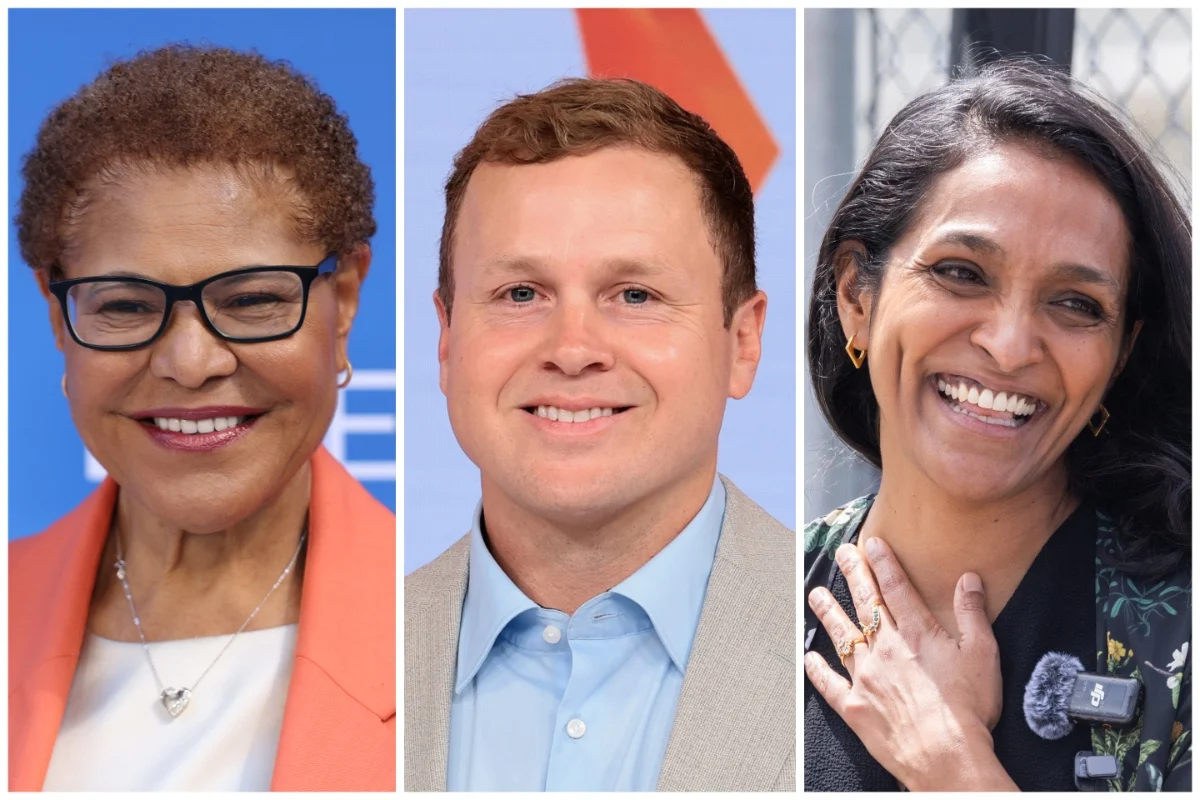
The political landscape of Los Angeles shifted dramatically on Tuesday night as early election returns signaled a high-stakes runoff in the race for the city’s top executive office. Incumbent Mayor Karen Bass, who ascended to the mayoralty in 2022, found herself leading a crowded field, yet facing a surprisingly robust challenge from a nontraditional political newcomer: reality television star and conservative firebrand Spencer Pratt.
As the ballots were tallied, the Associated Press projected that Bass had successfully secured her spot in the upcoming general election runoff. However, the second-place slot remained the subject of intense speculation throughout the evening. While Pratt held a commanding lead over Councilwoman Nithya Raman, the official confirmation of the final runoff matchup remained pending late into the night.
The Chronology of Election Night
The atmosphere in Los Angeles was thick with anticipation as the clock struck 9 p.m. At her headquarters, Mayor Bass appeared before a sea of supporters, radiating the confidence of a frontrunner. Addressing the crowd, she struck a tone of cautious optimism, characterizing the night’s results as "looking good so far."
"Tomorrow begins the second half of this journey," Bass declared, her voice steady. "You stood with me on the first half. Will you stand with me all the way?"
Across town, the scene was markedly different at a West Los Angeles Mexican restaurant, where Spencer Pratt hosted his campaign party. In a move that underscored his unconventional approach to the media, the event was closed to reporters. It wasn’t until after 10 p.m. that Pratt emerged to address the press, framing his campaign not as a celebrity publicity stunt, but as a genuine movement. He immediately issued a challenge to the Mayor: a series of weekly debates leading up to the final vote.
"I’m ready for whatever God puts in front of me," Pratt told the gathered journalists. "I’m going to prove to everybody this is for real and I’m ready to run the city."
Meanwhile, Councilwoman Nithya Raman, representing the progressive wing of the party, addressed her supporters with a message of defiance. Despite trailing in the polls, she emphasized the ideological impact of her campaign. "We believe that Angelenos were hungry for that vision—and we were right," she said. "Here’s the reality. That vision threatens some very powerful forces. They came at us with everything they had."
The Numerical Breakdown: A Shifting Electorate
The data from the initial returns painted a clear picture of a fractured electorate. Mayor Bass led the pack with approximately 36.6% of the vote. Spencer Pratt surged into a strong second position with 29.8%, while Councilwoman Raman held 20.5%.
Political analysts were quick to weigh in on the significance of these numbers. Conan Nolan, the veteran NBC4 anchor, noted that the results likely represented a favorable outcome for the incumbent. "This is a very good night for Karen Bass," Nolan remarked, suggesting that the Mayor’s campaign had long favored a runoff against Pratt—a candidate they likely view as easier to paint as outside the mainstream—rather than a more ideological battle against the progressive Raman.
The Pillars of the Campaign
The race has been defined by three distinct visions for the city’s future, each anchored by the candidates’ unique political identities and support bases.
Mayor Karen Bass: The Establishment Defense
Mayor Bass has anchored her reelection bid on a record of incremental progress. Her campaign has heavily touted a 17.5% decline in street homelessness during her first term, a statistic she uses to counter criticisms regarding the city’s ongoing housing crisis. Her campaign infrastructure is robust, fueled by deep-seated support from labor organizations. Key players, including the International Alliance of Theatrical Stage Employees and the Hollywood Teamsters, have provided the financial and organizational muscle necessary to maintain her lead.
Spencer Pratt: The Populist Challenger
Perhaps the most unpredictable element of the election is the rise of Spencer Pratt. A former star of MTV’s The Hills, Pratt has transformed his public persona into that of a populist conservative leader. His campaign gained traction by tapping into deep-seated voter frustration regarding public safety and the city’s handling of natural disasters. His personal experience—having lost his home in the devastating Palisades fire—became a focal point of his narrative, allowing him to frame himself as a victim of the same systemic failures he claims his opponents have ignored. His campaign has been bolstered by significant endorsements from conservative media outlets, including The California Post, and frequent appearances on national platforms like Fox News.
Nithya Raman: The Progressive Vanguard
Councilwoman Raman campaigned as the voice of a new generation of Angelenos, calling for a radical departure from "City Hall insiders." Her campaign was characterized by a sharp critique of corporate influence and landlord power in the city. Her financial backing was a "who’s who" of the Hollywood creative class, drawing support from luminaries like Tina Fey, Mike Schur, Cord Jefferson, Mindy Kaling, and Colin Jost. While she may fall short of the runoff, her ability to mobilize a dedicated base suggests that the progressive wing of Los Angeles politics remains a formidable, if currently out-numbered, force.
Implications for the City’s Future
The issues driving this election—homelessness, the flight of industry jobs, and the rising cost of living—will only intensify as the city heads toward the final runoff.
One of the most pressing concerns for Los Angeles’ economic engine is the health of the entertainment industry. All three candidates have publicly supported an unlimited state tax incentive for film production. However, industry insiders remain skeptical, noting that the mayor’s office possesses limited direct influence over the state’s fiscal policy. This issue has become a flashpoint; critics have accused Mayor Bass of failing to act with sufficient urgency to stem the tide of "runaway production," while the Mayor defends her record by pointing to successful efforts to streamline permitting and reduce red tape.
The upcoming runoff promises to be a referendum on the direction of Los Angeles. For Mayor Bass, it is a test of whether her coalition of labor and moderate voters can withstand a populist challenge. For Spencer Pratt, it is an opportunity to prove that his movement—built on social media savvy and conservative frustration—has the broad appeal necessary to govern a deeply liberal city.
As the city turns its attention to the next phase of the campaign, one thing is certain: the electorate is deeply divided. Whether the result is a validation of the current administration’s trajectory or a mandate for a radical shift, the next few months will be a defining period for the future of Los Angeles.
The political establishment, watching the numbers closely, recognizes that this is no longer a standard election cycle. It is a moment of volatility, where the intersection of celebrity, policy, and public grievance has created a new, and entirely unpredictable, political reality.


 Ali Ikhwan
 Sagoh
Sagoh