Nana Muazin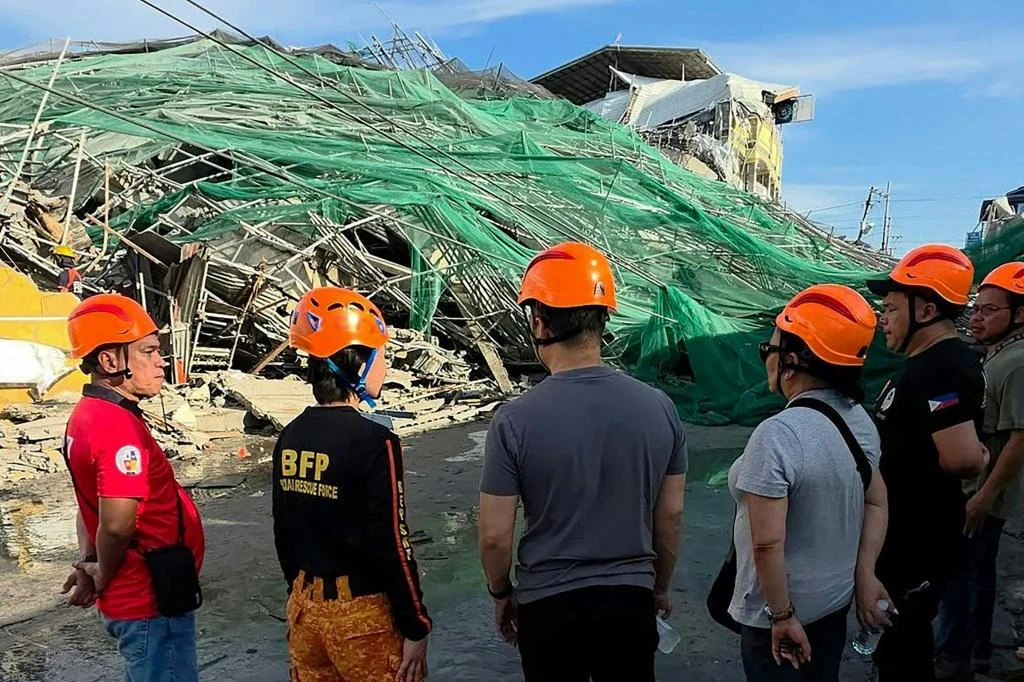
ANGELES CITY, Philippines – A frantic search-and-rescue operation is currently underway in Angeles City, located approximately 80 kilometers north of the Philippine capital, Manila, following the catastrophic collapse of a nine-story building under construction. The structure, which crumbled in the early hours of Sunday morning, has left authorities scrambling to locate 19 individuals feared buried beneath a massive, unstable mountain of concrete, twisted steel, and shattered scaffolding.
As the sun rose over the devastation, the scale of the structural failure became painfully apparent. The building, which had been wrapped in the characteristic green protective mesh common at construction sites across the Philippines, had folded in on itself, sending debris cascading into the street and severely damaging an adjacent hotel. While the immediate aftermath saw 26 people pulled from the rubble, the whereabouts of 19 construction workers remain a grave concern for local officials.
Chronology of the Disaster
The collapse occurred at approximately 3:00 a.m. local time, catching the surrounding neighborhood in deep slumber. The silence of the night was shattered by a sound described by witnesses as a thunderous roar, initially mistaken by many in the vicinity for a seismic event.
James Bernardo, a 30-year-old local delivery rider, had arrived on the street just moments before the incident to complete a food delivery. His account provides a harrowing glimpse into the immediacy of the disaster.
"A few seconds later there was suddenly a loud noise in the area, and when I looked, I realized that the building had already collapsed," Bernardo told AFP. "We thought it was an earthquake, but it turned out it was the building. Thank God I’m safe."
Bernardo’s mobile footage, verified by news agencies, captures the immediate chaos: a landscape of pulverized concrete and mangled metal pylons obstructing the road. In the clip, the sound of the collapse still seems to hang in the air as onlookers, shaken and disoriented, begin to document the destruction.
Within minutes of the collapse, the first responders were dispatched to the site. The city government initiated a multi-agency rescue effort, coordinating between the Bureau of Fire Protection, local police, and disaster risk reduction management teams. By daybreak, 24 individuals associated with the construction site and two hotel guests had been successfully extricated from the debris.
Supporting Data and Site Conditions
The site of the collapse is a testament to the immense force of the structural failure. The nine-story project, which was in the advanced stages of construction, left a chaotic footprint of debris that extended well beyond its original perimeter.
According to City Information Officer Jay Pelayo, the structural integrity of the site had been completely compromised. The walls and primary scaffolding, designed to hold thousands of tons of weight, buckled instantaneously. The debris field now consists of massive, irregular chunks of reinforced concrete, power pylons, and tangled steel beams—materials that pose significant challenges to heavy machinery.
"There are big chunks of concrete, and we need equipment to lift them up," Pelayo explained during a press briefing. "That is what is challenging for the rescue right now."
The adjacent hotel, which bore the brunt of the building’s fall, suffered severe structural damage, forcing the evacuation of its occupants. Officials confirmed that the two rescued individuals from the hotel were fortunate to escape with their lives, though they were transported to local medical facilities for observation.
Current data from the city government indicates that 26 people have been rescued in total. Officials remain in a state of cautious optimism, holding onto the hope that the 19 missing personnel are included among those already recovered or that they managed to evacuate the building before the primary structural support gave way. Interviews with the survivors are currently ongoing to verify identities and reconstruct the timeline of the collapse.
Official Responses and Rescue Strategy
The Angeles City government has mobilized all available resources to manage the crisis. The primary focus of the operation is the manual and mechanical removal of debris to clear pathways to potentially trapped individuals.
"We hope the 19 people are part of that number and therefore accounted for," Pelayo noted, emphasizing the complexity of reconciling the current roster of rescued individuals with the manifest of workers who were expected to be on-site.
The rescue team is utilizing specialized equipment, including hydraulic cutters, cranes, and thermal imaging tools, to search for signs of life. However, the instability of the remaining debris poses a persistent threat to the rescuers themselves. Engineers are currently assessing the site to ensure that secondary collapses do not occur while crews work beneath the hanging remnants of the building.
The local government has also called for medical personnel to remain on standby at the periphery of the site. The 26 survivors currently accounted for are reported to be in "stable condition," though they are being treated for a range of injuries, from fractures to crush-related trauma.
Broader Implications and Safety Concerns
The sudden collapse of a major construction project in a bustling city like Angeles raises urgent questions regarding building safety, regulatory oversight, and construction standards in the Philippines. As of now, the official cause of the collapse remains unknown. Engineering experts are expected to be brought in to analyze the debris and review the project’s architectural permits and structural compliance records.
The Question of Oversight
In the wake of such a high-profile disaster, the scrutiny of the local construction industry is inevitable. Questions regarding the quality of materials, the adherence to building codes, and the structural design of the nine-story edifice will be at the forefront of the upcoming investigation. If it is found that the structural failure resulted from substandard materials or improper engineering, those responsible could face significant legal consequences, including criminal charges for negligence.
Urban Planning and Disaster Preparedness
The Angeles City incident highlights the risks associated with rapid urbanization in areas that may not have the infrastructure or regulatory capacity to oversee high-density, multi-story construction. The fact that the collapse occurred at 3:00 a.m. likely prevented a significantly higher death toll, as a daytime collapse would have likely impacted pedestrians, motorists, and a larger workforce.
The Path Forward
As the search for the missing 19 continues, the community of Angeles City is rallying to support the victims and their families. Local hospitals have been prepped for a potential influx of patients, and authorities have urged the public to stay clear of the site to allow rescue operations to proceed without obstruction.
The tragedy serves as a grim reminder of the inherent risks in the construction sector. For now, the city’s attention remains locked on the piles of twisted steel and concrete, hoping against the odds for further signs of life. The investigation into the structural integrity of the building is expected to commence as soon as the rescue phase concludes, with findings likely to influence construction safety protocols across the region.
The city information office has promised regular updates as they cross-reference survivor lists and continue the painstaking work of clearing the debris. For the families of the missing, these hours are a test of endurance, as the city waits for news that will define the tragedy’s ultimate human cost.
Reporting by regional correspondents; additional verification provided by international news bureaus. © 2026 AFP.


 Neng Nana
 Asro
Asro