In the rapidly evolving landscape of modern warfare, the "FPV nightmare" has emerged as one of the most lethal challenges facing armored units and infantry alike. Small, inexpensive First-Person View (FPV) drones, often jury-rigged with explosive payloads, have become the primary cause of casualties on the Ukrainian front. These low-cost munitions, capable of disabling multi-million-dollar main battle tanks, have forced a global rethink of air defense. Now, a San Francisco-based defense startup, Mara, has stepped into this breach, securing $7 million in a pre-seed funding round to deploy "Spike"—a compact, autonomous, and cost-effective interceptor system designed to strip the sky of these airborne threats.
The Core Innovation: Spike and the Seeker
At the heart of Mara’s proposition is a fundamental shift in the economics of air defense. Traditionally, intercepting a target requires an asset significantly more expensive than the target itself. Mara aims to invert this dynamic.
The Spike system is a portable, backpack-housed launcher capable of holding up to 48 "Seeker" interceptors. These interceptors are lightweight—weighing in at approximately 250 grams (8.8 ounces)—and are designed to be mass-produced at a cost comparable to the FPV quadcopters they are intended to neutralize.
"The goal is to maintain a one-to-one cost ratio, or at worst, a two-to-one ratio," explained Mara CEO Daniel Kofman. By keeping the price point low, Mara intends to provide frontline units with a sustainable defense that does not bankrupt the military budget, a stark contrast to high-end interceptor missiles that often cost hundreds of thousands of dollars per shot.
Tactical Realities: Why Current Defenses Fail
To understand the necessity of the Spike system, one must understand the tactics of the modern drone swarm. According to Kofman, the current threat is rarely solitary. "They launch from anywhere at anything, and they never attack one at a time," Kofman noted in an interview with Tectonic Defense. "They always attack four to six at a time in waves, doing pincer strikes in rapid succession or simultaneously."
Existing electronic warfare (EW) solutions—primarily radio-frequency (RF) jammers—are increasingly becoming obsolete. Modern drones are moving toward fiber-optic control or high-level autonomous navigation, meaning they no longer rely on radio-frequency signals to guide them to their targets. Because these drones do not emit a control signal for a jammer to disrupt, they are effectively invisible to traditional RF-based counter-drone systems.
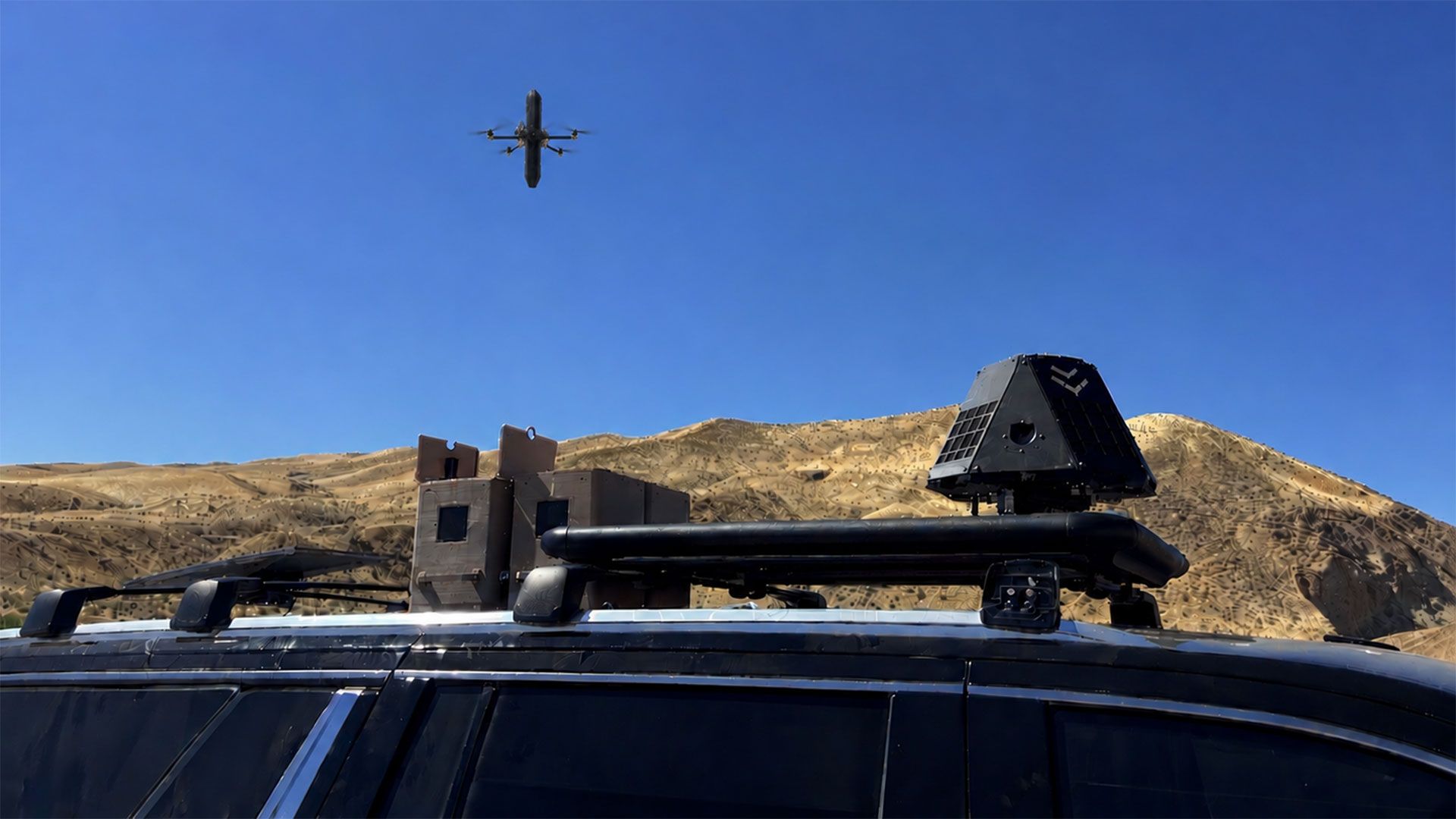
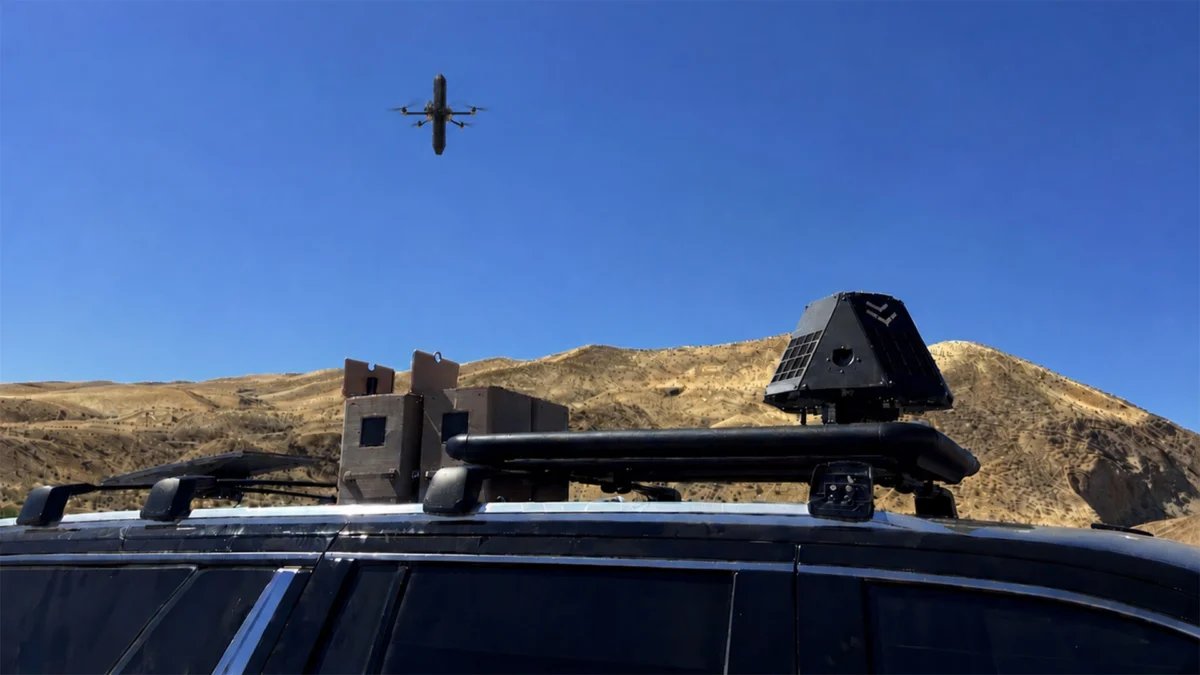
This is where Mara’s "Spotter" targeting unit differentiates itself. By fusing electro-optical and acoustic sensors with an optional low-emission W-band radar, the system can detect and track both fiber-optic and fully autonomous drones. Because the sensors are multi-modal, the system remains effective in varying weather conditions and across day-night cycles, providing a robust layer of protection that legacy systems lack.
A Chronology of Development and Deployment
Mara’s journey from concept to deployment has been marked by rapid iteration and significant validation from defense authorities.
- 2026 Q1: Mara joins the prestigious NATO DIANA (Defence Innovation Accelerator for the North Atlantic) cohort, signaling strong institutional interest from Western military powers.
- 2026 Q2: The company formalizes cooperative research agreements with three major U.S. defense organizations, integrating their technology into broader defense R&D pipelines.
- 2026 Q3: Mara secures $7 million in pre-seed funding. Simultaneously, the company conducts a civilian pilot program at a commercial port in South Korea to test the system’s ability to protect critical infrastructure.
- Late 2026: Ukrainian forces field-test the Spotter unit near the front lines. Initial reports indicate the system successfully tracked FPV drones from as far as 40 kilometers (approximately 25 miles) away.
- Future Outlook (2027): Mara plans to transition from ground-mounted units to vehicle-mounted and man-portable variants, with full-scale production expected to meet the demands of NATO partners.
Comparative Analysis: How Mara Stacks Up
The defense market is currently saturated with anti-drone technologies, ranging from high-powered microwave (HPM) emitters to kinetic interceptors. Comparing Mara to its competitors reveals a clear strategic niche.
Lockheed Martin, for instance, has developed the Morfius X-Rotor, which utilizes high-power microwaves to disable entire swarms at once. While highly effective, these systems are often large, power-intensive, and significantly more expensive than the Spike.
Conversely, Ukraine has pioneered the use of 3D-printed, low-cost interceptors to counter Shahed-type "kamikaze" drones. While these are economically competitive, they are generally optimized for larger, slower-moving targets rather than the agile, high-speed FPV quadcopters that characterize the current tactical threat. Mara’s Seekers occupy the "Goldilocks" zone: cheap enough to be expended in high numbers, yet agile enough to engage 100 mph threats with precision.
Human-in-the-Loop: The Ethics of Autonomy
Despite the high level of automation in the Spike system, Mara emphasizes a "human-in-the-loop" philosophy. The interceptors are designed to respond with a speed that far exceeds human reaction time—essential when dealing with a drone diving at a target at triple-digit speeds. However, the decision-making process is constrained by human oversight.
"The machine handles the physics of the interception, but the human sets the rules of engagement," Kofman explained. Operators retain the ability to authorize or abort a launch, ensuring that the technology remains a tool of defensive policy rather than an unchecked automated weapon. This balance is critical for compliance with international humanitarian law and domestic military regulations regarding the use of force.
Strategic Implications for Global Defense
The emergence of Mara’s technology has profound implications for global military strategy. If a backpack-sized system can reliably negate a swarm of FPV drones, the dominance of "cheap" aerial warfare may be short-lived.
- Restoring the Defensive Advantage: For the past few years, the advantage has firmly rested with the attacker, who can destroy an expensive asset with a cheap drone. Mara’s system threatens to restore the defensive advantage, potentially forcing an evolution in how offensive drone swarms are structured.
- Decentralized Air Defense: By moving air defense from a centralized, vehicle-based battery to a man-portable unit, Mara changes how infantry squads interact with the airspace. Smaller units can now carry their own "air cover," reducing their vulnerability during maneuvers.
- The Proliferation of Counter-Autonomous Systems: As drones become more autonomous, the reliance on RF jammers is destined to end. Mara’s success highlights a pivot toward sensor-fusion and computer-vision-based targeting, a trend that will likely dominate defense contracts over the next decade.
Challenges Ahead
Despite the optimism surrounding the $7 million funding round, the path to full-scale adoption is fraught with hurdles. Scaling the production of thousands of precision-guided interceptors while maintaining strict quality control is a significant manufacturing challenge. Furthermore, the company must contend with the "fog of war"—ensuring that their software performs reliably in the high-interference, high-clutter environments of an active battlefield.
Moreover, while a European NATO partner has placed the first paid order for an exercise, the transition from successful testing to wide-scale procurement is notoriously slow. Mara must navigate the bureaucratic complexities of multiple international defense procurement cycles if it intends to become a standard-issue system.
Conclusion: A New Era of Kinetic Defense
Mara represents a new breed of defense startup: one that prioritizes the economics of the battlefield as much as the physics of the weaponry. By acknowledging that the current threat is an asymmetric economic one, they have created a solution that is as much about logistics and cost-containment as it is about kinetic destruction.
As the Spike system moves toward its 2027 production target, the world will be watching to see if this "backpack-sized" solution can truly quiet the FPV nightmare. If successful, Mara will not only have provided a vital shield for armored units, but they will have redefined the baseline for what a modern, scalable air defense system looks like in the 21st century. The era of the drone-dominated battlefield is being met with a new era of agile, autonomous, and cost-effective counter-measures—a technological arms race that is only just beginning.