

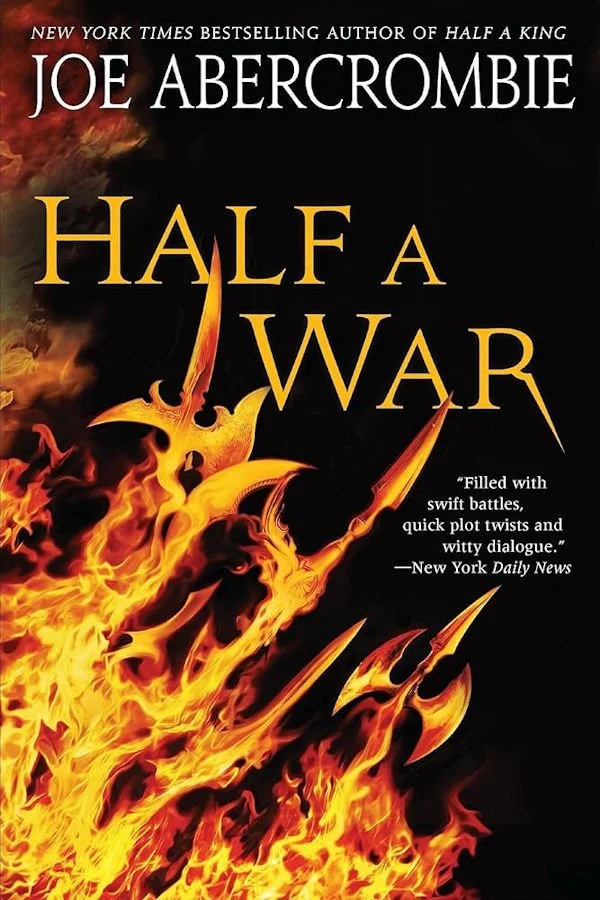
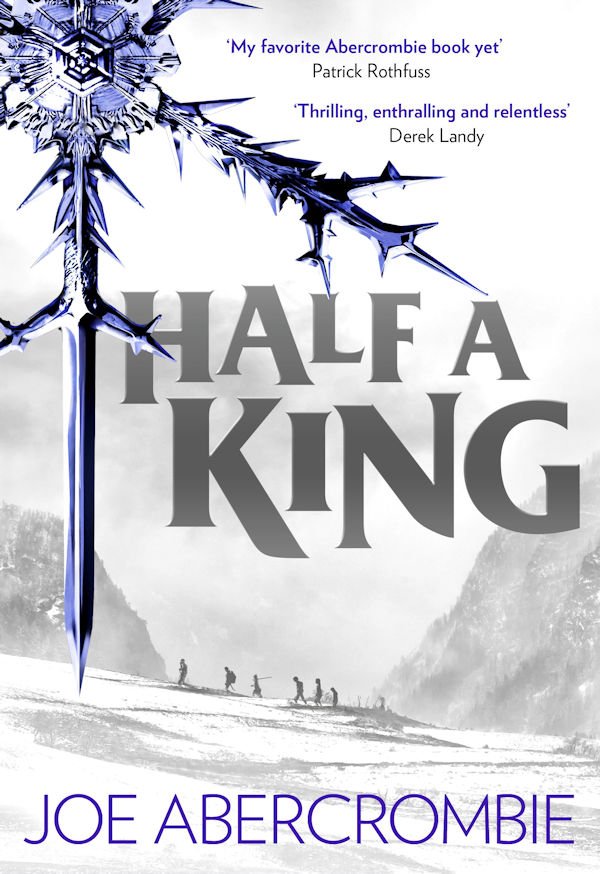
When Joe Abercrombie released Half a King in 2014, the literary world was already well-acquainted with the "Lord of Grimdark." Having established his reputation through the blood-soaked, cynicism-drenched landscapes of The First Law trilogy, Abercrombie was the undisputed master of moral ambiguity and the anti-hero. However, when his publishers attached the "Young Adult" (YA) label to his new series, the Shattered Sea, it sparked an immediate, polarized reaction among his fanbase.
A decade later, the question remains: Did the YA label act as a bridge to new readers, or did it serve as an intellectual barrier, obscuring a work that was, in reality, a masterclass in distilled storytelling?
The Anatomy of an Unexpected Pivot
To understand the controversy, one must understand the perceived "Abercrombie brand." Before Half a King, his work was synonymous with sprawling, nihilistic epics where the "good guys" were rarely good and the "bad guys" were merely better at violence. The announcement of a YA trilogy felt, to many, like an act of dilution.
YA, as a marketing category, carries specific baggage: a reputation for simplified morality, predictable coming-of-age arcs, and a softening of the sharper edges found in adult fantasy. When readers picked up Half a King, they were prepared for a sanitized version of the North and the Union. Instead, they found Prince Yarvi—a protagonist defined by physical deformity and intellectual brilliance—navigating a world that was just as brutal, unforgiving, and politically treacherous as anything seen in The Blade Itself.
Chronology of a Controversial Release
- 2014: Half a King is published, marketed as YA. The literary community debates whether the grimdark icon has "gone soft."
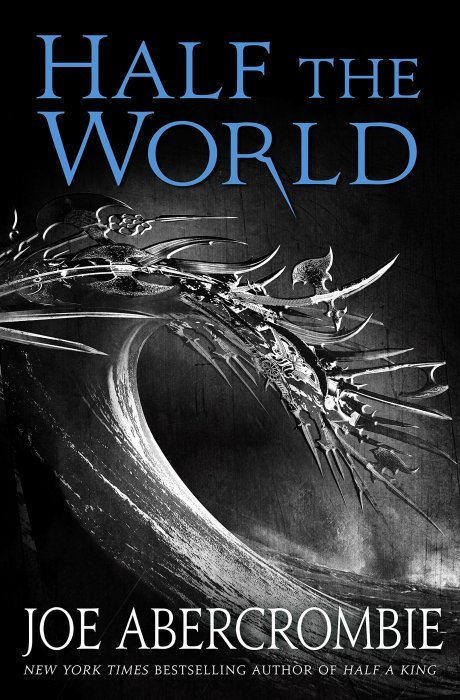
- 2015: Half the World is released, further exploring the geopolitical nuances of the Shattered Sea. Critics begin to notice that while the scope is tighter, the body count remains high.
- 2016: The conclusion, Half a War, hits shelves. The trilogy is recognized for its tight pacing and high-stakes character development, earning critical acclaim despite the persistent "YA" stigma.
- 2017–Present: The Shattered Sea trilogy maintains a steady readership, though it remains frequently categorized as "Abercrombie-lite" in online fan forums—a label that increasingly appears to be a mischaracterization.
Supporting Data: The Stylistic Constant
The argument that Half a King represents a departure from Abercrombie’s established style falls apart upon closer inspection of the prose. The hallmarks of his writing—dry, biting wit, a cynical undercurrent, and a pervasive sense of dread—are not only present but arguably more potent due to the increased narrative velocity.
In his adult epics, Abercrombie often indulges in panoramic world-building, allowing the plot to simmer over hundreds of pages. In the Shattered Sea trilogy, he uses the constraints of the YA format to his advantage. The "leaner" nature of the books acts as a pressure cooker. Because the reader is tethered primarily to Yarvi’s perspective, the betrayals hit harder and the stakes feel more personal.
Consider the "Supporting Evidence" of his thematic consistency:
- The Outsider Protagonist: Much like Logen Ninefingers or Sand dan Glokta, Yarvi is an outcast. He is defined not by his capacity for heroic deeds, but by his struggle to survive in a society that views his disability as a moral failure.
- The Failure of Virtue: In the Shattered Sea, as in The First Law, good intentions are the fastest path to a grave. The morality is not black and white; it is shades of gray, often murky with the blood of those who thought they were doing the right thing.
- Intellect vs. Brawn: Abercrombie consistently challenges the fantasy trope of the "chosen one." Yarvi succeeds not because he is a skilled warrior, but because he is the most manipulative, calculating person in the room—a character trait that fits perfectly into the cynical framework of the author’s wider bibliography.
Official Responses and Editorial Intent
While Abercrombie himself has been relatively diplomatic regarding the categorization of his work, he has frequently noted that his goal was not to change his voice, but to change the tempo. In various interviews throughout the 2010s, he alluded to the idea that the "YA" label was a marketing decision made by publishers to reach a wider demographic, rather than a conscious attempt by the author to write "for children."
Editorial staff involved in the publication noted at the time that the distinction was largely one of length and perspective. By focusing on a single, younger protagonist, the books were naturally marketed toward a younger audience. However, behind the scenes, the editorial mandate remained the same: "Keep the edge, keep the grit, keep the Abercrombie."
The industry consensus suggests that the "YA" tag was a successful, if polarizing, gambit. It introduced a generation of readers to Abercrombie’s style, serving as a gateway drug to his more dense, sprawling adult epics like The Age of Madness trilogy.
The Implications of Labeling
The lingering question of whether Half a King would be viewed differently without the "YA" tag is more than a semantic debate; it is a commentary on how we consume genre fiction.
If the books had been published under a general "Fantasy" banner without the age-restricted label, it is highly probable that the Shattered Sea would be held in the same esteem as Best Served Cold or The Heroes. The label created a cognitive bias: adult readers entered the book looking for "YA tropes" and, when they found them, pointed to them as evidence of the author’s supposed dilution, while ignoring the complex, dark heart of the narrative.
The "Grimdark" Paradox
The implications of this mislabeling are twofold:
- For the Reader: It creates an exclusionary barrier. Adult fans who crave "grimdark" may skip over perfectly valid, high-quality entries in their favorite author’s bibliography because of a three-letter tag.
- For the Author: It pigeonholes an author’s range. By forcing an author into a "YA" box, the market potentially discourages them from experimenting with tighter, faster-paced narratives in the future, fearing that their core audience will perceive it as a step down.
A Re-evaluation: Beyond the Genre Borders
Ultimately, the Shattered Sea trilogy serves as a case study in why genre boundaries are increasingly irrelevant. When we strip away the marketing, what remains is a series of books that are, in every meaningful way, pure Abercrombie.
The world is bleak. The characters are damaged. The humor is as sharp as a razor, and the outcome is rarely "happy" in any traditional sense. Yarvi’s journey from a prince with a maimed hand to a man who must decide if the price of power is worth the loss of his soul is a quintessential Abercrombie arc.
To suggest that the Shattered Sea is "lesser" because it is shorter or labeled for a younger demographic is to misunderstand the author’s primary strength: his ability to dissect human nature under extreme duress. Whether that dissection happens in a sprawling empire or a kingdom of slave ships, the surgeon’s scalpel is the same.
In conclusion, readers who have avoided the Shattered Sea due to its label would do well to revisit it. They will find that the distance between the "YA" section and the "Adult Fantasy" shelf is often just a matter of marketing—and that Joe Abercrombie is just as capable of delivering a punch to the gut in 300 pages as he is in 800. It is time to retire the skepticism and view the trilogy for what it truly is: a lean, mean, and deeply cynical piece of storytelling that sits proudly alongside the best of the grimdark canon.











No comments yet. Be the first to join the conversation!